

Firefighter Gear Maintenance and Laundry Tips
Table of Contents
- Why Firefighter Gear Maintenance Matters
- Understanding NFPA 1851 Standard Requirements
- Pre-Treatment and Removing Soot, Hydrocarbons, and Biohazards
- Selecting the Best Detergent for Turnout Gear
- Step-by-Step Washing and Drying Process
- How to Inspect Turnout Gear for Damage and Wear
- Common Wash Errors and How to Troubleshoot Them
- Sustainable and Eco-Friendly Detergent Options
- Frequently Asked Questions
Last Updated: September 30, 2026
Why Firefighter Gear Maintenance Matters
Proper firefighter gear maintenance isn't just about keeping your turnout gear clean. It's about protecting your health and extending the life of equipment that costs thousands of dollars. Firefighter gear maintenance directly impacts thermal protective performance, fiber integrity, and your ability to respond safely to the next call.
Every time you work a fire, your gear absorbs soot, hydrocarbons, and biohazards. These contaminants break down the protective layers over time. Without proper cleaning, the moisture barrier deteriorates, the thermal liner loses effectiveness, and the hook and loop fasteners fail. You're left with gear that looks fine but no longer protects you.
The NFPA 1851 standard exists because firefighter health depends on it. Following these guidelines isn't optional, it's how you stay safe.
Understanding NFPA 1851 Standard Requirements
The NFPA 1851 standard sets mandatory requirements for the cleaning and maintenance of protective ensembles, including turnout gear. This standard defines how often gear must be cleaned, what methods to use, and what inspection criteria apply.
According to NFPA's official fire service standards, NFPA 1851 requires that structural firefighting protective ensembles be cleaned after each use or at minimum every 12 months. The standard specifies that cleaning must remove gross contamination and decontaminate the gear from hazardous materials.
Key requirements include:
- Gear must be cleaned using approved methods that don't damage thermal protective performance
- All components (outer shell, thermal liner, moisture barrier) must remain intact after cleaning
- On-premises laundry facilities must use equipment specifically designed for turnout gear
- Inspection must occur before and after each cleaning cycle
- Documentation of cleaning and inspection is required
Understanding these standards protects you legally and physically. Fire departments that follow NFPA 1851 reduce liability and keep firefighters safer.
Pre-Treatment and Removing Soot, Hydrocarbons, and Biohazards
Pre-treatment is where proper firefighter gear maintenance begins. You can't just throw contaminated gear into a washer and expect good results. The soot, hydrocarbons, and biohazards need to be addressed first.
Field Decontamination After Incidents
Gross decontamination starts at the scene. After a structure fire, your gear is covered in soot and potentially hazardous materials. Many firefighters skip field decontamination because they're tired, but this step prevents cross-contamination in your station and home.
At the fireground, use water and a brush to remove visible soot and debris. Don't scrub aggressively, you want to remove surface contamination without driving particles deeper into the fibers. Rinse thoroughly with clean water. This reduces the contamination load before the gear reaches your station laundry.
Field decontamination takes five to ten minutes but saves hours of work later. It also protects your family if you bring gear home.
Home-Based vs. Station-Based Cleaning Risks
This is where most firefighters make a critical mistake. Cleaning turnout gear at home creates serious risks that station-based cleaning avoids.
Home washers aren't designed for the abrasion and heat requirements of turnout gear. The moisture barrier can be damaged by standard water temperatures. Cross-contamination spreads carcinogens throughout your home laundry system. Your family's clothes get washed in the same machine as gear contaminated with soot and biohazards.
Station-based cleaning uses extractors and washers specifically designed for protective ensembles. These machines apply the right water temperature, agitation level, and rinse cycles without damaging thermal protective performance. Professional on-premises laundry keeps contamination contained and your family safe.
If your station doesn't have proper laundry facilities, advocate for them. The cost of equipment is far less than the cost of health problems or liability.
Selecting the Best Detergent for Turnout Gear
Not all detergents work equally for turnout gear. Using the wrong product can damage the moisture barrier, reduce thermal protective performance, or leave residue that traps contaminants.
The best detergent for turnout gear is pH-neutral and specifically formulated for protective equipment. Avoid standard laundry detergents, which are often alkaline and break down protective coatings. Don't use fabric softeners or bleach, they damage fibers and the moisture barrier.
Look for detergents labeled for firefighting gear or industrial protective equipment. These products are engineered to remove hydrocarbons and biohazards without compromising the gear's protective properties.
Many commercial laundry services that specialize in turnout gear use proprietary detergents tested against NFPA 1851 standards. If you're cleaning gear in-house, ask your equipment supplier which detergents they recommend. Using the right product is one of the easiest ways to extend gear longevity.
Step-by-Step Washing and Drying Process
Proper washing and drying follow a specific sequence. Skip steps or rush the process, and you risk damaging the protective ensemble.
Turnout Print Sports Bra (Breathable →
Separating Gear Layers and Components
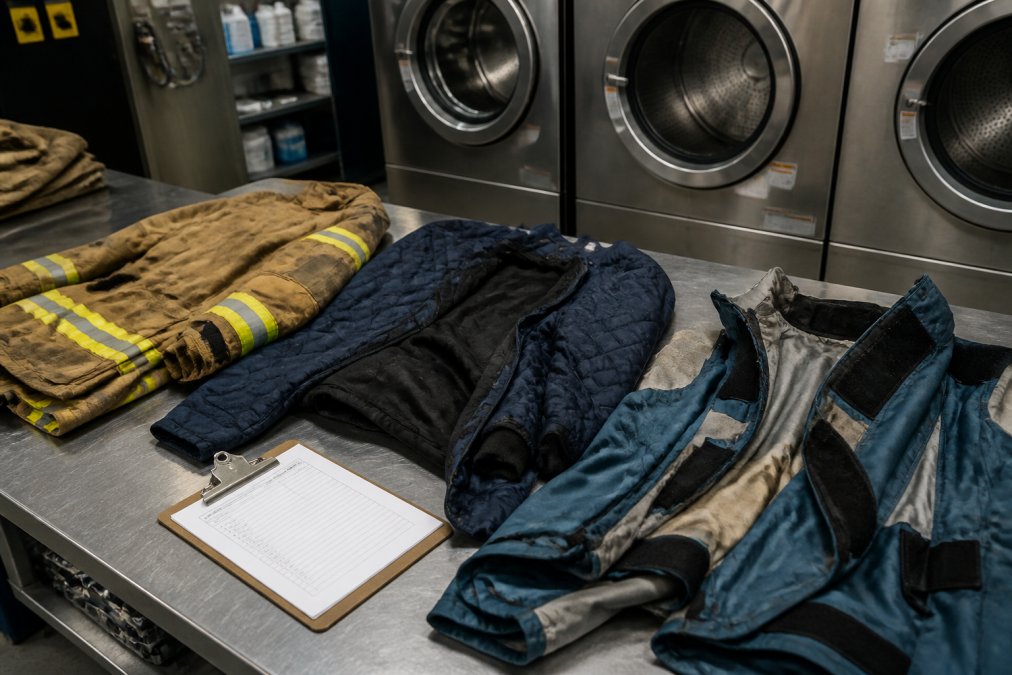
Before washing, separate all components. The outer shell, thermal liner, and moisture barrier must be washed separately or in a way that allows water to flow through each layer without trapping moisture.
Remove hook and loop fasteners if possible. Velcro collects lint and debris that can damage other gear in the wash. If fasteners are sewn on, cover them with mesh bags to prevent snagging.
Inspect each piece before washing. Look for tears, melted areas, or delamination. Document any damage, this becomes part of your maintenance record.
Wash Cycle and Rinse Cycle Guidelines
Use water temperature between 105°F and 130°F. This range removes contaminants without damaging the moisture barrier. Water that's too hot can melt protective coatings. Water that's too cold won't effectively remove hydrocarbons.
The wash cycle should run 8 to 12 minutes with gentle agitation. Aggressive washing causes abrasion and fiber damage. The goal is to suspend contaminants so they rinse away, not to scrub the gear clean.
Rinse cycles are critical. Run at least two full rinse cycles to remove all detergent residue. Detergent left in the gear traps moisture and reduces thermal protective performance. A third rinse cycle is better than two.
After rinsing, extract excess water using the extractor. Don't wring or twist the gear, let the machine's spin cycle remove water. Gentle extraction prevents fiber damage.
Air Drying and Avoiding Heat Damage
This is the step where most damage occurs. Machine drying at high temperatures destroys the moisture barrier and thermal liner. Never use a dryer.
Hang gear on drying racks in a well-ventilated area. Air drying takes 24 to 48 hours depending on humidity and airflow. Avoid direct sunlight, which can damage the outer shell and fade colors. Avoid heat sources like radiators or space heaters. Proper ventilation remains the most effective method for neutralizing gear odors while preserving the structural integrity of the protective layers.
Arrange the gear so air flows through all layers. Bunching gear together traps moisture and creates mildew risk. Space pieces out on the rack.
Once gear is dry, inspect it again.
How to Inspect Turnout Gear for Damage and Wear
Inspection is where you catch problems before they become safety issues. Inspect gear before and after each cleaning, and regularly during storage.
Checking Thermal Protective Performance and Fiber Integrity
Examine the outer shell for tears, melts, or areas where the coating is worn away. The outer shell protects against flames and radiant heat. Damage here compromises thermal protective performance.
Maintaining Hook and Loop (Velcro) Components
Hook and loop fasteners wear out over time. The hook side (the rough, scratchy side) loses its grip as fibers compress and break. The loop side (the soft, fuzzy side) collects lint and loses effectiveness.
Common Wash Errors and How to Troubleshoot Them
Even experienced firefighters make mistakes that damage gear. Knowing what can go wrong helps you avoid costly errors.
Sustainable and Eco-Friendly Detergent Options
Environmental responsibility and gear protection aren't mutually exclusive. Several detergent manufacturers now offer eco-friendly products that work with turnout gear.
| Maintenance Task | Frequency | Key Consideration |
|---|---|---|
| Field decontamination | After each incident | Prevents cross-contamination at station |
| Inspection | Before and after washing | Documents gear condition for safety |
| Cleaning cycle | After each use or every 12 months | Removes hydrocarbons and biohazards |
| Air drying | After each wash | Never use heat, takes 24-48 hours |
| Hook and loop inspection | Monthly during storage | Replace if fasteners lose grip |
| Thermal liner check | Every 6 months | Look for delamination or compression |
Frequently Asked Questions
What are the NFPA 1851 standards for cleaning turnout gear?
NFPA 1851 sets mandatory requirements for firefighter gear maintenance, including pre-treatment of soiled gear, use of pH-neutral detergents, proper wash cycle temperatures, and inspection criteria for thermal protective performance. The standard requires that turnout gear be professionally cleaned or home-laundered using approved methods to prevent cross-contamination and preserve the moisture barrier and thermal liner. Compliance protects gear longevity and firefighter safety by maintaining the protective ensemble's integrity against hydrocarbons, carcinogens, and particulate matter encountered during incidents.
What is the best detergent for cleaning firefighter turnout gear?
Use a pH-neutral detergent specifically formulated for protective apparel. Avoid bleach, fabric softeners, and standard laundry detergents, which damage the thermal liner and moisture barrier. pH-neutral options preserve fiber integrity and prevent snagging of the outer shell. Look for detergents labeled safe for turnout gear or firefighter PPE. Eco-friendly, phosphate-free detergents are increasingly available and meet NFPA 1851 requirements while reducing environmental impact. Always follow the gear manufacturer's recommendations and test new detergents on a small area first.
How often should firefighter gear be professionally cleaned?
NFPA 1851 requires gross decontamination after each incident exposure and routine cleaning at least every 12 months, even if gear appears clean. Career firefighters typically need professional or station-based cleaning monthly or quarterly depending on exposure frequency. Volunteer firefighters should clean gear after significant incidents and at least annually. Post-incident field decontamination removes visible soot and biohazards immediately, but formal washing removes embedded hydrocarbons and carcinogens that regular inspection cannot detect. Frequent professional cleaning extends gear longevity and reduces health risks.
Can you wash firefighter gear in a regular washing machine?
Home washing is permitted under NFPA 1851 if done correctly, but station-based or professional laundry is safer. Home-based cleaning risks cross-contamination of other household items and inadequate removal of carcinogens and biohazards. If home-washing, use a dedicated extractor or commercial-grade machine, separate gear from other laundry, use pH-neutral detergent, avoid heat drying, and inspect thoroughly afterward. Station-based cleaning with calibrated extractors designed for turnout gear provides better decontamination and eliminates cross-contamination risks, making it the preferred method for career departments.
