

Firefighter Helmet Color Codes Explained: What Each Color Means
Table of Contents
- Why Firefighter Helmet Color Codes Exist
- The Lack of National NFPA Standardization
- Common Helmet Color Meanings and Rank Identification
- Firefighter Rank Structure and Helmet Color Coding
- Regional Variations in Fire Department Helmet Colors
- EMS, Specialized Units, and Role-Specific Color Coding
- Visibility, Safety Technology, and Modern Helmet Design
- Mutual Aid Challenges: When Departments Work Together
Firefighter Helmet Color Codes Explained: What Each Color Means
Last Updated: August 3, 2026
Understanding firefighter helmet color codes starts with recognizing that the fire service has no single national standard. This guide breaks down what each color typically means, why variations exist, and what you need to know about this critical visual identification system.
Why Firefighter Helmet Color Codes Exist
Visual identification on the fireground saves lives. When crews wear full personal protective equipment, breathing apparatus, and face shields, verbal communication becomes difficult. Incident commanders need to instantly recognize who holds authority. Helmet color codes create a silent language that works regardless of noise, smoke, or chaos.
The fireground involves multiple companies from different stations and mutual aid departments working together. A battalion chief from across the county needs to direct firefighters without knowing their names. Helmet colors make this possible and support accountability during interior operations.
The Lack of National NFPA Standardization
The National Fire Protection Association (NFPA) publishes standards for fire service equipment, including helmet design and construction. However, NFPA 1971, the standard governing protective helmets for structural firefighting, does not mandate specific helmet colors for rank identification. The standard addresses materials, impact resistance, and heat protection, but not color-based rank codes.
This absence is intentional. The NFPA recognizes that fire departments are locally governed and should maintain control over their own operational procedures.
What NFPA 1971 Actually Requires
NFPA 1971 focuses on helmet performance and protective capability. The standard requires helmets to withstand specific impact forces, resist penetration, provide adequate face and neck protection, and include reflective striping for visibility. Modern helmets must meet thermal protection requirements and accommodate face shields and breathing apparatus.
Why Departments Still Choose Different Colors
Many fire departments established their helmet color codes decades ago, long before modern standardization efforts. These traditions became embedded in firehouse culture and represent departmental identity and legacy. When mutual aid agreements were formalized, departments realized they had different systems, but changing would disrupt internal operations. The solution was to educate personnel about regional variations rather than force standardization.
Budget and equipment lifecycle also play a role. Replacing all helmets in a department is expensive.
Common Helmet Color Meanings and Rank Identification
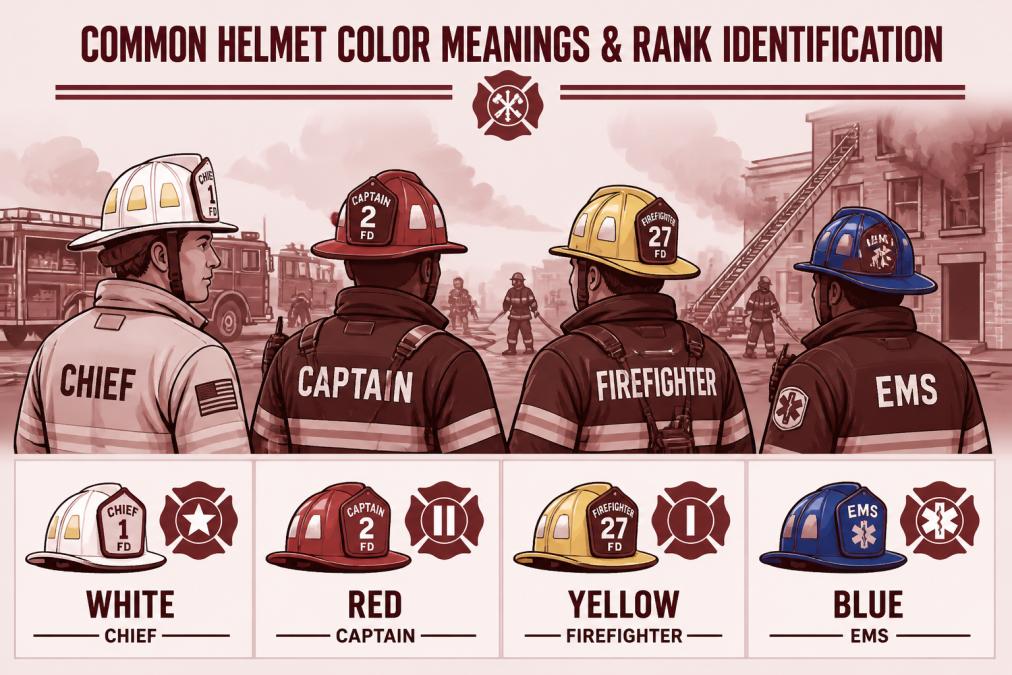
While no national standard exists, certain color patterns have emerged across many fire departments in the United States. Understanding these common meanings provides a foundation, though you must always verify your specific department's color code.
| Helmet Color | Typical Role | Typical Rank | Common Variations |
|---|---|---|---|
| White | Chief Officer | Battalion Chief, Fire Chief, Deputy Chief | Some departments use white for captains |
| Red | Firefighter/Company Officer | Firefighter, Captain, Lieutenant | Some departments use red for all firefighters regardless of rank |
| Yellow | Driver-Engineer | Apparatus Operator, Engineer | Some departments use yellow for all company-level personnel |
| Blue | Safety Officer, Specialized Role | Safety Officer, Rescue Specialist, Medical Officer | Some departments use blue for EMS or hazmat specialists |
| Black | Probationary Firefighter | Recruit, Probationary Firefighter | Some departments use black for all firefighters in specific roles |
White Helmets: Chief Officers and Command
White helmets typically denote chief officers and command staff. A white helmet on the fireground usually means the wearer holds authority within the incident command structure. This might be a battalion chief coordinating multiple companies, a fire chief overseeing the entire incident, or a deputy chief managing a specific division. The visibility of white also serves a practical purpose, standing out against dark smoke and fire.
Red Helmets: Firefighters and Company Officers
Red is the most common helmet color in American fire departments, used for firefighters, captains, and lieutenants. The widespread adoption reflects tradition dating back to early fire brigades and the visibility of red in emergency environments. In some departments, all firefighters wear red regardless of rank, with rank indicated by insignia on the helmet shield or uniform.
Yellow Helmets: Driver-Engineers and Apparatus Operators
Yellow helmets commonly identify driver-engineers and apparatus operators, the firefighters responsible for operating the fire apparatus and managing water supply. This role requires different training and responsibilities than interior firefighting, and the color distinction helps organize the fireground by function.
Blue Helmets: Safety Officers and Specialized Roles
Blue helmets identify safety officers, medical personnel, and other specialized roles depending on departmental policy. A blue helmet on the fireground typically means the wearer has a specific operational responsibility outside the traditional firefighter-captain-chief hierarchy.
Firefighter Rank Structure and Helmet Color Coding
Understanding rank structure is essential to interpreting helmet colors correctly. Fire departments organize personnel into a hierarchical command structure with clear lines of authority and responsibility. Helmet colors support this hierarchy by making rank visually obvious on the fireground.
Probationary Firefighters and Entry-Level Identification
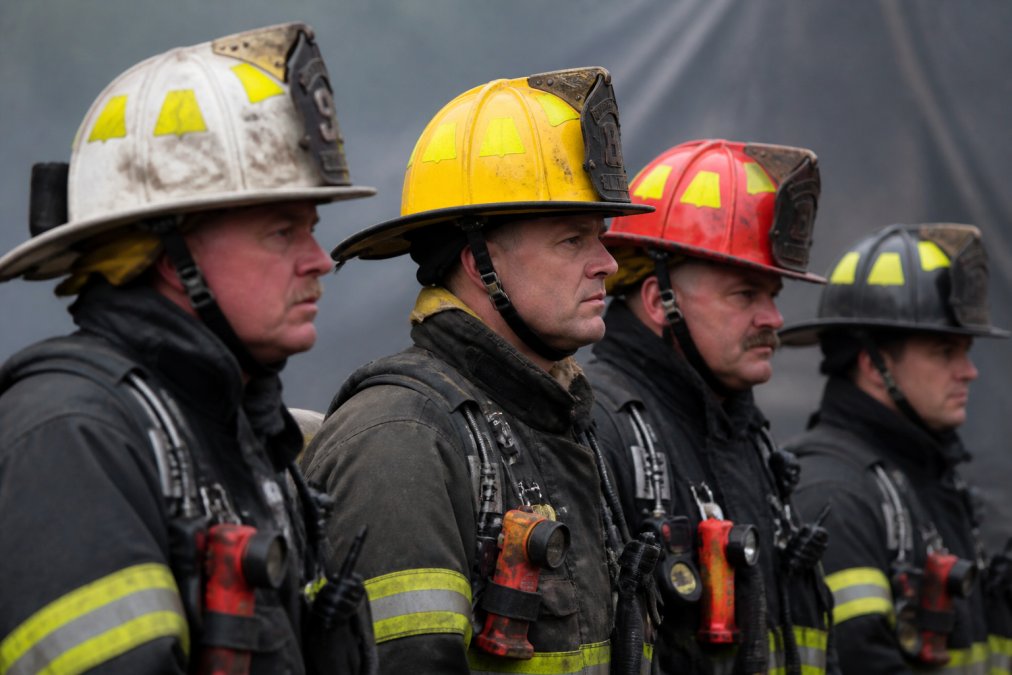
Probationary firefighters are recruits completing their initial training and evaluation period. Some departments identify probationary firefighters with a specific helmet color, often black or a variation of the standard firefighter color with different insignia. This visual distinction helps senior firefighters quickly identify less experienced personnel and adjust supervision accordingly.
Company Officers: Captains and Lieutenants
Captains and lieutenants are company officers, the first level of supervisory authority in the fire department. A company typically consists of five to eight firefighters led by a captain or lieutenant. Helmet color coding for company officers varies significantly by department, creating challenges during mutual aid operations.
Chief Officers: Battalion Chiefs and Above
Chief officers, battalion chiefs, deputy chiefs, and the fire chief, hold authority over multiple companies and broader incident operations. These positions are typically identified by white helmets, though some departments use variations like light blue or gold. Clear visual identification of authority is critical to effective incident command.
Regional Variations in Fire Department Helmet Colors
Fire departments across the United States have developed distinct helmet color traditions based on regional history and departmental autonomy.
Northeast and Midwest Traditions
Northeastern fire departments often use white for chiefs, red for firefighters, and yellow for apparatus operators. This system emerged from early fire department traditions and has remained consistent across generations. Midwestern departments show more variation, with some following the Northeast pattern while others have developed distinct local systems.
Southern and Western Department Practices
Southern and western fire departments show greater variation in helmet colors. Some departments use white and red systems similar to the Northeast, while others have developed distinct regional practices.
EMS, Specialized Units, and Role-Specific Color Coding
Many fire departments integrate emergency medical services personnel and operate specialized units for rescue, hazmat, and other functions. Helmet color coding must accommodate these roles while maintaining clear visual identification on the fireground.
Medical Officers and EMS Integration
Departments that integrate EMS personnel into the fire department must identify medical officers and paramedics on the fireground. Some departments use blue helmets for medical personnel, distinguishing them from firefighters conducting structural firefighting operations. Others use the same color helmet but distinguish them with specific insignia or shields.
Wildland Firefighters and Rescue Specialists
Wildland firefighters operate in environments very different from structural firefighting. Some departments use distinct helmet colors for wildland personnel to indicate their specialized role. Wildland firefighters often wear yellow or orange helmets to distinguish them from structural firefighting personnel.
Visibility, Safety Technology, and Modern Helmet Design
Modern firefighting helmets incorporate advanced materials and visibility features that go beyond basic color coding.
Reflective Striping and Fireground Visibility
NFPA 1971 requires retroreflective striping on helmets to enhance visibility in low-light conditions and smoky environments. This reflective material becomes critical during interior operations where smoke obscures normal visibility. Some departments use reflective striping patterns that reinforce rank identification, creating redundant identification systems that work even when primary visibility is compromised.
Helmet Shields and Personal Protective Equipment Standards
Modern structural firefighting helmets often include removable shields that protect the face and neck. These shields can display rank insignia, department emblems, or additional color coding. A shield system allows departments to change rank identification without replacing entire helmets, reducing costs and supporting equipment lifecycle management.
Mutual Aid Challenges: When Departments Work Together
Mutual aid operations bring together firefighters from different departments, each with potentially different helmet color codes. The lack of national standardization creates coordination challenges that must be addressed during incident briefings.
When a large incident requires resources from multiple departments, incident commanders must understand each department's helmet color system. Effective mutual aid operations require explicit communication about rank structure and helmet color codes. During the initial incident briefing, representatives from each department explain their system to incident command.
Training and pre-incident planning support mutual aid effectiveness. Departments that regularly work together often develop shared understanding of each other's systems. Some regions have developed mutual aid agreements that include standardized identification systems, maintaining departmental autonomy while supporting mutual aid operations.
Firefighter helmet color codes reveal a fire service that values both tradition and operational effectiveness. While the lack of national standardization creates complexity, it reflects the reality of American fire service culture: locally governed, independently operated, and deeply committed to tradition. Understanding common color patterns, regional variations, and the importance of mutual aid coordination helps personnel navigate this complex system.
At Black Helmet, we recognize that firefighters wear their professional identity with pride. Our apparel honors the traditions, brotherhood, and operational excellence that define the fire service. Whether you're a probationary firefighter learning your department's systems, a company officer managing your crew, or a retired firefighter maintaining your connection to the service, Black Helmet's products celebrate the commitment and sacrifice that helmet colors represent on the fireground. Shop our collection of firefighter shirts, hoodies, and accessories that reflect the authentic culture of the fire service.
NFPA 1971 Standard on Protective Helmets for Structural Fire Fighting and Proximity Fire Fighting
National Incident Management System (NIMS) Incident Command Structure Guidelines
International Association of Fire Chiefs Mutual Aid Resource Guidelines
Frequently Asked Questions
What do different firefighter helmet colors mean?
Helmet colors indicate rank and role on the fireground. White helmets typically identify chief officers and incident command personnel. Red is standard for firefighters and company officers. Yellow often denotes driver-engineers and apparatus operators. Blue may identify safety officers or specialized roles. However, there is no national standard, so meanings vary significantly between departments and regions. Always check your specific department's standard operating procedures for exact color meanings.
Are there national NFPA helmet color requirements for firefighters?
No. The National Fire Protection Association's NFPA 1971 standard sets requirements for helmet materials, impact resistance, and protective design, but does not mandate specific colors for rank or role identification. This is why helmet color codes vary widely across US fire departments. Each department establishes its own color-coding system based on tradition, regional practice, and departmental policy. This lack of standardization creates challenges during mutual aid operations when crews from different departments work together.
What does helmet color mean in the firefighter rank structure?
Helmet color helps identify rank and position within the operational hierarchy. In many departments, white helmets belong to chief officers and incident command staff. Red is worn by firefighters and company officers like captains and lieutenants. Probationary firefighters may wear a different color or marking. Driver-engineers often wear yellow. However, since there is no national standard, your department's standard operating procedures and departmental policy will define what each color represents in your specific rank structure.
Why do fire departments use different helmet colors if there's no national standard?
Helmet colors are rooted in firehouse tradition and regional practice rather than federal regulation. Departments evolved their own color systems based on historical precedent, local preferences, and what worked for their specific operational needs. Some departments prioritize visibility on the fireground, while others emphasize tradition and brotherhood. This decentralized approach means a white helmet in one city might mean something different in another. Wildland firefighters and specialized units also use colors differently than structural firefighting crews, adding further variation across the fire service.
This article was written using GrandRanker
