

Why Firefighters Use Bagpipes: History, Tradition, and Honor
Table of Contents
- Why Firefighters Use Bagpipes: The Core Reason
- History of Bagpipes in the Fire Service
- Firefighter Funeral Traditions and the Bagpipe Lament
- Symbolism and Emotional Impact of Bagpipe Music
- The Pipe and Drum Band: Honoring Fallen Comrades
- Evolution of Bagpipes in Modern Fire Departments
- Forming and Maintaining a Department Pipe Band
- Conclusion
Last Updated: August 9, 2026
Why Firefighters Use Bagpipes: The Core Reason
Bagpipes serve as the voice of the fire service during its most solemn moments. When a firefighter falls in the line of duty, the mournful wail of the Great Highland Bagpipes announces to the community that someone has made the ultimate sacrifice. It's a ritual that honors the dead, unites the living, and reminds everyone watching that this job demands courage and carries consequences.
The bagpipe tradition in American fire departments represents a connection to history, brotherhood, and the sacred duty to remember those who don't come home. At Black Helmet, we understand that the fire service isn't just a job, it's a calling rooted in tradition and sacrifice. The bagpipes embody that calling in a way few other symbols can, speaking to duty, honor, community, and unwavering loyalty to your crew.
This guide explores the historical roots of why firefighters use bagpipes, the cultural significance that keeps the tradition alive, and how modern fire departments continue to honor fallen comrades through pipe and drum bands.
History of Bagpipes in the Fire Service
The bagpipe tradition in American fire departments arrived with Scottish and Irish immigrants and took root in the unique culture of the fire service. The Great Highland Bagpipes had been instruments of ceremony and mourning for centuries in Scotland and Ireland. When immigrants arrived in America during the 18th and 19th centuries, many became firefighters in growing cities like New York, Boston, Philadelphia, and Chicago. They naturally carried their traditions into firehouses that became tight-knit communities.
Scottish and Irish Immigration Influence
The fire service in America's major cities was heavily shaped by Irish-American and Scottish-American immigrants who valued ceremony, ritual, and public display of respect for the dead. In their homelands, bagpipes had long been associated with funerals and moments of collective mourning. When firefighters from these backgrounds died in service, their fellow firefighters wanted to honor them in ways that felt authentic and meaningful.
The bagpipe's piercing, mournful tones cut through the noise of the city and command silence from everyone within earshot. Over time, the practice spread beyond Irish and Scottish firefighters. Other departments recognized the impact of the bagpipes at funerals and their power to honor not just the individual firefighter, but the entire brotherhood. By the mid-20th century, bagpipes had become a standard part of firefighter funeral honors across the United States, regardless of the ethnic background of the department.
The Connection to Military Tradition
The U.S. military, particularly the Army and Marine Corps, has long used bagpipes in ceremonies and funerals. This military tradition provided a model that fire departments could follow and adapt. Many early American firefighters had military experience and brought with them an understanding of military ceremony and the role of formal ritual in honoring the fallen. The bagpipes fit naturally into this framework, as they were already established in military funerals and parades.
Both soldiers and firefighters put their lives at risk for their communities and operate within hierarchical structures built on trust and mutual obligation. When a soldier or firefighter dies in service, the community wants to mark that death as something different from an ordinary loss. The bagpipes serve that purpose, saying: this person was part of something larger than themselves. Their death matters. We remember.
Firefighter Funeral Traditions and the Bagpipe Lament
Firefighter funerals are public ceremonies involving the entire fire service community, often drawing thousands of firefighters from across the region or country. The bagpipes are central to these ceremonies, with their role formalized and deeply meaningful over decades of practice.
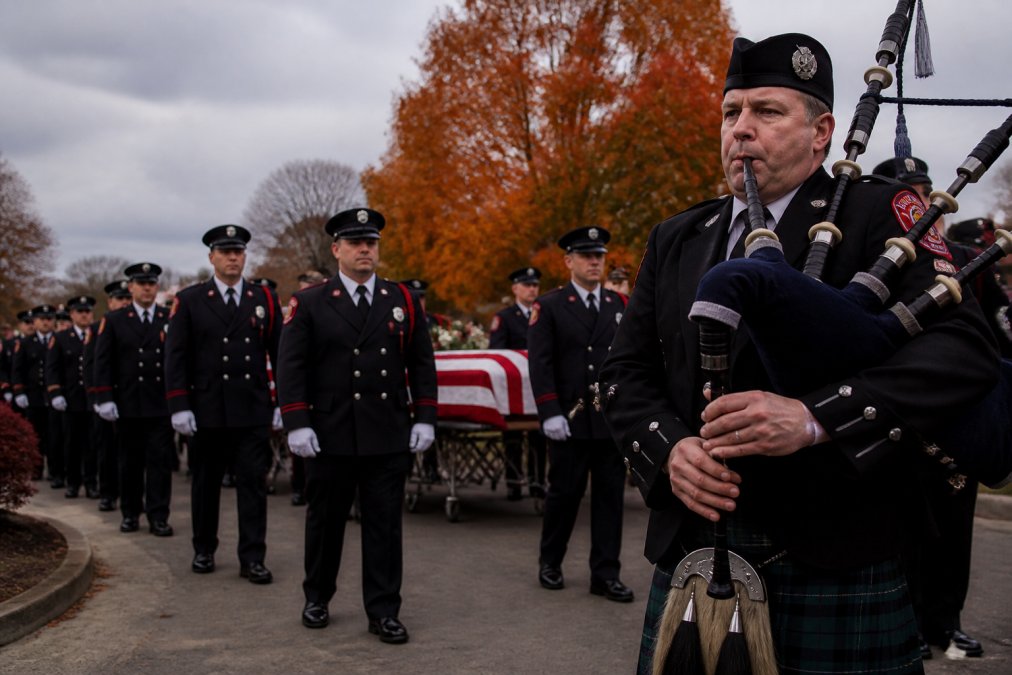
When a firefighter dies in the line of duty, the coffin is transported on a fire truck with the department's colors draped across it. Firefighters in full dress uniform line the streets. A bagpiper plays a "lament," a slow, mournful tune that has become synonymous with firefighter funerals across America. The bagpipe lament is designed to be difficult to listen to, the high, wailing notes create an almost unbearable sense of loss. That's precisely why it works. The lament forces you to feel the weight of the moment rather than remain emotionally distant.
The Role of Pipes and Drums at Memorial Services
Many fire departments have formal pipe and drum bands made up of firefighters, retired firefighters, or civilians with close ties to the fire service. These bands rehearse regularly and understand that their role is sacred, not entertainment.
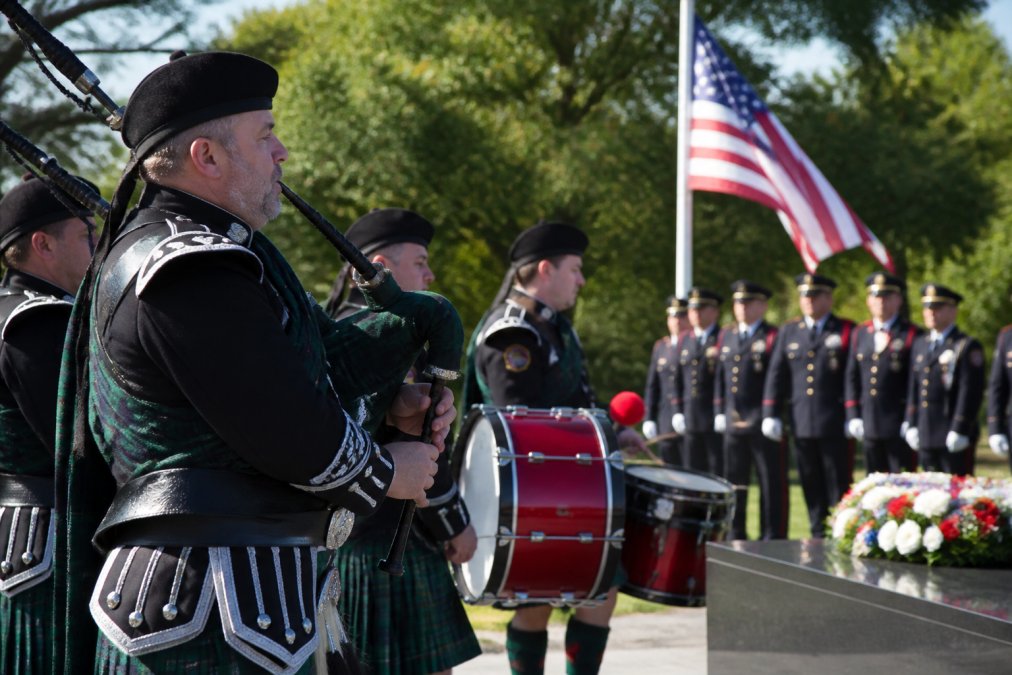
At a memorial service, the pipe and drum band typically performs at key moments, as the coffin enters, during the procession, and at the graveside. The presence of the band in full dress uniform adds visual and auditory weight to the ceremony, saying: this death is being honored by the entire community. The bagpipes also help organize large processions and maintain order, with their sound carrying across distances and commanding attention.
Amazing Grace and Other Ceremonial Pieces
While the lament is the most recognizable bagpipe piece at firefighter funerals, "Amazing Grace" is the second most common. When played on bagpipes, the familiar hymn becomes both more solemn and more powerful. Other pieces may include "Highland Funeral March," "Mist Covered Mountains of Home," and various departmental variations. Some departments have commissioned original pieces, and the choice of music can reflect the personality or background of the fallen firefighter.
Symbolism and Emotional Impact of Bagpipe Music
The bagpipes carry symbolic weight that goes far beyond the mechanics of the instrument itself. When people hear bagpipes at a firefighter funeral, they are hearing a sound associated with death, honor, and remembrance for centuries. The sound triggers an emotional response that bypasses rational thought and speaks directly to emotion.
For firefighters specifically, the bagpipes represent the fire service's connection to immigrant communities and their traditions, the military heritage of discipline and duty, and the brotherhood bound by shared risk and purpose. When a firefighter hears bagpipes at a funeral, they are hearing their own values reflected back in sound.
The bagpipes also serve as a boundary between the ordinary and the sacred. A firefighter's funeral is not a normal event. Their presence transforms it from a private family event into a public ceremony of the fire service, announcing: this death is significant. This person was part of something larger. For family members of fallen firefighters, the bagpipes can be both painful and comforting, painful because they emphasize the loss, comforting because they demonstrate that the entire community is grieving.
The Pipe and Drum Band: Honoring Fallen Comrades
Fire departments across the United States have established formal pipe and drum bands, typically made up of 8 to 20 members including bagpipes, drums, and sometimes other instruments. These bands rehearse regularly to maintain their skills and repertoire.
The pipe and drum band serves multiple functions: at funerals and memorial services, they provide the music that honors the fallen; at parades and public events, they represent the fire service to the community. Membership is typically voluntary and often unpaid, reflecting the deep meaning the bagpipe tradition holds within the fire service.
The pipe and drum band also serves an important function in the grieving process. When a firefighter dies, members of the band know they will be called upon to play at the funeral. This gives them a role in the community's response to loss, allowing them to channel their grief into performing their duty.
Evolution of Bagpipes in Modern Fire Departments
The bagpipe tradition in the fire service has evolved to reflect changes in the fire service itself and in American culture. In early days, bagpipes were played primarily by firefighters with Scottish or Irish heritage. Over time, as the bagpipe tradition became established as a fire service tradition rather than an ethnic one, people from all backgrounds began learning to play. Today, a fire department's pipe and drum band may include firefighters of Italian, African American, Hispanic, Asian American, and many other backgrounds. The bagpipes have become a shared symbol of the fire service.
The contexts in which bagpipes are played have also expanded beyond funerals to include public events, recruitment events, and community celebrations. Some departments have invested in high-quality instruments and formal training programs. Video recordings of bagpipe performances at funerals are now commonly shared online, increasing awareness of the tradition and reinforcing its significance across the fire service community.
The tradition has also become more formalized, with many fire departments establishing written policies about bagpipe use in ceremonies and training programs for bagpipers. This formalization helps ensure the tradition continues and maintains its standards.
Forming and Maintaining a Department Pipe Band
Starting and maintaining a pipe and drum band requires commitment, resources, and organizational support. The first step is identifying interested firefighters through announcements or direct outreach. The initial group typically consists of 5 to 10 people.
Once formed, the department needs to provide training through a hired bagpipe instructor. Bagpipes are notoriously difficult to learn, requiring months of practice before competent performance. A quality bagpipe costs several hundred to several thousand dollars, and drums cost hundreds. Departments must decide whether firefighters provide their own instruments or the department purchases them.
Regular rehearsals are essential, typically weekly. The band needs a director who understands bagpipe music and can lead the group. Many bands create formal uniforms combining the department's dress uniform with Scottish elements like sporrans and specific tartan patterns. As the band matures, it can perform at public events, raising awareness and recruiting new members.
Maintaining a pipe band over the long term requires sustained commitment as firefighters retire or transfer. Despite these challenges, many fire departments have maintained active pipe and drum bands for decades, passing the tradition from one generation of firefighters to the next.
Conclusion
The bagpipes in the fire service tell a story of immigration, tradition, military heritage, and the profound need to honor sacrifice. They connect today's firefighters to centuries of history and to the specific communities that shaped American firefighting. When a bagpiper plays a lament at a firefighter's funeral, they are playing the voice of the entire fire service community.
For firefighters seeking to honor this tradition and express their connection to the fire service brotherhood, gear that reflects these values matters. Black Helmet creates apparel and accessories designed specifically for firefighters who understand that the job is about more than fighting fires, it's about legacy, duty, and honoring those who came before. Explore Black Helmet's collection of firefighter apparel to find gear that truly represents the values that define your service.
Frequently Asked Questions
Why are bagpipes played at firefighter funerals?
Bagpipes are played at firefighter funerals to honor the fallen and pay solemn tribute to their service and sacrifice. The tradition stems from Scottish and Irish heritage brought to America by immigrant firefighters. The mournful, dignified sound of the pipes, especially the lament, conveys the gravity of the loss and provides ceremonial dignity to the memorial service. For the fire service community, bagpipe music has become a cultural legacy that unites uniformed personnel in collective mourning and respect for the departed.
What is the history of bagpipes in the fire service?
Bagpipes entered the American fire service through Scottish and Irish immigration in the 1800s. Many early firefighters came from these cultures and brought their musical traditions with them. The pipes were already associated with military ceremonies and funeral rites in their home countries. Over time, fire departments, particularly in major cities with large Irish-American populations, formally adopted pipe and drum bands as part of their ceremonial tradition, cementing bagpipes as a symbol of firefighter identity and honor.
Is the bagpipe tradition exclusive to Irish-American firefighters?
While the tradition has deep roots in Irish-American and Scottish-American fire service culture, bagpipes are now used across American fire departments regardless of the ethnic composition of the community. The practice has become a universal symbol of the fire service itself, transcending ethnic origins. Many departments without significant Irish or Scottish heritage have adopted pipe and drum bands as part of their ceremonial identity, recognizing the profound cultural and emotional value of the tradition to the broader firefighter brotherhood.
What does the bagpipe lament represent in firefighter ceremonies?
The bagpipe lament is a slow, mournful piece that represents grief, respect, and the solemnity of the occasion. In firefighter ceremonies, the lament conveys the weight of loss and the dignity owed to those who gave their lives in service. The haunting, mystical quality of the instrument creates an emotional resonance that words alone cannot achieve. For first responders and the community witnessing the ceremony, the lament serves as a musical tribute that honors the departed soul and acknowledges the sacrifice made by the fallen comrade and their family.
This article was written using GrandRanker
