

Sleep Strategies for Shift Work Firefighters
Table of Contents
- Why Sleep Strategies for Shift Work Matter in the Fire Service
- Understanding Circadian Rhythm Disruption and Sleep Inertia
- Firefighter Sleep Hygiene Tips You Can Start Tonight
- Napping Strategies for Fire Stations: When and How to Rest
- Firefighter Recovery After 24-Hour Shift: A Post-Shift Protocol
- Managing Light Exposure, Caffeine, and Sleep Environment
- Psychological Decompression and Family Integration
- Conclusion: Sleep as Occupational Performance
Last Updated: August 19, 2026
Why Sleep Strategies for Shift Work Matter in the Fire Service
Sleep strategies for shift work firefighters aren't a luxury, they're a survival mechanism. The 24-hour shift schedule creates a collision between your body's natural rhythms and the demands of the job. Your circadian rhythm wants consistency. Your job demands disruption. That tension costs you sleep quality, mental sharpness, and physical recovery.
Fatigue degrades decision-making in emergencies, weakens immune function, and strains relationships. Yet most firefighters approach sleep reactively, grabbing rest when they can instead of building systems that work within shift work constraints. The strategies in this guide are built on what actually works when you're rotating shifts and trying to stay sharp for the next call.
Understanding Circadian Rhythm Disruption and Sleep Inertia
Your circadian rhythm is your body's internal 24-hour clock regulating sleep-wake cycles, hormone release, body temperature, and alertness. When you work shift work, you're fighting this clock every time you try to sleep at 3 p.m. or stay alert at 2 a.m.
Sleep inertia is the grogginess and cognitive fog that hits when you wake, especially from deep sleep. For firefighters pulling a night shift, this is dangerous. You might need to respond to a call within minutes of waking. If you're still in that fog, your reaction time and judgment suffer.
Shift work sleep disorder is a real occupational health concern. Repeated disruption of your sleep-wake cycle creates chronic sleep deprivation even if you're getting enough total hours. Your sleep architecture fragments and you lose the deep, restorative stages your body needs. Recovery requires strategy, not just time.
Firefighter Sleep Hygiene Tips You Can Start Tonight
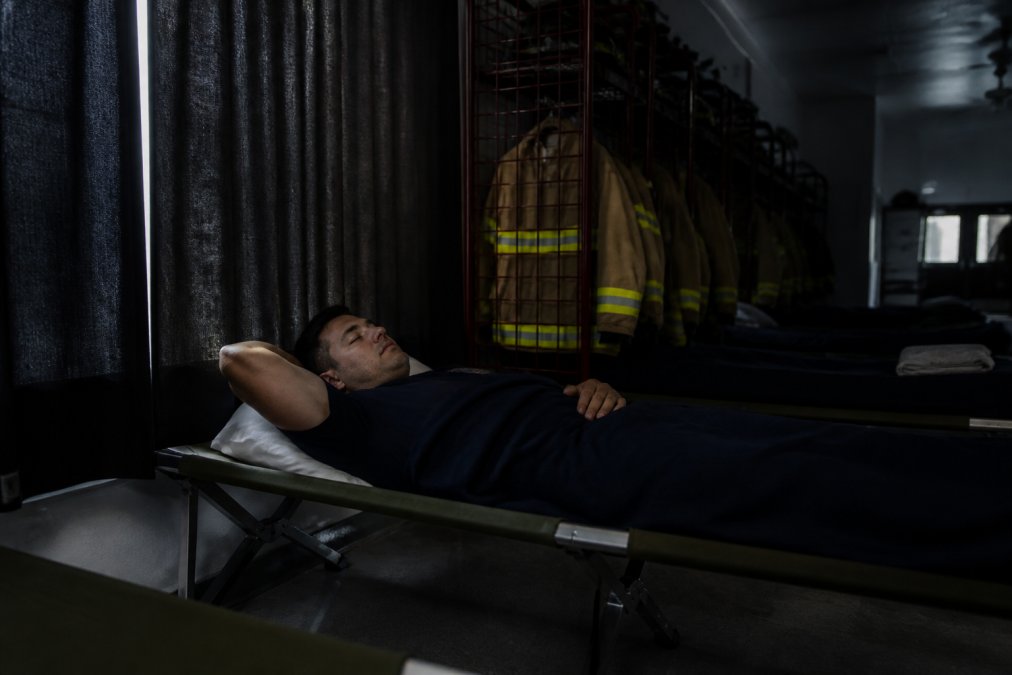
Sleep hygiene is the foundation. Control your sleep environment by keeping your bunkroom cool (65-68 degrees), dark with blackout curtains or a sleep mask, and quiet with white noise or earplugs.
Manage caffeine strategically. Caffeine has a half-life of 5-6 hours. If you drink coffee at 6 a.m., 25% is still active at 4 p.m. Stop caffeine intake at least 8-10 hours before your planned sleep window.

Establish a pre-sleep routine of 20-30 minutes of low-stimulation activity: reading, stretching, or meditation. Avoid screens, blue light suppresses melatonin production. A warm shower also triggers sleepiness.
Consistency beats perfection. Even on shift work, maintain the same sleep and wake times on your days off. Your circadian rhythm responds to consistency. Limit alcohol near bedtime as it fragments sleep quality despite initial drowsiness.
Napping Strategies for Fire Stations: When and How to Rest
Strategic napping isn't laziness. It's sleep architecture optimization when a full sleep cycle isn't available.
Short naps (10-20 minutes) boost alertness without causing sleep inertia. Medium naps (30-45 minutes) risk waking during deeper sleep, causing grogginess. Long naps (90 minutes) allow a full sleep cycle including REM and deep sleep, leaving you genuinely rested.
For firefighters on a 24-hour shift with a 2-4 hour nap window, a 90-minute nap during a quiet period can meaningfully improve cognitive function for the remainder of the shift. Timing matters, napping 2 hours before your typical wake time can disrupt nighttime sleep on your days off. Experiment during your days off first to see what works.
Firefighter Recovery After 24-Hour Shift: A Post-Shift Protocol
What you do in the 2-4 hours after your shift ends determines how well you recover.
The first 30 minutes are critical. Your body is flooded with adrenaline and cortisol. Don't force sleep. Instead, transition by changing out of gear and showering. The temperature change relaxes your nervous system.
Eat something light but substantial with protein, healthy fats, and complex carbs to bring your system back to baseline. Spend 20-30 minutes on psychological decompression. Your nervous system is still in emergency mode. Sitting quietly, walking, or talking through the shift helps your brain process the intensity. natural sleep alternatives.
Avoid screens and stimulation. Your brain needs to downshift, not stay in high-alert mode. Then sleep. By 30-45 minutes post-shift, your body should be ready. Prioritize sleep quality over duration, a solid 4 hours of deep sleep is more valuable than 7 hours of fragmented rest.
When you wake, get sunlight exposure immediately. Natural light resets your circadian rhythm and signals your body it's time to be awake. Open curtains or get outside for 10-15 minutes.
Managing Light Exposure, Caffeine, and Sleep Environment
These three factors work together to solve most sleep problems.
Light exposure is your most powerful tool. Bright light suppresses melatonin. Darkness triggers it. For shift workers, get sunlight exposure after your shift. A 20-30 minute walk in morning sunlight after a night shift accelerates your body's transition back to day schedule. Research on light therapy and circadian rhythm adjustment shows strategic light exposure reduces circadian disruption from shift work.
Caffeine management is non-negotiable. Set a hard cutoff time. For a night shift starting at 6 p.m., no caffeine after 8 a.m. You'll feel more tired initially, but your body adapts within 2-3 weeks and you'll sleep better overall.

Your sleep environment is either working for you or against you. Temperature, darkness, and sound are critical. A cool room promotes sleep. Darkness triggers melatonin. Silence allows sleep. You can't control all station noise, but you can control your bunkroom. Blackout curtains, white noise machines, and quality sleep masks are the cheapest performance upgrades you can make.
Psychological Decompression and Family Integration
Sleep strategies fail when they ignore the psychological reality of shift work. You can have perfect sleep hygiene, but if your nervous system is still in emergency mode, you won't sleep well.
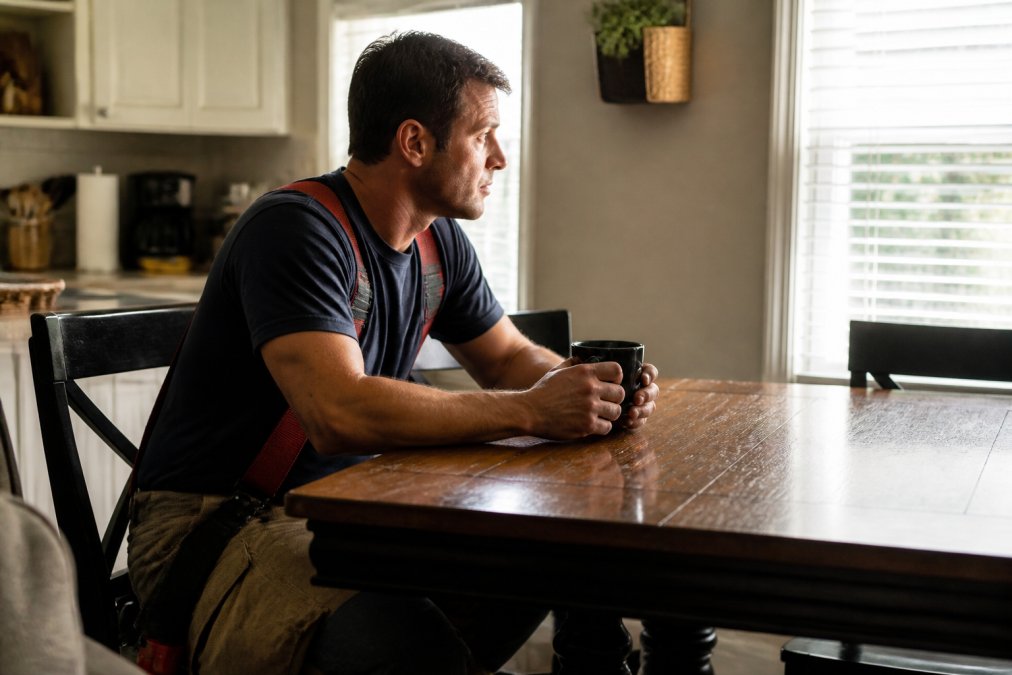
Decompression is a skill, not a luxury. After a difficult shift, your body has been in sympathetic nervous system overdrive. Sleep doesn't happen until your parasympathetic nervous system takes over.
Effective decompression techniques include:
- Journaling: Write for 10-15 minutes about the shift to externalize the experience.
- Meditation or breathing work: Box breathing (4 counts in, 4 counts hold, 4 counts out, 4 counts hold) activates your parasympathetic nervous system.
- Physical activity: A walk or light stretching discharges nervous system activation better than intense exercise.
- Talking it through: Debriefing with a crew member helps your brain process the shift.
Family integration is harder than sleep hygiene. Your family is on a normal schedule. When you're sleeping after a night shift, they're awake and need you. Set expectations about your sleep windows and communicate which days you'll be available. When you're off-shift and awake, be genuinely present.
A firefighter who's chronically sleep-deprived is more irritable and withdrawn. A firefighter who's slept well is more present and engaged. Investing in sleep strategies makes you a better family member.
Conclusion: Sleep as Occupational Performance
Sleep isn't recovery time. It's performance time. Firefighters who sleep well are sharper on calls, make better decisions, and handle the physical demands of the job better. They're also better at managing the psychological weight of the work.
The strategies in this guide, circadian rhythm awareness, sleep hygiene, strategic napping, post-shift protocols, light and caffeine management, and psychological decompression, work together. They're foundational to occupational performance in the fire service.

Start with one or two changes. Most firefighters see noticeable improvement within 2-3 weeks. Once those stick, layer in another strategy. Within 60 days of consistent implementation, you'll feel the difference. Better sleep means better alertness, faster recovery, and a more sustainable career.
At Black Helmet, we've built our brand on understanding what firefighters actually need. Quality sleep is essential.
Frequently Asked Questions
What is the 10-3-2-1-0 rule for better sleep?
The 10-3-2-1-0 rule is a countdown for sleep quality: 10 hours before bed, no more caffeine; 3 hours before, no large meals or alcohol; 2 hours before, no work; 1 hour before, no screens; 0 times you hit snooze in the morning. For firefighters on shift work, this framework helps anchor sleep hygiene tips despite irregular schedules. Adapt it to your pre-sleep window, even partial compliance improves sleep quality and alertness.
How can firefighters manage Shift Work Sleep Disorder?
Shift Work Sleep Disorder stems from circadian rhythm misalignment. Combat it by maintaining consistent sleep timing when possible, using light therapy after night shifts, and strategic caffeine use (only in the first half of your shift). Napping strategies for fire stations, like 20-30 minute power naps, can bridge sleep debt. If symptoms persist (chronic fatigue, difficulty focusing), consult a sleep specialist. Many departments now recognize SWSD as a health priority.
What's the best way to recover sleep after a 24-hour shift?
Firefighter recovery after 24-hour shift requires a structured protocol: avoid long sleep immediately after work (it worsens sleep inertia); instead, take a short walk, eat a light meal, and stay in daylight for 30 minutes. Then sleep 90-120 minutes to complete a full sleep cycle. That night, aim for 7-9 hours. Avoid alcohol and heavy meals, which fragment sleep. This two-phase approach prevents grogginess and rebuilds sleep debt faster than crashing immediately.
Does sleep deprivation really impact firefighter performance on emergency calls?
Yes. Sleep deprivation degrades reaction time, decision-making, and situational awareness, all critical during emergency response. Research shows that 24 hours without sleep impairs cognitive function as much as a 0.10% blood alcohol level. Firefighters operating on poor sleep architecture make more errors in rescue operations and face higher injury risk. Prioritizing sleep strategies for shift work isn't just wellness, it's occupational safety and accountability to your crew and the public.
Your sleep quality directly impacts your performance on the job and your wellbeing off-duty. Implement these sleep strategies for shift work firefighters consistently, and you'll recover faster between shifts. The recovery compounds. Over months and years, prioritizing sleep becomes the difference between a sustainable career and burnout. That's worth the discipline it takes to get right.
This article was written using GrandRanker
