

Is Firehouse Culture Changing Today: A Guide for Fire Service Leaders
Table of Contents
- Is Firehouse Culture Changing Today: The Reality
- Defining Modern Firehouse Culture vs. Traditional Standards
- Recognizing Toxic Firehouse Culture and Its Impact
- Fire Department Leadership Strategies for Cultural Shifts
- Firefighter Mental Health Awareness as a Cultural Pillar
- Fire Department Recruitment and Retention in a Changing Culture
- Building Crew Cohesion Without Compromising Professionalism
- Conclusion: The Future of Fire Service Culture
Last Updated: August 7, 2026
Is Firehouse Culture Changing Today: The Reality
Yes, firehouse culture is changing today. The transformation is real, measurable, and reshaping how fire departments operate at every level. What once felt immovable, traditions, hierarchies, communication styles, and what it meant to belong, is now under scrutiny and being rebuilt.
The shift is driven by generational turnover, recruitment challenges, mental health awareness, diversity initiatives, and a fundamental reckoning with what "tradition" actually means versus what's simply toxic. Fire departments face a choice: evolve intentionally or watch talented people leave.
At Black Helmet, we've spent years listening to firefighters across the country. This guide explores what's actually changing, why it matters, and how fire service leaders can navigate cultural shifts without losing the brotherhood that defines the job.
Defining Modern Firehouse Culture vs. Traditional Standards
Modern firehouse culture balances operational excellence and crew safety with respect, inclusion, and psychological health. Traditional standards emphasized hierarchy, toughness, and "that's how it's always been done" without questioning whether those methods actually worked.
Tradition and toxicity have been conflated for decades. Not every old practice is bad, mentorship, accountability, crew loyalty, and mission-first thinking remain foundational. But hazing, exclusion, silence around mental health, and dismissing concerns as "weakness" are dysfunction masquerading as culture.
Psychological safety is now non-negotiable. Crews that trust each other enough to admit mistakes, ask for help, and speak up perform better under stress. Departments that create space for honest conversation see fewer injuries, better decision-making, and stronger team cohesion.
Diversity and inclusion are business imperatives. Recruiting from the broadest possible pool means better candidates and better representation of the communities you serve. A crew that includes women, people of color, and people from different backgrounds isn't diluting the brotherhood, it's expanding it.
Mental health awareness is shifting from stigma to standard practice. Firefighters face PTSD, depression, and suicide at rates that demand response. Departments that integrate peer support, wellness programs, and access to mental health resources see better retention and healthier crews.
Communication has evolved. The command-and-control model is paired with transparency, explanation, and feedback loops. Younger firefighters want to understand the "why" behind decisions. Senior leadership that explains strategy and listens to frontline input makes better calls and builds buy-in faster.
Accountability works differently. Modern culture means holding each other to a standard that serves the mission and the crew, addressing misconduct, poor performance, and behavior that undermines trust.
Recognizing Toxic Firehouse Culture and Its Impact
A toxic firehouse environment damages operational readiness, recruitment, retention, and the mental health of the people inside it.
Signs of toxic firehouse culture include: hazing and initiation rituals that humiliate recruits, silence around mental health struggles, exclusion based on identity, retaliation against people who speak up, substance abuse normalized as tradition, misconduct protected by loyalty, communication that shuts down questions, and burnout treated as character-building rather than a systemic problem.
The impact is severe. Toxic departments lose good people to burnout and resignation, struggle with recruitment, face legal liability, and see higher rates of suicide, substance abuse, and PTSD. Operationally, they make worse decisions because people don't speak up about problems. A crew that doesn't trust each other, that's afraid to admit mistakes, that's dealing with untreated mental health crises, is not at its best when lives depend on it.
Fire Department Leadership Strategies for Cultural Shifts
Senior leadership sets the tone for cultural change, and that leadership has to be visible, consistent, and willing to make hard calls.
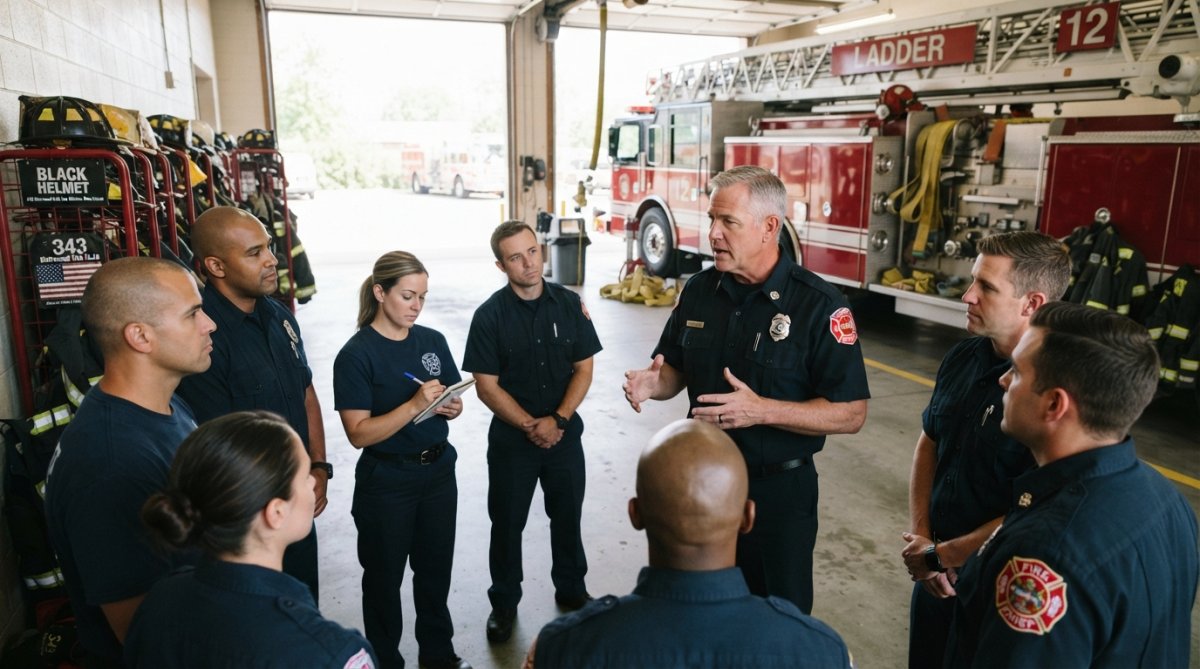
Lead from the front on the behaviors you want to see. If you want crews to speak up about problems, ask questions and listen without defensiveness. If you want mental health to be normalized, model it, talk about your own wellness, and treat someone asking for help as a sign of strength. If you want respect across differences, actively include people from different backgrounds in decision-making and visibly shut down exclusionary behavior.
Make the case for change before you mandate it. Explain why the shift matters in concrete terms: better recruitment, reduced turnover, improved safety, and fewer people in crisis.
Set clear behavioral standards and enforce them consistently. Define what professionalism, respect, and accountability look like, then hold everyone to that standard, including senior staff.
Address generational gaps directly. Create spaces where different generations can understand each other's experience and build respect across it.
Support the middle managers who have to execute change. Captains and lieutenants are caught between senior leadership pushing change and crews resistant to it. Give them tools, training, and cover.
Measure what matters. Track retention, recruitment pipeline, mental health resource use, and crew feedback. Share the data transparently.
Firefighter Mental Health Awareness as a Cultural Pillar
Mental health awareness is foundational to firehouse culture. The fire service has one of the highest rates of suicide among first responders. For decades, the response was silence. That culture killed people.
Modern fire departments are flipping that script. Mental health awareness means:
Normalizing the conversation. Mental health struggles are a normal response to abnormal stress. Departments that talk openly about mental health see more people seeking help early.
Providing access to real resources. Peer support programs, confidential counseling, and crisis hotlines are operational necessities.
Training senior staff to recognize and respond to crisis signs. Captains and officers need to know what depression, PTSD, and suicidal ideation actually look like and how to have the conversation.
Removing barriers to help-seeking. If a firefighter knows that admitting they're struggling could end their career, they won't seek help. Departments need explicit policies protecting people who access mental health resources.
Building peer support into organizational health strategy. Firefighters trust other firefighters. Peer support programs are more effective than external counseling alone.
Fire Department Recruitment and Retention in a Changing Culture
Fire departments across the country are struggling to recruit and retain quality candidates. Culture is a major factor.
Younger recruits evaluate fire departments differently than previous generations. They're asking about mental health support, diversity, work-life balance, and whether the culture will respect them as a person. Candidates from underrepresented backgrounds are cautious about joining departments with a history of exclusion.
Retention strategies in a changing culture:
Create clear advancement pathways and transparent promotion criteria. Invest in structured mentorship programs that build relationships and show recruits that senior staff are invested in their success. Address work-life balance and provide mental health support. Celebrate the crew you have through genuine recognition and appreciation. Build community, the strongest retention tool is belonging.
Building Crew Cohesion Without Compromising Professionalism
The fear many senior firefighters have is that cultural change will destroy crew cohesion and brotherhood. That's a misunderstanding of what cohesion actually is.
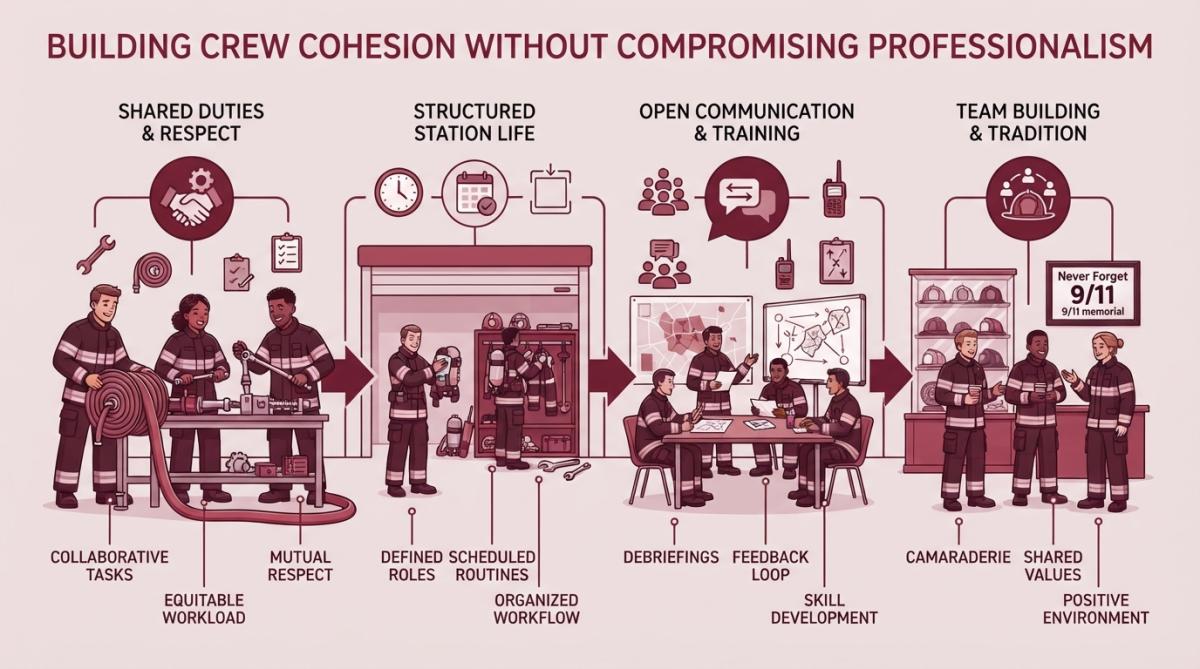
Real crew cohesion isn't built on shared hazing experiences or loyalty that overrides accountability. It's built on trust, shared mission, and mutual respect.
Shared purpose around the mission of saving lives and protecting property creates strong cohesion. Interdependence in dangerous situations creates bonds based on competence and reliability. Respect across differences makes crews stronger and more creative. Accountability that works both ways increases trust. Fun and connection, station cooking, inside jokes, shared experiences, build bonds without requiring hazing.
Professionalism doesn't mean coldness. It means doing your job well, following standards, and treating people with respect while maintaining the human connections that make a crew feel like a crew.
Conclusion: The Future of Fire Service Culture
The fire service is at an inflection point. Departments that are building culture proactively, addressing mental health, recruiting broadly, removing hazing, creating psychological safety, and developing leaders who can navigate change are attracting better candidates, retaining good people, and operating more effectively.
The brotherhood isn't disappearing. It's evolving. The crews that will define the next 20 years of the fire service will be the ones that understand that respect, inclusion, and accountability don't weaken the mission, they strengthen it.
The best of fire service culture is still there. The mission-first thinking, the willingness to run toward danger, the commitment to your crew, the pride in the work. What's changing is that more people get to be part of it, and the path to belonging doesn't require proving yourself through humiliation.
At Black Helmet, we've always believed that firefighter culture is built on respect for the job and respect for the people doing it. Our Firehouse Standard Premium Tee and other gear are designed for firefighters who understand that professionalism and pride in the brotherhood aren't in conflict, they're the same thing.

The future of firehouse culture belongs to departments and firefighters who are willing to ask hard questions, make hard changes, and build something that works for everyone.
The fire service you're building today sets the standard for the next generation. Black Helmet stands with firefighters who are committed to both excellence and respect. Explore our collection of firefighter apparel and accessories designed for crews that take their professionalism, and their brotherhood, seriously. Discover products that reflect your values and your pride in the fire service.
| Cultural Element | Traditional Approach | Modern Approach | Impact |
|---|---|---|---|
| Mental Health | Silence, stigma | Open conversation, resources | Better retention, fewer crises |
| Recruitment | Limited to traditional sources | Broad outreach, inclusive messaging | Access to better talent |
| Hazing | Initiation ritual, "toughening up" | Structured mentorship, clear standards | Faster integration, better safety |
| Leadership | Command-and-control | Transparent, collaborative | Better buy-in, faster decision-making |
| Accountability | Loyalty over standards | Consistent enforcement | Trust across the crew |
| Diversity | Homogeneous crews | Intentional inclusion | Stronger problem-solving, better community trust |
EXTERNAL CITATIONS:
For information on firefighter mental health and suicide prevention, the National Suicide Prevention Lifeline resources for first responders provides evidence-based guidance on crisis support and peer intervention.
Research on organizational culture and safety outcomes is documented in NFPA guidance on fire department operations and crew dynamics, which emphasizes the connection between psychological safety and operational readiness.
For recruitment and retention best practices in emergency services, International Association of Fire Chiefs leadership development resources offers frameworks for building sustainable organizational health during periods of cultural transition.
Frequently Asked Questions
What is the biggest challenge facing the fire service today regarding firehouse culture?
The fire service faces a generational shift where younger firefighters expect mental health support, inclusion, and transparent leadership, values that clash with traditional hazing and hierarchical silence. Departments struggle to retain talent because burnout, untreated trauma, and toxic environments drive recruits away. Senior leadership must balance respect for fire service tradition with accountability for behavior that harms operational readiness and crew safety.
How can fire departments address toxic firehouse culture without losing tradition?
Distinguish tradition from toxicity. Tradition includes mentorship, discipline, and mission-first values. Toxicity includes hazing, silence about mental health, and abuse of authority. Implement clear behavioral standards, hold all ranks accountable equally, create peer support systems, and train leaders on conflict resolution. Grassroots movements from crew members often drive faster change than top-down mandates. Respect the brotherhood while protecting firefighter wellness.
What role does firefighter mental health awareness play in cultural change?
Mental health awareness transforms firehouse culture by normalizing help-seeking and peer support. Departments that integrate mental health training, stress management, and access to counseling see improved retention and operational readiness. When senior leadership openly discusses firefighter wellness and removes stigma, crew members feel safer reporting trauma, preventing burnout and suicide. Mental health integration is not soft, it's a core operational strategy that strengthens accountability and integrity.
How does fire department recruitment and retention connect to cultural shifts?
Departments with healthy cultures recruit and retain talent faster. Younger firefighters research station reputation, leadership style, and inclusion policies before applying. Toxic environments drive experienced firefighters into early retirement, forcing costly recruitment cycles. Departments that invest in succession planning, mentorship, and diverse hiring see stronger crew cohesion and mission-first performance. Cultural health directly impacts your ability to staff stations and respond effectively.
This article was written using GrandRanker
