

How to Order Custom Station Shirts: A Step-by-Step Guide
Table of Contents
- What You'll Need Before Ordering Custom Station Shirts
- Fire Department Apparel Design Ideas and Logo Submission
- Best Fabric for Firefighter Station Wear
- Firefighter Apparel Embroidery vs Screen Printing
- Customization Options and Personalization for Your Order
- Custom Firefighter Shirt Order Form Template and Group Ordering Logistics
- Pricing Structures, Volume Discounts, and Shipping Timelines
- Common Mistakes to Avoid When Ordering Station Shirts
- Frequently Asked Questions
Last Updated: September 2, 2026
What You'll Need Before Ordering Custom Station Shirts
Gather accurate crew measurements, a finalized department logo in digital format, and realistic timelines before placing your order. Most departments underestimate the approval process, factor in at least two weeks for design proofs and feedback cycles, even with expedited services.
Collect precise measurements from everyone wearing the shirts; don't estimate. Decide whether you're ordering embroidered pieces, screen-printed designs, or a mix of both, as each has different minimum order quantities and pricing. Have your department logo ready as vector artwork (AI or EPS files), which scales cleanly without pixelation. Raster images like JPGs or PNGs produce poor results on apparel.
Establish a budget and timeline with your crew or department leadership. Custom station shirts represent your station's identity, so get buy-in from the people wearing them to prevent costly revisions and ensure satisfaction.
Fire Department Apparel Design Ideas and Logo Submission
Fire department apparel design should balance tradition with clarity, honoring fire service heritage without looking dated. Consider what makes your crew unique: station number, location, specialty (rescue, hazmat, EMS), or a meaningful motto.
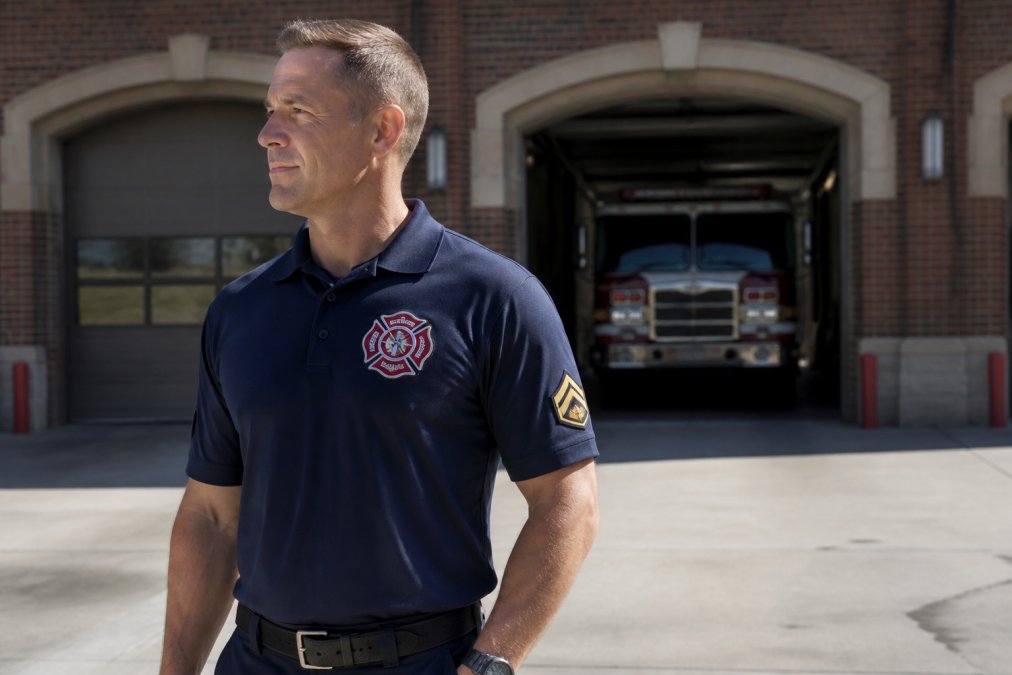
Your design must work at multiple sizes. What looks sharp on a 4-inch chest embroidery may become illegible when scaled down to a 2-inch sleeve patch. Test your artwork at actual sizes before committing to production.
Incorporate your station number, crew names, or a meaningful symbol representing your unit's mission. Many departments feature station history, local landmarks, or the traditional Maltese cross. Whatever you choose should resonate with the people wearing it.
Design File Requirements
For embroidery, submit vector files in Adobe Illustrator (AI), EPS, or PDF formats. These are scalable and convert to embroidery machine files without quality loss. If you only have a JPG or PNG logo, you'll need to have it digitized, which adds time and cost.
Screen printing requires high-resolution artwork at 300 DPI at final print size. Vector files are preferred for crisp edges, but high-quality raster images work if large enough. Avoid low-resolution social media graphics or small website logos, they'll print blurry.
Include multiple formats if possible and specify color references: full color, single color, or specific Pantone color match. This prevents surprises when your shirts arrive.
Design Proof and Approval Process
After submitting artwork, the apparel company will create a digital proof showing exactly how your design will appear on the finished shirt. Review placement, size, color accuracy, and overall appearance carefully. Most providers allow 2-3 revisions included in the order price.
Be specific in feedback: "move the logo 1 inch higher" is clearer than "move it left." The approval process typically takes 3-5 business days per round. Once you approve the proof, production begins immediately, there's no going back to request major changes without additional fees.
Best Fabric for Firefighter Station Wear
Cotton-poly blends dominate the market because they balance durability, comfort, and affordability. Pure cotton is softer but shrinks easily and wears out faster. Pure polyester is durable but doesn't breathe well.
Look for fabrics with at least 6 ounces per square yard weight (astm.org). This density ensures the shirt holds up to industrial wash cycles and repeated wear. Lighter fabrics pill, fade, and lose shape quickly.
Moisture-wicking properties matter for active crews, keeping firefighters comfortable during training or station activities, though this is a nice-to-have rather than essential for casual station wear.
Cotton-Poly Blends and Industrial Wash Performance
A 50/50 cotton-poly blend or 60/40 blend offers the best combination of comfort and durability (peer-reviewed research). Cotton provides breathability and softness, while polyester adds strength and reduces shrinkage. These blends maintain their shape after dozens of industrial wash cycles without significant fading or pilling.
Look for fabrics specifically marketed as "commercial laundry friendly" or tested for institutional washing. Cheap blends shrink unpredictably, fade rapidly, and develop holes within months.
Preshrunk fabrics are essential. Before manufacturing, material should be washed and dried to remove residual shrinkage. Verify with your apparel provider that fabrics are preshrunk before ordering.
Firefighter Apparel Embroidery vs Screen Printing
Embroidery uses thread to stitch your design directly onto fabric, creating a three-dimensional, textured finish. Screen printing uses ink to apply your design to the shirt surface, producing a flat, smooth appearance. Neither is objectively better; the choice depends on your design, budget, and preferences.
Embroidery is more durable for logos seeing heavy wear. Stitched threads don't crack or fade like ink can, and embroidered designs look sharp at any size. The downside: embroidery costs more per unit, especially for small orders and multi-color designs. Embroidery works best on chest logos and sleeves; large back designs become bulky and uncomfortable.
Screen printing costs less per shirt, especially for larger orders and multi-color designs. It's ideal for large back graphics, full-color designs, and photographic elements. The tradeoff: screen-printed designs fade faster with heavy washing and repeated wear.
Durability and Graphic Placement Considerations
For station shirts needing to last through years of washing, embroidery generally outperforms screen printing. Stitched thread resists fading and cracking far better than ink. If your crew washes shirts in industrial machines weekly, embroidery is the safer choice for logos and text.
Chest and sleeve placements work well with both methods. Back designs are more durable with screen printing because embroidery on large back areas creates stiffness and can pull at fabric. Consider a hybrid approach: embroidered chest logo with screen-printed back design to balance aesthetics, durability, and cost.
Customization Options and Personalization for Your Order
Custom station shirts should reflect your crew's identity. Beyond the department logo, you can add rank insignia, individual names, station numbers, and meaningful text. These personal touches transform generic apparel into gear that means something to the people wearing it.
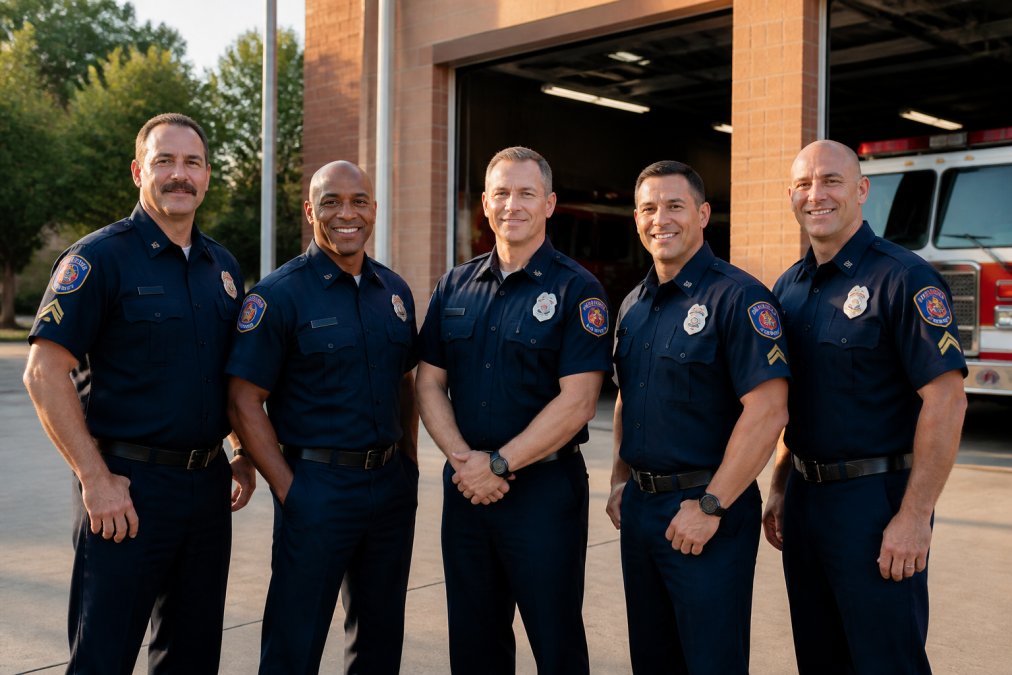
Most apparel providers offer customization options; you're only limited by budget and imagination. Keep designs clean and readable to avoid visual clutter.
Rank and Name Placement
Rank insignia is typically placed on the sleeve, either embroidered or screen-printed. Names go on the chest below the department logo or on the back. This placement mirrors actual fire service uniforms.
When ordering personalized shirts, provide a complete roster with correct spelling for every name. Misspelled names are expensive to fix. Double-check your list three times before submitting. Include rank abbreviations and titles if applicable.
Sans-serif fonts (Arial, Helvetica) are cleaner and more legible than script or decorative fonts. Discuss font options with your apparel provider early, as some fonts cost extra or aren't available for embroidery.
Size Breakdown and Fit Options
Getting sizes right is critical. Collect measurements from everyone, not just shirt sizes. Chest measurement, sleeve length, and torso length matter. Different brands fit differently.
Most quality apparel comes in multiple fit options: standard fit, slim fit, and relaxed fit. Standard fit works for most crews. Request a sample shirt before ordering the full batch if possible to prevent ordering fifty shirts that don't fit anyone.
Custom Firefighter Shirt Order Form Template and Group Ordering Logistics
Organizing a group order requires a system to collect information from multiple people, track preferences, and manage approvals. A simple spreadsheet prevents confusion and ensures nothing gets missed.
Here's a basic template for collecting group order information:
| Firefighter Name | Rank | Size | Shirt Color | Embroidery Placement | Special Requests |
|---|---|---|---|---|---|
| John Smith | Captain | L | Navy | Chest + Sleeve | None |
| Sarah Johnson | Firefighter | M | Navy | Chest + Sleeve | None |
| Mike Davis | Paramedic | XL | Navy | Chest + Sleeve | None |
Customize this template based on your specific needs.
Managing Bulk Orders and Minimum Order Quantities
Most apparel providers require minimum order quantities of 12-25 shirts for custom embroidery or screen printing. If your crew is smaller than the minimum, consider ordering extra shirts for future recruits or promotional events.
Bulk pricing tiers usually apply at 25, 50, 100, and 250 units, with per-shirt costs dropping significantly at each tier. If ordering for multiple stations or planning ahead, larger quantities save money. However, ensure you actually need that many shirts.
Using an Order Portal for Station Crews
Many apparel companies provide online order portals where crew members can select preferences, upload designs, and track production. A good portal allows crew members to select sizes, colors, and personalization options independently and provides real-time production updates.
If your apparel provider doesn't have a portal, create a shared document or spreadsheet. Assign one person as coordinator to manage submissions, collect payment, and communicate with the apparel company.
Pricing Structures, Volume Discounts, and Shipping Timelines
Custom station shirts cost more than off-the-shelf apparel, but you're paying for quality, durability, and personalization. Pricing breaks down into three components: base shirt cost, customization cost (embroidery or screen printing), and setup fees.
Base shirt costs vary by fabric quality and brand. Customization costs vary by method and complexity; embroidery costs more per unit than screen printing, especially for multi-color designs. Setup fees (typically $25-$75 per design) are one-time charges.
Volume discounts kick in at specific thresholds. An order of 25 shirts might cost $28 per unit, while 50 shirts drops to $24 per unit. At 100 units, you might pay $20 per unit.
Standard turnaround is typically 2-3 weeks from approved proof to shipped order (ppai.org). Expedited options (1-2 weeks) cost extra. During peak seasons, standard turnaround may extend to 3-4 weeks. Factor shipping into your total budget; it can add $30-$100+ depending on order size and location.
Common Mistakes to Avoid When Ordering Station Shirts
The biggest mistake is rushing the design approval process. Mistakes caught in the proof stage are free to fix; mistakes discovered when shirts arrive are expensive. Review every proof thoroughly.
Underestimating turnaround time forces expedited orders that cost extra or result in missed deadlines. Start the process at least 6-8 weeks before you need the shirts.
Collecting inaccurate measurements causes fit problems. Require actual measurements, not guesses. Submitting low-quality artwork requires back-and-forth revisions. Invest time upfront to prepare clean, professional artwork files.
Changing designs mid-production wastes money. Lock in your design before approval, then stick with it. Not reading the fine print on policies causes problems. Understand the provider's revision, cancellation, and return policies before ordering.
Ordering custom station shirts is an investment in your crew's identity and morale. The process requires planning, clear communication, and attention to detail, but the payoff is apparel that your firefighters will wear with pride. Start early, review proofs carefully, and don't hesitate to ask your apparel provider questions. Quality custom station shirts represent your department's commitment to professionalism and brotherhood. Our premium tees like the Firehouse Standard Premium Tee and Fire Rescue Thin Red Line Premium Tee start at $34.50 and are built to withstand years of wear. Whether you're outfitting a single crew or coordinating a department-wide order, we understand the importance of getting it right. Get started with Black Helmet and create custom station shirts that honor your crew's service and legacy.


Frequently Asked Questions
Q: How long does it typically take to receive custom station shirts after ordering?
A: Turnaround time depends on your order size and customization method. Always confirm the exact turnaround time with your supplier before placing your order, especially if you need shirts for a specific event or station event.
Q: What's the difference between embroidery and screen printing for custom firefighter apparel?
A: Screen printing applies ink directly to the fabric, offering vibrant colors and detailed graphics at lower costs for large orders. Embroidery uses thread to create a raised, textured design that's extremely durable and professional-looking. For fire department apparel with rank and name placement, embroidery provides superior durability through industrial wash cycles and looks more formal. Screen printing works better for large graphic designs and is more budget-friendly for bulk orders.
Q: What fabric should I choose for station wear that needs to withstand frequent washing?
A: Cotton-poly blends (typically 65% polyester and 35% cotton) are ideal for firefighter station wear. This combination provides moisture-wicking properties, excellent durability through industrial wash cycles, and maintains shape and color better than 100% cotton. The polyester resists shrinkage and fading, while the cotton blend keeps the shirt comfortable for all-day wear. Look for fabric weights of 6 ounces or heavier for maximum durability.
Q: Can I order custom station shirts in bulk for my entire crew, and what's the minimum order quantity?
A: Yes, most custom apparel providers offer group ordering for fire departments and station crews. Minimum order quantities typically range from 12-24 shirts depending on the customization method and supplier. Bulk orders usually qualify for volume discounts, reducing the per-shirt cost significantly. Using an order portal or spreadsheet template helps manage sizes, names, and ranks across your crew. Contact your supplier directly to discuss your crew's specific needs and available bulk pricing options.
This article was written using GrandRanker
