

How to Maintain Flame Resistant Firefighter Clothing
Table of Contents
- Step 1: Read the Care Label and Manufacturer Instructions
- Step 2: How to Wash Flame-Resistant Clothing Correctly
- Step 3: How to Dry Flame-Resistant Clothing Safely
- Step 4: FR Garment Inspection and Repair After Each Wash
- Step 5: Understand Flame-Resistant Clothing Lifespan and Replacement
- Step 6: Contamination Control and Storage Between Calls
- Step 7: Professional Cleaning and Department-Level Care Programs
- Frequently Asked Questions
Last Updated: October 20, 2026
Step 1: Read the Care Label and Manufacturer Instructions
Knowing how to maintain flame resistant firefighter clothing starts with the care label, and skipping it is the most common mistake we see. Every piece of flame-resistant clothing comes with manufacturer instructions for a reason. Those rules protect the protective properties built into the fabric.
Flame-resistant clothing is garment apparel engineered to resist ignition and self-extinguish once a heat source is removed. The protection lives in the fibers and the fabric treatment, not in a coating you can reapply. Wash it wrong and you can wear that protection down over time.
So start here:
- Find the care label inside the garment, usually at the side seam or collar
- Note the water temperature, cycle, and drying method it lists
- Check whether the maker requires professional cleaning
- Write the details down for your station's laundry area
Different FR garments carry different rules. A cotton-blend shirt and a heavier turnout coat are not washed the same way. Follow the label for that specific item, every time.
Step 2: How to Wash Flame-Resistant Clothing Correctly
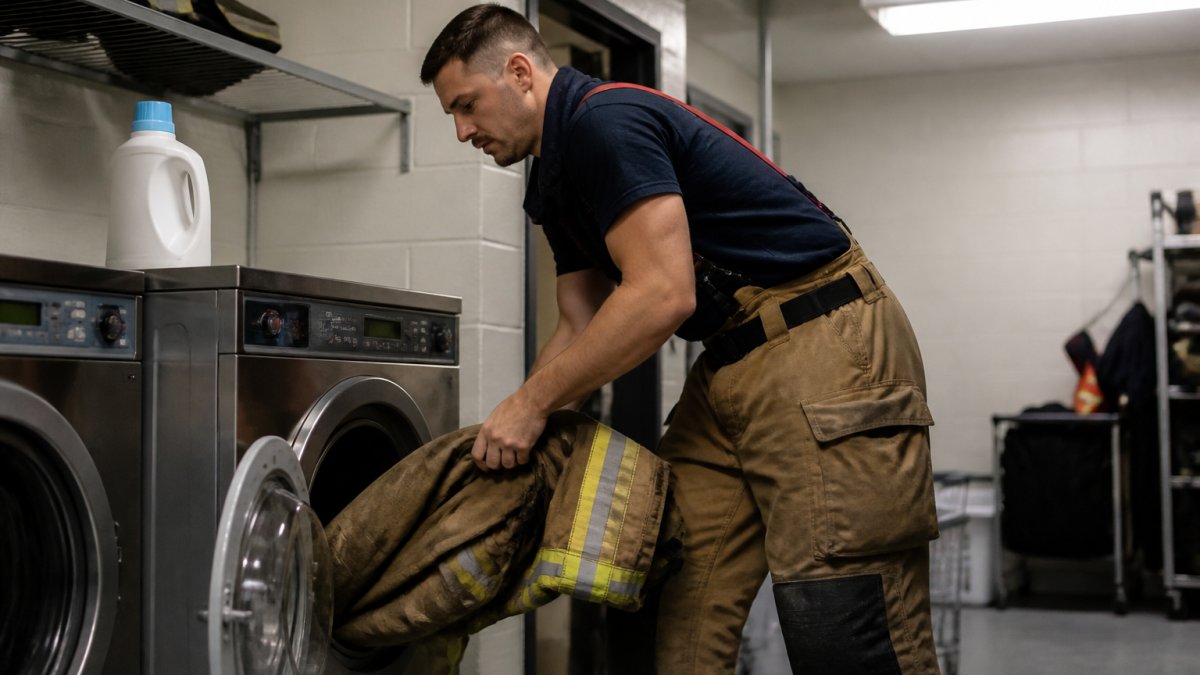
Wash FR garments separately from regular laundry, in a standard machine wash on a normal or cotton cycle. Use a mild liquid detergent and warm water, and skip anything that coats the fabric. That is the short version. Here is how to get it right.
Water Temperature, Cycle, and Detergent Choices
Warm water around 140°F works for most FR clothing, but confirm against the care label first. A normal or cotton cycle gives the fabric room to move and rinse clean.
For detergent, pick a standard liquid detergent with no added softeners or brighteners. A few ground rules:
- Use the amount the detergent label recommends, not more
- Skip detergent pods if the label warns against them
- Never mix FR clothing with oily rags or shop towels
What to Avoid: Bleach, Fabric Softener, and Starch
Three things damage FR clothing faster than anything else: bleach, fabric softener, and starch. All three leave residue or break down fibers.
Bleach and peroxide strip color and weaken fabric. Fabric softener and dryer sheets coat the fibers, which can trap flammable residues and cut the fabric's ability to self-extinguish. Starch and other home remedies add a flammable film on top of the garment.
Pre-treat harsh stains like cooking oils or grease with a small amount of liquid detergent before washing. Let it sit a few minutes, then wash as normal. Pre-soak heavy soil in warm water with detergent, never with bleach.
Step 3: How to Dry Flame-Resistant Clothing Safely
Tumble dry on low heat, or air dry and line dry when you can. High heat is the enemy here. It can shrink fabric, weaken fibers, and shorten the life of the garment.
Follow the care label for the exact setting. If it says air dry, hang the item on a line or a sturdy rack with good airflow. If you tumble dry, use the lowest heat setting and pull the garment out while it is still slightly damp.
A few habits that protect the fabric:
- Clean the lint trap before every load
- Do not overload the dryer
- Avoid dryer sheets entirely
- Let garments cool before folding or storing
Step 4: FR Garment Inspection and Repair After Each Wash
Inspect every FR garment after each wash, before it goes back on the rack. For firefighter PPE, inspection is not a quick glance, it is a structured check of the entire ensemble, including turnout coats, pants, hoods, gloves, and any station wear worn underneath. This five-minute habit is what separates gear that lasts from gear that fails.
Here is what to check, garment by garment:
- Turnout coats and pants: Look for holes, tears, thin spots, and shiny areas that indicate heat damage. Check the outer shell for abrasion, the moisture barrier for cracks or delamination, and the thermal liner for compression or charring. Pay close attention to high-wear zones: knees, elbows, cuffs, and shoulders.
- Seams and stitching: Inspect all seams for loose threads, split stitching, or pulled threads. Seams that hold the moisture barrier and thermal liner are critical, a failed seam can compromise the entire garment's protective envelope.
- Closures: Test zippers, snaps, and hook-and-loop closures. They should hold securely and release smoothly. A zipper that no longer stays closed or hook-and-loop that has lost its grip is a failure point that can expose skin to heat and contaminants.
- Trim and reflective tape: Check for peeling, cracking, fading, or missing segments. Reflective trim is not just visibility, it is part of the garment's design and can affect overall performance.
- Contamination: Look for soot, oil, or chemical residue that remains after washing. Persistent staining or odor can indicate contamination that routine laundering cannot remove.
- Hoods and gloves: Inspect hoods for holes, thin spots, and damaged seams. Gloves should be checked for tears, stiffness, and degraded grip. Both are often overlooked but are critical to the ensemble's protection.
Small repairs like a loose button or a minor seam can often be fixed according to manufacturer instructions. Structural damage to the protective fabric itself, holes, tears, delamination, or heat damage, usually means retirement, not repair. When in doubt, pull the item from service and have it checked by a qualified inspector. Follow your department's policy and the manufacturer's guidance for repair and retirement decisions.
A simple inspection log for each garment helps track wear over time and supports retirement decisions.
Step 5: Understand Flame-Resistant Clothing Lifespan and Replacement
There is no single expiration date for FR clothing, which is why how to maintain flame resistant firefighter clothing matters so much. Lifespan depends on the fabric, how often it is worn, and how well it is cared for. A well-maintained garment can serve for years. A neglected one can lose its protective properties far sooner.
Retire a garment when you see:
- Holes or tears that cannot be properly repaired
- Fabric that has become thin, stiff, or shiny
- Fading or charring that suggests heat damage
- Contamination that repeated washing will not remove
- A care label that is gone and the maker's guidance is unknown
Track your gear. A simple log of purchase date, wash cycles, and inspections gives you a real picture of service life. Many departments build retirement criteria into their written care program so the decision is not left to guesswork.
Step 6: Contamination Control and Storage Between Calls
Contamination is the quiet threat. Soot, oils, and chemical residue settle into fabric and stay there if you do not wash them out. Over time, that buildup can affect both the protective fabric and firefighter health. Firefighter PPE is exposed to a wide range of contaminants, from combustion byproducts to chemical agents, and handling gear correctly between calls is part of protecting the crew.
Keep contaminated gear away from clean gear. Store soiled items in a separate bag until they can be washed, and never toss dirty turnout gear in the same locker as your station shirts. Bag contaminated gear at the scene, not at the station. A dedicated gear bag keeps soot and residue off your apparatus seats and out of your living quarters on the ride back.
For storage between calls:
- Hang garments on sturdy hooks in a dry, ventilated space. Avoid cramming gear into tight lockers where moisture can trap.
- Keep gear out of direct sunlight for long periods. UV exposure can degrade fabrics and trim over time.
- Never store FR clothing in a sealed plastic bag while damp. Moisture trapped against the fabric can promote mildew and fabric damage.
- Keep clean items separate from gear exposed to a fire scene. Use separate bags or compartments for clean station wear and contaminated PPE.
- Inspect storage areas regularly for moisture, pests, and contamination. A clean, dry storage environment is part of gear readiness.
For departments, a written contamination-control policy, covering bagging, transport, storage, and cleaning, helps ensure every member follows the same steps and reduces exposure risks.
Step 7: Professional Cleaning and Department-Level Care Programs
Some FR garments, especially heavy turnout gear, call for professional cleaning and advanced inspection. A qualified cleaner uses the right equipment and can spot damage the eye misses. Check the care label first, since some makers require it.
For departments, a written care program beats scattered habits. A solid program covers:
- Who inspects gear and how often
- Where and how gear gets washed
- Clear retirement and repair criteria
- Records for each garment
- Training so every member follows the same steps
The brotherhood runs on discipline, and gear care is part of that.
A simple tracking sheet keeps a program honest:
| Check | Frequency | Who Does It | What to Record |
|---|---|---|---|
| Visual inspection | After each wash | Wearer | Damage, contamination |
| Deep inspection | Quarterly | Officer or inspector | Seam and fabric wear |
| Professional cleaning | Per label or need | Assigned cleaner | Date, garment ID |
| Retirement review | Annually | Department lead | Pass or retire decision |
Frequently Asked Questions
How should I care for flame-resistant (FR) clothing?
Follow the care label and manufacturer instructions for your specific FR garment. In general, machine wash separately from regular clothing using a mild liquid detergent and warm water not exceeding 140°F on a normal cycle. Avoid bleach, fabric softeners, and starch because they can leave flammable residues or coat the fibers. Tumble dry on low heat or line dry, and inspect the garment after each wash for damage. Proper care preserves the protective properties and extends the life of your flame resistant clothing.
How long does flame-resistant clothing last?
The flame-resistant clothing lifespan depends on wear frequency, care, and exposure to contaminants. There is no fixed expiration date. Replace garments when you see thinning, holes, tears, or when the fabric no longer passes inspection. Follow manufacturer guidelines and department protocols. Regular inspection and proper laundering help you get the most life from your FR clothing while maintaining protection.
Can you use dryer sheets on flame-resistant clothing?
No. Dryer sheets contain chemicals that can coat FR fibers and leave a flammable film, reducing the garment's protective properties. The same applies to fabric softeners and starch. Skip these products entirely. If you need to reduce static, use a humidifier or anti-static options approved by the manufacturer. Always check the care label for specific restrictions before drying.
Does washing flame-resistant clothing reduce its protection?
Washing does not reduce protection if you follow proper procedures. In fact, removing dirt, soot, and flammable residues helps maintain FR performance. Use a mild detergent, avoid bleach and fabric softeners, and follow the recommended water temperature and cycle. Improper washing, such as using harsh chemicals or high heat, can degrade the fabric over time. Always inspect the garment after washing and repair or retire it if damaged.
Gear care is not glamorous, but it is part of the job, and it protects the people beside you. Black Helmet was built for firefighters who take that pride seriously, from our firefighter shirts and hoodies to the accessories that carry the tradition off duty. Every piece is made to honor the brotherhood and hold up to real life. Get started with Black Helmet and wear gear that reflects the legacy you carry.
