

Hook and Irons Alternatives for Firefighters
Table of Contents
- Understanding Forcible Entry Tools and Why Alternatives Matter
- The Role of the Lockwood Hook and Traditional Irons in Fireground Operations
- Best Forcible Entry Tools for Firefighters Today
- Multi-Purpose Fire Tools: Efficiency and Weight Distribution
- Firefighter Tool Loadout Best Practices for Modern Structures
- Comparing Traditional vs. Modern Alternatives: Tool Geometry and Impact Resistance
- Maintenance and Care of Fire Service Hand Tools
- Conclusion
Last Updated: August 28, 2026
Understanding Forcible Entry Tools and Why Alternatives Matter
Forcible entry remains one of the most critical skills in structural firefighting. The traditional hook and irons alternative for firefighters has evolved significantly over the past two decades, driven by changes in building construction, tactical innovations, and equipment durability demands. Modern fireground operations require tools that balance weight, use, striking capability, and versatility across diverse structural scenarios.

The fundamental challenge hasn't changed: crews need reliable equipment that performs under extreme conditions. What has changed is how tools are engineered to meet those demands. Contemporary alternatives to classic hook and irons setups offer firefighters options that didn't exist a generation ago, with improvements in steel alloy composition, handle ergonomics, and multi-purpose functionality.
Understanding these alternatives matters because your tool selection directly impacts crew safety and operational efficiency. A poorly matched tool loadout slows breaching operations, increases fatigue, and compromises your team's ability to execute rescue operations effectively. At Black Helmet, we've worked with active firefighters across multiple departments to understand what drives these decisions in the field.
This guide covers the forcible entry landscape as it exists today: what the traditional tools do, why alternatives matter, and how to evaluate options for your specific operational needs.
The Role of the Lockwood Hook and Traditional Irons in Fireground Operations
The Halligan bar and its companion tools represent a foundational approach to forcible entry that has served the fire service for decades. Chief Hugh Halligan's designs, introduced in the 1940s, established principles of use and tool geometry that still define modern equipment. The Halligan bar's flat prying end, adze (striking) end, and curved hook section created a multi-purpose platform that addressed multiple entry scenarios with a single tool.
The hook and irons alternative for firefighters often references this traditional pairing: a Halligan bar working in concert with a flat-head axe or roof hook. This combination provided crews with striking power, prying use, and the ability to breach multiple structural elements. The geometry was deliberate, the angle of the Halligan's prying end, the weight distribution of the axe head, and the hook's reach all contributed to operational effectiveness.
However, traditional setups carried inherent trade-offs. A full Halligan bar weighs between 6-8 pounds depending on the model, and adding an axe or roof hook meant crews carried 15-20 pounds of entry equipment per firefighter (nfpa.org). Over a multi-hour fireground operation, that weight accumulates. Fatigue reduces technique precision, increases injury risk, and slows tactical execution.
Modern alternatives address these constraints while preserving the functional principles that made traditional tools effective. The conversation around hook and irons alternatives isn't about abandoning proven designs, it's about optimizing them for contemporary fireground realities.
Best Forcible Entry Tools for Firefighters Today
The landscape of forcible entry equipment has expanded considerably. Modern tools fall into several categories, each with specific use cases and performance characteristics.
Halligan-style bars remain the baseline. Tools like the standard Halligan bar, the New York Halligan, and the Halligan Pro variants maintain the original geometry while incorporating improvements in steel alloy composition and handle grip design. These tools are still the most versatile option for general forcible entry work, prying, striking, and breaching applications all within one tool.
Hybrid and specialized tools address specific operational gaps. The Bam-Bam tool combines a striking head with a prying end, optimized for concrete and masonry breaching. The Jaws of Life and similar hydraulic spreaders excel at vehicle extrication and structural breaching where extreme force is needed. The Halligan hook, refined from Halligan's original 1940s design, provides superior use for roof operations and ventilation work.
Lightweight alternatives have gained adoption among crews prioritizing mobility. The Pry-Ax and similar hybrid designs reduce weight while maintaining multi-purpose functionality. Some departments now issue shorter, lighter Halligan variants paired with specialized tools for specific tasks rather than expecting one tool to handle everything.
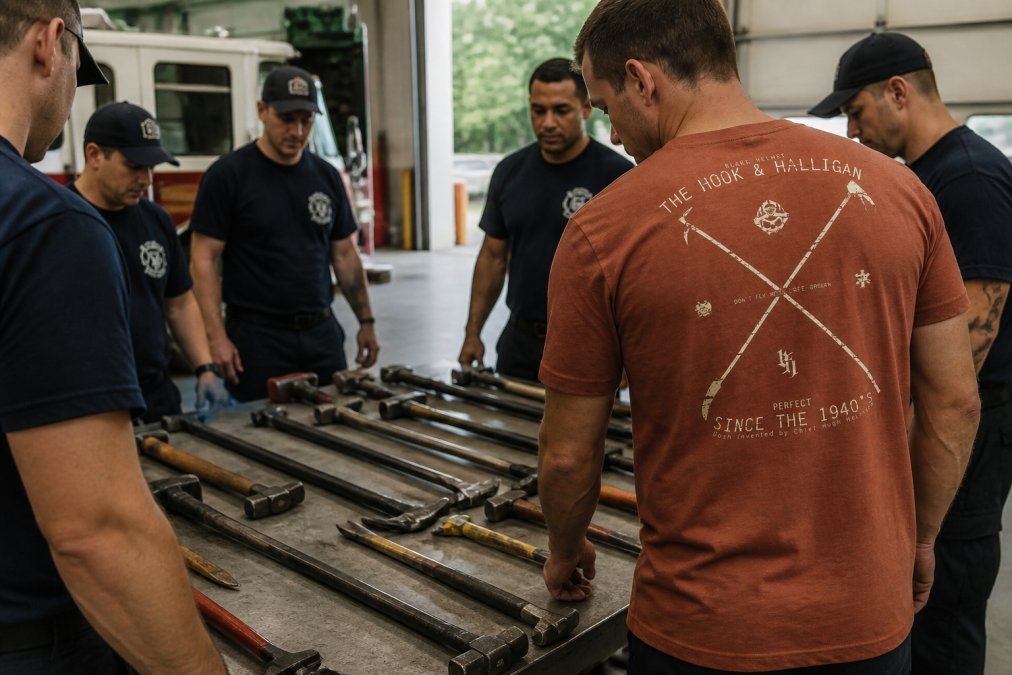
The hook and irons alternative for firefighters you choose depends on your department's building inventory, crew size, and tactical doctrine. A rural department responding to older wood-frame structures faces different demands than an urban crew working high-rise commercial buildings. The tool that excels at breaching a residential door may be poorly suited for ventilation work on a pitched roof.
Black Helmet's Hook & Halligan Premium Tee celebrates these legendary tools and the innovation behind them, a reminder that understanding your equipment matters as much as having it on the rig.

Multi-Purpose Fire Tools: Efficiency and Weight Distribution
Weight-to-performance analysis reveals why multi-purpose tools have become central to modern forcible entry strategy. A single well-designed tool that handles 80% of common entry scenarios outperforms carrying three specialized tools that collectively weigh twice as much.
The principle is straightforward: efficient tool geometry reduces the physical effort required to generate force. A Halligan bar's prying end concentrates force at a precise angle. A properly weighted striking end transfers kinetic energy effectively. A hook section provides reach and use for different structural elements. This isn't just convenience, it's physics applied to fireground operations.
Weight distribution within the tool itself matters significantly. A tool with poor balance fatigues the operator faster, reduces striking accuracy, and increases the risk of hand and wrist injuries. Modern forcible entry tools are engineered with center-of-gravity considerations that earlier designs sometimes overlooked. The handle grip design, diameter, material, and texture, directly affects control and reduces slippage during wet or smoky conditions.
Tactical efficiency also depends on tool deployment speed. Crews that can quickly assess a structure, select the appropriate tool, and execute entry operations complete rescue operations faster. Complex tool loadouts that require decision-making about which tool to use in which situation introduce delays. Simpler, more intuitive tool selections reduce cognitive load under stress.
Many departments now standardize on one or two primary forcible entry tools per crew, supplemented by specialized equipment for specific scenarios. This approach balances versatility with operational simplicity. A crew that knows their primary tool intimately executes better than a crew that carries more options but less familiarity.
Firefighter Tool Loadout Best Practices for Modern Structures
Modern building construction has shifted forcible entry demands. Lightweight construction, engineered lumber, and advanced door hardware require different tactical approaches than the masonry and solid-wood structures that defined earlier fireground operations (the CDC).
Assess your building inventory first. Commercial structures with aluminum-framed glass doors require different entry approaches than residential wood-frame construction. Industrial buildings with reinforced doors and security hardware demand heavier striking and prying tools. Modern apartments with lightweight construction can be breached with less force but require precision to avoid collapse.
Establish crew proficiency standards. Each firefighter should be competent with primary forcible entry tools. This means regular training on proper technique, tool care, and scenario-based deployment. A crew that trains together develops rhythm and efficiency that translates directly to fireground performance.
Balance tool weight against operational demands. Crews working high-rise structures where equipment must be carried multiple flights benefit from lighter tool loadouts. Ground-level operations in industrial areas might justify heavier tools optimized for maximum striking or prying force. Your loadout should reflect your typical response profile.
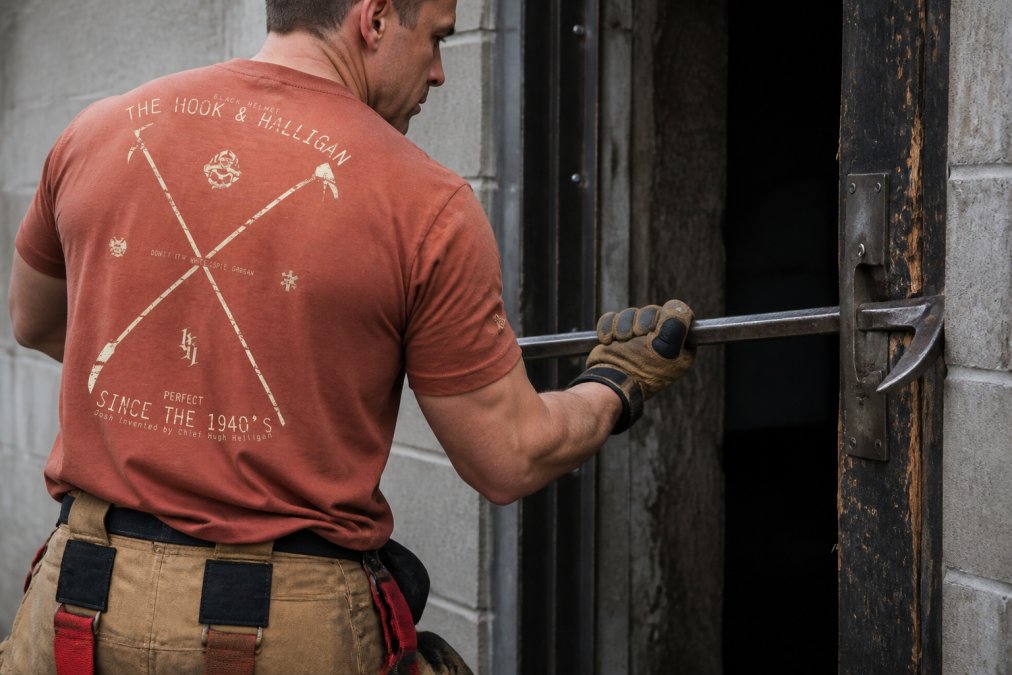
Standardize across your department. When all crews carry the same primary tools, mutual aid becomes simpler. Crews from different stations can coordinate entry operations without confusion about tool capabilities. Standardization also simplifies procurement and maintenance.
Document your tool selection rationale. Crews that understand why their department chose specific tools over alternatives make better decisions about when to deploy alternatives. This knowledge also informs training, instructors can explain not just how to use a tool, but why that tool was selected.
The hook and irons alternative for firefighters your department selects should align with your building types, crew composition, and tactical doctrine. There's no universal best choice, only the choice that works best for your specific operational context.
Comparing Traditional vs. Modern Alternatives: Tool Geometry and Impact Resistance
The evolution from traditional hook and irons setups to modern alternatives reveals how tool geometry directly affects performance.
Traditional Halligan bars typically feature a 45-degree prying angle and a flat striking surface. This geometry was optimized for the masonry and solid-wood construction common when the design was refined. The use angle works well against residential doors and wooden structural members.
Modern alternatives often adjust this geometry based on specific use cases. Some designs increase the prying angle for better use against metal frames. Others flatten the striking surface to distribute impact force more effectively across modern materials. The hook section has been refined on many contemporary tools to provide better reach and control.
Impact resistance testing shows that modern steel alloys handle repeated striking better than earlier materials. Fatigue failure, where a tool breaks after many impacts, was a real concern with older equipment. Contemporary tools incorporate metallurgical improvements that extend service life and maintain edge sharpness longer.
However, traditional designs remain effective. Many departments continue using classic Halligan bars because the tool works reliably and crews know the tool intimately. There's operational value in familiarity. A crew that has trained extensively with traditional tools often outperforms a crew with newer equipment but less experience.
The comparison between traditional and modern tools isn't about one category being objectively superior. It's about matching tool characteristics to your specific operational needs. A tool optimized for lightweight construction breaching might underperform against reinforced commercial doors. A tool designed for maximum striking force might be unnecessarily heavy for residential entry work.
| Tool Type | Primary Use | Weight Range | Best For | Key Trade-off |
|---|---|---|---|---|
| Traditional Halligan | General entry | 6-8 lbs | Versatility across scenarios | Heavier than specialized alternatives |
| Hybrid pry-axe | Residential + light commercial | 4-6 lbs | Balanced performance and mobility | Less specialized than dedicated tools |
| Roof hook | Ventilation and roof operations | 3-5 lbs | Reach and use on pitched roofs | Limited prying capability |
| Specialized breaching tools | Concrete and masonry | 7-10 lbs | Maximum force for reinforced structures | Heavier, single-purpose design |
Maintenance and Care of Fire Service Hand Tools
Forcible entry tools represent significant equipment investments. Proper maintenance extends service life, ensures reliability under stress, and prevents safety failures during critical operations.
Inspect tools regularly. Before and after every use, examine your tools for damage. Check the striking surfaces for chips or deformation. Inspect prying ends for bending or cracking. Examine handles for splinters, cracks, or looseness. A tool with a loose handle is dangerous, the head can separate during striking.
Clean and dry tools after use. Moisture promotes rust and corrosion. After exposure to water, wipe tools dry and store in a dry location. Some departments apply light oil to steel surfaces to prevent rust formation. Don't store tools in damp environments like basement areas or uninsulated storage spaces.
Address damage promptly. A chipped striking surface can be restored through grinding, but this should be done carefully to maintain proper geometry. Bent prying ends should be straightened by a qualified technician, attempting to straighten them yourself can introduce stress fractures. If a tool is severely damaged, replacement is safer than repair.
Maintain handle grip and condition. Wooden handles should be inspected for rot or insect damage. Fiberglass or composite handles require less maintenance but should still be checked for cracks. If a handle becomes loose, tighten the head or replace the handle entirely.
Keep an inventory system. Know which tools are assigned to which crew or station. Track maintenance history. This prevents tools from being lost or overlooked during maintenance cycles. Some departments photograph their tools and maintain digital records for accountability.
Train on proper tool use. Many maintenance issues result from improper technique. Crews that use tools correctly, striking with the proper surface, prying at the correct angle, and avoiding over-torque, generate fewer failures. Regular training reinforces proper technique.
The hook and irons alternative for firefighters you maintain today directly affects the tool's reliability when you need it most. Preventive maintenance is far less costly than equipment failure during a critical operation.
Conclusion
The evolution of forcible entry tools reflects decades of fireground experience and continuous refinement. While traditional hook and irons setups remain effective, modern alternatives offer options that address contemporary building construction, crew mobility demands, and operational efficiency. The best tool for your department is the one that matches your building inventory, aligns with your tactical doctrine, and that your crews train with regularly.
Understanding tool geometry, weight distribution, and maintenance requirements transforms equipment selection from a procurement decision into a strategic choice that affects crew safety and operational performance.
The right tool loadout makes entry operations faster and safer. Black Helmet's Hook & Halligan Premium Tee ($34.50) honors the legacy of Chief Hugh Halligan's innovations and reminds firefighters why understanding their equipment matters. Whether you're outfitting a new crew or upgrading your station's forcible entry capability, start with tools that have proven reliable and that your team can master through consistent training. NFPA 1001 Standard for Firefighter Professional Qualifications establishes competency requirements for forcible entry operations, your tool selection should support your team's ability to meet those standards consistently.
Frequently Asked Questions
What are the most versatile alternatives to traditional hook and irons?
Modern alternatives include the Halligan bar, which combines prying and striking capability in one tool, flat head axes designed for roof ventilation, and multi-purpose tools that handle both forcible entry and rescue operations. The Halligan tool, introduced by FDNY Chief Hugh Halligan in the 1940s, remains one of the most trusted alternatives for its leverage, durability, and dual functionality. Many departments now pair these with specialized outside vent hooks for roof operations, reducing overall tool weight while maintaining operational efficiency on the fireground.
How has the evolution of building construction changed the need for hook and irons alternatives?
Modern construction uses lightweight materials, engineered trusses, and different wall assemblies that respond differently to traditional forcible entry techniques. Older solid wood and masonry structures favored heavy leverage tools, but contemporary buildings often require more precision, lighter impact, and faster deployment. This shift has driven demand for multi-purpose tools with better weight distribution and impact resistance. Firefighters now prioritize tactical equipment that adapts to both residential and commercial structures without sacrificing performance in either scenario.
What factors should firefighters consider when choosing alternative forcible entry tools?
Prioritize tool geometry, weight-to-performance ratio, handle grip design, and steel alloy quality. Consider your department's primary structural types and ventilation needs. Assess whether you need single-purpose tools or multi-purpose options that reduce overall loadout weight. Evaluate impact resistance and durability for high-frequency use. Test tools during training to ensure they fit your tactical approach and fireground operations. Lighter tools reduce fatigue during extended rescue operations, while heavier tools may provide better leverage for certain breaching scenarios. Balance operational efficiency with the physical demands of your role.
Are lightweight alternatives as effective as traditional heavy irons?
Lightweight alternatives can be equally effective when designed with proper tool geometry and steel alloy composition. Modern engineering has created tools that deliver comparable striking force and leverage while reducing weight. The advantage is decreased fatigue during extended fireground operations and rescue scenarios. However, effectiveness depends on proper technique and tool selection for the specific task. A lightweight Halligan bar may outperform a heavy traditional iron on modern construction, while certain structural breaching tasks may still benefit from heavier tools. The best choice depends on your department's specific needs and training emphasis.
This article was written using GrandRanker
