

10 Firefighter Exercise Routines for Shift Work
Table of Contents
- Why Firefighter Exercise Routines Must Fit Your Shift Schedule
- Warm-Up and Readiness Drills for Fireground Preparation
- Firefighter HIIT Workouts for Maximum Metabolic Conditioning
- Strength Training for Structural Firefighting: Core, Deadlifts, and Carries
- Cardiovascular Endurance and Fireground Movement Replication
- Firefighter Recovery Strategies and Active Recovery Protocols
- Firefighter Cancer Prevention Tips for Active Duty: Nutrition and Lifestyle Integration
- Time-Efficient Workouts for 24-Hour Shifts and Off-Duty Days
Last Updated: August 18, 2026
Why Firefighter Exercise Routines Must Fit Your Shift Schedule
The 24-hour shift is relentless. You're called out multiple times, sleep comes in fragments, and generic workout programs ignore this reality. They're built for predictable schedules and consistent sleep, luxuries firefighters don't have.
This guide from Black Helmet covers 10 firefighter exercise routines specifically designed around shift work. These routines account for the unpredictable nature of the job, the physical demands of fireground movements, and the recovery challenges that come with sleeping at the station. The core problem isn't finding good exercises, it's finding a training approach that fits your life. These routines are designed to be done in 30-45 minutes, account for unpredictable call volume, and work whether you're training at 6 AM or squeezing in a session during a quiet night at the station.
What makes firefighter exercise routines different is their focus on functional fitness that directly transfers to the job: carrying heavy loads, climbing stairs under load, dragging victims, moving through confined spaces, and maintaining cardiovascular endurance during extended operations.
Warm-Up and Readiness Drills for Fireground Preparation
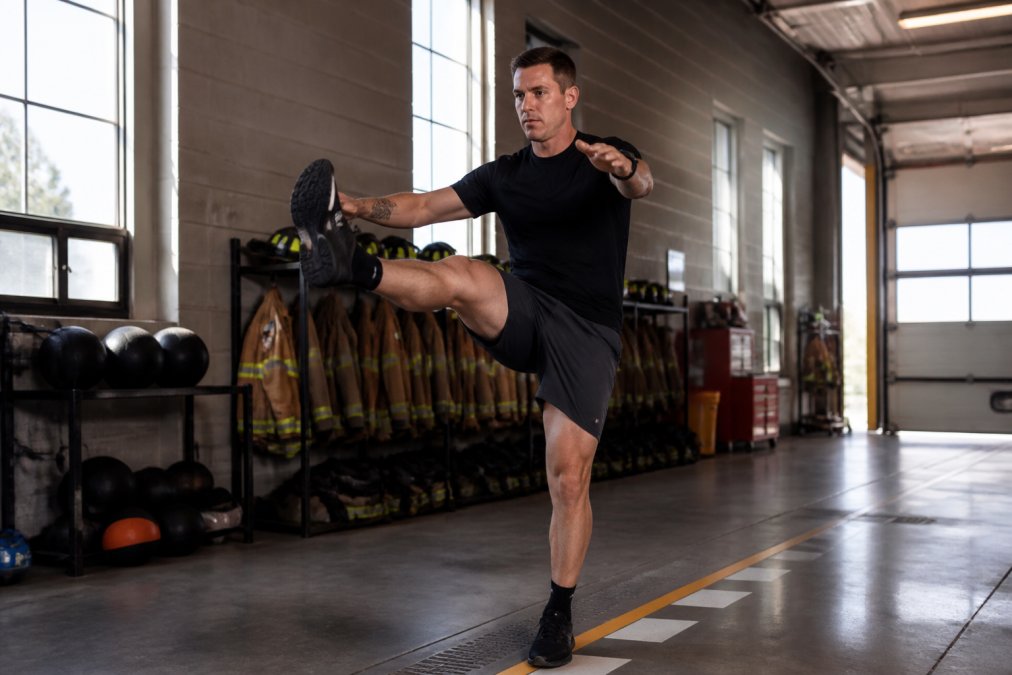
A proper warm-up prepares your nervous system for fireground demands. Start with 5-10 minutes of light movement, easy walking, light rowing, or cycling at a conversational pace. Follow this with dynamic mobility drills targeting the hips, shoulders, and thoracic spine.
Include these specific drills:
- Leg swings: 10 forward-back swings per leg, then 10 lateral swings per leg
- Arm circles: 10 circles forward, 10 backward, performed with control
- Bodyweight squats: 15-20 reps with emphasis on depth and control
- Inchworms: 10 reps, moving from standing to a plank position and back
- Glute bridges: 15-20 reps with a 1-second pause at the top
After these mobility drills, spend 2-3 minutes on activation work, light resistance exercises that "turn on" the muscles you'll use. Resistance band pull-aparts, light kettlebell swings, or bodyweight push-ups all work here. A complete warm-up takes about 15 minutes and should leave you feeling ready, not fatigued.
Firefighter HIIT Workouts for Maximum Metabolic Conditioning
High-intensity interval training (HIIT) delivers cardiovascular benefits of a 45-minute steady-state run in 20 minutes. For firefighters working shift schedules, efficiency matters.
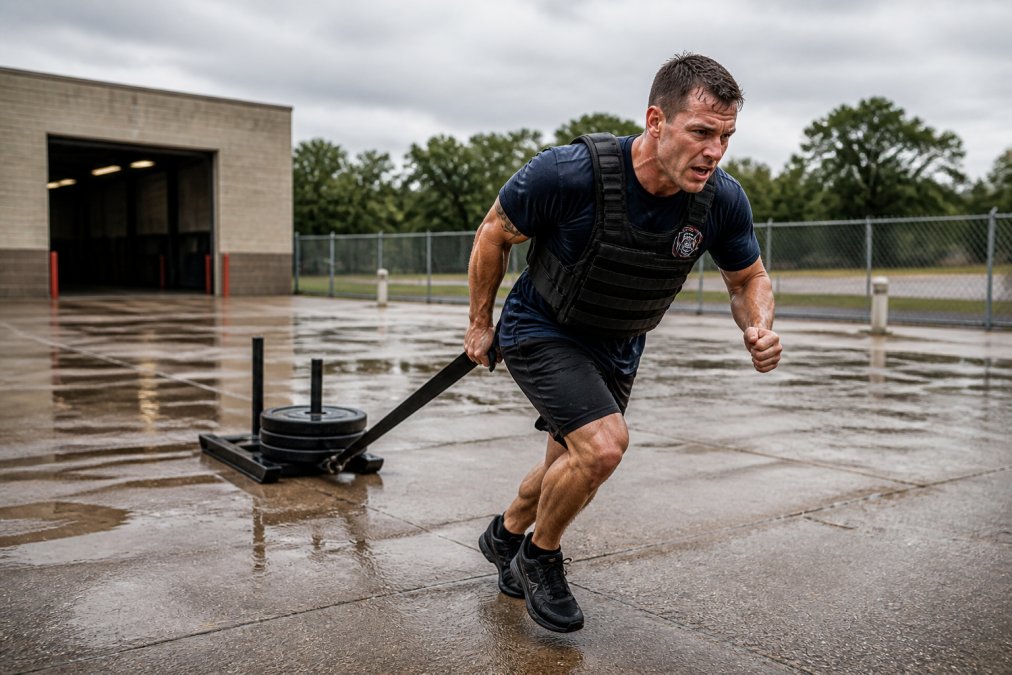
HIIT alternates between maximum effort (85-95% of maximum heart rate) and active recovery. For firefighters, emphasize movements that replicate fireground demands: sled drags, stair climbing, rowing, and bodyweight movements rather than just running sprints.
The 20-Minute Fireground HIIT Session:
- 3 minutes easy warm-up (light rowing or walking)
- 40 seconds at maximum effort (sled drag, stair sprint, or rowing at high intensity)
- 20 seconds active recovery (light movement, catch your breath)
- Repeat this 40/20 cycle 10 times (total work time: 10 minutes)
- 2 minutes cool-down at easy pace
Two to three HIIT sessions per week is optimal. More risks overtraining and compromising recovery; less doesn't create enough stimulus to improve metabolic conditioning.
Strength Training for Structural Firefighting: Core, Deadlifts, and Carries
Structural firefighting is a strength sport. You're moving heavy loads, equipment, hoses, and victims, often in compromised positions and under time pressure.
The foundation is the deadlift. This single movement builds posterior chain strength (glutes, hamstrings, lower back) and teaches you how to safely pick up heavy loads from the ground. Start with a weight you can handle for 5-6 clean reps. Perform 3-4 sets of 5 reps, resting 2-3 minutes between sets. Focus on form over load.
Core stability is the second pillar. Include these core exercises:
- Planks: 3 sets of 45-60 seconds
- Dead bugs: 3 sets of 10 reps per side
- Pallof presses: 3 sets of 10 reps per side with a resistance band or cable
- Sled drags: 3 sets of 30-40 meters
Carries, walking while holding heavy weight, are the third pillar. Farmer carries, suitcase carries, and overhead carries build functional strength that directly transfers to fireground work. Perform carries for distance rather than time. A 40-meter farmer carry with heavy dumbbells, repeated for 3-4 sets, builds tremendous functional strength.
A complete strength session:
- Deadlifts: 4 sets of 5 reps
- Goblet squats: 3 sets of 8 reps
- Planks: 3 sets of 45-60 seconds
- Farmer carries: 3 sets of 40 meters
This session takes about 45 minutes. Perform twice per week with at least one day of rest between sessions.
Cardiovascular Endurance and Fireground Movement Replication
Cardiovascular endurance is the foundation of firefighter fitness. The best cardiovascular training replicates fireground demands: stair climbing, rowing, and sled work rather than just running.
The 30-Minute Fireground Endurance Session:
- 5 minutes easy warm-up
- 20 minutes at steady state (moderate intensity where you can talk but not sing)
- 5 minutes easy cool-down
During the steady-state portion, your heart rate should be around 60-70% of your maximum. For stair climbing, maintain a steady pace up the stairs and walk down for recovery. Perform 8-10 repetitions. Rowing is another excellent cardiovascular tool. A 20-minute row at steady pace builds tremendous aerobic capacity while engaging your core and upper body.
Combine these sessions with your strength and HIIT work:
- Monday: Strength training
- Tuesday: HIIT session
- Wednesday: Cardiovascular endurance (rowing or stair climbing)
- Thursday: Active recovery or light mobility work
- Friday: Strength training
- Saturday: Cardiovascular endurance or longer steady-state session
- Sunday: Rest or active recovery
Firefighter Recovery Strategies and Active Recovery Protocols
Recovery is where adaptation happens. You don't get stronger during the workout; you get stronger during recovery. Active recovery is low-intensity movement designed to promote blood flow and reduce muscle soreness without creating additional fatigue.
Active recovery can take many forms:
- Light walking: 20-30 minutes at a conversational pace
- Easy cycling: 20-30 minutes at low intensity
- Yoga or mobility work: 20-30 minutes focusing on stretching and mobility
- Swimming: Easy swimming for 20-30 minutes
Sleep is the most powerful recovery tool available. Optimize the sleep you do get: keep your sleep environment cool (around 65-68 degrees Fahrenheit), block out light with blackout curtains or an eye mask, use earplugs if necessary, and avoid screens for 30 minutes before sleep.
Nutrition plays a critical role in recovery. Aim for 0.7-1 gram of protein per pound of body weight daily. You also need carbohydrates to replenish glycogen stores and fat to support hormone production. Hydration is critical, drink water consistently throughout your shift and during training sessions.
Firefighter Cancer Prevention Tips for Active Duty: Nutrition and Lifestyle Integration
Firefighters face elevated cancer risk due to occupational exposure to carcinogens. While you can't eliminate this risk entirely, lifestyle factors, particularly nutrition, physical activity, and stress management, can significantly reduce your overall cancer risk.
Nutrition for cancer prevention starts with eating whole foods. Prioritize vegetables (especially cruciferous vegetables like broccoli and cabbage), fruits, whole grains, and lean proteins. Limit processed foods, sugary drinks, and red meat. For shift work, meal planning is critical. Prepare meals at home and bring them to the station.
Physical activity itself is a cancer preventive. The combination of strength training, cardiovascular conditioning, and active recovery you're doing through these routines directly reduces cancer risk. Consistency matters more than intensity.
Stress management is also important. The training routines help manage stress through physical activity. Complement this with other stress-reduction practices: meditation, time with family, hobbies, or whatever helps you decompress off shift. Limiting alcohol and avoiding tobacco are non-negotiable factors.
Time-Efficient Workouts for 24-Hour Shifts and Off-Duty Days
The reality of shift work is that you don't always have 45 minutes to train. These routines work in whatever time you have available.
The 20-Minute Station Workout (perform during a quiet period):
- Bodyweight squats: 3 sets of 10 reps
- Push-ups: 3 sets of 8-10 reps
- Plank: 3 sets of 30-45 seconds
- Burpees: 3 sets of 5 reps
- Glute bridges: 2 sets of 15 reps
Perform each exercise with minimal rest between sets (30 seconds maximum).
The 10-Minute Core and Mobility Session (perform before or after shift):
- Planks: 2 sets of 45 seconds
- Dead bugs: 2 sets of 10 reps per side
- Glute bridges: 2 sets of 15 reps
- Child's pose: 2 minutes of holding
- Cat-cow stretches: 10 reps
| Workout Type | Duration | Frequency | Best For |
|---|---|---|---|
| HIIT Session | 20-25 minutes | 2x per week | Metabolic conditioning |
| Strength Training | 45 minutes | 2x per week | Building functional strength |
| Cardiovascular Endurance | 30-40 minutes | 2x per week | Aerobic capacity |
| Active Recovery | 20-30 minutes | 3-4x per week | Promoting recovery |
| Station Maintenance Workout | 20 minutes | 2-3x per week | Maintaining fitness during shifts |
The key is being flexible. If you have a brutal shift and you're exhausted, do the 10-minute mobility session instead of a full workout. If you have a quiet shift and energy to spare, do the 20-minute station workout. The goal is consistency over time, not perfection on any given day.
Black Helmet apparel is designed for this kind of training reality. The Thin Red Line Yoga Leggings With Inside Pocket provide the flexibility and functionality you need for active recovery sessions, while the Red Skull Logo Embroidered Joggers work for both training and off-duty wear. The Turnout Print Sports Bra is specifically designed for firefighters who want moisture-wicking support during workouts. The Plug Brew Premium Tee is built for long days and whatever the shift throws at you. The Thin Red Line Patriot Headband keeps sweat out of your eyes during intense sessions. The Signal Everyday Duffel carries everything you need, sized at 22 inches, bigger than a standard gym bag but smaller than oversized travel duffels, making it practical for the realities of shift work.


The 10 firefighter exercise routines outlined here work because they're built around the actual constraints of shift work. They don't require perfect conditions or unlimited time. They acknowledge that your sleep is interrupted, your schedule is unpredictable, and your recovery is compromised compared to civilians. Yet they're designed to build the specific fitness firefighters need: functional strength, cardiovascular endurance, metabolic conditioning, and the resilience to perform under stress.
Start with one routine per week and build from there. Consistency matters more than perfection. A firefighter who does a 20-minute station workout twice per week will see better results over a year than someone who tries to do everything perfectly for a month and then burns out. Your fitness directly impacts your ability to perform on the fireground and your long-term health. Make it a priority, even when the shift schedule makes it difficult.
Frequently Asked Questions
What are the best firefighter exercise routines for a 24/48 shift schedule?
The most effective routines combine short, high-intensity workouts during your 24-hour shift (30-45 minutes) with longer training sessions on your 48-hour off days. On-shift workouts should focus on functional fitness and metabolic conditioning using circuit training and interval training protocols. Off-duty days allow for deeper strength work, steady-state cardio, and active recovery. This approach maintains cardiovascular endurance and functional fitness without overtraining during demanding shift cycles.
How can firefighter HIIT workouts improve fireground performance?
Firefighter HIIT workouts build anaerobic capacity and metabolic conditioning that directly translates to fireground movements. High-intensity interval training develops the work-to-rest ratios needed for structural firefighting, where you alternate between intense exertion and brief recovery periods. Protocols using sled drags, stair climbing, and weighted carries replicate the demands of search and rescue operations, ladder work, and victim removal. Studies show HIIT improves tactical athlete performance more efficiently than traditional steady-state cardio alone.
What firefighter recovery strategies prevent burnout and injury?
Effective firefighter recovery strategies include active recovery days with light mobility drills and steady-state cardio, adequate sleep (7-9 hours when possible despite shift work), proper nutrition and hydration, and stress-resilience training. Cool-down protocols after intense workouts reduce muscle soreness and improve adaptation. Mental health support and stress management are equally important for long-term service sustainability. Rotation between high-intensity training, moderate-intensity work, and recovery days prevents overtraining and reduces injury risk.
How does firefighter cancer prevention connect to exercise and shift work?
Regular exercise, particularly functional fitness and resistance training, supports immune function and reduces cancer risk factors. Firefighter cancer prevention tips for active duty include maintaining consistent training routines despite shift work, managing weight through proper nutrition and hydration, limiting alcohol and tobacco exposure, and prioritizing sleep quality. Exercise also reduces occupational stress and inflammation linked to firefighter health risks. Combining structured workouts with anti-inflammatory nutrition and stress management creates a comprehensive cancer prevention approach.
Can firefighters do effective workouts at home on off-duty days?
Yes. Home-based alternatives include bodyweight exercises (push-ups, split squats, goblet squats), resistance band work, jump rope for cardiovascular training, and loaded carries using household items. Many functional fitness movements require minimal equipment but deliver high training stimulus. Black Helmet's apparel, like the Thin Red Line Yoga Leggings and moisture-wicking sports bra, supports comfortable home training. The key is consistency: even 45-60 minutes of structured home workouts on off days significantly improves fireground readiness and maintains physical fitness between station training.
This article was written using GrandRanker
