

Firefighter Apparel Guide: Gear, Standards & Care
Table of Contents
- What Is Firefighter Apparel and Why It Matters
- Firefighter Station Wear and Job Shirts
- Class A Dress Uniforms and Professional Apparel
- Protective Turnout Gear and Fire-Resistant Base Layers
- NFPA 1971 Standards and Compliance for Firefighter Apparel
- Firefighter Apparel Maintenance and Care Guide
- Firefighter Accessories, Embroidered Hats, and Custom Gear
- Sizing, Fitment, and Choosing the Right Firefighter Apparel
Firefighter Apparel Guide: Gear, Standards & Care
Last Updated: July 11, 2026
When firefighters step into the station, what they wear matters more than most people realize. The right firefighter apparel bridges the gap between casual station culture and professional fire service identity. This guide covers everything you need to know: from understanding station wear versus protective equipment, to navigating NFPA standards, to caring for your gear so it lasts.
What Is Firefighter Apparel and Why It Matters
Firefighter apparel is any clothing worn by active and retired firefighters, from casual station wear during downtime to highly specialized protective equipment used during emergency operations. The category spans station t-shirts, hoodies, dress uniforms, turnout gear, and accessories, each serving a distinct purpose.
Station wear represents firehouse culture and brotherhood. Protective gear is engineered to keep you alive. Research from National Fire Protection Association standards documentation shows that proper protective apparel reduces burn injuries by up to 40% compared to street clothes. Station wear serves a psychological function, when you pull on a quality firefighter shirt, you're putting on identity. That matters during 24-hour shifts when morale and brotherhood keep the station running.
Station Wear vs. Protective Gear
Station wear is what you wear during downtime at the firehouse: breathable, comfortable, and designed for extended wear during meals, training, and station duties. Protective gear, also called turnout gear or structural firefighting ensemble, is engineered for emergency response and must meet NFPA 1971 standards. It includes fire-resistant base layers, turnout coat and pants, helmet, gloves, and boots, made from materials like Nomex and Kevlar that resist extreme heat and flames.
The distinction matters for your purchase decisions. You don't need NFPA compliance for a station tee, you need comfort, durability, and a design that resonates with your crew. For protective gear, compliance is non-negotiable.
Firefighter Station Wear and Job Shirts
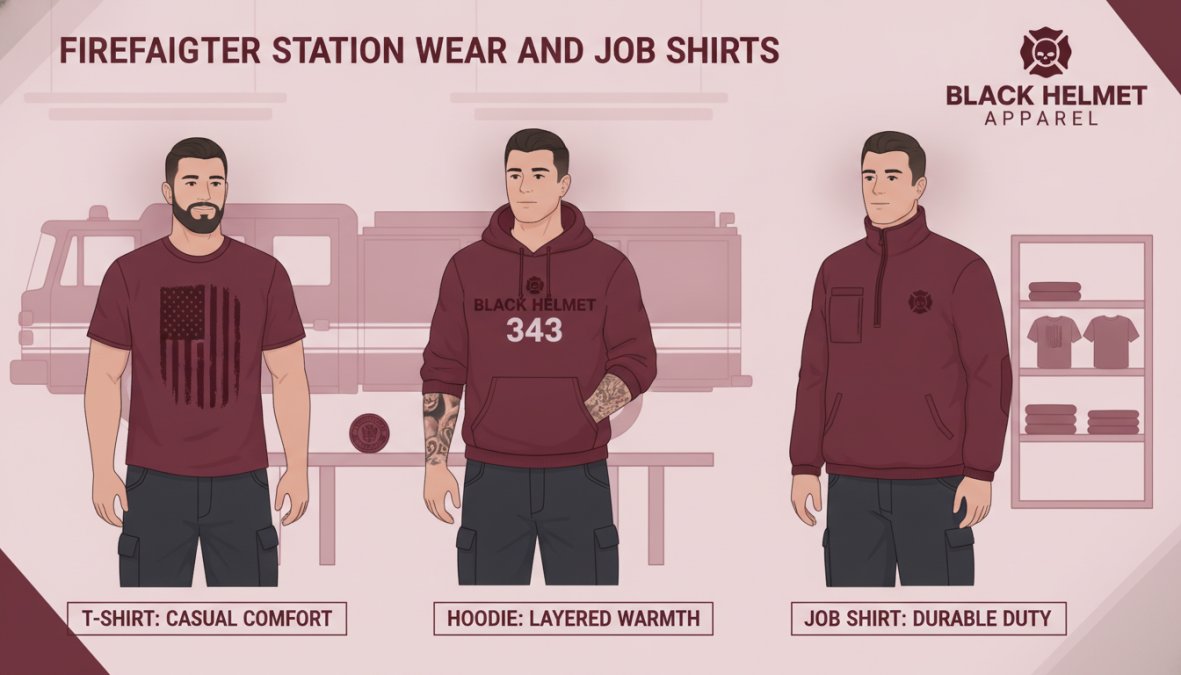
Station wear is the uniform of downtime. Quality station wear needs to be tough enough to withstand daily washing and wear, but comfortable enough for 24-hour shifts. The most popular category is the premium firefighter t-shirt, constructed from higher-weight cotton blends or performance fabrics that hold color after repeated washing and maintain their shape.
Black Helmet's Fire Rescue Premium Tee ($34.50) exemplifies what station wear should be: understated design that speaks to rescue pride, made from premium fabric that survives the firehouse laundry. What separates quality station wear from bargain alternatives is thread count, seam construction, and ink durability. Cheap tees fade after five washes; quality tees maintain color and integrity for years.
Premium T-Shirts and Casual Station Apparel
The best premium firefighter t-shirts use 100% cotton or cotton-polyester blends that balance breathability with durability. Look for preshrunk fabric to prevent unpredictable shrinking after washing. Heavier weight (6.0 oz or more) indicates a more durable garment. Design matters too, simple, iconic imagery rather than novelty graphics will never feel dated.
Premium tees typically range from $25 to $40. A $30 tee worn for three years costs less per wear than a $12 tee worn for one year. Station wear should be an investment in gear you'll actually reach for.
Hoodies and Crew Neck Options
Hoodies and crew neck sweatshirts serve as layering pieces for cooler months and casual weekend wear. The best firefighter hoodies use the same premium fabric standards as tees: preshrunk, durable stitching, quality graphics that don't crack or fade. Heavier weight fabric (9.0 oz or more) lasts longer than lighter alternatives.
Crew neck sweatshirts offer a more professional alternative to hoodies and pair well with casual pants or jeans. Both should use screen-printed or embroidered designs applied to preshrunk fabric.
Class A Dress Uniforms and Professional Apparel
Class A dress uniforms represent the formal, professional side of firefighter apparel, worn for ceremonies, public appearances, and official functions. Traditional Class A uniforms consist of a dark-colored shirt (navy or black), dress trousers with a stripe down the leg, and a tie or neckerchief. The fit must be precise and tailored to your body.
When you put on Class A gear, you're stepping into a formal representation of your department and the fire service itself. That's why details matter: crisp creases, polished boots, proper insignia placement, and well-maintained fabric. Many departments have specific requirements for Class A uniforms, approved vendors, colors, patches, and insignia placement. Check with your department before purchasing.
Quality Class A uniforms are an investment. Expect to spend $200-400 for a complete uniform. A properly fitted Class A uniform will last for years and will be worn for significant moments in your fire service career.
Protective Turnout Gear and Fire-Resistant Base Layers
Protective turnout gear is the equipment that keeps you alive. Unlike station wear, turnout gear is engineered for extreme conditions: temperatures exceeding 1,000 degrees Fahrenheit, smoke-filled environments, and physically demanding rescues. Every component serves a specific protective function.
A complete turnout ensemble includes: turnout coat, turnout pants, fire-resistant base layers, gloves, boots, helmet and face shield, and self-contained breathing apparatus (SCBA) in most cases. The outer shell is typically made from multiple layers: an outer shell (often Nomex or a Nomex blend), a moisture barrier, and an insulating thermal liner. This layered construction protects against heat, moisture, and flame.
Understanding Fire-Resistant Materials
Fire-resistant materials are the foundation of protective turnout gear. Nomex is a meta-aramid synthetic fiber that resists flames, doesn't melt, and maintains its strength at high temperatures. It's the gold standard because the fire-resistant property is inherent to the fiber itself, not applied through chemical treatment.
Kevlar is often blended with Nomex to add puncture and abrasion resistance. PBI (Polybenzimidazole) resists heat even better than Nomex but is more expensive. Manufacturers blend these materials to balance protection across multiple hazards.
The moisture barrier inside turnout gear is typically made from Gore-Tex or similar breathable, waterproof membranes. This layer prevents water from entering while allowing sweat vapor to escape. The thermal liner is usually made from brushed Nomex or similar insulating material, trapping air and reducing the rate at which heat penetrates to your skin.
NFPA 1971 Standards and Compliance for Firefighter Apparel
NFPA 1971 is the standard for structural and proximity firefighting protective ensembles. This standard defines the minimum performance requirements for every component of turnout gear. If you're purchasing protective gear, NFPA 1971 compliance is non-negotiable.
The standard was developed by the National Fire Protection Association, a non-profit organization that establishes fire safety standards used across the United States and internationally. NFPA 1971 is updated periodically to reflect new materials, testing methods, and lessons learned from firefighter injuries and deaths.
What NFPA 1971 Requires
NFPA 1971 specifies minimum performance across several categories: Thermal Protection requires that turnout coat and pants prevent heat from reaching your skin through specific testing protocols. Moisture Barrier Performance requires that the barrier prevents water penetration while allowing moisture vapor to escape. Tear and Puncture Resistance ensures the outer shell can withstand contact with sharp objects and rough surfaces. Seam Strength requires that seams are stronger than the surrounding material. Chemical Resistance requires that gear resists contact with certain chemicals and hazardous materials. Visibility and Reflectivity requires reflective trim and high-visibility colors so firefighters can be seen in low-light conditions.
Compliance is verified through third-party testing. Manufacturers must submit gear to accredited testing laboratories. This testing is expensive, which is why quality turnout gear costs $2,000-4,000 per ensemble. Note that NFPA 1971 compliance doesn't guarantee your gear is adequate for your specific department's needs, some departments have additional requirements.
Firefighter Apparel Maintenance and Care Guide
How you care for your firefighter apparel determines how long it lasts and how well it protects you. Station wear and protective gear require different maintenance approaches.
Washing and Drying Best Practices
Station Wear: Wash premium firefighter t-shirts, hoodies, and crew necks in cold water with mild detergent. Turn the garment inside-out before washing to protect screen-printed or embroidered designs. Dry on low heat or hang-dry. Never use bleach or fabric softener.
Protective Gear: Use cold water and mild detergent. Never use hot water, bleach, or harsh chemicals. Wash turnout gear separately from other clothing. Dry by hanging in a well-ventilated area, never use a machine dryer. After washing, inspect your turnout gear carefully for tears, holes, or damage to seams. Check the moisture barrier for any signs of water penetration.
Storage and Longevity Tips
Store station wear in a cool, dry place away from direct sunlight. Hang hoodies and crew necks on padded hangers to prevent shoulder stretching. Store turnout gear in a cool, dry location away from direct heat sources and never in a damp environment, as moisture promotes mold and mildew growth.
Inspect your gear regularly, even when not in use. A properly maintained station tee should last 2-3 years of regular wear. Quality hoodies and crew necks last 3-5 years. Turnout gear, if properly maintained and not exposed to extreme conditions, can last 5-10 years or longer.
Firefighter Accessories, Embroidered Hats, and Custom Gear
Beyond the core categories of station wear and protective gear, firefighter accessories allow for personal expression while maintaining professional identity. Embroidered hats and beanies are popular year-round accessories. Quality embroidery uses thread that won't unravel or fade, applied to a structured base that maintains its shape.
Custom apparel allows departments and individual stations to create gear unique to their crew. Custom t-shirts, hoodies, and patches celebrate the brotherhood while honoring tradition. Socks and undergarments are often overlooked but crucial for comfort during long shifts. Merino wool or moisture-wicking synthetic socks keep your feet dry and prevent blisters. Wallets and drinkware serve practical functions while allowing for subtle fire service branding.
Sizing, Fitment, and Choosing the Right Firefighter Apparel
Getting the right size is crucial. Poorly fitting apparel is uncomfortable and doesn't represent your department effectively.
Fit for Station Wear vs. Protective Gear
Station wear should fit comfortably without being oversized. The ideal fit allows full range of motion, you should be able to raise your arms, bend forward, and move freely without restriction. The shirt should be long enough to stay tucked in without riding up.
Protective gear needs to be looser to accommodate multiple layers underneath. You'll be wearing a fire-resistant base layer undershirt and long underwear, so the turnout coat and pants need to be sized to fit over these layers. When purchasing turnout gear, measure yourself while wearing the base layers you'll actually use.
| Apparel Type | Fit Standard | Key Measurements | Comfort Priority |
|---|---|---|---|
| Station T-Shirt | Slightly fitted | Chest, length, sleeve | Mobility & appearance |
| Hoodie/Crew Neck | Slightly fitted | Chest, length, sleeve | Mobility & warmth |
| Turnout Coat | Loose/layered | Chest (over base), shoulder, sleeve | Full range of motion |
| Turnout Pants | Loose/layered | Waist (over base), inseam | No restriction at hips/thighs |
| Class A Uniform | Tailored | Chest, waist, inseam, sleeve | Professional appearance |
Don't guess your size based on what you usually wear in street clothes. Try items on when possible, or purchase from vendors with good return policies. If you're between sizes, the general recommendation is to size up for station wear.
Choosing the right firefighter apparel comes down to understanding what each category does and investing in quality. Station wear represents your identity and the brotherhood of the fire service, it deserves to be premium gear that lasts. Protective equipment is non-negotiable in terms of compliance and performance. It's literally the difference between going home and not going home.
Frequently Asked Questions
What is the difference between station wear and turnout gear?
Station wear includes comfortable t-shirts, hoodies, and job shirts firefighters wear during downtime at the firehouse, designed for comfort and brotherhood. Turnout gear is protective equipment worn during emergency response, engineered to meet NFPA 1971 standards for thermal protection, visibility, and durability. Station wear celebrates firehouse culture; turnout gear saves lives.
What NFPA 1971 standards must firefighter apparel meet?
NFPA 1971 standards govern protective turnout gear, requiring flame resistance, thermal protection, tear strength, and visibility features like reflective trim. Gear must withstand extreme heat, sharp objects, and water while maintaining structural integrity. Compliance is mandatory for structural firefighting. Station wear and job shirts are not subject to NFPA 1971 but should still reflect professional fire service standards.
How do you properly clean and maintain firefighter apparel?
For station wear: wash in cold water with mild detergent, air dry to preserve fabric integrity. For protective turnout gear: follow manufacturer instructions closely, most require specialized cleaning to maintain fire-resistant properties. Never use bleach, fabric softener, or high heat. Store in cool, dry conditions away from direct sunlight. Regular inspection for damage extends gear life and ensures safety compliance.
What materials make firefighter apparel fire-resistant?
Fire-resistant base layers typically use aramid fibers (like Nomex), modacrylic blends, or treated cotton that resist ignition and limit flame spread. These materials maintain integrity at high temperatures without melting. Station wear may use standard cotton but should reflect professional standards. Base layers under turnout gear provide critical thermal protection. Quality fire-resistant materials are durable but require proper maintenance to preserve protective properties.
This article was written using GrandRanker
