

Fire Station Shirt Alternatives: Beyond Standard Issue
Table of Contents
- Why Firefighters Look Beyond Standard-Issue Station Wear
- NFPA 1975 Compliance: What Your Station Shirt Must Meet
- Best Firefighter Hoodies and Premium Tees for Duty
- Durable Station Wear for Firefighters: Construction and Materials
- Customization, Embroidery, and Department Branding
- Layering Systems for Climate Control On and Off Duty
- Long-Term Care and Maintenance for Station Apparel
- Sustainable and Eco-Friendly Firefighter Apparel Options
Last Updated: August 23, 2026
Why Firefighters Look Beyond Standard-Issue Station Wear
Standard-issue fire station shirts serve a functional purpose, but they're not always the best fit for every firefighter's needs. Many active-duty firefighters, recruits, and retired members seek alternatives that offer better comfort, durability, or personal expression without compromising professionalism or compliance.
Station-issued gear is designed for the broadest possible audience. It fits some well and others poorly, meets baseline standards but often lacks premium construction, moisture-wicking technology, or customization options. Whether you're looking for better breathability during summer shifts, enhanced durability for heavy-duty work, or apparel that reflects your station's unique identity, quality alternatives exist that go beyond what most departments provide.
This guide explores the best alternatives to standard issue fire station shirts, covering premium cotton-polyester blends, layering systems, and sustainable options. We'll break down what makes a station shirt work for active duty, how to evaluate construction quality, and how brands like Black Helmet are redefining firefighter apparel.
NFPA 1975 Compliance: What Your Station Shirt Must Meet
Any fire station shirt alternative you choose must meet NFPA 1975 standards, the national standard for emergency responders' station wear (nfpa.org). This standard establishes flammability requirements, thermal protection, and durability specifications that ensure your apparel performs reliably during rapid response and station life.
NFPA 1975 compliance means your shirt has been tested for flammability resistance, thermal protection, durability standards, and shrink resistance. Many duty apparel alternatives meet or exceed these standards. Look for certifications on product pages or contact manufacturers directly. Black Helmet's premium tees, for example, are constructed with compliance in mind, using combed and ring-spun cotton or cotton-polyester blends that deliver both professional appearance and the durability NFPA standards demand.
Best Firefighter Hoodies and Premium Tees for Duty
Premium tees and hoodies dominate the market because they balance comfort, durability, and professional appearance. The best firefighter hoodies and premium tees for duty combine quality construction with designs that reflect station culture and brotherhood.
Black Helmet Premium Tees represent the gold standard for duty-focused apparel. The Firehouse Standard Premium Tee ($34.50) delivers a minimalist approach built from 100% combed and ring-spun cotton (with polyester in heather colors), soft, lightweight, and pre-shrunk to maintain fit through repeated laundering.

The Fire Rescue Thin Red Line Premium Tee ($34.50) honors both firefighters and medics with a distressed Fire Rescue seal, crossed axes, and EMS Stars of Life. For crews seeking heritage aesthetic, the Tailboard Rider Premium Tee ($34.50) captures firehouse tradition with a fitted cut. The Jack of All Trades Firefighter Premium Tee ($34.50) celebrates the multifaceted role firefighters play.
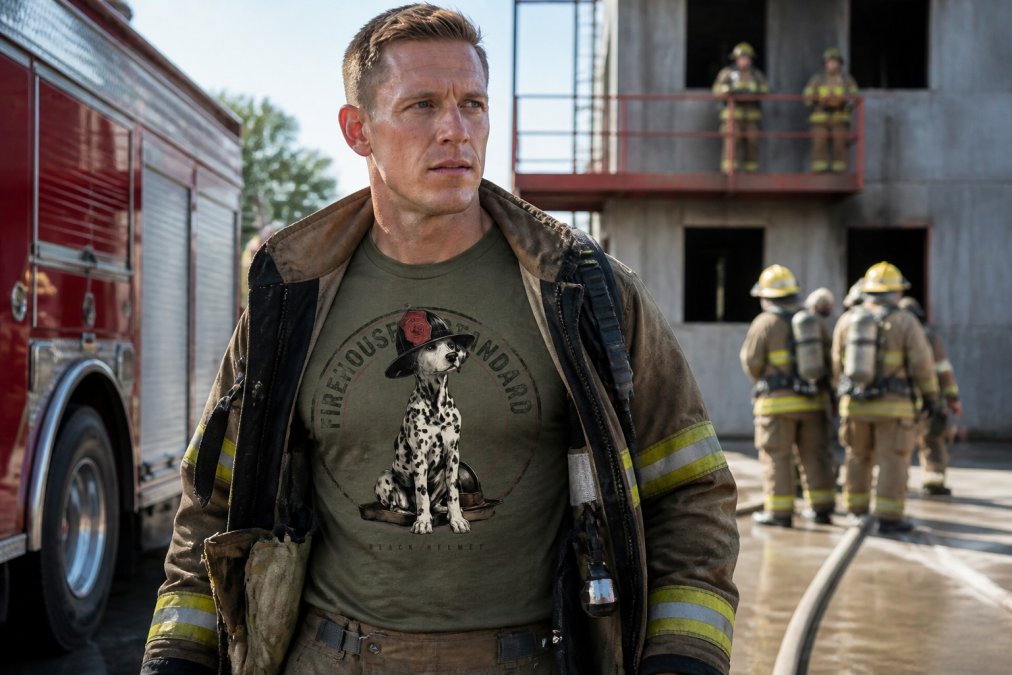
Premium Cotton-Polyester Blends for All-Day Comfort
Cotton-polyester blends typically run 50-60% cotton with 40-50% polyester, striking a balance between breathability and durability (peer-reviewed research). Cotton provides comfort and natural breathability; polyester adds durability, resists shrinking, holds color better, and increases garment lifespan. When blended properly, the result is a shirt that feels like pure cotton but lasts significantly longer.
Black Helmet's Plug Brew Premium Tee ($34.50) exemplifies this approach, designed for long days and early mornings with fabric that holds up under real use. The blend maintains color and structure through dozens of wash cycles, meaning your station wear looks professional month after month.
Moisture-Wicking Designs for Active Fireground Work
Moisture-wicking technology pulls sweat away from your skin and allows it to evaporate quickly. During active fireground work or training exercises, this difference is noticeable. Standard cotton absorbs moisture and holds it against your body; moisture-wicking fabrics move that moisture to the outer surface where it can dry. Your shirt stays lighter, you stay cooler, and your focus stays on the job.
Many premium duty tees incorporate moisture-wicking properties without sacrificing the authentic feel firefighters want. When evaluating alternatives with moisture-wicking claims, check the fiber content. Polyester and certain synthetic blends naturally wick moisture. The most reliable approach is choosing a quality cotton-polyester blend from a reputable brand tested under real conditions.
Durable Station Wear for Firefighters: Construction and Materials
Durability separates premium station wear from disposable alternatives. A shirt that falls apart after a season costs more in the long run than one that lasts years.
Construction quality shows up in seams and stitching. Look for side-seamed construction and shoulder-to-shoulder taping. Side seams are stronger and distribute stress more evenly. Shoulder taping reinforces high-abuse areas. Multiple rows of stitching, especially on armholes and collar, indicate a garment built to last.
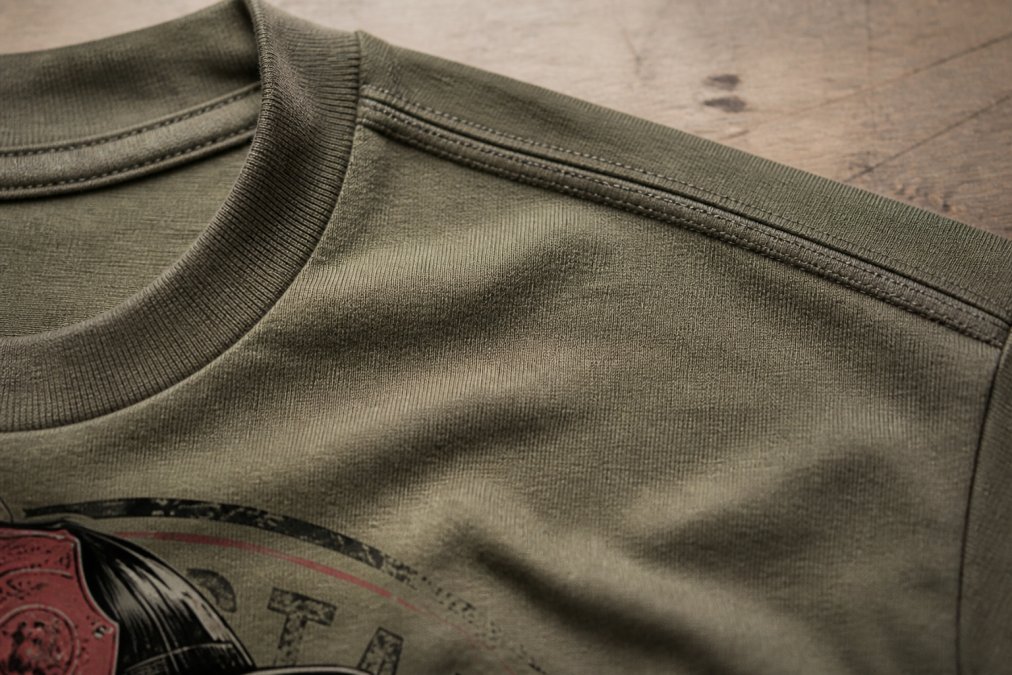
Fabric weight matters too. Lightweight tees (around 4.2 oz per square yard) feel comfortable but may not withstand years of heavy use (peer-reviewed research). Mid-weight options (5-6 oz) offer better durability while remaining breathable. Black Helmet's premium tees use 4.2 oz lightweight fabric paired with reinforced construction, delivering comfort without sacrificing longevity.
Pre-shrunk fabric is non-negotiable. Quality manufacturers pre-shrink their fabric before cutting and sewing, ensuring the garment maintains its dimensions through decades of washing. Industrial laundering, the standard at most fire stations, is harsh. A shirt designed to survive industrial laundering will survive anything a firefighter does to it off-duty.
Customization, Embroidery, and Department Branding
One of the strongest reasons firefighters seek alternatives to standard issue fire station shirts is the ability to customize. Department emblem, station number, crew name, or personalized design transform a generic shirt into something that represents your specific unit.
Custom embroidery and screen printing are the two main approaches. Embroidery involves stitching thread directly into the fabric, creating a raised, textured design that's incredibly durable and withstands thousands of wash cycles. Screen printing applies ink to the fabric surface, offering vibrant colors and fine detail. Quality screen printing lasts well through industrial laundering.
Department branding builds cohesion. When a crew wears matching custom shirts, it reinforces identity and pride. Black Helmet works with departments and crews on custom orders, handling everything from embroidery placement to bulk logistics. The quality of the base shirt matters as much as the customization. Embroidery on cheap fabric can cause puckering or distortion.
Layering Systems for Climate Control On and Off Duty
Firefighters work across seasons and climates. A layering system, base layer, mid-layer, outer layer, allows you to adapt to temperature changes without sacrificing mobility or professional appearance.
A moisture-wicking base layer pulls sweat away and keeps you dry. The mid-layer (often a station shirt or lightweight hoodie) adds warmth and allows easy adjustment. The outer layer provides wind and weather protection. Station shirt alternatives designed for layering are cut to allow this flexibility without uncomfortable bunching. The fit is intentional, working with your gear rather than against it.
For wildland firefighters and rescue professionals working in variable conditions, layering systems are essential. A well-designed station shirt alternative becomes part of a complete system rather than a standalone piece.
Long-Term Care and Maintenance for Station Apparel
How you care for your station wear directly impacts its lifespan. Wash in cold water when possible; hot water accelerates fading and damages elastic and seams. Use mild detergent and avoid bleach unless the fabric is white. Air-dry when you can; heat drying breaks down fabric faster than anything else.
Inspect regularly. Small issues like loose threads or tiny tears are easy fixes. A loose seam can be re-stitched quickly; ignoring it leads to bigger problems. Store apparel in a cool, dry place away from direct sunlight. UV exposure fades colors over time. Hanging is better than folding, it prevents creases and keeps the garment ready to wear.
Quality station wear becomes more comfortable with age as the fabric softens and conforms to your body. This marks a well-made garment. Cheap alternatives tend to deteriorate, becoming stiff, uncomfortable, or falling apart.
Sustainable and Eco-Friendly Firefighter Apparel Options
A growing number of firefighters are considering the environmental impact of their gear. Sustainable station wear alternatives use eco-friendly materials, ethical manufacturing, and responsible production practices.
Organic cotton is grown without synthetic pesticides or fertilizers, reducing environmental impact during cultivation. It's softer than conventional cotton and often feels premium. Recycled polyester, made from reclaimed plastic bottles or used textiles, reduces waste and manufacturing emissions while performing identically to virgin polyester.
On-demand manufacturing, where items are produced only after purchase, dramatically reduces overproduction and waste. Black Helmet uses this approach for many premium tees, meaning each shirt is made specifically for you. Responsible dyeing and finishing processes minimize water pollution and chemical runoff.
Sustainable station wear meets the same durability, compliance, and comfort standards as conventional alternatives. It's simply produced with environmental consciousness.
Finding the right alternatives to standard issue fire station shirts comes down to understanding what matters most to you: comfort, durability, customization, sustainability, or a combination of these factors. Black Helmet has spent nearly two decades building premium apparel specifically for firefighters, focusing on authentic designs that honor the brotherhood while delivering real performance. With options like the Firehouse Standard Premium Tee and Fire Rescue Thin Red Line Premium Tee starting at $34.50, you get construction quality and authentic design without premium pricing. Start with a single shirt to test the fit and feel, then build your collection with designs that represent your station and your values.

| Consideration | What to Look For | Why It Matters |
|---|---|---|
| Material Composition | 100% combed cotton or 50-60% cotton/polyester blend | Balance between comfort and durability |
| NFPA 1975 Compliance | Flammability, thermal protection, shrink resistance | Meets safety standards for duty apparel |
| Construction Quality | Side seams, shoulder taping, reinforced stitching | Withstands heavy use and industrial laundering |
| Moisture-Wicking | Polyester content or specialized blends | Keeps you comfortable during active work |
| Customization Options | Embroidery, screen printing, bulk ordering | Allows department branding and crew identity |
| Fabric Weight | 4.2-5.5 oz per square yard | Lighter for comfort, heavier for durability |
| Pre-Shrunk Fabric | Confirmed by manufacturer | Maintains fit through repeated washing |
Frequently Asked Questions
What makes a fire station shirt NFPA 1975 compliant?
NFPA 1975 sets the standard for protective apparel worn by firefighters. Compliant station shirts must meet flammability requirements, thermal protection standards, and durability specifications. The fabric composition, typically cotton-polyester blends or Nomex, plays a critical role. Shirts must resist ignition, limit flame spread, and maintain structural integrity after repeated industrial laundering. When selecting fire station shirt alternatives, verify that the manufacturer explicitly states NFPA 1975 compliance and provides documentation.
Are cotton-polyester blends better than 100% cotton for duty apparel?
Cotton-polyester blends offer advantages for durable station wear for firefighters. A typical blend (like 65% polyester, 35% cotton) provides superior shrink resistance, faster drying, and better colorfastness than 100% cotton. These blends maintain their shape through repeated industrial laundering, which is essential for station apparel. However, 100% combed and ring-spun cotton offers exceptional softness and breathability. The best choice depends on your climate, duty type, and whether you prioritize comfort or maximum durability.
Can I wear non-standard firefighter shirts while on duty?
Your department's standard operating procedures govern what you can wear on duty. Some departments allow approved alternatives to standard-issue station wear as long as they meet NFPA 1975 compliance and maintain a professional appearance. Off-duty wear has fewer restrictions. Always verify with your department before purchasing alternatives. Many firefighters wear premium duty apparel that exceeds standard requirements, offering better comfort, fit, and durability, while remaining fully compliant with safety and appearance standards.
What should I look for in high-quality firefighter station wear?
Quality duty apparel combines fabric performance with construction durability. Look for pre-shrunk fabric to prevent fit changes after washing, reinforced seams with shoulder-to-shoulder taping for strength, and side-seamed construction that resists tearing. Moisture-wicking properties help manage sweat during active work. Verify NFPA 1975 compliance, check colorfastness ratings, and confirm the shirt withstands repeated industrial laundering. Premium brands test their apparel under real fireground conditions, ensuring the gear performs when it matters most.
Why do firefighters choose firefighter-owned brands for station wear?
Firefighter-owned apparel brands understand the job firsthand. They design gear based on actual fireground experience, station life demands, and the specific needs of active-duty personnel. These brands prioritize durability, comfort, and authenticity over generic marketing. When you buy from firefighter-owned companies, your purchase supports members of the fire service community directly. Many firefighters prefer these brands because the products reflect genuine knowledge of what works on the job, not assumptions made by corporate manufacturers unfamiliar with fire service culture and demands.
This article was written using GrandRanker
