

How Do You Decorate a Fire Station on a Budget?
Quick Summary
Budget fire station decor works best when you plan before buying and reuse materials. Start by mapping how each room is used, choose two or three colors, and set a spending limit. Use salvage wood and paint, mount retired helmets in shadow boxes, and keep every item safe and out of exit paths.
- Map each room's main use before buying anything
- Use HT-stamped pallet wood for indoor shelves and boards
- Source retired hose and nozzles only through the formal retirement process
- Mount retired helmets on plaques or in shadow boxes rather than modifying them
- Keep decor clear of exits, stairways, and the apparatus floor
Table of Contents
- Why Fire Station Decor Matters for Crew Morale
- Planning Your Fire Station Decoration Ideas Before You Build
- DIY Firefighter Decor for Walls: Frames, Signs and Gear Displays
- DIY Fire Station Decor Outdoor: Signs, Flags and Apparatus Bay Touches
- Budget-Friendly Fire Station Decor: Materials and Upcycling
- Safety Rules for DIY Decor in Working Stations
- Choosing Your First Project and Getting Your Crew Involved
- Frequently Asked Questions
Why Fire Station Decor Matters for Crew Morale
A fire station is where crews eat, sleep, train, and wait between calls. Good fire station decor makes that space feel like home, and it shows respect for the people who spend long shifts there. This guide covers how to decorate a firehouse on a budget without cheap-looking results.
Fire station decor is any item that makes the station feel lived-in and proud, from framed photos to a helmet shelf. Shared spaces matter most, because the day room and kitchen are where crews bond. Simple touches tend to work better than big purchases.
- Personal touches help crews feel they belong
- Visible history connects new recruits to past members
- Clean, organized displays suggest pride in the job
Decor also supports the station's identity. A crew that takes care of its space often takes care of its equipment and its shifts. The USFA guidance on fire and EMS station design stresses that station environments should support the health and well-being of personnel.
Planning Your Fire Station Decoration Ideas Before You Build
Start with a plan before you buy or build anything. Walk through the station and note which spaces get used most. The day room, kitchen, and bunk room each need different things. Write down a short list of goals, like "more station history" or "a place to display gear."
Measure walls and shelves before you shop. Check with the department about what can be mounted, since some walls may have fire code or facility limits. Think about a color palette too. Two or three colors keep a room from looking cluttered.
Set a budget and a timeline. Decide which items you will make yourself, which you will buy, and what can wait. Many crews split the work by shift so the project does not fall on one person.
- List each room and its main use
- Measure wall space and shelf depth
- Pick two or three colors or materials
- Set a spending limit for the first phase
DIY Firefighter Decor for Walls: Frames, Signs and Gear Displays
Wall decor is often the easiest place to start. Frames, signs, and gear displays can fill blank space and tell the station's story. Keep the look consistent so the room feels planned, not random.
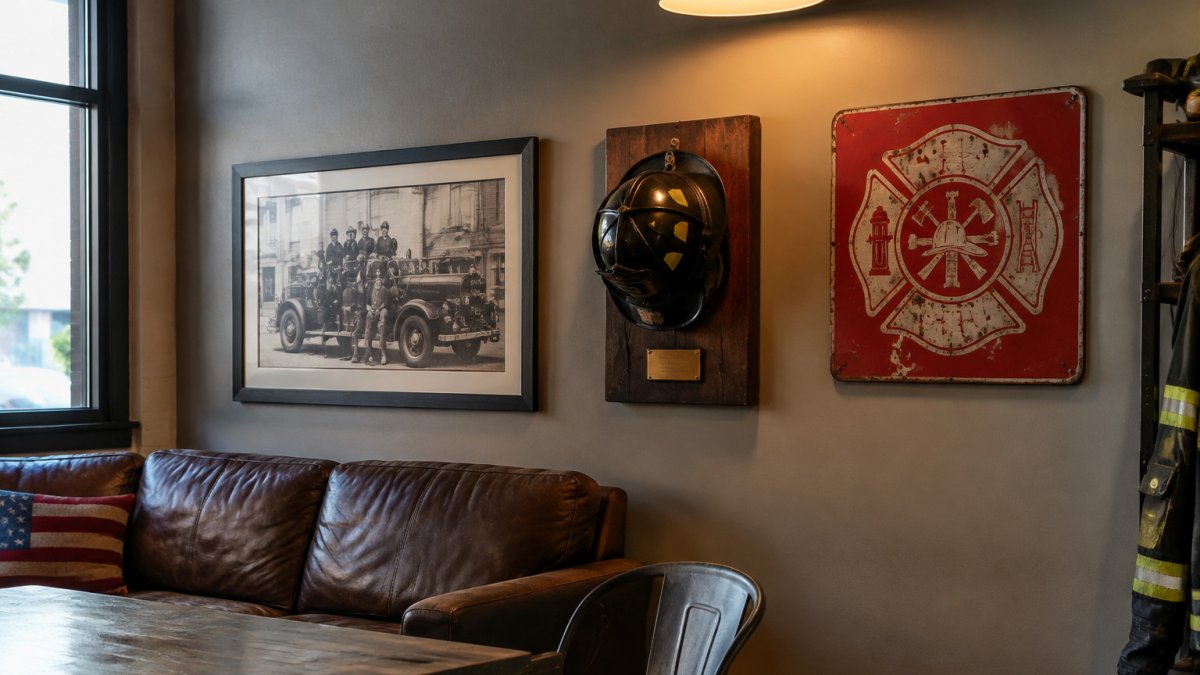
Repurposing Old Helmets and Turnout Gear
Retired helmets and turnout gear can become strong display pieces. Mount a helmet on a wooden plaque or shadow box with a name plate. Handle retired gear carefully, and follow department policy before you cut, paint, or modify anything.
Turnout gear is best shown in a clean, well-lit display. Keep it away from direct sunlight, which can fade materials over time. Label each piece with the owner's name, years of service, or the date it was retired.
Metal Art and Vintage Signage
Metal art and old-style signs add an industrial feel that many firehouses already have. You can buy reproduction signs or make your own from painted sheet metal. Lettering, station numbers, and simple shapes work well.
Vintage photos in matching frames pair nicely with metal pieces. Choose a mix of black and white and color prints. Hang everything at eye level so people can read it.
DIY Fire Station Decor Outdoor: Signs, Flags and Apparatus Bay Touches
Outdoor decor should look sharp and stay safe. Station signs, flags, and planters can make the front of the building welcoming. Check local rules and department policy before you hang anything near the apparatus bay or street.
Choose weather-resistant materials such as powder-coated metal, sealed wood, or outdoor-rated vinyl. Keep signs and flags clear of hose lines, doors, and sightlines for drivers. A neat, well-maintained entrance shows the community that the station takes pride in its work.
Budget-Friendly Fire Station Decor: Materials and Upcycling
Most station decor budgets are small, and the best-looking results usually come from reused material rather than new purchases. The trick is to separate what is safe to repurpose from what should stay out of the living space. A common pattern is to spend on one or two quality anchors, a framed photo wall, a proper helmet display, and fill the rest with salvage and shift labor. Applying these budget-friendly decorating tips helps transform utilitarian quarters into a more welcoming environment while maintaining the rugged aesthetic essential to station life.
Start with wood and metal salvage. Pallet wood, old ladders, retired lockers, and scrap sheet metal can become shelves, coat racks, and display boards. Sand, seal, and let finishes cure fully before the piece goes into an occupied space.
Before any hose, nozzle, or helmet becomes decor, confirm with the department that the item is formally retired and out of service, then clean it per the manufacturer's instructions and the department's policy. Gear that looks clean can still hold contaminants, so do not cut or sew retired hose in a kitchen or bunk room.
Helmets and turnout coats make strong display pieces, but they need the same discipline. Retire them formally, clean them, and keep them out of direct sunlight, which fades shells and fabric over time. Mount them on a plaque or in a shadow box with a name plate and years of service rather than modifying the item itself; cutting or painting a retired helmet destroys the history that makes it worth displaying.
Paint is still the cheapest way to change a room. One accent wall in a station color, refinished cabinets, and repainted salvage furniture can carry the theme for the cost of supplies. Ask neighboring departments and local salvage yards what they are discarding, and put out a call to retirees, many former members are glad to see old gear displayed properly.
- Use HT-stamped pallet wood for indoor shelves and boards
- Refinish salvage lockers and cabinets with paint instead of replacing them
- Source retired hose and nozzles only through the department's formal retirement process
- Clean and seal every salvaged item before it enters a living space
- Buy a few quality pieces instead of many cheap ones
Keep a simple log of what was repurposed, where it came from, and how it was cleaned. That record protects the crew, satisfies the station officer, and makes it easy to remove an item later if its condition changes.
The article points to a few concrete rules and sources that can guide a low-cost project.
| Item | Guidance | Note |
|---|---|---|
| Pallet wood | Use HT-stamped pallet wood | Indoor shelves and boards |
| Salvage lockers and cabinets | Refinish with paint | Instead of replacing them |
| Retired hose and nozzles | Source only via formal retirement | Department process required |
| Salvaged items | Clean and seal before use | Before entering living space |
| Spending approach | Buy a few quality pieces | Instead of many cheap ones |
Safety Rules for DIY Decor in Working Stations
Decor in an occupied station is not the same as decor in a house. Crews sleep, cook, and respond from the same rooms, and an alarm can send people moving through the space in the dark at 2 a.m. Treat every project as a life-safety decision first and a design decision second.
Start with egress. Nothing may narrow a corridor, cover an exit sign, block a door swing, or sit within the clear width of a stairway. Keep decor off the apparatus floor entirely; anything that can be struck by a moving rig or snagged by a hose line is a hazard, not a decoration. Mount wall pieces above head height in bunk rooms and day rooms, and never hang anything over a bunk, a stairwell, or a doorway.
Material choice matters more than most crews expect. Foam board, paper banners, fabric drapes, and untreated pallet wood all add fuel load in a space that may already contain turnout gear and compressed-gas cylinders. Confirm that paints, adhesives, and sealers are rated for indoor use and are fully cured before the room is occupied; solvent fumes in a bunk room are a real complaint.
Mounting is where DIY decor most often goes wrong. Fasten heavy pieces into wall studs or use rated anchors, and add a safety cable or tether on anything mounted above a walkway. Watch out: a heavy display hung on drywall anchors can pull free when a rig rolls out and the bay door shakes the building.
Lighting and electrical work are the other common failure point. Do not daisy-chain power strips, do not run cords across walkways, and do not add decorative lighting that is not listed by a recognized testing laboratory. If a project needs new circuits or hardwired fixtures, it belongs to a licensed electrician and the facilities manager, not a shift project.
Finally, get sign-off before you drill. The station officer and facilities manager should approve anything mounted to a wall, ceiling, or door, and the local fire marshal or code official is the authority on what is permitted in occupied spaces. OSHA's guidance on fire and EMS station conditions is a useful starting reference for general safety expectations, and the OSHA guidance on safety in fire and EMS stations is worth reading before a large installation. Document what you installed, where, and with what hardware so the next shift can maintain or remove it safely.
Choosing Your First Project and Getting Your Crew Involved
Pick one small project for your first attempt. A framed photo wall or a single shelf works well. Early wins build momentum and show the crew that the effort is worth it.
Invite crew members to share ideas and take on tasks. Some people enjoy building, while others prefer painting or collecting photos. Shared work gives the project a sense of ownership.
If the crew wants a gift to reward effort or equip the team, a Black Helmet Virtual Gift Card lets them choose what fits the station. For a wall display, a Principles Thin Red Line Dog Tag or a Black Helmet Never Go Gently Firefighter Helmet Decal can serve as a simple, meaningful centerpiece. Start small, keep the crew involved, and let the station's decor grow over time.


Frequently Asked Questions
How can you decorate a fire station on a budget?
Start with materials you already have or can source cheaply. Retired helmets, old patches, decommissioned signage and reclaimed wood can become wall displays for little or no cost. Frame department photos in inexpensive shadow boxes, and use a consistent color palette so the space looks intentional rather than cluttered. Ask crew members to contribute items, which spreads both cost and effort. Set a fixed budget before you buy anything so decor stays practical.
What are some easy DIY firefighter station decor ideas?
Simple projects include a shadow box displaying a retired helmet or badge, a wood-plank sign with the station number routed or painted on, and a gear-storage rack built from pipe fittings. Framed prints of the apparatus, a station history timeline on corkboard, and a rotating display of crew achievements also work well. Choose one project per weekend so the work stays manageable for volunteers.
What are some outdoor fire station decor ideas?
Outdoor options include a weather-resistant station sign mounted near the entrance, a flagpole display, and planters built from old hose sections or wood pallets. Reflective house numbers and address markers help visibility, which is a practical benefit as well as a visual one. Keep materials rated for weather exposure, and avoid anything that could block sight lines, access routes or apparatus clearance.
Is DIY decor safe to hang in an active firehouse?
It can be, if you follow basic rules. Do not block exits, egress routes, alarm panels, extinguishers or apparatus bay doors. Anchor heavy displays into studs with proper hardware, avoid glass in high-traffic areas, and keep sharp metal edges covered. Check your department's policies and any lease or facility restrictions before permanent installation, since some walls, ceilings or easements may limit changes.

