

Fire Department Scramble: Meaning, History & Symbolism
Table of Contents
- What Is the Fire Department Scramble?
- Origin and History of the Fire Department Scramble
- Symbolism Behind the Scramble Design
- Regional Variations Across Fire Departments
- Common Fire Service Acronyms and Radio Codes
- Fire Service Tradition and the Scramble Today
- Conclusion
Last Updated: August 6, 2026
What Is the Fire Department Scramble?
Definition and Core Purpose
The fire department scramble is a symbolic emblem composed of firefighting tools and insignia arranged in a specific pattern that represents the core values, readiness, and heritage of the fire service. Every element carries meaning rooted in fire service tradition and operational reality.
The scramble typically features a central Maltese cross surrounded by essential firefighting tools: the pike pole, fire axe, ladder, and sometimes a hydrant wrench or water nozzle. Each tool represents a critical function in fire suppression and rescue operations. When you see a scramble on a firefighter's gear, you're looking at a compact visual statement of what the fire service stands for: preparedness, courage, and the practical skills required to save lives.
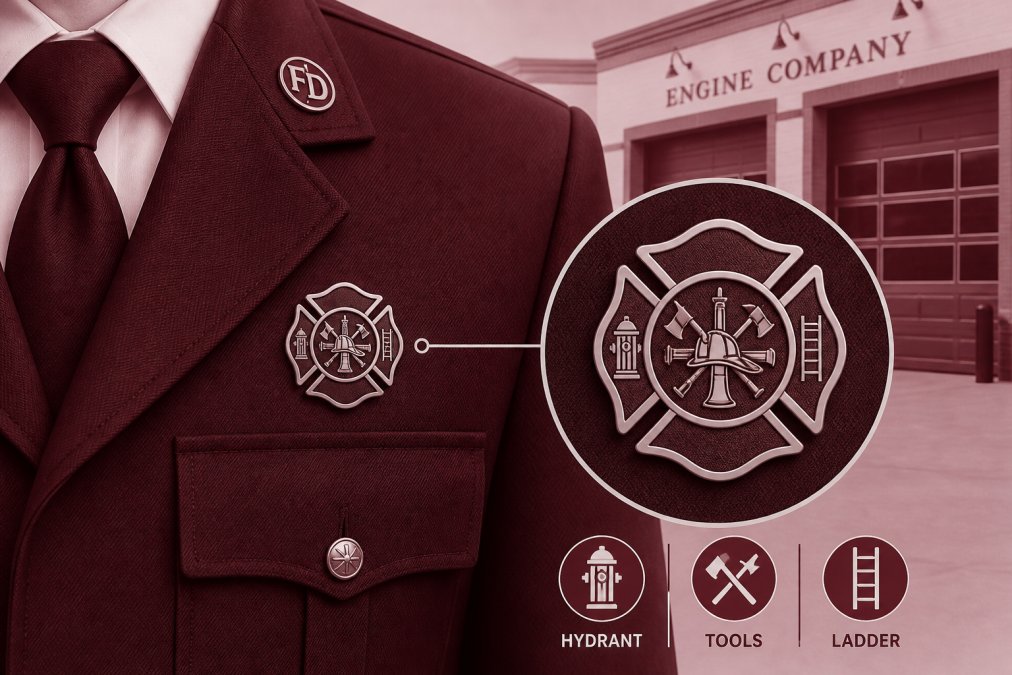
Visual Anatomy of the Scramble
The scramble's design is deceptively simple but layered with meaning. At the center sits the Maltese cross, a four-pointed cross with splayed arms synonymous with firefighting for over a century. Radiating outward, the traditional tools of the trade are arranged in a balanced, symmetrical pattern.
The pike pole symbolizes ventilation and forcible entry. The fire axe represents the aggressive, decisive action firefighters take when lives are at stake. The ladder symbolizes rescue operations and the willingness to climb into danger. The hydrant wrench or water nozzle represents the water supply and suppression capabilities that form the backbone of fire attack. Some departments include a bugle or trumpet, honoring the historical role of these instruments in fire service communication.
The visual balance of the scramble is intentional. No single tool dominates; each occupies equal visual weight, reflecting the reality that every role, tool, and crew member matters equally. A scramble on firefighter apparel honors this principle of shared responsibility and collective strength.
Origin and History of the Fire Department Scramble
The fire department scramble traces back to the early days of organized firefighting in America, when volunteer fire companies began developing their own insignia and symbols. These were badges of identity in communities where firefighting was one of the most dangerous and respected roles a person could take on.
The Maltese cross became associated with firefighters in the 1800s, adopted from military and medical traditions where it symbolized protection and service. As fire departments professionalized and standardized their uniforms and insignia, the scramble evolved into a way to display multiple symbols of the trade in a single, compact design.
By the mid-20th century, the scramble had become standardized across many American fire departments, though regional variations emerged based on local traditions and departmental preferences. The design reflected the tools available at the time: pike poles, axes, and ladders were the primary equipment firefighters relied on. The scramble represents more than historical nostalgia; it embodies the continuity of the fire service, a visual link between firefighters of different eras united by the same commitment to service.
Symbolism Behind the Scramble Design
The Maltese Cross and Its Connection
The Maltese cross sits at the heart of the scramble, and its symbolism runs deep. Each of its four points extends outward with splayed, widened ends, a design that makes it instantly recognizable. The cross's four points symbolize duty, honor, courage, and commitment, not abstract virtues but the daily reality of fire service work.
The Maltese cross became associated with firefighting through its historical connection to protection and service. In medieval times, the Knights Hospitaller used this cross as their symbol, and it later appeared in military and medical contexts where it signified readiness to protect others at personal risk. When American fire departments adopted it, they tapped into a centuries-old tradition of service and sacrifice. The cross signals that firefighters are part of something larger than themselves, a heritage of courage and duty that extends back generations.
Tools and Elements Represented
Each tool in the scramble tells a specific story about fire service work and values. The pike pole is a long, versatile tool used for ventilation, opening walls, and pulling down burning materials. It represents the technical skill and precision required in firefighting. The fire axe represents decisive action and the willingness to breach barriers between firefighters and those who need rescue. It symbolizes the aggressive, forward-thinking approach that defines fire attack.
The ladder symbolizes rescue and the willingness to climb into danger. Ladders are essential for accessing upper floors, conducting rescues, and positioning firefighters for ventilation and attack. The ladder represents both the practical necessity of rescue work and the metaphorical climb through training and career advancement. The hydrant wrench or water nozzle represents the water supply and suppression capabilities that form the core of fire attack. Water is the primary tool firefighters use to control and extinguish fire, and the nozzle represents the precise application of that water.
Regional Variations Across Fire Departments
While the scramble follows a consistent basic design, regional variations reflect the unique history and priorities of different fire departments. Some departments emphasize the Maltese cross more prominently, while others create scrambles that are more tool-focused. Wildland fire departments often modify the scramble to include elements relevant to their work, such as pine trees or water droppers. Urban fire departments might emphasize the ladder or hydrant wrench more heavily, reflecting the types of calls they handle most frequently.
Some departments have adopted modern variations that include contemporary equipment like SCBA tanks or thermal imaging cameras, updating the traditional design to reflect how firefighting has evolved. These variations show that the scramble isn't frozen in history; it's a living symbol that adapts while maintaining its core meaning and acknowledging regional differences in firefighting operations.
Common Fire Service Acronyms and Radio Codes
Essential Fire Department Radio Codes Explained
Fire service communication relies on a standardized set of codes and acronyms that allow firefighters to communicate quickly and clearly over radio systems. These codes developed out of necessity; in emergency situations, brevity and clarity are critical.
SCBA stands for self-contained breathing apparatus, the equipment firefighters wear to breathe in smoke-filled environments. PPE refers to personal protective equipment, the full turnout gear that protects firefighters from heat and hazards. RIT is the rapid intervention team, firefighters assigned specifically to rescue other firefighters in danger. MAYDAY is the emergency call used when a firefighter is in distress and needs immediate assistance.
Defensive operations indicate that firefighters are fighting a fire from outside the structure because interior attack is too dangerous. Master stream refers to large-volume water delivery from ground-based or aerial apparatus, used when the fire is too large or dangerous for hand-held lines. Ventilation or vent means removing smoke and heat from a structure, a critical operation that improves conditions for interior crews and helps control fire behavior.
Many departments have moved away from 10-codes in favor of plain English to reduce confusion during emergency operations. All clear indicates that a structure has been searched and no victims are found. HAZMAT refers to hazardous materials incidents, which require specialized training and equipment. MVA is a motor vehicle accident. Understanding these codes and acronyms reveals the vocabulary of preparedness and readiness that defines the fire service.
Fire Service Tradition and the Scramble Today
The scramble endures as a symbol because it connects firefighters to something larger than their individual careers. It represents the continuity of the fire service, a visual link to firefighters who came before and those who will come after. When a firefighter puts on a shirt bearing the scramble, they're joining a tradition of service and sacrifice that extends back generations.
Fire service tradition emphasizes brotherhood, accountability, and respect for the job. The scramble embodies these values in a single image. It appears on uniforms, on station walls, on memorial tributes, and on apparel worn by active firefighters, retirees, and supporters of the fire service. Premium firefighter apparel that features the scramble speaks directly to those who understand its meaning.
The scramble also serves a practical purpose in modern fire service culture. It's a design that works across different mediums, embroidered on shirts, printed on hoodies, engraved on accessories. It scales well and remains recognizable regardless of size or format. Today's firefighters wear the scramble with the same sense of purpose as firefighters decades ago. The tools may have changed, but the fundamental values represented by the scramble remain constant: readiness, preparedness, courage, and commitment to service.
The fire department scramble is far more than a decorative emblem. It's a compact visual statement of what the fire service stands for: readiness, preparedness, brotherhood, and a commitment to service that transcends individual firefighters. Understanding the scramble, its history, its symbolism, and its regional variations gives insight into the culture and values that define professional firefighting. Whether you're an active firefighter, a fire academy recruit, a retiree honoring your service, or someone who supports the fire service community, recognizing the meaning behind the scramble deepens your connection to the tradition you're part of. At Black Helmet, we create apparel and accessories that honor these values and help firefighters, their families, and supporters express their commitment to the fire service legacy.
Frequently Asked Questions
What does the fire department scramble symbolize?
The fire department scramble represents readiness, preparedness, and the core values of the fire service. Its design incorporates the Maltese Cross, tools of the trade like the pike pole and fire axe, and ladder imagery. Each element symbolizes a different aspect of firefighting heritage, duty, and emergency response. The scramble serves as a badge of honor that connects firefighters to generations of those who served before them.
What are the most common fire service acronyms I should know?
Essential fire service acronyms include SCBA (Self-Contained Breathing Apparatus), HAZMAT (Hazardous Materials), EMT (Emergency Medical Technician), and FDNY (Fire Department of New York). Understanding common fire service acronyms helps recruits communicate effectively during training and emergency operations. Radio codes like 10-codes vary by department, but knowing your local codes is critical for first alarm response and defensive operations coordination.
How do fire departments use radio codes during emergencies?
Fire department radio codes enable quick, clear communication during emergency response. Codes like 10-4 (acknowledged) and 10-8 (in service) standardize communication across departments. Radio codes help dispatch coordinate apparatus movement, identify fire suppression needs, and manage first alarm assignments. Each department may use slightly different codes, so recruits learn their specific department's system during academy training.
Why do firefighters use jargon and acronyms instead of plain language?
Fire service jargon and acronyms speed up communication during high-stress emergency response situations where every second counts. Terms like 'Charlie Side' (the Charlie side of a building in fireground operations) and 'master stream' (large-volume water delivery) allow crews to share critical information instantly without confusion. This specialized language is part of fire service tradition and helps ensure all personnel understand their roles during fire suppression and rescue operations.
This article was written using GrandRanker
