

Durable Clothing for Wildland Firefighters: A Complete Guide
Table of Contents
- Why Durable Clothing for Wildland Firefighters Matters
- Understanding NFPA 1977 Standards for Wildland Gear
- Nomex Wildland Fire Gear: The Gold Standard
- Essential Durability Features in Wildland Brush Gear
- Breathability and Moisture Management for Heat Stress Prevention
- Wildland Fire Gear Maintenance and Lifecycle
- Cost of Wildland Firefighter Gear and Budget Planning
- Real-World Field Performance and Integration with Other PPE
Last Updated: July 22, 2026
Why Durable Clothing for Wildland Firefighters Matters
When wildland firefighters deploy to the fireline, durable clothing becomes a lifeline. Every stitch and fabric choice determines whether gear holds up under extreme heat, abrasion, and unpredictable brush fire conditions. Wildland firefighting presents unique challenges: moving through dense brush, scrambling over rocky terrain, and working 12-16 hour shifts in extreme heat. Your clothing must flex with you, breathe when temperatures spike, and resist constant tearing from chaparral and juniper. Research from NFPA wildland firefighter safety standards shows that proper protective clothing reduces heat-related injuries by up to 40%, yet many crews still rely on gear that doesn't meet current durability standards.
Understanding NFPA 1977 Standards for Wildland Gear
NFPA 1977 defines what protective clothing for wildland firefighters must achieve. If your gear doesn't meet NFPA 1977 certification, it's not wildland firefighting gear, it's work clothes. The standard sets minimum requirements for flame-resistant properties, thermal protection, and durability under wildland-specific stresses, including constant abrasion from brush, rocks, and terrain.
Flame-Resistant Fabric Requirements
Flame-resistant (FR) fabric is the foundation of all wildland firefighter clothing. When exposed to flame or extreme heat, FR materials self-extinguish or char in ways that prevent melting or dripping onto your skin. NFPA 1977 requires that wildland gear maintain flame resistance after ignition source removal, with no melting or dripping. Most wildland gear uses Nomex IIIA (inherently flame-resistant at the fiber level), Tecasafe Plus (Nomex blended with other fibers for improved durability), or Sigma fabric (a modacrylic-based alternative that meets standards but degrades faster).
Thermal and Arc Flash Protection Ratings
NFPA 1977 specifies thermal protection ratings measured by how long it takes fabric to allow enough heat transfer to cause second-degree burns. Gear must maintain these ratings throughout its service life, as washing, sun exposure, and repeated thermal stress gradually degrade some FR fabrics.
Nomex Wildland Fire Gear: The Gold Standard
Nomex IIIA is a meta-aramid fiber that is inherently flame-resistant, with protection built into the fiber structure itself. Unlike FR treatments that wash out, Nomex's protection is permanent. This is why it remains the preferred choice for serious wildland crews.
How Nomex IIIA Outperforms Other FR Fabrics
Nomex's durability advantage comes from fiber chemistry. After 50 washings, your gear still performs as it did on day one. Nomex IIIA handles wildland-specific stresses better than alternatives: it resists tearing when snagged on brush, doesn't melt under radiant heat, and maintains structural integrity when repeatedly exposed to sparks and embers. Quality Nomex brush shirts run $150-250, while cheaper FR alternatives start at $80-120. However, Nomex gear lasts 4-5 seasons with proper care while budget alternatives last 1-2 seasons, making Nomex more cost-effective long-term.
Tecasafe Plus and Alternative FR Technologies
Tecasafe Plus blends Nomex with other fibers to improve durability and comfort while maintaining NFPA 1977 compliance. It offers slightly better abrasion resistance than pure Nomex IIIA and typically costs 10-15% less. Sigma fabric is another NFPA 1977-compliant option positioned as a budget alternative, but doesn't perform as consistently across multiple wash cycles.
| Fabric Type | NFPA 1977 Compliant | Durability | Typical Lifespan | Price Range |
|---|---|---|---|---|
| Nomex IIIA | Yes | Excellent | 4-5 seasons | $150-250 per shirt |
| Tecasafe Plus | Yes | Very Good | 3-4 seasons | $130-200 per shirt |
| Sigma | Yes | Good | 2-3 seasons | $80-130 per shirt |
Essential Durability Features in Wildland Brush Gear
Durable wildland gear isn't just about base fabric, it's about how that fabric is engineered, reinforced, and constructed. A Nomex shirt with weak stitching will fail faster than budget gear with superior construction.
Reinforced Knees, Stitching, and High-Wear Zones
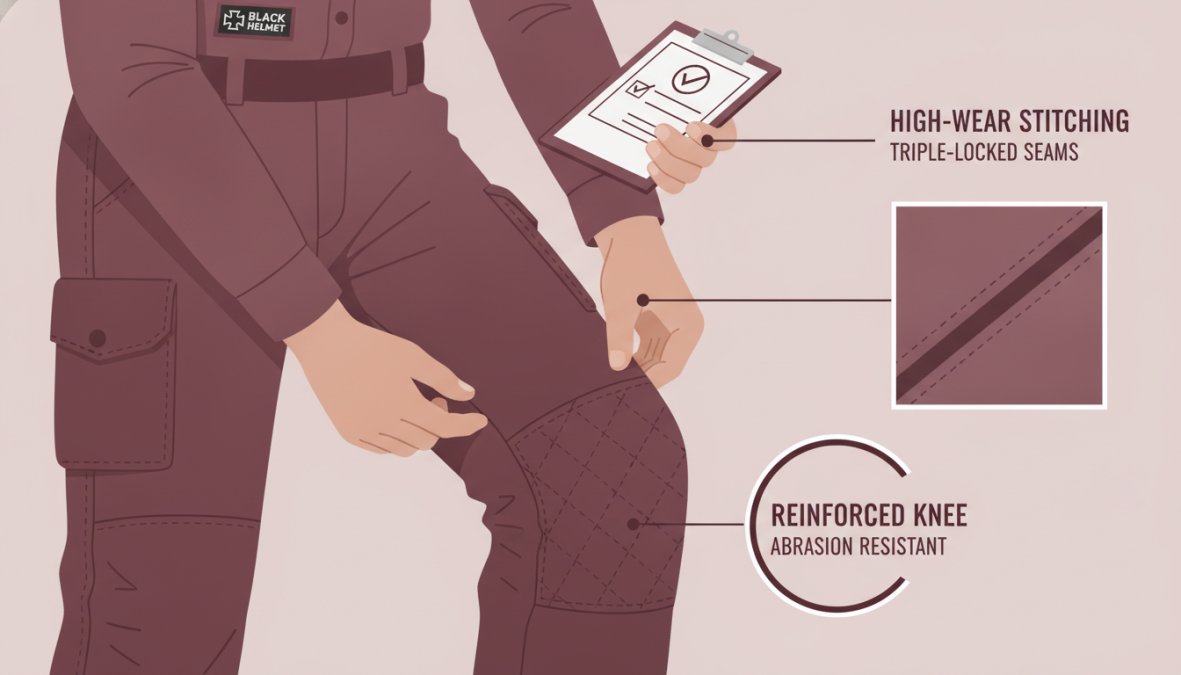
Quality wildland brush pants have reinforced knees using double or triple-layer fabric panels extending 4-6 inches above and below the kneecap. Quality gear uses double-stitched or triple-stitched seams, especially at stress points like armholes, crotch seams, and shoulder seams. Look for tight, even stitching, loose or wavy stitching indicates poor construction and early failure. High-wear zones extend beyond knees to the seat, elbows, and cuff areas.
Abrasion Resistance and Tear Prevention
Abrasion resistance measures how well fabric resists wearing through when rubbed against rough surfaces. The best wildland gear combines Nomex with strategic reinforcement in high-wear areas. Some manufacturers add Kevlar reinforcement panels on elbows and forearms while keeping the torso in lighter Nomex, balancing protection, durability, and comfort. Medium-weight Nomex (8-10 ounces per square yard) with tight plain weave construction resists tears better than heavy, uncomfortable fabric throughout.
Breathability and Moisture Management for Heat Stress Prevention
The biggest challenge in designing durable wildland firefighter clothing is balancing protection with breathability. Moisture-wicking technology and strategic ventilation design become critical. According to CDC wildland firefighter safety guidelines, heat-related illness accounts for significant non-fatal injuries. Crews working 12-16 hour shifts in temperatures exceeding 100°F with heavy gear are at constant risk.
Moisture-Wicking Technology in Brush Shirts and Pants
Moisture-wicking fabrics pull sweat away from your skin and move it to the outer surface where it can evaporate. Most modern wildland gear uses moisture-wicking technology built into Nomex or blended with it. Quality brush shirts feel noticeably drier after a few hours of work compared to older-generation gear.
Ventilation Design Without Compromising Protection
Strategic ventilation design allows air circulation without creating gaps in protection. Some manufacturers use mesh panels in low-risk areas like the sides of the torso. Quality wildland gear achieves balance: snug enough to maintain protection, loose enough to allow air circulation and movement.
Wildland Fire Gear Maintenance and Lifecycle
How you maintain your gear directly determines how long it lasts and whether it maintains protective properties. Proper cleaning, storage, and inspection can extend quality wildland gear life by 1-2 seasons.
Proper Cleaning and Storage Practices
Never dry clean wildland firefighter gear. Machine wash in cold water with mild detergent designed for technical fabrics. Air dry completely before storing in a cool, dry place away from direct sunlight. Fold carefully to avoid permanent creases that weaken fabric. Inspect regularly for separating weave, fraying seams, or peeling reinforced panels.
When to Replace Gear and Sustainability Considerations
Quality Nomex wildland gear lasts 4-5 seasons with proper care. Replace gear immediately if you notice seams separating, large tears, reinforced panels peeling away, discoloration indicating extreme heat exposure, or fit issues that can't be addressed. Gear that lasts longer reduces waste and environmental impact. When gear reaches end-of-life, some manufacturers offer recycling programs or donation options.
Cost of Wildland Firefighter Gear and Budget Planning
A complete set of brush gear typically costs $300-500 for quality Nomex or Tecasafe Plus, compared to $150-250 for budget alternatives. For career firefighters and departments, higher upfront cost for gear lasting 4-5 seasons costs less per season than replacing budget gear every 2 seasons. The quality shirt provides better protection, better moisture management, and better durability throughout its service life.
Investment in Quality vs. Long-Term Durability
A quality Nomex brush shirt ($150-200) versus a budget alternative ($60-80) costs roughly $30-40 per season over five seasons. For departments deploying crews 100+ days per season, crews in quality gear report fewer heat stress issues and maintain better performance in later hours of long shifts, translating to improved safety.
Gender-Specific Fit and Sizing Challenges
Gear that doesn't fit properly wears out faster because it creates stress points where fabric is pulled or bunched. Manufacturers increasingly recognize this gap, with quality gear now coming in women-specific cuts accounting for different proportions. Prioritize fit over size number, gear that fits properly will outlast oversized or undersized gear by multiple seasons.
Real-World Field Performance and Integration with Other PPE
How durable wildland gear performs depends not just on the gear itself, but on how it integrates with your protective ensemble. Quality wildland gear coordinates with moisture-wicking base layers designed for fire service use. Integration with packs and fire shelters also matters, gear that fits properly under a pack without bunching will last longer. Research from National Interagency Fire Center wildland firefighter training standards emphasizes that gear is part of a larger protective system where each component does its job and components work together.
Choosing durable clothing for wildland firefighters means understanding that protection and durability are inseparable. Quality Nomex or Tecasafe Plus gear, properly maintained and fitted correctly, provides consistent protection season after season while lasting significantly longer than budget alternatives. The investment in gear meeting NFPA 1977 standards, featuring reinforced high-wear zones, and managing moisture effectively pays for itself through extended service life and improved crew safety.
Frequently Asked Questions
What makes NFPA 1977 compliance important for durable clothing for wildland firefighters?
NFPA 1977 standards establish minimum performance requirements for flame-resistant fabric, thermal protection, and durability in wildland gear. Compliance ensures your clothing meets critical safety benchmarks for heat resistance, abrasion resistance, and seam strength under extreme fireline conditions. Non-compliant gear may fail when exposed to intense heat or sharp debris, putting firefighters at risk. Always verify NFPA 1977 certification on product labels before purchasing wildland brush shirts and pants.
How does Nomex wildland fire gear compare to other FR fabrics?
Nomex IIIA is the industry standard for wildland gear because it provides superior flame resistance, durability, and moisture management. Unlike some synthetic alternatives, Nomex maintains structural integrity when exposed to extreme heat and doesn't melt or shrink excessively. Tecasafe Plus and Sigma fabric offer comparable protection, but Nomex IIIA has the longest field-proven track record. The choice between them often depends on budget, climate conditions, and personal preference for breathability versus maximum thermal protection.
What is the realistic cost of wildland firefighter gear and how long does it last?
A complete wildland fire gear setup (brush shirt, brush pants, socks, and accessories) typically ranges from $300-$600 depending on fabric quality and brand. Premium Nomex IIIA gear costs more upfront but lasts 3-5 years with proper maintenance, while lower-cost alternatives may need replacement in 1-2 years. Investing in quality gear reduces long-term costs and ensures consistent protection. Budget should account for regular replacement and maintenance supplies like specialized detergents and storage solutions.
How do you maintain wildland fire gear to maximize durability?
Proper wildland fire gear maintenance extends durability significantly. Wash gear in cool water with mild detergent designed for FR fabrics, avoid bleach and fabric softeners that compromise flame resistance. Air-dry completely before storage to prevent mildew and degradation. Inspect for tears, worn seams, and fading before each season. Store in a cool, dry location away from direct sunlight. Replace gear immediately if you notice permanent staining, persistent odors after washing, or visible damage to reinforced areas like knees and stitching.
This article was written using GrandRanker
