

Choosing Comfortable Apparel for Long Fire Shifts
Table of Contents
- Why Comfort Matters During Long Fire Shifts
- Understanding Fabric Options for Comfortable Firefighter Shirts
- Fit and Mobility for Station Wear
- Moisture-Wicking Shirts for Firefighters: Managing Sweat and Heat
- Firefighter Uniform Layering for Changing Conditions
- Durability and Care: Making Apparel Last Through Your Shift Rotation
- Building Your Shift Apparel System
- Frequently Asked Questions
Last Updated: October 11, 2026
Why Comfort Matters During Long Fire Shifts
Choosing comfortable apparel for long fire shifts isn't a luxury, it's essential. When you're on a 24-hour rotation or pulling back-to-back shifts, what you wear directly affects your performance, focus, and safety. Uncomfortable clothing causes distraction, creates pressure points that lead to fatigue, and can compromise your ability to respond quickly when the alarm sounds.
The stakes are high. A shirt that rides up, restricts your shoulders, or traps sweat doesn't just feel bad, it affects your readiness. At Black Helmet, we understand that station wear is part of your professional identity. It needs to work as hard as you do.
Comfort during long shifts comes down to three core factors: the fabric itself, how the garment fits your body, and how well it manages moisture and temperature changes throughout your day. Get these right, and you'll move through your shift without thinking about what you're wearing. Get them wrong, and every hour feels longer.
Understanding Fabric Options for Comfortable Firefighter Shirts
Not all fabrics perform the same way during extended wear. The material you choose determines how your shirt handles sweat, heat, and the physical demands of station work and emergency response. Let's break down the real-world performance of the most common options.
Cotton and Cotton-Blend Performance
100% cotton is comfortable but has clear limitations for long shifts. Cotton absorbs moisture quickly, which feels good initially. The problem appears hours into your shift: the fabric stays wet against your skin, cools rapidly, and creates a clammy feeling that builds fatigue.
Cotton-blend shirts, typically 50/50 cotton-polyester or 60/40 blends, perform better. The polyester component helps the fabric dry faster while maintaining the softness of cotton. For firefighters on station, a quality cotton-blend shirt strikes a balance between comfort and practicality.
Black Helmet's Fire Rescue Thin Red Line Premium Tee uses a premium cotton blend designed specifically for all-day wear. The fabric is soft enough for comfort during downtime but durable enough for training and active station work.

Key characteristics of cotton blends:
- Breathable and soft against skin
- Dry faster than pure cotton
- Maintain shape through repeated washing
- Cost-effective for regular rotation
- Work well as base layers under heavier apparel
Tri-Blend and Hybrid Fabrics
Tri-blend fabrics combine three fibers, typically cotton, polyester, and rayon, to create a lightweight, soft shirt that drapes well. The rayon component adds a subtle sheen and reduces the weight compared to standard cotton blends.
These fabrics excel at moisture management. The polyester wicks sweat away from your skin while the cotton provides comfort. Rayon adds breathability that pure cotton-polyester blends can't match. For firefighters managing body heat during station activities, tri-blend shirts offer genuine performance advantages.
Black Helmet's Make Your Own Luck Premium Tee is a tri-blend construction (50% polyester, 25% cotton, 25% rayon) that delivers a vintage fit with exceptional durability. The lighter weight means less bulk under your station uniform or under additional layers.

Tri-blend advantages for long shifts:
- Lightweight and less restrictive
- Superior moisture-wicking compared to cotton
- Soft feel that improves with washing
- Excellent breathability
- Ideal for layering systems
Fit and Mobility for Station Wear
Fit determines whether a shirt works for you or against you during a full shift. An oversized shirt bunches up when you sit. A tight shirt restricts your shoulders during equipment checks and training.
Station wear needs to accommodate your real body and your real movements. You'll be sitting in the truck, reaching overhead to grab equipment, bending down, and moving quickly when needed. Your shirt should move with you, not against you.
Look for these fit characteristics:
- Shoulder seams sit at your actual shoulder point, not drooping or pulling up
- Sleeves have enough length that they don't ride up when your arms are raised
- Chest and torso fit snugly without pulling or gaping
- Hem reaches your hip without excess fabric
- Side seams sit at your side, not wrapping around to your front or back
Mobility matters more than aesthetics. A slightly loose fit beats a tight fit every time when you need to move quickly. Test the fit by raising your arms overhead, reaching across your body, and bending forward.
Black Helmet's apparel is designed with regular fit that accommodates real firefighters. The Prepare For Everything Embroidered Long Sleeve Tee features side-seamed construction that provides structure without restricting movement. Crew neck styling sits properly without choking when you're wearing gear over it.
Moisture-Wicking Shirts for Firefighters: Managing Sweat and Heat
Moisture-wicking fabrics move sweat away from your skin to the outer surface of the garment, where it can evaporate. This keeps you dry, reduces chafing, and prevents the clammy feeling that builds fatigue during long shifts.
Pure cotton doesn't wick moisture, it absorbs it. Your shirt gets heavy and stays wet. Synthetic fibers and blends with polyester or rayon actively push moisture outward, keeping your skin drier and more comfortable.
The science is simple: when sweat stays against your skin, your body temperature drops as it evaporates, making you feel cold. When moisture moves to the fabric surface, evaporation happens faster, and you stay at a more stable temperature.
For firefighters managing sweat and heat during long shifts:
- Polyester-blend shirts dry 30-40% faster than 100% cotton
- Tri-blend fabrics add rayon, which improves breathability
- Lighter-weight fabrics reduce heat buildup
- Moisture-wicking reduces odor buildup over extended wear
- Faster-drying fabrics mean cleaner garments with less frequent washing
Test moisture-wicking by wearing the shirt during physical activity. A good moisture-wicking shirt should feel dry to the touch within 20-30 minutes of stopping activity. Pure cotton will still feel damp.
Firefighter Uniform Layering for Changing Conditions
Your shift apparel system needs to adapt to temperature changes throughout your day. You might start your shift in a cool station, warm up during training, cool down during downtime, and then respond to a call in variable conditions. Layering lets you adjust without changing your entire outfit.
A solid layering system starts with a comfortable base layer (the shirt against your skin), adds a mid-layer for warmth when needed, and includes an outer layer for protection and professionalism.
Base Layers and Mid-Layers
Your base layer is your foundation. It should be soft, moisture-wicking, and comfortable enough to wear all shift. This is where your station shirt lives, the garment you wear most of the time.
Fire Rescue Thin Red Line Premium Tee →
Mid-layers add warmth without bulk. A lightweight long-sleeve shirt works as a mid-layer under your station uniform or under a jacket when the station is cold. Long sleeves also provide a professional appearance during community interactions and public visibility.
Black Helmet's Bomberos Dusk To Dawn Premium Tee is 100% combed ring-spun cotton with a 4.3 oz/yd² fabric weight.

Base and mid-layer selection:
- Base layer: moisture-wicking, soft, fits close to body
- Mid-layer: adds warmth, worn over base layer or under outer layer
- Both should allow full mobility for equipment work
- Layering lets you stay comfortable as temperature changes
Outer Layers and Transitions
Your outer layer is what people see. It should project professionalism while providing protection from the elements. A lightweight jacket or overshirt transitions easily from station to community interactions to vehicle response.
Outer layers should be easy to remove and stow when you need to move quickly. A jacket that fits well over your base and mid-layers without excess bulk is ideal. You want to layer without looking like you're wearing three shirts.
The transition from station wear to response gear should be smooth. Your base and mid-layers should fit comfortably under your turnout gear without bunching, creating pressure points, or restricting movement. This is where fit discipline matters most.
Durability and Care: Making Apparel Last Through Your Shift Rotation
Quality apparel that lasts through repeated washing saves money and ensures consistency in your rotation. Firefighter shirts take abuse: sweat, heat, friction from gear, and frequent laundering.
Durable fabrics start with high-quality fiber. Look for combed ring-spun cotton, which has been processed to remove short fibers and impurities. This creates stronger yarn and a softer feel. Tri-blend fabrics with quality rayon also maintain durability through repeated wear and washing.
Seam construction matters equally. Side-seamed shirts (where the seams run along your sides rather than wrapping around your torso) distribute stress better and last longer. Reinforced collar and cuff stitching prevents fraying and stretching.
Care practices extend garment life:
- Wash in cool water to prevent shrinking and fading
- Use mild detergent designed for performance fabrics
- Avoid fabric softeners, which break down moisture-wicking properties
- Dry on low heat or air dry to prevent shrinkage
- Check for damage before washing to catch small problems early
- Rotate shirts to distribute wear evenly across your collection
Black Helmet apparel is pre-shrunk to prevent the common problem of shirts shrinking after purchase. The Prepare For Everything Embroidered Long Sleeve Tee uses 100% airlume combed ring-spun cotton with cover-stitched collar and ribbed cuffs designed to withstand repeated washing and active wear.
Store clean, dry apparel in a cool location away from direct sunlight. Sunlight fades colors and degrades fibers over time. A dark closet or drawer keeps your shirts looking fresh through your rotation.
Building Your Shift Apparel System
Start with a foundation of 4-5 quality base shirts in your regular rotation. These are your workhorses, the shirts you wear most frequently during station time and training.
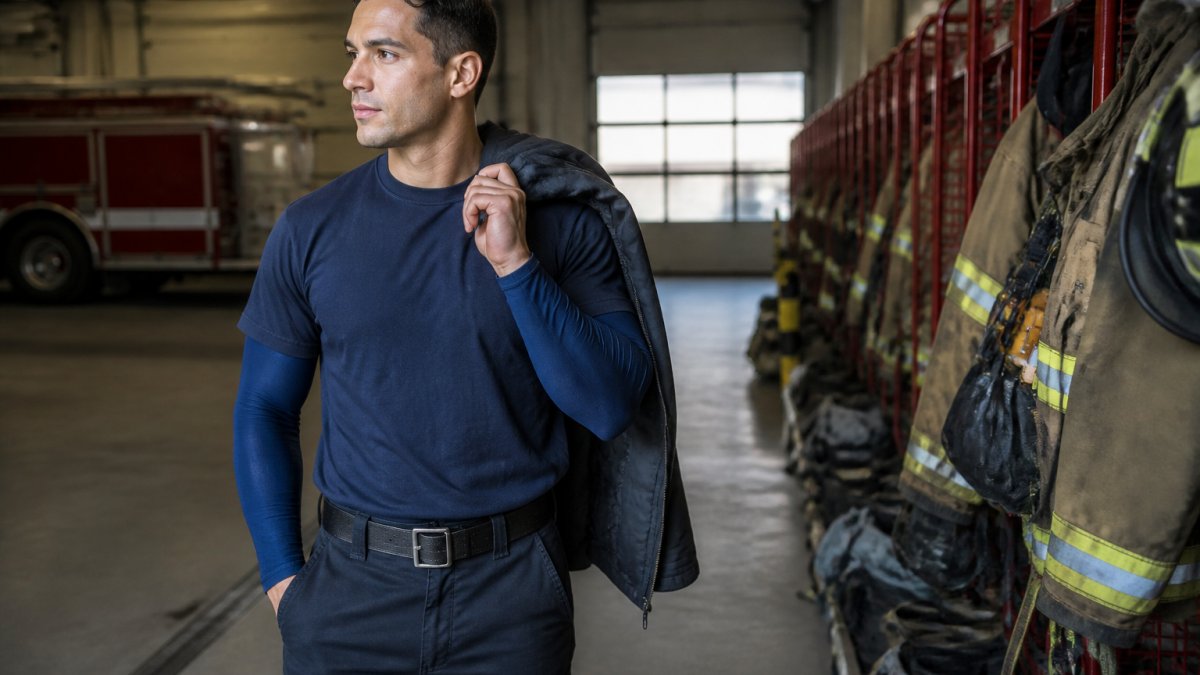
Add 2-3 mid-layer options: long-sleeve shirts for cooler mornings, heavier-weight tees for layering, or lightweight sweaters for station downtime.
Include 1-2 outer-layer options: a lightweight jacket for cool weather or a button-up overshirt for professional interactions. These should layer smoothly over your base and mid-layers without creating bulk or restriction.
Your system should include:
- 4-5 quality base shirts (short or long sleeve based on season)
- 2-3 mid-layer options for temperature adjustment
- 1-2 outer layers for protection and professionalism
- All pieces fit together without bulk or restriction
- Fabrics are compatible (similar care requirements, compatible weights)
- Color coordination allows mixing and matching
Quality matters more than quantity. Five excellent shirts that fit perfectly and last through a full season beat ten cheap shirts that shrink, fade, and fall apart.
Rotate your shirts to distribute wear evenly. Don't wear the same shirt three days in a row. Spread wear across your collection.
Invest in the basics first. A solid collection of well-fitting, moisture-wicking base shirts is the foundation.
Frequently Asked Questions
What fabrics are best for comfortable firefighter shirts during long shifts?
Cotton-blend and tri-blend fabrics work best for long shifts. Pure cotton offers breathability and comfort but absorbs sweat. Tri-blend fabrics (50% polyester, 25% cotton, 25% rayon) provide a lightweight fit, durability, and moisture management. Cotton-poly blends balance softness with durability. Look for pre-shrunk fabrics to maintain fit through repeated washing. The key is choosing a fabric that breathes while holding up to the demands of a full shift.
How should a firefighter shirt fit for comfort during a long shift?
Your shirt should allow full arm mobility without binding at the shoulders or chest. Sleeves should reach your wrist when arms are at rest, and the shirt should be loose enough to move freely but not so baggy it catches on equipment. Side-seamed construction reduces chafing during extended wear. Look for cover-stitched collars and ribbed cuffs that maintain shape. A regular fit works for most, but prioritize movement over a tight athletic cut for all-shift comfort.
Why is moisture-wicking important for firefighters on long shifts?
Moisture-wicking fabrics pull sweat away from your skin, keeping you dry and comfortable throughout your shift. When sweat stays on your skin, it causes chafing, discomfort, and temperature regulation problems. Poly-cotton blends and tri-blends wick moisture better than pure cotton. Fast-drying fabrics prevent the clammy feeling that builds during physical activity or heat exposure. This is especially critical during training, workouts, or summer shifts when heat and humidity are high.
How do I care for firefighter shift apparel to make it last longer?
Wash in cold water to preserve fabric integrity and color. Use gentle detergent and avoid bleach unless the care label permits it. Turn shirts inside out before washing to protect distressed artwork. Dry on low heat or air-dry to prevent shrinkage and print damage. Pre-shrunk fabrics hold their shape better through repeated washing. Check seams and cuffs regularly for wear. Proper care extends garment life significantly and maintains the professional appearance and fit you need for station wear.
Choosing comfortable apparel for long fire shifts comes down to understanding your body, knowing how fabrics perform, and building a system that adapts to your day. The right shirt keeps you focused on the job, not on how you feel. Black Helmet creates apparel designed by firefighters who understand these demands, premium fabrics, thoughtful fit, and authentic designs that represent the brotherhood. Your shift system should work as hard as you do.
