

Buy High Quality Firefighter Gear: A Complete 2026 Guide
Table of Contents
- Why Buying High Quality Firefighter Gear Matters
- Understanding NFPA Certified Turnout Gear Standards
- Essential Categories of Firefighter Gear to Buy
- Gear Sizing and Fitment: Getting the Right Fit
- The Firefighter Gear Replacement Cycle Explained
- How to Inspect Firefighter Gear Before Purchase
- Firefighter PPE Maintenance Tips for Longevity
- Budget vs. Professional Tier: What You Really Need
Last Updated: July 14, 2026
When you're gearing up for the fireline, every decision matters. The difference between adequate protection and truly reliable equipment can mean the difference between a safe shift and a dangerous one. At Black Helmet, we've spent years understanding what firefighters actually need, not just what's trendy or cheapest, but what genuinely protects you when conditions get serious.
This guide covers everything you need to know about buying high quality firefighter gear in 2026: essential categories, certification standards that matter, proper sizing and inspection, and when professional-tier equipment is worth the investment.
Why Buying High Quality Firefighter Gear Matters
Quality firefighter gear isn't a luxury, it's a requirement for survival. Poor-quality PPE fails predictably: seams separate under stress, materials lose fire-resistant properties after a few washings, boots develop leaks, and helmets crack. Professional-tier gear costs more upfront because it's engineered to last longer, maintain protective properties through dozens of wash cycles, and perform reliably under extreme conditions.
Understanding NFPA Certified Turnout Gear Standards
NFPA standards exist because firefighters died. Every requirement in NFPA 1971 and NFPA 1977 was written in response to real failures that cost lives.
NFPA 1971 and Structural Firefighting PPE
NFPA 1971 is the standard for structural firefighting protective ensembles, your turnout gear, coat, pants, boots, gloves, and helmet. The standard specifies minimum performance requirements for flame resistance, thermal protection, moisture barriers, and durability.
What most firefighters don't realize is that NFPA certification only guarantees minimum performance at manufacture. A coat that passes NFPA 1971 on day one might fail to meet standards after 50 wash cycles if made from lower-quality materials. Professional-tier gear earns its price through better materials, superior seam construction, and higher-quality flame-resistant treatments that maintain protective properties through 100+ wash cycles.
NFPA 1977 and Wildland Equipment Requirements
Wildland firefighting gear operates under different standards because the environment differs. NFPA 1977 covers wildland protective clothing, which must be lighter and more mobile than structural gear but still provide serious protection against radiant heat and flame. Wildland gear prioritizes mobility and breathability because you're hiking rough terrain for hours, not entering buildings. Understanding the difference matters because you can't use structural gear for wildland assignments and shouldn't use wildland gear for structure fires.
Essential Categories of Firefighter Gear to Buy
When you buy high quality firefighter gear, you're actually buying multiple interconnected systems. Each category serves a specific purpose, and gaps in any category compromise your overall protection.
Structural Firefighting PPE and Turnout Gear
Your turnout ensemble is your primary protection during structure fires: coat, pants, boots, gloves, and helmet working together as a system. Professional-tier turnout gear features multiple layers: an outer shell resisting flame and moisture, a thermal barrier insulating against radiant heat, and a moisture barrier preventing water and steam from reaching your skin.
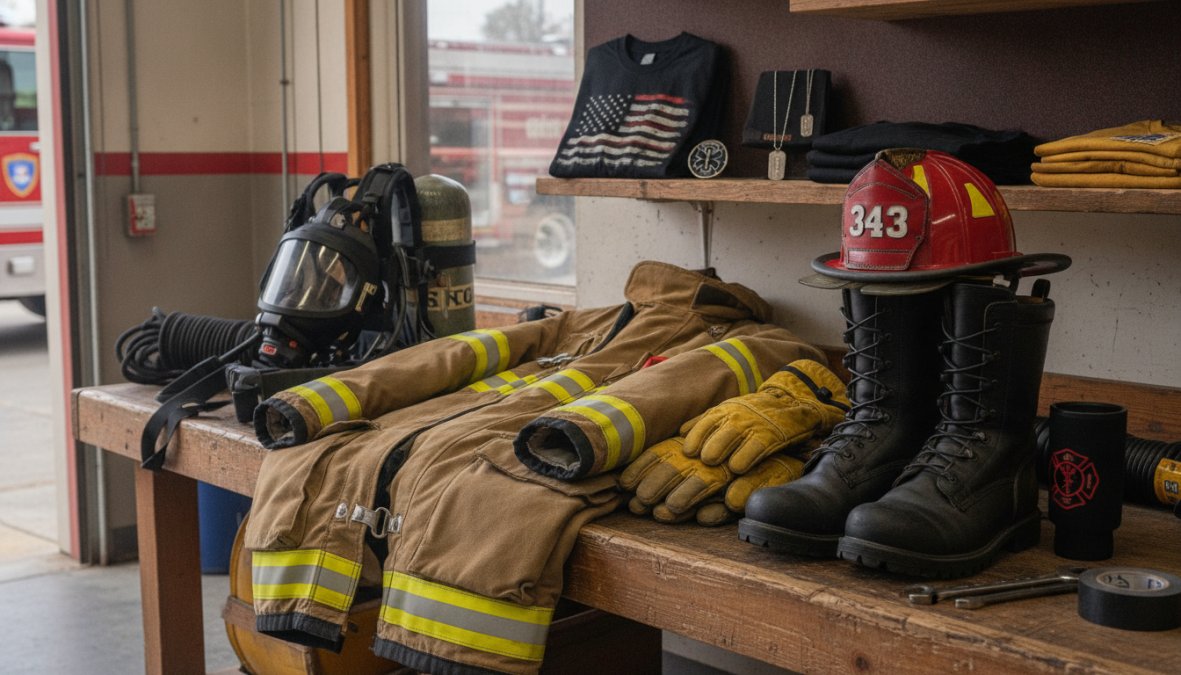
Proper sizing matters more than many firefighters realize. Gear that's too loose creates gaps where heat can enter. Gear that's too tight restricts movement and causes fatigue. Professional fitting services account for the gear you'll wear underneath and the movements you'll make during firefighting.
Fire Helmets and Protective Headgear
Your helmet is the only thing between your head and falling objects, flames, and impact hazards. NFPA 1971 certified helmets must meet specific impact resistance standards and include a face shield protecting your eyes and face from radiant heat and debris. Professional-grade helmets use materials engineered to absorb impact without transferring force to your head. A cracked helmet isn't protecting you.
The fit of your helmet is critical. A loose helmet can shift during movement or impact, leaving your head partially unprotected. Professional fitting ensures your helmet stays in place without restricting blood flow.
Firefighter Boots and Footwear
Your boots need to protect your feet from heat, sharp objects, and impact while allowing safe movement through unstable environments. NFPA 1971 certified boots have heat-resistant soles, puncture-resistant midsoles, and ankle support designed for firefighting movement patterns. Professional-tier boots use superior materials that maintain protective properties longer and provide better ankle support.
Proper boot fit is essential because your feet are the foundation of your stability. Professional fitting accounts for the socks and insoles you'll wear and the swelling that occurs during physical exertion.
Hand Tools and Forcible Entry Equipment
Your hand tools, pry bars, axes, halligan bars, mauls, are your primary means of opening structures and moving obstacles. Quality tools are made from hardened steel that resists bending and breaking. A quality halligan bar will last a career. A budget version might last a few years before the tip bends or the handle cracks.
Tactical Gear and Technical Rescue Equipment
Technical rescue operations require specialized equipment beyond standard turnout gear: harnesses, carabiners, ropes, and rescue-specific PPE designed for specific hazards. Professional-tier technical rescue gear is engineered and tested for the specific loads and stresses of rescue operations. This is not an area where budget options make sense.
Flashlights and Lighting Solutions
Your flashlight is your eyes in zero-visibility conditions. Professional-grade flashlights produce bright, focused light that penetrates smoke and allows you to see obstacles and victims. Many departments now use LED flashlights that produce superior light while using less battery power.
Gear Sizing and Fitment: Getting the Right Fit
Buying high quality firefighter gear means nothing if it doesn't fit properly. Gear that's too loose creates gaps in protection. Gear that's too tight restricts movement and causes fatigue.
Most firefighters underestimate how much their body changes during physical exertion. Your feet swell during intense activity. Your torso expands as you breathe harder. Professional fitting services account for these factors by having you move through realistic firefighting motions while wearing the gear.
The layers underneath your gear matter too. You'll wear thermal underwear, a station uniform, and possibly additional protective layers. Your gear needs to fit over all of this without creating gaps or restricting movement.
| Gear Category | Sizing Consideration | Common Mistake |
|---|---|---|
| Turnout Coat | Measure across shoulders and chest while wearing base layers | Buying too large for "room to grow" |
| Turnout Pants | Measure inseam and waist while standing; account for boot height | Ignoring how gear stretches under load |
| Boots | Try on with firefighting socks; walk on uneven surfaces | Assuming standard shoe size equals boot size |
| Gloves | Test dexterity with actual tools; ensure wrist coverage | Prioritizing comfort over coverage |
| Helmet | Ensure chin strap sits properly; test visibility with face shield | Loose fit that shifts during movement |
The Firefighter Gear Replacement Cycle Explained
Understanding when to replace gear is as important as understanding what to buy. NFPA standards don't specify replacement intervals because gear degradation depends on use, care, and storage. A coat used in a busy urban department might need replacement every 5-7 years. The same coat in a quieter department might last 10+ years.
Most departments establish replacement cycles based on inspection findings rather than arbitrary timelines. Gear showing significant wear, seam separation, or loss of flame-resistant properties gets replaced. Professional departments track gear replacement costs as part of budget planning. Quality gear lasts longer, reducing replacement frequency and total cost of ownership.
The replacement cycle depends on care. Gear that's properly cleaned, dried, and stored lasts longer than neglected gear. Professional cleaning after every significant fire is essential, it removes contaminants and preserves flame-resistant treatments.
How to Inspect Firefighter Gear Before Purchase
Before committing to buying high quality firefighter gear, inspect it thoroughly. Look for seam quality, stitches should be tight and consistent. Check material, it should feel substantial. Examine zippers and closures for smooth operation. Look at the helmet for cracks or damage. Check boots for sole integrity.
Feel the materials. Professional-grade materials feel denser and more substantial than budget materials. Check the fit by moving through realistic motions: bend, reach, crouch, and climb. The gear should move with you without creating gaps or restricting movement.
Ask about construction details. How are seams sealed? Are they glued, taped, or both? How is the thermal barrier attached? These details determine how long the gear will maintain its protective properties.
Firefighter PPE Maintenance Tips for Longevity
Proper maintenance extends gear life significantly. After every fire exposure, your gear needs professional cleaning. This removes contaminants, preserves flame-resistant treatments, and prevents degradation. Don't wash turnout gear at home, the wrong detergent or water temperature can damage protective treatments.
Between fires, store gear properly. Hang it in a well-ventilated area away from direct sunlight. UV exposure degrades materials over time. Inspect gear regularly for damage. Small problems caught early prevent larger failures.
Budget vs. Professional Tier: What You Really Need
The choice between budget and professional-tier gear depends on your specific situation.
Entry-Level Gear for New Firefighters
Entry-level gear meets NFPA standards and provides adequate protection for most assignments. It's suitable for volunteer departments, training scenarios, and firefighters who want reliable protection without the highest price point. Entry-level gear typically costs 30-40% less than professional-tier options. The tradeoff is durability, entry-level gear might need replacement after 5-7 years of regular use.
Black Helmet's approach focuses on gear that respects your budget while delivering authentic quality. Our wallets, made from actual used bunker gear, give you that connection to the job without compromising on quality. The Badge Bifold Used Bunker Gear Wallet ($52) and Deluxe Used Bunker Gear Wallet ($73) let you carry that gear with you every day.
Premium Quality Gear for Career Departments
Professional-tier gear is engineered for durability, comfort during extended use, and superior protection. It's suitable for career departments where firefighters spend significant time in gear and face regular high-heat exposure. Professional-tier gear costs 40-60% more initially but lasts significantly longer. When calculating total cost of ownership, professional-tier gear might cost $500 more initially but last 10+ years instead of 5-7 years, making the cost per year of service comparable to or better than entry-level gear.
Specialized Gear for Wildland and Technical Rescue
Wildland firefighting requires gear optimized for mobility and breathability. Wildland turnout gear is lighter and allows more movement than structural gear, essential when hiking rough terrain for hours. Technical rescue gear is specialized equipment for specific rescue scenarios. This is not an area for budget options.
When you commit to buy high quality firefighter gear, you're making a decision that affects your safety and your career. The right gear protects you, lasts longer, and performs reliably when conditions get serious. Black Helmet has served the firefighter community since 2008 because we understand that your gear represents your commitment to the job. Whether you choose Trifold Used Bunker Gear Wallet ($61) or Used Bunker Gear Flip ID Wallet ($87), you're choosing gear made by people who understand the fire service. Start with the right foundation, maintain your gear properly, and you'll have protection you can trust.
According to NFPA 1971 Standard on Protective Ensembles for Structural Fire Fighting, proper gear maintenance and replacement cycles are critical to maintaining protection standards. Research from National Institute for Occupational Safety and Health firefighter safety studies shows that equipment failures contribute significantly to preventable firefighter injuries. The International Association of Fire Chiefs guidelines on PPE procurement emphasize that total cost of ownership, not just initial price, should drive gear purchasing decisions for departments serious about firefighter safety.
Frequently Asked Questions
What should I look for when buying high quality firefighter gear?
Prioritize NFPA certification, durable fire-resistant materials, proper fit, and brand reputation. Check that structural firefighting PPE meets NFPA 1971 standards and wildland equipment meets NFPA 1977. Inspect seams, closures, and reflective striping. Look for rugged construction with reinforced stress points. Verify the gear is appropriate for your department's needs, structural, wildland, or technical rescue. Quality brands backed by firefighter communities offer better longevity and performance on fireline conditions.
How often should firefighter gear be replaced according to NFPA standards?
NFPA 1971 recommends inspecting turnout gear annually and replacing it every 10 years from manufacture date, or sooner if damaged. However, the firefighter gear replacement cycle depends on use frequency, care, and condition. Structural firefighting gear used in high-heat environments may need replacement every 5-7 years. Regular inspection for thermal damage, seam separation, or loss of water repellency determines actual replacement timing. Proper maintenance extends gear life, but safety standards require replacement when protective qualities degrade.
What is the difference between budget and professional tier firefighter gear?
Budget gear meets minimum safety standards but uses lighter materials and simpler construction. Professional tier gear features advanced fire-resistant fabrics, superior thermal protection, ergonomic design, and enhanced durability for frequent use. Premium brands invest in research and testing for better performance on fireline conditions. While entry-level options work for volunteer or occasional use, career firefighters benefit from professional-grade PPE that withstands rigorous demands. The investment in quality gear reduces replacement frequency and improves safety performance.
Can I buy used firefighter gear, and is it safe?
Used gear can be purchased if properly inspected and certified safe. Check for thermal damage, seam integrity, reflective striping visibility, and water repellency. Verify the manufacture date hasn't exceeded NFPA replacement guidelines. Used structural firefighting PPE from reputable sources can be cost-effective for training or volunteer departments. However, gear exposed to extreme heat or chemical contamination should be avoided. Always obtain inspection documentation and ensure the previous owner's care history. When in doubt, invest in new NFPA certified gear for mission-critical applications.
This article was written using GrandRanker
