

10 Best Books on Fire Service History
Table of Contents
- Why Fire Service History Matters to Firefighters Today
- How We Selected the 10 Best Books on Fire Service History
- 1. Dennis Smith's History of Firefighting in America: 300 Years of Courage
- 2. Report from Engine Co. 82 - Urban Firefighting Reality
- 3. The Big Burn: Wildland Firefighting and Conservation History
- 4. 30 Fires You Must Know - Tactical Lessons from Pivotal Fires
- 5. The Fire Service: History, Traditions & Beyond
- 6. San Francisco Is Burning - A Disaster That Shaped Modern Firefighting
Last Updated: July 28, 2026
Understanding fire service history honors the courage and sacrifice that shaped firefighting. At Black Helmet, we believe the 10 best books on fire service history offer firefighters, students, and enthusiasts a window into the traditions, tactics, and heroism that define the profession. Whether researching pivotal fires, learning wildland firefighting evolution, or exploring leadership decisions that saved lives, these books provide depth and authenticity that no online article can match.
The fire service has transformed dramatically over three centuries, from volunteer bucket brigades to modern structural firefighting and wildland megafire response. Research shows firefighters who understand their profession's history demonstrate stronger connection to fire service traditions and make more informed tactical decisions on the fireground.
Why Fire Service History Matters to Firefighters Today
History is instruction, not nostalgia. Every major fire that shaped modern tactics, every equipment innovation, and every leadership principle that saved lives originated from hard-won lessons. Firefighters who study fire service history understand why we do things the way we do, deepening their connection to the brotherhood and translating that knowledge directly to the fireground.
Fire service history documents pivotal fires that changed everything. The 1906 San Francisco earthquake and fires reshaped how cities prepared for conflagrations. The 1970s Bronx fires tested urban firefighting to its limits. The 1910 Big Burn revolutionized wildland firefighting and conservation policy. These weren't just historical events, they were crucibles that forged modern fire service doctrine.
How We Selected the 10 Best Books on Fire Service History
Our selection criteria prioritize authenticity, depth, and relevance to modern firefighters. We sought books written by or with direct input from fire service professionals, covering the full spectrum from structural firefighting to wildland, from tactical lessons to leadership principles.
Each book meets at least three standards: authored by a respected fire service figure, contains firsthand accounts from firefighters involved in major incidents, offers tactical or leadership lessons applicable today, or documents a specific era that fundamentally changed firefighting. We also considered availability in print and audiobook formats, since many firefighters prefer listening during station downtime or training.
Our Selection Criteria
A strong fire service history book combines accuracy with no sensationalism, connects historical events to modern practice, remains accessible to new firefighters while satisfying veterans, and features authors with credibility within the fire service community. We weighted books addressing underrepresented topics: women in the fire service, technological evolution, global perspectives, and the full scope of wildland firefighting.
1. Dennis Smith's History of Firefighting in America: 300 Years of Courage
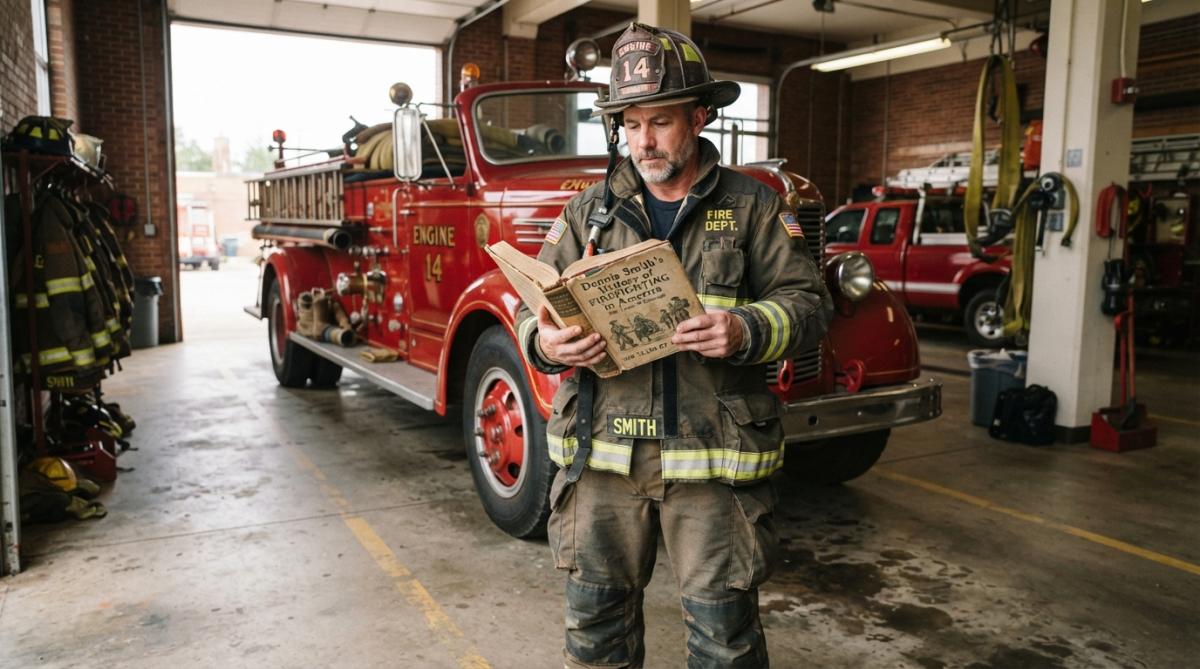
Dennis Smith is a retired FDNY firefighter whose History of Firefighting in America is the gold standard for comprehensive fire service history. Spanning three centuries, this book traces firefighting from colonial volunteer brigades through modern urban fire departments, documenting the evolution of tactics, equipment, and fire service culture.
Smith's insider perspective combined with rigorous research explains why firefighting evolved as it did. You'll understand why red engines became standard, how the professional fire service emerged from volunteer traditions, and how equipment innovations like aerial ladders and breathing apparatus changed what firefighters could accomplish. The book covers pivotal fires and disasters, connecting each to the tactical or organizational lessons that followed.
Best for: Anyone wanting a comprehensive, authoritative overview of American firefighting from its origins to modern times.
2. Report from Engine Co. 82 - Urban Firefighting Reality
Dennis Smith's Report from Engine Co. 82 is an essential firsthand account of daily firefighting in the Bronx during the 1970s. This work puts you inside the firehouse, experiencing the intensity, camaraderie, and danger of structural firefighting during one of the most challenging eras in FDNY history.
Smith documents actual calls, crew dynamics, decisions made under pressure, and the human cost of the job. The 1970s Bronx was a crucible, fires came relentlessly, the city was under financial strain, and firefighters had to do more with less. Smith's narrative gift and ability to extract tactical and leadership lessons from lived experience separates this from other firefighter memoirs.
This book is must-read for active firefighters and essential for aspiring firefighters wanting to understand what they're signing up for. It's also powerful for retired firefighters reconnecting with their career and for families trying to understand what their firefighter experiences on the job.
Best for: Firefighters seeking authentic accounts of structural firefighting, leadership lessons from the fireground, and the firehouse culture that defines the fire service brotherhood.
3. The Big Burn: Wildland Firefighting and Conservation History
Timothy Egan's The Big Burn documents the catastrophic 1910 wildfires in the American West and their profound impact on the U.S. Forest Service, conservation policy, and the birth of organized wildland firefighting. This book is essential for wildland firefighters and anyone interested in how a single disaster reshaped an entire profession.
The 1910 fire season was apocalyptic. A massive wildfire swept across Idaho, Washington, and Montana, burning millions of acres and killing dozens of firefighters. The disaster forced the federal government to take wildland fire seriously, leading to the creation of the Forest Service's firefighting capability and conservation policies that persist today. Egan's narrative brings the disaster to life, you experience the fear, tactical decisions made with incomplete information, and the heroism of firefighters facing a megafire before modern equipment or understanding of fire behavior existed.
For modern firefighters, this book documents how wildland firefighting evolved. Early firefighters fought fires with hand tools and courage, learning through tragedy what works. The tactical evolution from those early lessons to modern incident management systems is traced throughout.
Best for: Wildland firefighters, fire service leaders, and anyone interested in how major disasters reshape institutions and drive tactical evolution.
4. 30 Fires You Must Know - Tactical Lessons from Pivotal Fires
Authored by Billy Goldfeder, Frank Leeb, and other fire service contributors, 30 Fires You Must Know examines significant modern fire incidents, extracting lessons that apply directly to today's fireground. Each chapter focuses on a specific fire, walking through what happened, what firefighters did right, what they missed, and what the incident teaches about tactics, decision-making, and safety.
The book includes firsthand accounts from firefighters involved in the incidents, making lessons come from people who were there. What separates this from historical narrative is its laser focus on applicability. The book includes training drills and discussion prompts for each fire, making it ideal for station training or fire academy instruction.
Fire officers and instructors especially value this resource because it provides structured material for teaching fire service decision-making.
Best for: Active firefighters, fire officers, and instructors seeking tactical lessons from real incidents and structured training material based on historical fires.
5. The Fire Service: History, Traditions & Beyond
J.A. Rhodes' The Fire Service: History, Traditions & Beyond explores the why behind fire service traditions and symbols. Why are fire engines red? What's the origin of the chief's bugle? Why do firefighters wear the Maltese cross?
This book is essential for new firefighters and anyone curious about the cultural roots of the fire service. Understanding the meaning behind traditions deepens your connection to the profession. When you know the Maltese cross originated with the Knights of Malta and represents protection and service, wearing it means something deeper. The book also covers the evolution of fire service management, leadership structures, and how the profession professionalized from volunteer brigades to modern departments.
Best for: New firefighters, fire service enthusiasts, and anyone wanting to understand the cultural and historical roots of fire service traditions and symbols.
6. San Francisco Is Burning - A Disaster That Shaped Modern Firefighting
Dennis Smith's San Francisco Is Burning details the catastrophic 1906 earthquake and the fires that followed. This book is essential for understanding how a single disaster fundamentally changed American firefighting and urban fire prevention.
The 1906 San Francisco fires were unprecedented in scale and challenge. The earthquake ruptured water mains, crippled infrastructure, and left firefighters battling massive conflagrations without adequate water supply. Smith's narrative brings the chaos and heroism to life. The book documents how San Francisco's experience led to changes in building codes, water system redundancy, and fire prevention practices that became standard nationwide.
For fire service leaders, this book illustrates why fire prevention, water system reliability, and pre-incident planning matter. For firefighters, it documents the tactical evolution that followed.
Best for: Fire service leaders, fire prevention professionals, and firefighters interested in how major disasters drive tactical and organizational change.
| Book Title | Author(s) | Best For | Key Focus | Format Available |
|---|---|---|---|---|
| History of Firefighting in America: 300 Years of Courage | Dennis Smith | Comprehensive overview seekers | Fire service evolution across centuries | Print, Audiobook |
| Report from Engine Co. 82 | Dennis Smith | Active firefighters, new recruits | Urban firefighting reality, 1970s Bronx | Print, Audiobook |
| The Big Burn | Timothy Egan | Wildland firefighters, fire service leaders | 1910 wildfires, wildland firefighting origins | Print, Audiobook |
| 30 Fires You Must Know | Billy Goldfeder, Frank Leeb | Fire officers, instructors, training | Tactical lessons from modern incidents | |
| The Fire Service: History, Traditions & Beyond | J.A. Rhodes | New firefighters, culture enthusiasts | Fire service symbols and traditions | |
| San Francisco Is Burning | Dennis Smith | Fire leaders, prevention professionals | 1906 disaster and prevention evolution | Print, Audiobook |
Reading fire service history is an investment in your professional development and connection to the brotherhood. These six books represent the essential foundation of fire service history literature. Whether you're a new firefighter building your knowledge base, an experienced firefighter deepening your understanding, or a fire service leader seeking historical context for modern decisions, these books deliver authentic accounts, tactical lessons, and perspective from those who lived the job.
The fire service is built on accumulated wisdom from those who served before us. By reading these books, you honor that legacy and equip yourself with knowledge firefighters earned through courage, sacrifice, and hard experience. Station libraries should include these titles, and individual firefighters should consider building their personal collection.
Representing fire service heritage and tradition extends beyond the uniform to how you carry yourself, the knowledge you seek, and the pride you take in the profession. [Black Helmet's America's First Shift Limited Edition Premium Tee](https://blackhelmetapparel.com/products/americas-first-shift-limited-edition-250th-anniversary-premium-tee) honors that legacy with a design speaking to the centuries of service that built the fire service. When you wear gear representing fire service history and tradition, pair it with the knowledge these books provide. Understanding fire service history transforms you from someone who performs the job to someone who carries forward the profession's mission with full awareness of what came before and what it cost to build what we have today.
Fire Engineering's fire service training resources
International Association of Fire Chiefs leadership and history resources
National Fire Protection Association fire service standards and historical documentation
Frequently Asked Questions
What are the best books on fire service history for someone new to firefighting?
For newcomers, start with 'The Fire Service: History, Traditions & Beyond' to understand the cultural roots and traditions. Then move to 'Dennis Smith's History of Firefighting in America' for a comprehensive overview spanning 300 years. These provide foundational context without overwhelming tactical detail. Both are accessible and help new firefighters connect to the broader fire service heritage and legacy.
Which books focus specifically on wildland firefighting history?
'The Big Burn: Teddy Roosevelt and the Fire that Saved America' is the essential read for wildland firefighting history. It details the devastating 1910 wildfires and the emergence of the U.S. Forest Service, offering insights into early wildland tactics and conservation policy. For active wildland firefighters, this book provides historical context for modern megafire suppression strategies and equipment evolution.
Are there audiobook versions of these fire service history books available?
Many of these titles are available in audiobook format through platforms like Audible and Apple Books, including Dennis Smith's works and 'The Big Burn.' Audiobooks are ideal for firefighters who want to learn during downtime at the station or during commutes. Check your local library's digital collection first, many offer free audiobook access through apps like Libby or OverDrive.
What's the difference between books on fire service history and tactical firefighting books?
Fire service history books explore the evolution, traditions, leadership, and heritage of firefighting over centuries. Tactical books like '30 Fires You Must Know' focus on specific incidents and modern decision-making lessons. History books build cultural understanding and context; tactical books improve operational performance. Both are valuable, history informs why we do things, tactics teach us how to do them better.
Do any of these books cover women in the fire service?
While most traditional fire service history books focus primarily on male firefighters, this represents a significant gap in the archive. Dedicated research into women's contributions to firefighting is limited in mainstream publications. Readers interested in this angle should supplement with academic journals, fire service training materials, and oral histories from women firefighters to get a complete picture of fire service heritage and modern inclusion.
This article was written using GrandRanker
