

How to Handle Fire Station Conflict: A Practical Guide
Table of Contents
- Why Fire Station Conflict Matters to Safety and Crew Performance
- Identifying the Root Cause of Fire Station Conflict
- Step 1: Listen Actively Before You React
- Step 2: Know the Company Officer's Role in Conflict Resolution
- Step 3: Use Firefighter Conflict Resolution Scripts That Work
- Step 4: Escalate Through the Chain of Command When Needed
- Step 5: Prevent Future Conflict Through Station Culture and Open Communication
- Common Mistakes That Make Fire Station Conflict Worse
Last Updated: August 10, 2026
Why Fire Station Conflict Matters to Safety and Crew Performance
Fire station conflict compromises the mission. When crew members aren't aligned, response times suffer, communication breaks down, and lives are at risk. The strongest stations aren't the ones without conflict, they're the ones that address it directly and fast. A crew that resolves tension together performs better on scene, trusts each other, communicates clearly, and watches each other's backs.
This guide walks you through how to identify conflict, address it with actual scripts you can use, and build a station culture that prevents problems before they start.
Identifying the Root Cause of Fire Station Conflict
Before you can fix a problem, you need to know what's actually causing it. Many crews skip this step and jump straight to confrontation, which usually makes things worse.
Common triggers in the firehouse
Firehouse conflict often stems from unclear expectations, perceived unfairness in work assignments, or resentment about how decisions are made. Pay attention to patterns. Is the conflict between specific people, or is it station-wide? Does it happen at certain times or after rough calls? Sometimes the stated problem isn't the real problem, a crew member complains about the schedule, but what they're really upset about is that nobody asked their opinion before it changed. Listen for what's underneath.
Conflict during high-stress incidents
High-stress incidents create their own kind of conflict. A call goes badly, emotions run high, and suddenly crew members are snapping at each other. This type of conflict is especially dangerous because it happens when judgment is already compromised. Don't ignore it, but don't treat it the same way you'd treat chronic station tension either. Give people space to decompress, then address it once everyone's had time to process.
Generational friction and digital communication gaps
Newer generations of firefighters communicate differently than veterans. They use text and social media. They expect more transparency about decisions. Older firefighters sometimes see this as disrespect. Digital communication also creates new conflict vectors, a text message gets misinterpreted, a group chat becomes a place where complaints fester. The generational friction is real, but it's solvable. Different communication styles don't mean different values.
Step 1: Listen Actively Before You React
The biggest mistake in addressing fire station conflict is responding immediately. Your instinct is to defend yourself, explain your side, or set someone straight. That approach almost always escalates.
Active listening means you stop talking and actually hear what the other person is saying. Not waiting for your turn to speak. Not planning your response while they're still talking.
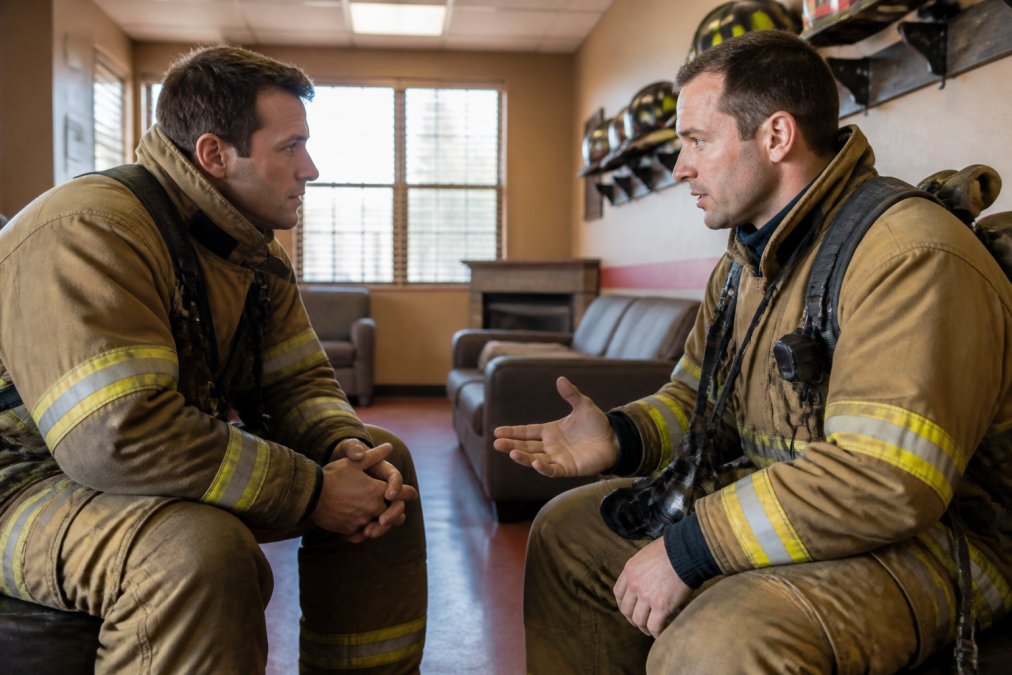
Here's what active listening looks like in practice:
- Ask clarifying questions: "Help me understand what you mean by that" or "What happened from your perspective?"
- Repeat back what you heard: "So you're saying that..." This confirms you understood correctly.
- Don't interrupt. Let them finish their thought completely.
- Pay attention to tone and body language, not just words.
- Acknowledge their feelings, even if you don't agree: "I can see why that would be frustrating."
Active listening gives you actual information instead of assumptions and de-escalates the situation.
Step 2: Know the Company Officer's Role in Conflict Resolution
The company officer's job isn't to pick sides or make everyone happy. It's to maintain crew cohesion and ensure the station operates at its best.
A good company officer sets the tone for how conflict gets handled. If the officer allows tension to fester, the crew learns that unresolved conflict is acceptable. If the officer addresses it quickly and fairly, the crew learns that problems get solved.
The company officer's responsibilities in conflict resolution include:
- Observing early: Notice when tension is building before it becomes a major problem.
- Creating safety: Let crew members know they can talk about problems without retaliation.
- Staying neutral: Investigate what actually happened before making judgments.
- Enforcing accountability: If someone violated policy or crossed a line, address it fairly and consistently.
- Following the chain of command: Know when a problem is yours to solve and when it needs to go up the ladder.
Step 3: Use Firefighter Conflict Resolution Scripts That Work
Knowing what to say matters. When emotions are high, people often say things they regret or miss the point entirely. Scripts help you stay focused and professional.
Script for addressing tension between crew members
Opening: "I've noticed some tension between you two, and I want to address it now before it becomes a bigger problem. I'm bringing you both in because I care about this crew and I want us to function as a unit."
Get their perspective: "Here's what I've observed [describe specific behavior]. Help me understand what's going on from your side."
Listen without interrupting. Ask clarifying questions. Repeat back what you heard.
Address the core issue: "It sounds like the real issue is [name it]. Is that fair?"
Set expectations: "Here's what I need from both of you going forward: [be specific]. We're a crew. We depend on each other. That means we handle disagreements directly and move on."
Follow up: Check in with both of them separately a few days later.
Script for the company officer to mediate a dispute
One-on-one first: Talk to each person separately before bringing them together. This prevents defensiveness and gives you more information.
Identify common ground: Even in serious conflicts, there's usually something both people agree on. "You both care about this crew's safety." Start there.
Separate behavior from character: "I'm not saying you're a bad person. I'm saying this specific behavior is a problem."
Be direct about consequences: "If this continues, here's what happens [spell it out]."
Make it about the mission: "Our job is to respond to emergencies and take care of each other. This conflict gets in the way of both of those things."
These scripts work because they focus on behavior, not blame, and create space for understanding.
Step 4: Escalate Through the Chain of Command When Needed
Not every conflict can be solved at the station level. If a crew member is violating policy, if there's harassment or discrimination, if someone's behavior is affecting their ability to do the job safely, that goes to the battalion chief or department leadership.
When you escalate:
- Document what happened. Dates, times, specific behavior, who was involved, what you've already tried.
- Be factual, not emotional. Stick to what you observed, not your interpretation of intent.
- Explain why you're escalating. "I've addressed this at the station level, but the behavior hasn't changed."
- Follow your department's procedures for reporting.
Escalating also protects you. If something goes wrong later and nobody knew about the problem, you look negligent. If you documented it and followed procedure, you've done your job.
Step 5: Prevent Future Conflict Through Station Culture and Open Communication
The best fire station conflict resolution happens before conflict starts. A healthy station culture is built on clear expectations, respect, and knowing that people's voices matter.
Building crew cohesion and accountability
Crew cohesion doesn't happen by accident. Regular station meetings matter, not lectures, but meetings where people can bring up problems, ask questions, and be heard. Make it safe for people to speak up. Accountability also builds cohesion. When everyone knows the standards and everyone is held to the same standards, people respect that.
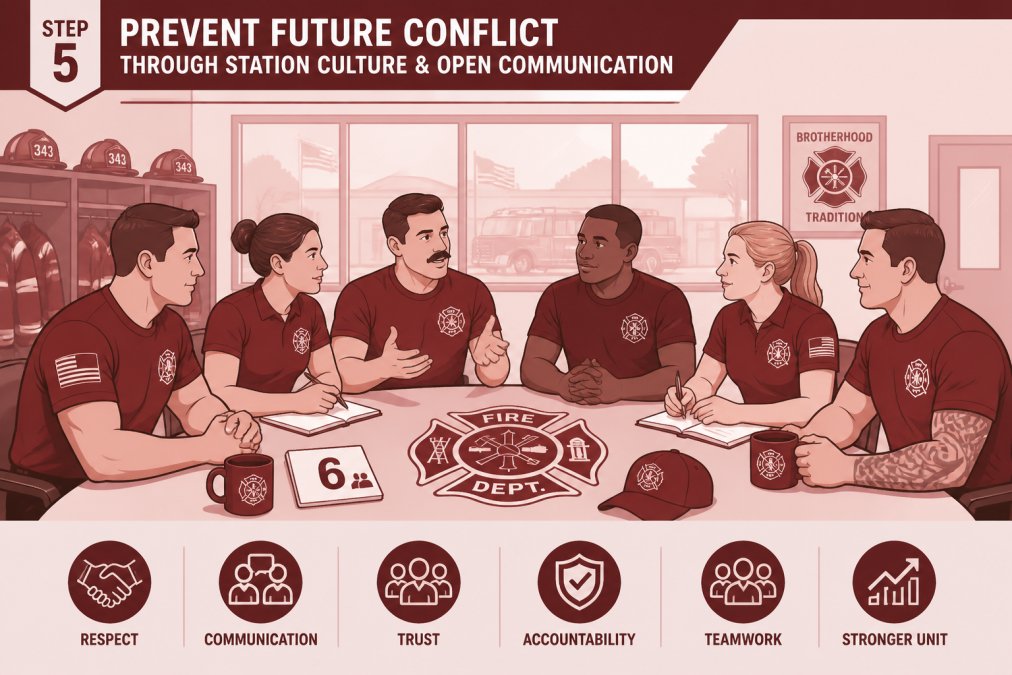
Create traditions and rituals that reinforce the crew's identity. Some stations do a pre-shift briefing where everyone checks in. Some have a crew meal together. Some have a challenge coin or wear station-specific gear that represents their crew. At Black Helmet, we see this reflected in how crews show their pride. Whether it's a challenge coin like the Braithre Brotherhood Before All Irish Challenge Coin that crews carry, or station apparel that represents their identity, these symbols matter.

Mental health, burnout, and peer support
One of the biggest sources of fire station conflict is unaddressed mental health and burnout. A firefighter who's struggling with PTSD, depression, or exhaustion becomes reactive. Your station needs to normalize talking about mental health. That means the company officer and senior firefighters talking openly about stress and when they've needed help. It means knowing your crew and noticing when someone's not okay. Peer support is powerful, a firefighter talking to another firefighter who's been through the same thing carries weight that a counselor might not.
Common Mistakes That Make Fire Station Conflict Worse
Waiting too long to address it. Small tensions grow into big problems. Address conflict early, when it's still manageable.
Taking sides. If the company officer picks a favorite, the crew fractures. Stay neutral until you have facts.
Assuming you know what the problem is. Ask. Listen. Get the story from the people involved.
Using conflict as a teaching moment for the whole crew. Publicly calling someone out humiliates them and makes them defensive. Handle it privately.
Confusing directness with disrespect. You can say "This behavior is a problem and it needs to stop" with respect.
Ignoring the power dynamic. If you're the company officer or a senior firefighter, your words carry more weight. Use that power carefully.
Letting resentment build. If someone feels they've been treated unfairly and nobody addresses it, that resentment spreads. Deal with it.
| Common Mistake | What It Leads To | Better Approach |
|---|---|---|
| Waiting too long | Entrenched positions, bigger blowup | Address early, while it's manageable |
| Taking sides | Crew fractures, loss of trust | Stay neutral, focus on behavior |
| Assuming the problem | Wrong diagnosis, ineffective solution | Ask questions, listen, get facts |
| Public correction | Humiliation, defensiveness, resentment | Handle privately with respect |
| Ignoring power dynamics | Junior members feel intimidated | Be aware of your authority, use it carefully |
| Letting resentment build | Poisoned crew culture | Address unfairness directly |
Fire station conflict is inevitable. The difference between crews that stay strong and crews that fall apart is how they handle it. The approaches in this guide, listening actively, knowing your role, using clear communication, and building a culture where problems get addressed, work because they're based on respect. They assume that people want to do the job right and be part of a functioning crew.
Black Helmet has been part of the firefighter community since 2008. We understand what matters to crews, not just the gear, but the culture and the brotherhood that makes a station work. Whether you're looking for challenge coins that represent your crew's identity or apparel that honors the sacrifice of the job, we're here to support the people who do this work. Get started with Black Helmet and invest in the gear and symbols that represent your crew's values.
Frequently Asked Questions
What are the most common causes of fire station conflict?
Conflict in the firehouse typically stems from personality clashes, perceived unfairness in duty assignments, communication breakdowns, stress from high-pressure incidents, and burnout. Generational differences in communication styles and digital conflicts (social media or text-based misunderstandings) are increasingly common. Mental health struggles and unaddressed personal issues also fuel tension. The key is recognizing that most fire station conflict isn't personal, it's systemic stress looking for an outlet.
What's the company officer's responsibility in handling fire station conflict?
The company officer sets the tone for station culture and must address conflict quickly and fairly. Their role includes active listening, fact-finding to understand all perspectives, coaching individuals on professional conduct, and enforcing standard operating procedures consistently. A company officer who avoids conflict or plays favorites creates organizational failure and damages crew cohesion. Leadership development in conflict resolution is essential for every officer.
How do I de-escalate tension during a high-stress incident at the fireground?
During high-stress incidents, keep communication brief and task-focused. Use the incident command structure to clarify roles and reduce confusion. After the call, allow time for decompression before addressing any friction. Peer support and station debriefs help crews process stress together. Never address personal conflict in the moment, wait until emotions settle and you can have a constructive conversation focused on the job, not blame.
When should fire station conflict be escalated beyond the company officer?
Escalate when the conflict involves disciplinary action, repeated violations of policy, safety risks, or interpersonal friction that the company officer cannot resolve alone. Most departments have escalation levels: first the company officer, then the battalion chief, then the fire chief or HR. If the conflict involves harassment, discrimination, or mental health concerns, involve your department's peer support team or employee assistance program immediately.
This article was written using GrandRanker
