

5 Essential Firehouse Traditions for New Recruits
Table of Contents
- Understanding the History of Fire Service Traditions
- Tradition 1: Respecting the Chain of Command and Firehouse Hierarchy
- Tradition 2: Mastering Firehouse Etiquette for New Members
- Tradition 3: Building Camaraderie Through Shared Meals and Mentorship
- Tradition 4: Embracing the Firefighter Probation Period and Professional Development
- Tradition 5: Honoring Sacrifice, Duty, and the Symbols of Service
- Evolving Traditions: Inclusivity and Modern Firehouse Culture
- How to Navigate the 5 Essential Firehouse Traditions as a New Recruit
5 Essential Firehouse Traditions for New Recruits
Last Updated: July 29, 2026
The fire service has deep roots in tradition and brotherhood extending back centuries. Understanding 5 essential firehouse traditions for new recruits is critical to your success during your first year on the job. At Black Helmet, we've worked directly with firefighters across the country for nearly two decades, and we've seen firsthand how recruits who embrace these core traditions integrate faster into their crews, build stronger relationships with veteran firefighters, and develop the resilience needed for a long career in the fire service.
Understanding the History of Fire Service Traditions
Fire service traditions developed out of necessity and sacrifice over more than 150 years of American firefighting history. The earliest volunteer fire companies in the 1700s and 1800s built tight-knit communities because firefighting was dangerous, unpredictable, and required absolute trust between crew members. The Maltese Cross, now recognized globally as the symbol of firefighting, represents the values that define the fire service: duty, honor, sacrifice, and community. These symbols and rituals persist today because they work, they create a shared identity that transcends individual egos and reinforce what it means to be part of something larger than yourself.
Research from The Fire Service: History, Traditions & Beyond documents how American fire service traditions evolved from volunteer brigades into the professional departments we know today. As a new recruit, you're not just learning a job, you're joining a lineage of firefighters who've carried these values forward through every era of the fire service.
Tradition 1: Respecting the Chain of Command and Firehouse Hierarchy
The chain of command isn't a bureaucratic formality, it's a survival mechanism. When an alarm sounds and firefighters are moving through zero-visibility conditions toward an active fire, there's no time for debate. Someone has to make the call, and everyone else must trust that decision and execute it immediately.
As a new recruit, your role is to learn, follow orders, and prove your reliability. Address senior members and company officers with respect, using proper titles (Captain, Lieutenant, Engineer). This demonstrates whether you recognize their expertise and whether you're the kind of person other firefighters can depend on when things get dangerous.
How Senior Members and Company Officers Lead by Example
The most effective firehouse leaders model the behavior they expect. A company officer who shows up early, maintains equipment meticulously, and treats probies fairly is teaching through example. Pay attention to how veteran firefighters handle conflict, manage stress during calls, and treat each other during downtime. That's your real training in firehouse culture. The chain of command also protects you by ensuring accountability flows in both directions.
Tradition 2: Mastering Firehouse Etiquette for New Members
Firehouse etiquette is a practical system that keeps a station running smoothly and ensures firefighters can focus on emergency response. The most fundamental rule: respect the equipment, respect the space, and respect the people who share both with you. Never touch someone else's gear or personal items without permission.
Station Duties, Apparatus Care, and Unwritten Rules
New recruits typically rotate through station duties: cooking, cleaning, maintaining apparatus, and managing the firehouse grounds. These tasks aren't punishment, they're foundational to how a station operates. Apparatus care is sacred in the fire service, a loose hose connection, a dead battery, or a malfunctioning pump can cost lives. Your attention to detail during apparatus maintenance demonstrates whether you understand the stakes of the job.
The unwritten rules of firehouse etiquette include: never sit in someone else's seat at the table, never touch food that isn't offered to you, never complain about a meal someone cooked, and never bring personal drama into the firehouse. These rules exist because 24-hour shifts require a level of civility and respect that prevents small tensions from becoming dangerous conflicts.
Tradition 3: Building Camaraderie Through Shared Meals and Mentorship
The firehouse meal is one of the most important traditions in the fire service. It's not just about food, it's about creating a space where firefighters from different backgrounds, ages, and experiences come together as equals. For a few hours between calls, the hierarchy softens and honest conversation builds trust.
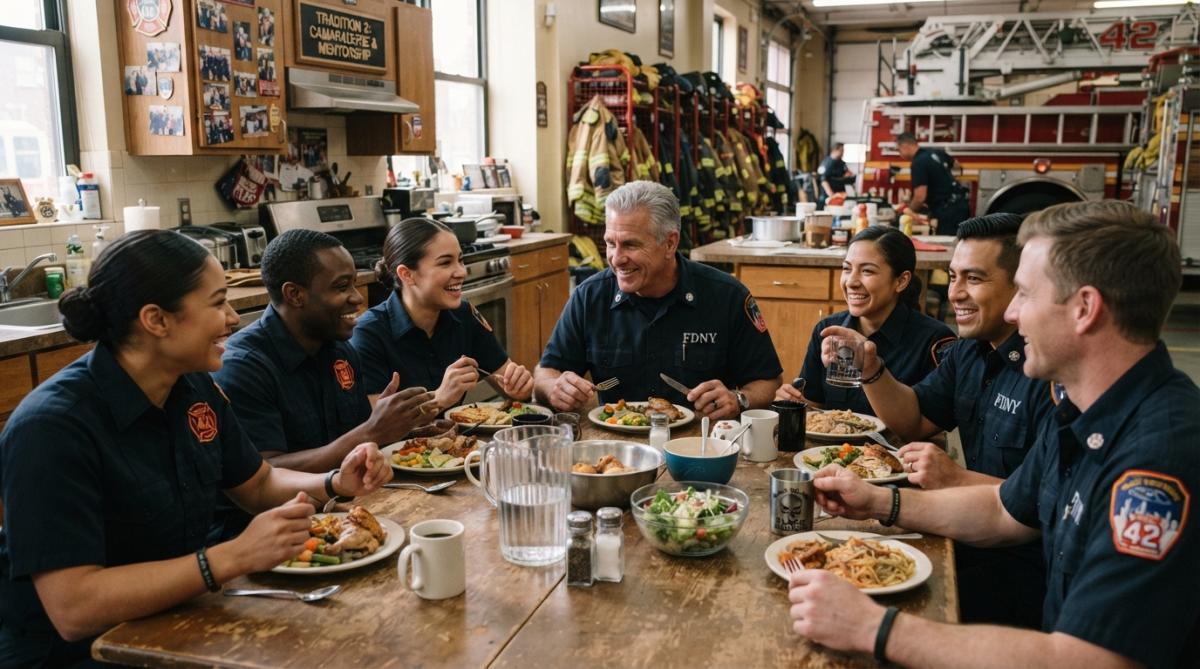
Probies often take on cooking responsibilities during their first year, and this tradition serves multiple purposes. It ensures the crew eats well during shifts, gives new recruits a tangible way to contribute and earn respect, and creates an opportunity for informal mentorship.
The Role of Probies in Firehouse Culture
Probationary firefighters occupy a unique position in the firehouse. You're part of the crew, but you're also being evaluated. Your probation period, typically 6 to 12 months, is when senior firefighters assess whether you have the technical skills, mental resilience, and character to be a long-term member of the station. Veteran firefighters are asking: Can this person stay calm under pressure? Do they take feedback well? Are they reliable? Will they have my back on a dangerous call?
Mentorship during this period is crucial. A good mentor will help you navigate the culture, explain the unwritten rules, and advocate for you when you're not in the room. Embrace this mentorship, ask questions, and show that you're committed to becoming a skilled, trustworthy firefighter.
Tradition 4: Embracing the Firefighter Probation Period and Professional Development
Your probation period is structured around a simple principle: the fire service is a profession, and professionals must continuously develop their skills. You'll be tested on equipment operation, emergency procedures, rescue techniques, and decision-making under pressure. You'll study for certifications, pass written exams, and demonstrate practical competency on apparatus and at training grounds.
The probation period also includes psychological and emotional development. Firefighting exposes you to trauma, loss, and moral complexity that most professions never encounter.
Training, Resilience, and Mental Health During Your First Year
Professional development during your probation includes both technical training and mental health support. Many fire departments now offer peer support programs, critical incident stress debriefing, and access to mental health resources specifically designed for firefighters. Talking to a peer support team after a difficult call isn't weakness, it's professionalism.
Your probation period is when you'll develop the physical and mental resilience that separates firefighters from other professions. You'll train in extreme heat, low visibility, and physically demanding scenarios. You'll learn to manage fear, focus under chaos, and make critical decisions with incomplete information.
Tradition 5: Honoring Sacrifice, Duty, and the Symbols of Service
The symbols of the fire service, the Maltese Cross, the helmet, the badge, represent centuries of sacrifice. Firefighters who died in the line of duty, firefighters who've been injured, and firefighters who've given their careers to the job are honored through these symbols and through specific traditions that reinforce what it means to serve.
The Maltese Cross appears on helmets, challenge coins, patches, and apparel throughout the fire service. It originated with the Knights Hospitaller in the 11th century and was adopted by firefighters because it represents the four virtues: duty, honor, sacrifice, and compassion.
The Maltese Cross, Challenge Coins, and Rituals That Bind the Crew
Challenge coins are a firehouse tradition worth understanding. A challenge coin is a small coin, typically custom-made with a fire department's logo, station number, or special design, that's awarded for achievements, promotions, or significant moments in a firefighter's career. The tradition includes a "challenge": if you're carrying your coin and someone challenges you, you must produce it or buy them a drink. These coins represent more than a game, they're tangible symbols of belonging, achievement, and connection to a specific crew.
Rituals honoring fallen firefighters are among the most important traditions in the fire service. When a firefighter dies in the line of duty, the entire fire service mourns. Memorial services, processions, and tributes are conducted with formal ceremony. The tradition reinforces that when you join the fire service, you join something that will honor your sacrifice if the worst happens.
Black Helmet products like the [Firefighter's Prayer Fire Rescue Brushed Steel Dog Tag](https://blackhelmetapparel.com/products/firefighters-prayer-fire-rescue-brushed-steel-dog-tag-make-a-great-firefighter-gift-sku-dt010) and challenge coins embody these traditions. These aren't generic merchandise, they're designed specifically for firefighters who understand the weight of the symbols they carry.
Evolving Traditions: Inclusivity and Modern Firehouse Culture
The fire service is changing, and its traditions are evolving to reflect a more diverse workforce. For decades, firehouse traditions were shaped almost entirely by white men, and some of those traditions didn't always welcome women or firefighters of color. Modern firehouse culture is intentionally working to preserve the values that make traditions important, brotherhood, sacrifice, duty, respect, while removing barriers that made those traditions exclusive.
Female firefighters and firefighters from underrepresented backgrounds have brought new perspectives to firehouse culture. This evolution doesn't mean abandoning tradition, it means being intentional about which traditions matter and why. The chain of command, apparatus care, mentorship, professional development, and honoring sacrifice are universal. How you practice those traditions can be inclusive without losing meaning.
New recruits from diverse backgrounds should know: the best fire departments actively work to ensure that probies of all backgrounds feel welcomed and supported. Over time, as more diverse recruits join the fire service, the traditions themselves will reflect a broader definition of who belongs.
How to Navigate the 5 Essential Firehouse Traditions as a New Recruit
Navigating firehouse traditions as a new recruit comes down to a few core principles: respect the hierarchy, learn the unwritten rules, embrace mentorship, take your professional development seriously, and understand the symbols you're wearing.
| Tradition | What It Means | How to Succeed |
|---|---|---|
| Chain of Command | Clear hierarchy for safety and decision-making | Address senior members respectfully, follow orders, understand why protocols exist |
| Firehouse Etiquette | Respect for equipment, space, and people | Master station duties, learn where things belong, never touch others' gear without permission |
| Shared Meals & Mentorship | Building trust and informal learning | Cook well, ask questions, spend time with veteran firefighters, accept feedback |
| Probation & Development | Testing your skills and resilience | Study for certifications, engage with training seriously, seek mental health support when needed |
| Honoring Sacrifice | Recognizing the weight of the job | Understand the symbols you wear, respect fallen firefighters, recognize that duty has real costs |
Start by observing. Watch how experienced firefighters interact and notice who speaks up in meetings. Be reliable, show up early, stay late if needed, and complete tasks without being asked twice. Reliability is the foundation of trust in the fire service.
Ask for mentorship explicitly. Find an experienced firefighter you respect and ask if they'd be willing to mentor you. Most will say yes. Understand that traditions exist for reasons that matter. The Maltese Cross represents firefighters who died so you could have a safer job. The chain of command saves lives. When you understand the "why" behind traditions, you're more likely to embrace them authentically.
Finally, recognize that you're joining something larger than yourself. When you wear the uniform, carry a challenge coin, or sit down for a firehouse meal, you're participating in something with deep meaning. That's an honor.
The transition from civilian to firefighter is one of the most significant changes you'll experience in your career. Understanding and embracing the 5 essential firehouse traditions for new recruits accelerates your integration into the crew and builds the foundation for a long, respected career in the fire service. Black Helmet has served over 100,000 firefighters since 2008 by creating gear and products that honor these traditions, from premium apparel that represents firehouse pride to challenge coins and dog tags that carry the symbols of sacrifice and duty. When you wear Black Helmet, you're wearing a brand that understands the fire service culture and respects what it means to serve. Explore our collection of firefighter apparel and accessories designed by firefighters, for firefighters, and begin your career with gear that reflects the values you're committing to.
Frequently Asked Questions
What are the 5 essential firehouse traditions for new recruits?
The five essential traditions are: respecting the chain of command and hierarchy, mastering firehouse etiquette and unwritten rules, building camaraderie through shared meals and mentorship, embracing the firefighter probation period with commitment to professional development, and honoring sacrifice through symbols like the Maltese Cross and challenge coins. These traditions form the foundation of fire service culture and help new recruits integrate into their department while maintaining the values of duty, integrity, and brotherhood that define the fire service.
How long is the firefighter probation period, and what should new recruits expect?
The firefighter probation period typically lasts 6 to 12 months, depending on your fire department's requirements. During this time, new recruits, called probies or rookies, undergo intensive training, evaluation, and mentorship from senior members. You'll learn fireground skills, station duties, department protocols, and the cultural expectations of your firehouse. This period tests your physical fitness, mental resilience, adaptability, and commitment to the fire service. Success requires dedication to training, respect for authority, and genuine effort to build trust with your crew.
What are some examples of positive traditions for female firefighters and diverse recruits?
Modern firehouses are evolving traditions to be more inclusive. Positive examples include mentorship programs that pair new recruits with experienced firefighters regardless of background, inclusive station meals that respect dietary preferences and cultural traditions, and recognition ceremonies that celebrate all firefighters' achievements equally. Some departments create affinity groups for support and community-building. The key is ensuring that core traditions, like respecting the chain of command, mastering station duties, and building camaraderie, are applied consistently and fairly to all recruits, while actively discouraging outdated hazing practices or exclusionary behaviors that undermine team unity.
What unwritten rules should new firefighters know about firehouse etiquette?
Key unwritten rules include: respect senior members' experience and authority, take initiative on station duties without being asked, never touch another firefighter's equipment or apparatus without permission, listen more than you speak during your probation period, participate fully in meals and station activities, maintain equipment meticulously, support your crew during emergency response and training, and show genuine interest in learning from every shift. Additionally, understand that the firehouse operates on a chain of command, follow orders from your company officer and respect the hierarchy. These rules reinforce the values of respect, accountability, and teamwork essential to fire service culture.
How do firehouse traditions help with mental health and resilience for new recruits?
Firehouse traditions create a sense of belonging, purpose, and psychological safety, critical factors for mental resilience. Shared meals, mentorship, and camaraderie build strong peer support networks that help new recruits process the stress and trauma inherent in firefighting. Challenge coins and recognition rituals affirm your value to the crew. The probation period, while challenging, establishes accountability structures and communication patterns that persist throughout your career. Knowing you're part of a brotherhood with a shared history and values, symbolized by the Maltese Cross and other traditions, provides emotional grounding. However, it's important that departments also normalize mental health discussions and ensure traditions never cross into hazing, which can damage psychological well-being.
This article was written using GrandRanker
