

What Firefighter Glove Technology Actually Improves Dexterity?
Last Updated: October 29, 2026
Quick Summary
Firefighter glove dexterity comes from four things you can control: fit, materials, construction, and care. Fit is the single biggest factor, since loose gloves are the most common cause of lost hand mobility, and manufacturers now design gloves to fit up to nine different points on the hand. Test any candidate glove with our seven-step station evaluation before your department buys.
- Glove fit problems affect up to 30% of male and up to 62% of female firefighters, per Clarion Events' 2025 report.
- More than a half-inch of fingertip slack means the glove is too big.
- Goatskin is generally more supple than cowhide at similar thickness.
- The seven-step station evaluation takes about 20 minutes and uses gear you already have.
- Air dry gloves away from direct heat and sunlight, since high heat is the most common cause of self-inflicted dexterity loss.
Table of Contents
- Why Firefighter Glove Dexterity Is a Safety Issue, Not a Comfort Perk
- Firefighter Glove Fit: The Single Biggest Factor in Hand Mobility
- Firefighting Glove Materials and How They Affect Feel and Flexibility
- Finger Articulation, Seamless Fingertips, and Palm Reinforcement
- Firefighter Glove Grip: Testing It Before You Trust It
- Structural Fire Gloves vs Technical Rescue Gloves: Different Dexterity Demands
- A Step-by-Step Glove Dexterity Evaluation You Can Run at the Station
- Care, Cleaning, Drying, and Inspection: Protecting the Dexterity You Paid For
- Frequently Asked Questions
Why Firefighter Glove Dexterity Is a Safety Issue, Not a Comfort Perk
Glove fit problems affect up to 30% of male firefighters and up to 62% of female firefighters, according to Clarion Events' 2025 report on PPE optimization.
At Black Helmet, the same frustration comes up constantly: gloves that protect well but leave you fumbling with a radio or door latch.
Most guides treat dexterity as a fixed feature. In practice, it comes from four things you can control: fit, materials, construction, and care.
Firefighter Glove Fit: The Single Biggest Factor in Hand Mobility
A loose glove is the most common cause of lost dexterity. Firefighters consistently name loose-fitting gloves as their top reason for poor hand mobility, according to The Fire Store's glove fit guidance.
Manufacturers now design gloves to fit up to nine different points on the hand to improve mobility, per Siddons-Martin Emergency Group's 2024 equipment review. That matters because a glove built around a generic hand shape will fit almost nobody well.
How to Check Fit Across Different Hand Shapes and Sizes
- Measure your dominant hand from the base of the palm to the tip of the middle finger, and around the palm's widest point
- Try gloves on late in the day, when hands are at their largest
- Curl your fingers into a fist: the glove should not pull tight across the knuckles
Watch out: sizing down to force a snug feel can restrict blood flow and make your hands cold and clumsy. Snug is not the same as tight.
Firefighting Glove Materials and How They Affect Feel and Flexibility
Material choice sets the ceiling on tactile feedback, but it is the sum of four layers working against each other: outer shell, moisture barrier, thermal liner, and fit liner. Change one and you change the dexterity equation.
Outer shell. Leather remains the benchmark for abrasion and heat resistance, but stiffness varies by tannage, thickness, and break-in.
Moisture barrier. The barrier keeps water and steam out and is usually the least flexible layer.
Thermal liner. More insulation means more protection and less feel. The practical question is where the insulation sits, not whether it exists.
Fit liner. The innermost layer is the one your hand actually touches. A textured liner can improve grip inside the glove, but a fire apparatus industry analysis notes that textured linings may make gloves harder to don quickly during an emergency.
Material stiffness also changes with temperature and moisture.
Finger Articulation, Seamless Fingertips, and Palm Reinforcement
Construction details decide whether your fingers can actually bend where the glove bends. Gloves built with naturally bent fingers and sculpted fingertips put material where the hand curves, not against it.
Research from the Journal of the Textile Institute developed new hand dexterity test methods, including a modified tool test for gross motor control and a cylinder test, to compare gloves on something closer to real tasks.
Palm reinforcement adds durability, but placement matters. A patch that sits under your grip point can add bulk and reduce feel. Look for reinforcement that follows the wear pattern of the work you do.
Firefighter Glove Grip: Testing It Before You Trust It
Grip is the dexterity trait you can most easily test yourself. A glove that grips well lets you hold a tool with less squeeze force, which means less hand fatigue over a long shift.
MTN Tactical ran a 2023 study comparing mission-direct grip and dexterity across popular structural firefighting glove models, per the MTN Tactical knowledge base.
Try this quick check:
- Pick up a smooth metal tool with gloved hands and shake it gently
- Hold a wet hand tool and see if it slips
- Squeeze a radio and press the buttons without looking
If any of those fail, the glove will cost you time on a real call.
Structural Fire Gloves vs Technical Rescue Gloves: Different Dexterity Demands
Structural firefighting gloves and technical rescue gloves are built for different jobs, and their dexterity profiles differ. Structural gloves prioritize thermal protection and barrier construction.
The Science and Technology Directorate's 2020 glove development work focused on building a structural firefighting glove that is less bulky and allows more precise motor tasks.
Match the glove to the mission:
- Structural firefighting: prioritize thermal protection, barrier construction, and a snug fit
- Technical rescue: prioritize flexibility, grip, and finger articulation
- Extrication and tool work: prioritize palm reinforcement and durable grip
For a deeper look at the hand tools themselves, our guide to essential hand tools for residential fire entry covers what you will actually be gripping.
A Step-by-Step Glove Dexterity Evaluation You Can Run at the Station
Run this evaluation with any candidate glove before your department buys. It takes about 20 minutes and uses gear you already have.
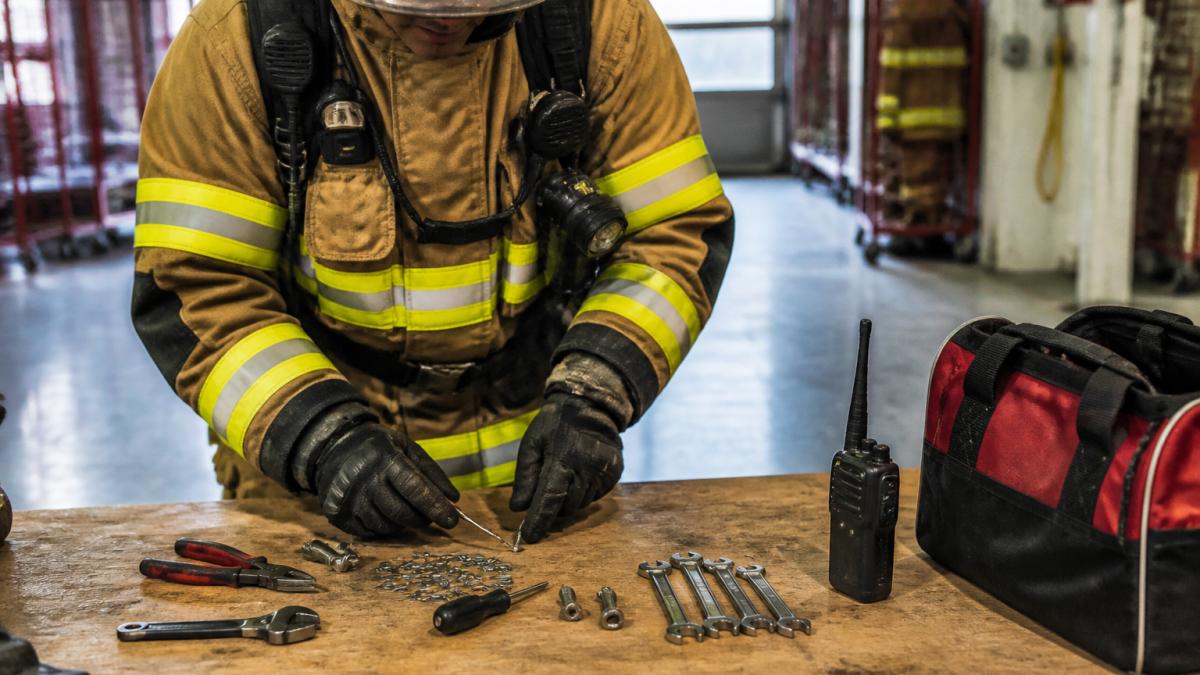
- Fit check. Measure both hands and try the glove with your normal liner. Confirm no more than a half-inch of fingertip slack.
- Donning test. Time how long it takes to put the gloves on from a cold start. Repeat three times and average the result.
- Gross motor test. Pick up and move a set of hand tools from one surface to another. Note any drops or fumbles.
- Fine motor test. Fasten and unfasten small nuts and bolts, then operate a radio and a flashlight switch without looking.
- Grip test. Hold a smooth tool, then a wet tool, and check for slip.
- Fatigue test. Repeat the fine motor test for five minutes and note when your hands start to slow.
- Doffing test. Time how fast you can remove the gloves, since doffing speed matters for hygiene and rehab.
Score each step 1 to 5 and compare gloves side by side. A glove that wins on protection but scores poorly on steps 3 through 6 will cost you time on the fireground.
Dexterity When Gloves Are Wet or Contaminated
Wet gloves change everything. Water and sweat reduce grip, and a soaked liner adds bulk inside the shell.
Moisture-wicking fabrics under the glove help manage sweat and keep your hands drier. Our article on moisture-wicking fabrics for fire station uniforms explains how those fabrics work and what to look for.
Run this seven-step evaluation with any candidate glove before your department buys; it takes about 20 minutes and uses gear you already have.
| Step | What to do | What to note |
|---|---|---|
| Fit check | Measure both hands, try glove with normal liner | No more than a half-inch of fingertip slack |
| Donning test | Time putting gloves on from a cold start | Repeat three times and average the result |
| Gross motor test | Pick up and move a set of hand tools | Note any drops or fumbles |
| Fine motor test | Fasten small nuts and bolts, operate radio and flashlight | Do it without looking |
| Grip test | Hold a smooth tool, then a wet tool | Check for slip |
| Fatigue test | Repeat the fine motor test for five minutes | Note when your hands start to slow |
| Doffing test | Time how fast you can remove the gloves | Doffing speed matters for hygiene and rehab |
Care, Cleaning, Drying, and Inspection: Protecting the Dexterity You Paid For
Care decides how long dexterity lasts, and most glove guidance stops at selection.
Why care affects dexterity. Three mechanisms matter. Soil and sweat mat the liner, increasing friction and slowing donning. Improper drying, especially high heat, can shrink or warp the shell and liner so the glove no longer matches your hand. Worn or flattened grip surfaces reduce the friction you rely on to hold tools with less squeeze force, increasing fatigue.
Cleaning. Follow the manufacturer's instructions, and treat those instructions as the ceiling, not a suggestion.
Drying. Air dry away from direct heat and sunlight. High heat is the most common cause of self-inflicted dexterity loss: it can stiffen leather, distort barrier films, and shrink liners.
Inspection. Check before every shift, and focus on the points that affect feel and grip:
- Fingertips and seams for cracks, separation, or exposed liner
- Palm and grip surfaces for glazing, hardening, or flattened texture
- The thumb web and knuckle flex points for stiffness or delamination
Retire gloves with cracked shells, exposed liner, or flattened grip surfaces.
Rotation. If your department allows it, rotate between two pairs. Rotation lets each pair dry fully between uses, preserving fit and liner condition, and gives you a comparison point: when one pair starts to feel noticeably stiffer or looser, you have an early signal that care or retirement is due.
Departments often budget for glove replacement but not for drying and inspection habits, then replace gloves early because they stiffened or lost grip. Better care is the cheaper fix and protects the dexterity you paid for. If you are rethinking the rest of your station wear, our guide to choosing comfortable apparel for long fire shifts covers staying comfortable through a 24-hour shift.
Frequently Asked Questions
What makes a firefighting glove easier to move in?
Fit does most of the work. A glove that matches your hand length and palm width keeps material from bunching at the knuckles, which is the main reason firefighters lose dexterity. From there, look at construction: pre-curved or naturally bent fingers, seamless or sculpted fingertips, and thinner palm reinforcement all reduce the effort needed to close your hand. Newer dexterity test methods can separate gloves that feel similar on the shelf but perform very differently once you are handling tools. Try gloves on with the liner you actually wear.
How should structural firefighting gloves fit?
Snug through the palm and fingers, with no material pinching between your fingers. Your fingertips should reach the ends of the finger stalls without pressing against them. Firefighters consistently cite loose-fitting gloves as a primary cause of lost dexterity, and fit problems are a common complaint among firefighters. Check that the cuff overlaps your coat sleeve without riding up, and test your grip on a tool before you commit.
Can firefighting gloves provide dexterity and protection at the same time?
Yes, but the balance is a trade-off you have to choose deliberately. The Science and Technology Directorate developed an improved structural firefighting glove in 2020 that is less bulky and allows more precise motor tasks, showing the two goals are not mutually exclusive. The catch is that thicker thermal barriers and palm reinforcement add protection at the cost of tactile feedback. Match the glove to the task: a structural glove for fire attack, a technical rescue glove for rope work and extrication. Newer structural gloves have moved well past the bulky mitts of the past.
How can firefighters test glove fit and dexterity before buying?
Run a task-based assessment rather than squeezing the fingers and calling it good. Put the gloves on with your normal liner, then work through tasks you actually do: turn a radio knob, clip a carabiner, grip and turn a wrench, tie a knot, and pick up a small screw or nut. Side-by-side handling tests are a practical way to compare grip and dexterity across structural glove models. Repeat the drill with wet gloves, since moisture changes grip and flexibility. If a glove fails on the radio or the wrench, it will fail on the fireground.

