

Cotton Blend Firefighter Shirts: Worth It?
Table of Contents
- Cotton vs. Synthetic Fabric Properties
- The Danger of Melting Synthetic Fibers
- Moisture-Wicking and Breathability in Station Wear
- Steam Burn Risks and Sweat Absorption
- Are Cotton Blend Firefighter Shirts Worth the Investment
- Best Firefighter Hoodies and Layering Strategy
- NFPA Station Wear Standards and Compliance
- Durability, Maintenance, and Real-World Performance
Last Updated: August 24, 2026
Cotton vs. Synthetic Fabric Properties
Cotton blend firefighter shirts are debated in the fire service because each material excels in different scenarios. Cotton is a natural cellulose fiber that absorbs moisture readily. Synthetic fabrics like polyester and nylon are petroleum-based polymers designed to repel moisture and dry quickly. This fundamental difference shapes how each material behaves under heat, sweat, and physical stress.
Cotton breathes well and feels soft against skin, making it preferred for station duties. Synthetics excel at moisture management and durability, but they introduce a separate hazard that deserves serious attention. Black Helmet's approach reflects this reality: their Firehouse Standard Premium Tee uses 100% combed and ring-spun cotton, while the Plug Brew Premium Tee blends cotton with polyester for added durability and stretch. This gives firefighters options depending on their specific use case.


The Danger of Melting Synthetic Fibers
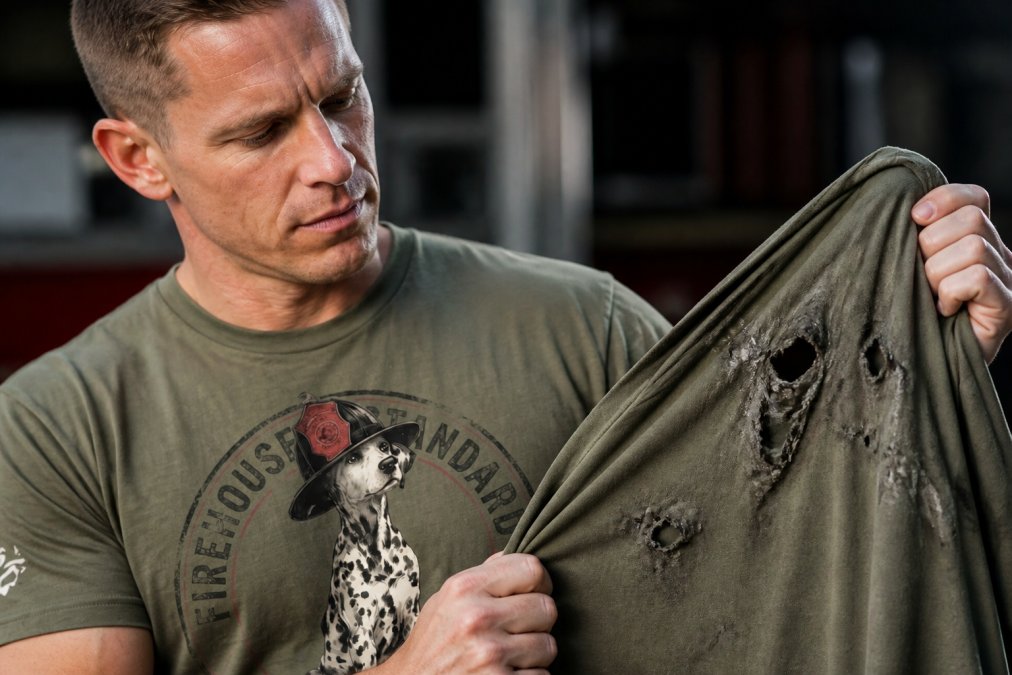
The real danger of synthetic firefighter shirts is what happens when they melt against your skin. Polyester and nylon have low melting points. When exposed to sustained heat above 300-400 degrees Fahrenheit, these fibers liquefy and stick to skin, creating deep thermal burns that are significantly harder to treat than traditional flame burns (peer-reviewed research). The melted polymer adheres to skin, trapping heat and causing deeper tissue damage. Cotton, by contrast, chars and falls away from skin rather than melting into it.
This risk scales with environment intensity. Firefighters working prescribed fire or wildland operations face sustained radiant heat that can push synthetics past their melting point. Structural firefighters in fully developed room fires face similar exposure. This is why the Wildland Fireline Premium Tee from Black Helmet uses 100% cotton construction, wildland crews operate in sustained heat environments where this distinction matters.

Moisture-Wicking and Breathability in Station Wear
Station wear operates under different rules than emergency response gear. When at the station or off-duty, moisture management and breathability become primary concerns. Cotton naturally wicks moisture away from skin through capillary action, pulling sweat away from your body and allowing evaporative cooling (peer-reviewed research). The downside is that cotton stays wet and holds moisture even after activity stops.
Synthetic blends address this by incorporating polyester or nylon, which repel moisture rather than absorbing it. Moisture sits on the surface and evaporates faster, creating the "moisture-wicking" effect. A cotton-polyester blend gives you cotton's breathability plus the synthetic's quick-dry properties.
For station wear, this balance matters. Firefighters spend hours at the station between calls. A shirt that breathes well and manages sweat without staying soaked is genuinely more comfortable. Black Helmet's Plug Brew Premium Tee cotton-polyester blend is designed explicitly for this use case, delivering comfort without sacrificing durability.
Steam Burn Risks and Sweat Absorption
Steam burns represent a specific hazard in firefighting. When cotton absorbs moisture, it becomes a conductor for steam. If water-saturated cotton is exposed to steam or high-temperature environments, the absorbed water can rapidly heat and create steam burns on the skin beneath the fabric.
This hazard is most relevant in structural firefighting with active water streams or high humidity. A firefighter operating in such conditions can have cotton fabric saturated with sweat or water. If exposed to steam from superheated water vapor, the absorbed moisture becomes dangerous, trapped water heats faster than the fabric itself, turning to steam and transferring heat directly to skin.
Synthetic blends reduce this risk because water sits on the surface rather than being drawn into the fiber structure, meaning less water is trapped when steam exposure occurs. However, this advantage is offset by the melting risk discussed earlier.
The practical response is understanding your operating environment. If you work primarily in structural firefighting with significant water use, the steam burn risk is real. If you work primarily in wildland operations, the melting risk of synthetics becomes more concerning. Cotton blends represent a middle ground that reduces both risks. Many experienced firefighters layer their gear specifically to manage this risk, a moisture-wicking base layer under your station shirt helps manage sweat without saturating your outer layer.
Are Cotton Blend Firefighter Shirts Worth the Investment
The answer depends on your primary use case. Cotton blend firefighter shirts cost more than generic athletic shirts. Black Helmet's premium tees run $34.50, which is higher than mass-market alternatives but competitive with other fire service-specific brands.
For active-duty firefighters, the answer is often yes. A shirt designed specifically for the fire service, with attention to fabric composition, durability, and the specific hazards firefighters face, performs better than generic clothing. Cotton blends reduce the melting risk of pure synthetics while maintaining better moisture management than pure cotton.
For retired firefighters and fire service supporters, the value proposition shifts toward identity and connection to the fire service. A well-made cotton blend shirt that feels authentic and lasts through regular wear still delivers value, even if the safety advantages matter less.
The durability factor is real. Fire service-specific brands use better fabric construction, pre-shrinking, and reinforced seams. A Black Helmet shirt will outlast a generic tee through multiple wash cycles. Over two or three years of regular wear, the premium shirt becomes the more economical choice. durable daily shirts.
Best Firefighter Hoodies and Layering Strategy
Hoodies serve dual purposes: comfort during station downtime and a base or mid-layer during active operations. The layering principle is straightforward: layer moisture-wicking materials closest to skin, insulating materials in the middle, and protective outer layers on top.
For station wear and off-duty use, a quality hoodie in cotton or cotton-blend construction provides comfort and identity. The best firefighter hoodies balance durability, comfort, and authentic fire service representation. Black Helmet's hoodie line is designed around these principles, with authentic fire service graphics, quality construction, and a fit that works for the demographic that wears them.
Layering strategy becomes critical in high-heat environments. A thin moisture-wicking base layer under your station shirt helps manage sweat without saturating the outer layer, reducing the steam burn risk. During active operations, firefighters wear protective gear over station wear, so the layering strategy extends to that context. The practical recommendation: invest in quality base layers and station wear that work together.
NFPA Station Wear Standards and Compliance
The National Fire Protection Association (NFPA) establishes standards for firefighter protective equipment. NFPA 1500 addresses firefighter safety and health, setting requirements for protective clothing used in emergency operations (nfpa.org). However, station wear, the clothes firefighters wear at the station between calls, is not subject to NFPA standards in the same way that turnout gear is. Station wear is personal choice, not regulated equipment.
Many fire departments have their own policies about station wear. Some require station wear to meet certain standards; others allow personal choice. Understanding your department's policy is essential. Station wear serves a different purpose than protective gear, it's meant to provide comfort, durability, and identity, not to protect you during emergency operations.
Black Helmet's products are designed as station wear and off-duty apparel, not as protective equipment. They're meant to represent the fire service authentically and provide quality construction for regular wear.
Durability, Maintenance, and Real-World Performance
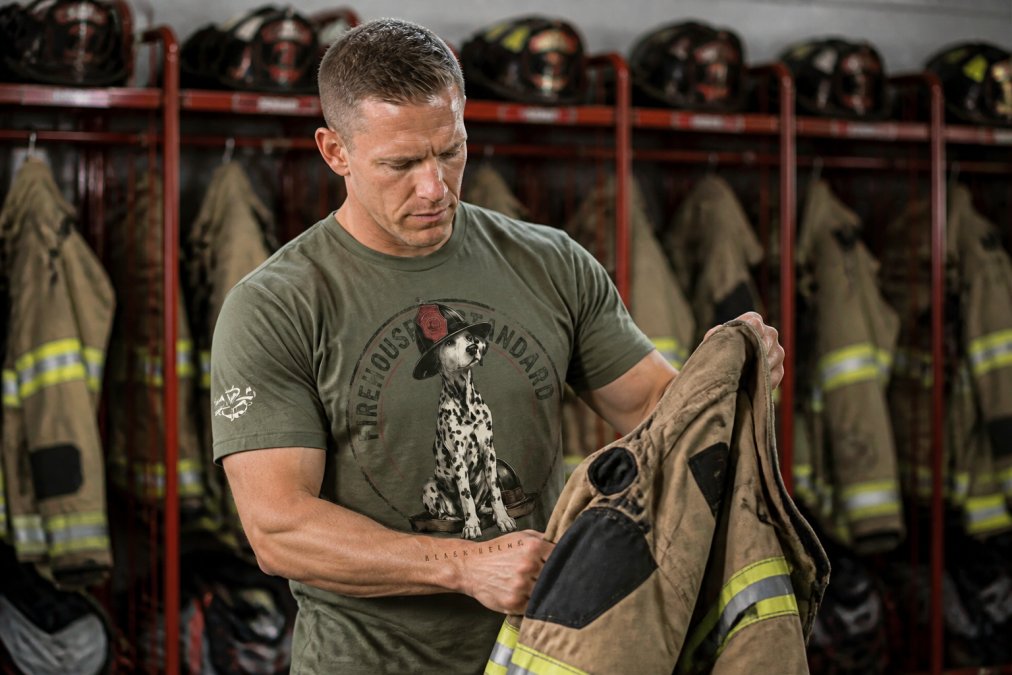
How long a firefighter shirt lasts depends on fabric quality, construction, and care. Quality matters in ways that aren't immediately obvious. Pre-shrunk fabric means your shirt won't shrink significantly after the first few washes. Ring-spun cotton creates stronger, smoother yarns that resist pilling and wear. Reinforced seams prevent tearing at stress points.
Black Helmet's premium tees use combed and ring-spun cotton, which is higher quality than standard cotton. The combing process removes short fibers and impurities, creating stronger, smoother yarn that feels better and looks better after multiple washes.
Maintenance impacts durability significantly. Washing in cold water, using gentle cycles, and air-drying extends the life of any shirt. A shirt that gets proper care will outlast one that doesn't, regardless of initial quality. For active firefighters, a shirt worn regularly at the station will last 2-3 years with proper care. A cheaper shirt might last 6-12 months under the same conditions. For retirees and occasional wearers, a shirt worn a few times per month can last 5+ years, making the initial cost premium negligible when amortized over that timeframe.
Cotton blend firefighter shirts represent a deliberate choice. They're not designed for high-heat emergency operations, that's what protective gear does. They're built for station wear, off-duty use, and the identity that comes with representing the fire service authentically.
The investment makes sense if you value durability, comfort, and a shirt that understands the fire service context. Black Helmet's premium construction and fire service-specific design deliver on that promise. For firefighters, retirees, and supporters who want gear that represents the brotherhood with authenticity and quality, cotton blend shirts are worth the cost.
| Fabric Type | Breathability | Moisture Absorption | Heat Resistance | Durability | Best Use |
|---|---|---|---|---|---|
| 100% Cotton | Excellent | High | Low | Good | Station wear, comfort |
| Cotton Blend | Very Good | Moderate | Moderate | Excellent | Station wear, layering |
| 100% Synthetic | Good | Low | Moderate | Good | Athletic, quick-dry |
Frequently Asked Questions
Q: What are the disadvantages of cotton blend firefighter shirts?
A: Cotton blend shirts absorb sweat, which can increase steam burn risk during high-heat exposure. The polyester component may melt and drip if exposed to direct flame, creating additional burn injury potential. However, the cotton portion provides better thermal protection than pure synthetic. Blends also require careful laundering. The key is choosing the right ratio: higher cotton percentages reduce melt-and-drip risk while maintaining breathability.
Q: Are cotton blend shirts good for firefighter station wear?
A: Cotton blend shirts work well for station wear because they balance comfort and safety. The cotton provides breathability and moisture-wicking for all-day comfort, while polyester adds durability and helps prevent shrinking. For off-duty wear and station lounging, they're practical. However, they're not suitable as primary protective gear during active firefighting. They're best used as base layers or station apparel, paired with proper thermal protection equipment when entering high-risk environments.
Q: How does fabric composition affect firefighter safety during station duties?
A: Fabric composition directly impacts heat transfer and burn injury risk. Pure cotton resists melting but absorbs moisture, increasing steam burn potential. Synthetic fibers wick moisture but melt under extreme heat, creating secondary burn wounds. Cotton blends offer a balance: the cotton provides thermal protection while polyester improves durability. Understanding your fabric's heat dissipation properties and layering strategy can help minimize risk during station duties and prescribed fire operations.
Q: Do cotton blend shirts shrink less than 100% cotton?
A: Yes, cotton blend shirts typically shrink less than pure cotton because polyester has minimal shrinkage. Pre-shrunk fabric helps both types, but blends provide extra insurance against size loss after multiple wash cycles. Black Helmet premium tees use pre-shrunk cotton and cotton-polyester blends to maintain fit and garment integrity through extended use. Always follow care instructions to preserve fabric performance over time.
This article was written using GrandRanker
