

Best Fire Department Station Wear: 2026 Buying Guide
Table of Contents
- What Makes the Best Fire Department Station Wear
- NFPA 1975 Standard Explained: Compliance and Certification
- Firefighter Station Uniform Requirements: What You Need to Know
- Top Brands for Best Fire Department Station Wear
- Key Features: Moisture-Wicking, Breathability, and Durability
- Fire Station Uniform Maintenance Tips and Care Guide
- Real-World Durability: What Firefighters Actually Need
- Budget vs. Premium: Making the Right Choice
Best Fire Department Station Wear: 2026 Buying Guide
Last Updated: July 15, 2026
When firefighters talk about what separates a good firehouse day from a frustrating one, the conversation often comes down to comfort and durability. The best fire department station wear isn't just about looking professional, it's about gear that performs during 24-hour shifts, survives repeated washing, and fits how your body moves. This guide walks you through the technical standards, brand options, and practical features that separate quality station wear from the rest.
What Makes the Best Fire Department Station Wear
Station wear is what you wear during the 90% of your shift spent at the firehouse, training, and managing administrative duties. Unlike turnout gear, it needs to be comfortable enough for eight-hour stretches, durable enough to survive constant motion and repeated laundering, and professional enough to represent your department in public.
What separates premium station wear from budget alternatives is reinforced stress points at the crotch and shoulders, fabric that breathes during physical training without fading after 50 washes, and pocket placement that actually works for the tools you carry. These details compound over months of use, cheap gear falls apart, good gear gets better with age.
NFPA 1975 Standard Explained: Compliance and Certification
NFPA 1975 is the National Fire Protection Association standard governing protective apparel for firefighters. It defines what "flame resistant" means, fabric won't ignite below 1,000 degrees Fahrenheit and won't continue burning after the heat source is removed. This matters because station wear sits between your skin and the outer environment.
However, not all station wear needs NFPA 1975 certification. If your department's procedures require you to change into turnout gear before entering hazardous environments, standard cotton or cotton-blend station wear is acceptable. Many departments, particularly those in wildland fire operations, mandate certification for all station apparel. Before investing in premium certified options, verify what your department actually requires.
Class A vs. Class B Uniforms: Key Differences
Class A uniforms are formal dress gear for community events, ceremonies, and official photos. They prioritize appearance with crisp lines and formal construction. Class B uniforms are daily station wear designed for comfort during long shifts, with moisture-wicking fabrics, reinforced stress points, and functional pocket placement.
Most firefighters prefer Class B for daily wear because it works better when you're actually working. If your budget is limited and you can only choose one, start with quality Class B gear and add Class A pieces as budget allows.
Fire Resistant Fabric Technology and Nomex IIIA
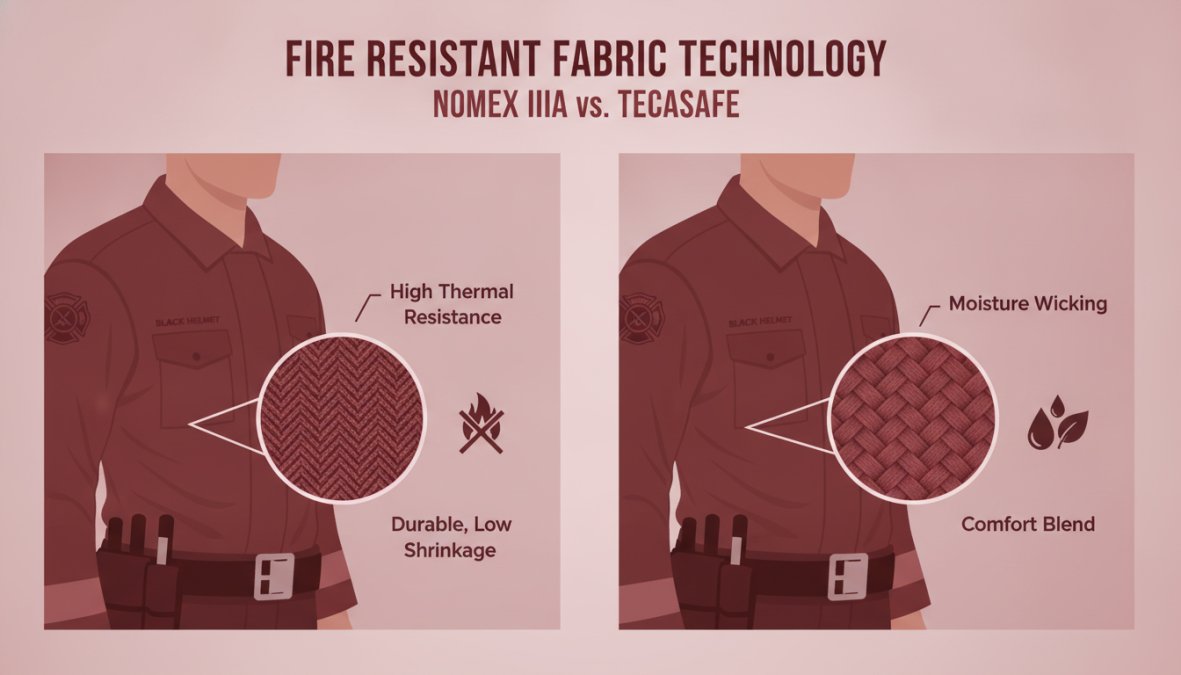
Nomex IIIA is the gold standard for inherent flame-resistant fabric. Unlike treated fabrics that lose protection with washing, Nomex IIIA's protection is built into the fiber itself and never washes out. Tecasafe is another premium option, a blend combining cotton durability with flame-resistant properties. It feels softer than pure Nomex but may not last quite as long under heavy use.
Most departments that mandate certified station wear specify either Nomex IIIA or Tecasafe. Both meet NFPA 1975 requirements. The choice often comes down to personal preference and what your department has standardized.
Firefighter Station Uniform Requirements: What You Need to Know
Every fire department sets its own standards for station wear. Some issue complete uniforms and require exact compliance. Others set minimum standards and let you choose brands within those parameters.
Most departments require:
- A Class B duty shirt or polo
- Class B duty trousers or cargo pants
- Department-issued insignia, badges, and patches
- Compliant footwear (usually black leather or tactical boots)
Beyond these basics, individual preference drives most choices. Understand what your department mandates versus what's optional before shopping.
Men's and Women's Station Wear Fit Standards
Modern manufacturers now offer distinct sizing for different body types. Quality brands provide detailed fit guidance. For men's station wear, fit focuses on chest, waist, and inseam measurements with multiple cuts within each size.
Women's station wear has transformed dramatically. Quality manufacturers now cut specifically for women's proportions, narrower shoulders, curved waist, different arm length ratios. The best women's station wear fits through the chest without pulling, tapers at the waist without excess fabric, and has appropriate sleeve length.
Proper fit matters more than brand. A perfectly-fitted shirt from a mid-range brand serves you better than an ill-fitting premium shirt. Take time to try multiple sizes and fits.
Tactical Apparel vs. Traditional Station Uniforms
Tactical apparel prioritizes functionality with cargo pockets, reinforced stress points, moisture-wicking fabrics, and cuts accommodating equipment belts. Traditional uniforms prioritize appearance with cleaner lines and fewer pockets.
Many modern departments blend both approaches, using tactical-cut base layers and duty shirts with more traditional trousers. The choice depends on your department's culture and your personal preference.
Top Brands for Best Fire Department Station Wear
Premium Options: Workrite and Flying Cross
Workrite Fire Service engineers station wear specifically for firefighters with NFPA 1975 certified options and proprietary fabric blends. Their Coolderm technology manages moisture during training and active duty. Workrite focuses on departments and bulk procurement, with pricing typically available through direct contact.
Flying Cross has made uniforms since 1946 with deep relationships across fire departments. Their Cross FR line includes tri-certified protection options. Both brands prioritize certification and compliance, you're paying for durability lasting years, not months.
Mid-Range Durability: 5.11 Tactical and Blauer
5.11 Tactical understands operational needs with moisture-wicking technology, reinforced stress points, and functional pocket placement. Starting around $37 per shirt, they offer strong value. Note that 5.11 sizing runs small, you'll likely need to size up.
Blauer offers similar positioning with professional-grade station wear designed for daily duty. Their gear is comfortable for all-day wear and maintains appearance through repeated washing.
Budget-Conscious Choices: Propper and Tru-Spec
Propper and Tru-Spec offer tactical apparel at lower price points. Propper starts around $50 per item with rugged construction. The trade-off is longevity, budget gear lasts 18-24 months versus 4-5 years for premium options. Per-year cost is actually comparable when factoring in replacement frequency.
Firefighter-Owned Pride: Black Helmet Apparel
Black Helmet, founded by firefighters, creates station apparel celebrating brotherhood and tradition. Their Firehouse Standard Premium Tee ($34.50) isn't designed as duty-only wear but for firefighters wanting to represent their identity on and off duty. Quality is premium with heavyweight cotton and construction surviving repeated washing.
Black Helmet works best as part of a mixed wardrobe, wear Workrite or 5.11 for formal duty, then Black Helmet for station downtime or off-duty events.
Key Features: Moisture-Wicking, Breathability, and Durability
Moisture-wicking refers to fabric's ability to pull sweat away from your skin and move it to the surface for evaporation. Polyester and synthetic blends excel at this. Breathability refers to how much air passes through the fabric. The best station wear balances these properties, typically using a cotton-polyester blend (60/40 or 65/35) with medium weave.
Durability comes down to fabric weight, seam construction, and reinforcement at stress points. Heavier fabrics generally last longer. Double-stitched seams at shoulders, underarms, and crotch prevent tears. Reinforced pocket corners and button attachment points extend garment life significantly.
Cargo Pockets and Tactical Design Elements
Cargo pockets are genuinely useful, providing dedicated storage without creating bulk at your waist. Well-designed pockets sit flat when empty and distribute weight evenly when loaded.
Other tactical design elements worth considering include articulated sleeves allowing full arm range of motion, tapered waist preventing excess fabric bunching, gusseted crotch for unrestricted movement, reinforced knees for durability, and pen slots for quick access.
Layering Systems for Climate Control
Many firefighters use layering systems to manage temperature. A compression shirt or moisture-wicking base layer under your duty shirt provides extra sweat management during training. A lightweight tactical polo works better than a heavy shirt during summer. A long-sleeve duty shirt with lightweight jacket handles cooler weather.
Test your layering system during training before relying on it during actual duty. Small adjustments in fit or material make a big difference in real conditions.
Fire Station Uniform Maintenance Tips and Care Guide
How you care for station wear dramatically affects its lifespan. Poor washing practices can reduce a quality shirt's life from four years to two years.
Washing and Drying Flame-Resistant Fabrics
Most manufacturers recommend washing in warm water (not hot) with regular detergent. Hot water can damage flame-resistant properties. Avoid chlorine bleach on any flame-resistant fabric, it degrades protective properties. Use oxygen-based bleach instead.
Machine drying on medium heat is fine for most station wear. High heat can damage elastic components and fade colors. Avoid fabric softener on flame-resistant gear, it can coat fibers and reduce breathability.
Extending the Life of Your Station Wear
Rotate your station wear to extend its life. A shirt worn every fourth day lasts significantly longer than one worn every day. Repair small damage immediately, a small tear or loose button is a five-minute fix. Store station wear on hangers in dry, temperature-controlled environments. Follow care label instructions based on manufacturer testing.
Real-World Durability: What Firefighters Actually Need
The most durable station wear combines quality fabric resisting staining and fading, reinforced construction at stress points, and design accommodating actual movement patterns. A shirt that looks perfect after one wash but tears at the shoulder seam after two months is not durable.
Firefighters who've worn the same brand for years have opinions worth listening to. Ask your crew what they wear and why, you'll get honest feedback about what works and common failure points.
Budget vs. Premium: Making the Right Choice
A premium shirt costing $70 lasting 5 years equals $14 per year. A budget shirt costing $40 lasting 2 years equals $20 per year. The premium option is actually cheaper over time.
| Gear Type | Budget Option | Mid-Range Option | Premium Option |
|---|---|---|---|
| Entry-Level Duty Shirt | Propper ($50) | 5.11 Tactical ($37) | Workrite (contact for pricing) |
| Durable Cargo Pants | Tru-Spec (contact) | Blauer (contact) | Flying Cross (contact) |
| Station Culture Apparel | Generic brand | Black Helmet ($34.50) | Black Helmet Premium ($54.50) |
| Expected Lifespan | 18-24 months | 24-36 months | 48-60 months |
Choose budget if cost is your primary concern. Choose mid-range if you want durability without premium pricing. Choose premium if you want gear lasting years at the highest performance level.
Finding the best fire department station wear means understanding what your department requires, what your body needs, and what will survive firehouse demands. Quality station wear is the foundation of comfort during 24-hour shifts and professional appearance during community events. Whether you choose premium certified options or functional mid-range gear, prioritize durability, fit, and features matching how you actually work. Your station wear should make your job easier, not harder.
Frequently Asked Questions
What fabric is best for fire department station wear?
Fire-resistant fabrics like Nomex IIIA and Tecasafe are preferred for compliance with NFPA 1975 standards. For non-FR station wear, heavy-duty cotton blends and moisture-wicking polyester provide durability and comfort. FR fabrics don't lose flame resistance when washed, making them ideal for regular station duty. Consider your department's specific requirements and climate when selecting fabric composition.
What should I look for when buying firefighter station wear?
Prioritize NFPA 1975 certification if required by your department, moisture-wicking technology for comfort during long shifts, reinforced stress points at seams and pockets for durability, and proper fit for your body type. Check for breathability, cargo pocket functionality, and fade-resistant construction. Station wear should balance professional appearance with practical functionality for daily firehouse duties and emergency readiness.
Are cotton uniforms allowed in fire stations?
Traditional 100% cotton uniforms are allowed in many fire stations for station wear, though they lack flame resistance. However, departments increasingly require or recommend FR-certified alternatives like Nomex IIIA or Tecasafe blends for safety compliance. Check your department's specific uniform policy and NFPA 1975 standards, as requirements vary. Cotton remains popular for its breathability and comfort, but FR fabrics provide an added safety layer.
How do I maintain flame-resistant station wear properly?
Wash FR station wear in warm water with mild detergent, avoiding bleach and fabric softeners that compromise flame resistance. Dry on low heat or air dry to prevent shrinkage. Don't dry clean FR garments, as solvents can damage the fabric's protective properties. Inspect regularly for wear at seams and stress points. Proper maintenance ensures your station wear maintains its protective qualities and appearance throughout its service life.
This article was written using GrandRanker
