

Durable Shirts for Active Duty Firefighters: A 2026 Buying Guide
Table of Contents
- What Makes Durable Shirts for Active Duty Firefighters Different
- NFPA 1975 Compliant Shirts: Understanding Regulatory Standards
- Fire Resistant Shirts for Firefighters: Materials and Heat Protection
- Fabric Science for Heat Stress: Moisture-Wicking and Breathability
- Firefighter Base Layer Shirts: Layering Systems for Long Shifts
- Durability Testing and Long-Term Performance Standards
- Top Durable Shirt Options for Station Wear and Off-Duty Use
- How to Care for Durable Firefighter Shirts to Maximize Lifespan
Last Updated: July 20, 2026
When selecting durable shirts for active duty firefighters, the stakes are higher than most apparel decisions. These aren't just uniforms, they're part of your gear, identity, and protection. Professional-grade firefighter shirts are engineered differently than regular apparel because they face constant abrasion from equipment, extreme heat, industrial washing cycles, and the physical demands of rescue operations. This guide covers everything you need to know about durable shirts for active duty firefighters, from NFPA compliance standards to the fabric technologies that keep you comfortable during long shifts.
What Makes Durable Shirts for Active Duty Firefighters Different
Professional firefighter shirts start with fabric selection. Ring-spun cotton offers superior durability compared to standard cotton because the fibers are twisted more tightly during production, creating stronger yarn that resists pilling and tearing. Quality duty-ready shirts use 6 oz heavyweight cotton, which provides the density needed to withstand abrasion without feeling stiff.
Construction matters equally. Double-stitched seams, reinforced collar bands, and pre-shrunk fabric prevent common failures that plague cheaper alternatives. Pre-shrinking during manufacturing ensures your shirt maintains its fit after repeated wash cycles.
Station wear shirts must handle both the physical environment and the aesthetic demands of the firehouse. Your shirt represents your department, crew, and commitment to the job.
NFPA 1975 Compliant Shirts: Understanding Regulatory Standards
NFPA 1975 is the specific standard governing firefighter station wear and work uniforms. Understanding this standard means knowing your shirt has been tested to meet real-world performance requirements.
NFPA 1975 requires that station wear meet specific criteria for flame resistance, durability, and comfort. The standard mandates that fabrics resist ignition and limit flame spread when exposed to an open flame. Testing is rigorous: samples are exposed to flame for specific durations, and the fabric must not ignite, must self-extinguish within a defined timeframe, and must not produce excessive smoke or toxic gases. The standard also covers seam strength, colorfastness, and shrinkage limits.
Compliance with NFPA 1975 means your shirt has been independently tested and verified to meet these performance standards. When you see a shirt labeled as NFPA 1975 compliant, you're buying a product that has passed rigorous third-party testing.
Fire Resistant Shirts for Firefighters: Materials and Heat Protection
Fire resistant shirts use specialized materials designed to protect you from thermal hazards. The most common approaches involve either inherently flame-resistant fabrics like Nomex or high-quality cotton blends that meet NFPA standards through construction and treatment.
Heat stress is a real concern during active firefighting. Your station wear shirt plays a role in managing thermal load. The fabric's ability to allow moisture to escape while providing thermal protection is critical. A shirt that traps sweat and heat accelerates fatigue and heat-related illness during long shifts.
Nomex Firefighter Shirts vs. Cotton Blends
Nomex is a synthetic fiber developed by DuPont that is inherently flame-resistant. It doesn't require chemical treatment to meet flame-resistance standards, the fiber itself resists combustion. Nomex shirts offer superior thermal protection and are often chosen for structural firefighters who face direct flame exposure.
Cotton blends, particularly high-quality ring-spun cotton that meets NFPA 1975, offer excellent durability and comfort for station wear. These shirts provide adequate flame resistance through construction and fabric density rather than synthetic materials. Many firefighters prefer cotton blends for daily station wear because they breathe better and align with traditional fire service uniform aesthetics.
The choice depends on your specific use case. Nomex excels in extreme heat environments and provides maximum thermal protection. Cotton blends are ideal for station wear, off-duty use, and situations where comfort and breathability are priorities alongside safety.
| Material | Best For | Thermal Protection | Breathability | Cost |
|---|---|---|---|---|
| Nomex | Structural firefighting, extreme heat | Highest | Moderate | Premium |
| Ring-spun cotton (NFPA compliant) | Station wear, daily duty | High | Excellent | Standard |
| Cotton blends | Mixed duty, versatility | High | Very good | Standard |
Fabric Science for Heat Stress: Moisture-Wicking and Breathability
Moisture-wicking technology moves sweat away from your skin to the outer surface of the fabric where it can evaporate. This process is critical during physical exertion because sweat trapped against your skin accelerates heat stress and reduces performance.
High-quality cotton can be engineered to wick moisture through tight weaving patterns and specific fiber treatments that encourage water movement along the fiber surface. Breathability refers to the fabric's ability to allow air circulation. Jersey knit construction, commonly used in premium firefighter shirts, provides a smooth surface that moves with your body while maintaining adequate fabric density.
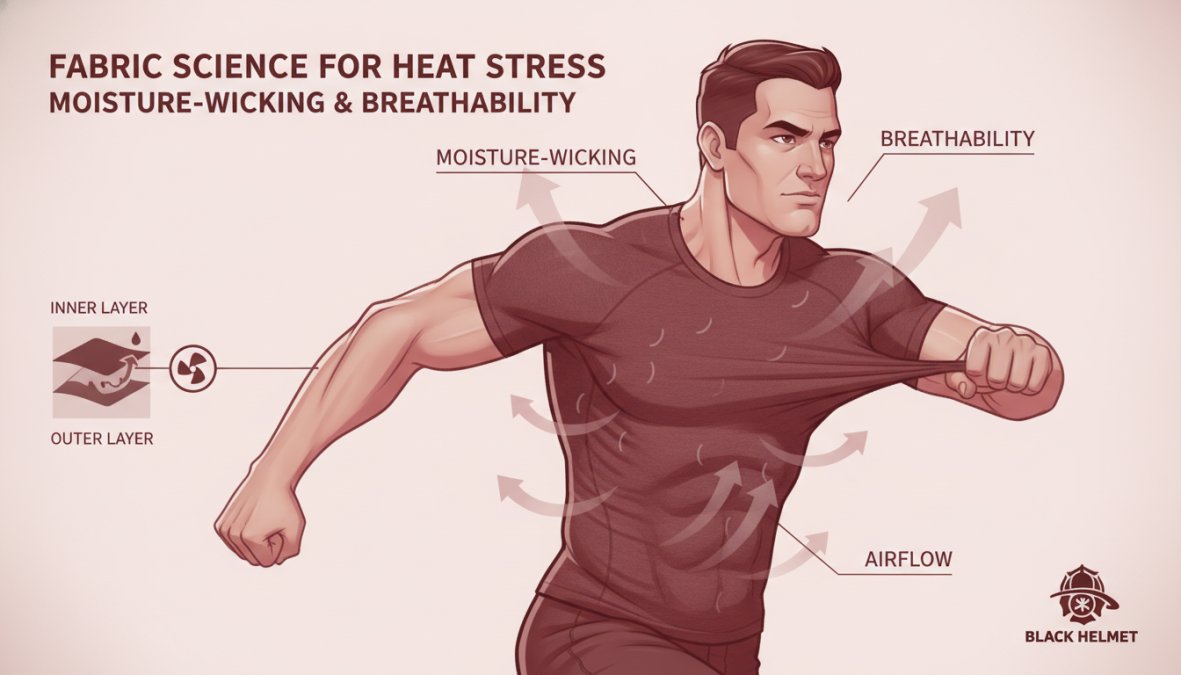
Heat stress during firefighting involves metabolic heat generated by physical exertion combined with the insulating effect of protective gear. Your station wear shirt should support thermoregulation by allowing sweat to escape and air to circulate.
Firefighter Base Layer Shirts: Layering Systems for Long Shifts
A proper layering system extends your comfort across different activity levels and environmental conditions. Your base layer sits closest to your skin and is responsible for moisture management. Your duty shirt functions as both a mid-layer and outer layer depending on conditions.
For firefighters, the base layer is critical for managing sweat and preventing chafing during long shifts. A quality base layer should be moisture-wicking, fitted, and made from materials that dry quickly. Many firefighters use synthetic base layers or wool blends that outperform cotton in moisture management.
During station activities, your duty shirt provides the primary layer of protection and represents your department. During active firefighting, it sits beneath your turnout gear and works with your base layer to manage heat and moisture. Understanding how your station wear shirt fits into your overall layering system helps you make the right choice for your specific environment.
Durability Testing and Long-Term Performance Standards
True durability testing involves subjecting shirts to repeated stress cycles that simulate months or years of real-world use. Professional durability testing measures seam strength, fabric pilling resistance, colorfastness, and shrinkage after repeated washing. The Martindale abrasion test measures how many cycles a fabric can withstand rubbing against itself before visible wear appears. Quality firefighter shirts should handle 100,000+ Martindale cycles without significant degradation.
Colorfastness testing ensures that dyes don't bleed or fade excessively during washing. Shrinkage testing verifies that pre-shrinking was done correctly, a shirt that shrinks more than 3-5% after washing will become unwearable quickly.
A shirt designed for station wear should maintain its fit, color, and structural integrity for at least 2-3 years of regular use with proper care, translating to 100+ wash cycles and countless hours of wear in real firehouses.
Top Durable Shirt Options for Station Wear and Off-Duty Use
When selecting durable shirts for active duty firefighters, several excellent options balance protection, comfort, and durability. The best choice depends on your specific use case.
Premium Tee Recommendations
The [Embroidered Skull Premium Tee - Black](https://blackhelmetapparel.com/products/embroidered-skull-premium-tee-black) from Black Helmet is designed for firefighters who want authentic station wear that works on and off duty. This shirt features a low-profile embroidered skull-in-helmet logo on the left chest. At $34.50, it offers premium construction at a reasonable price point, using heavyweight ring-spun cotton that maintains its shape through repeated washing.
The Fire Rescue Thin Red Line Premium Tee brings together the symbols of fire rescue service with a distressed design that honors fire service tradition. Also priced at $34.50, this shirt speaks to firefighters who want to represent their commitment off-duty.
For those who embody the front-line mentality, the First In, Last Out Premium Tee captures the mindset of crews who lead the charge. Priced at $34.50, this shirt is designed with the same premium construction as Black Helmet's other offerings.
The Wildland Fireline Premium Tee specifically honors wildland firefighters and the unique challenges of fireline work. At $34.50, it's built with the same durability standards as the rest of Black Helmet's lineup.
| Shirt Option | Price | Best For | Key Feature |
|---|---|---|---|
| Embroidered Skull Premium Tee | $34.50 | Daily station wear, understated pride | Low-profile embroidery |
| Fire Rescue Thin Red Line Tee | $34.50 | Off-duty representation | Distressed design, tradition-focused |
| First In, Last Out Tee | $34.50 | Active duty mindset | Front-line messaging |
| Wildland Fireline Tee | $34.50 | Wildland crews | Specialized representation |
All Black Helmet premium tees use heavyweight ring-spun cotton with pre-shrunk construction. Seams are double-stitched for durability, and embroidery and screen printing are done with commercial-grade processes that survive repeated washing.
How to Care for Durable Firefighter Shirts to Maximize Lifespan
Proper care extends the life of your durable shirts significantly. Wash in cold water with mild detergent. Avoid bleach and oxygen-based cleaners, which weaken fibers and fade dyes. Dry on low heat or air dry whenever possible. High heat accelerates shrinkage and fabric degradation.
Store shirts in a cool, dry place away from direct sunlight. Turn your shirt inside out before washing to reduce fading and pilling on the visible surface. Inspect seams and embroidery regularly for signs of wear and address loose stitches immediately.
Finding durable shirts for active duty firefighters requires understanding the standards that matter, the materials that perform, and the construction details that separate professional gear from everything else. Black Helmet shirts are built with heavyweight ring-spun cotton, NFPA-compliant construction, and double-stitched durability to last through years of station life and beyond.
Frequently Asked Questions
What materials are best for durable shirts for active duty firefighters?
The most durable options combine ring-spun cotton with moisture-wicking synthetic blends. NFPA 1975 compliant station wear typically uses heavyweight 6 oz cotton or Nomex blends for thermal protection and abrasion resistance. Moisture-wicking fabrics pull sweat away from skin, reducing heat stress during long shifts. Look for pre-shrunk, jersey knit construction that resists fading and maintains shape after repeated washing. Premium brands use double-stitched seams and reinforced stress points for extended durability.
Are Nomex firefighter shirts required for all active duty firefighters?
Nomex shirts are not universally required, requirements depend on your fire department's specific NFPA 1975 compliance standards and station protocols. Nomex provides superior thermal protection and flame resistance compared to standard cotton, making it ideal for structural firefighters. However, many departments approve duty-ready cotton or cotton-blend shirts for station wear and off-duty use. Check your department's uniform compliance guidelines. For maximum heat stress protection during active operations, Nomex is the premium choice; for station wear, compliant cotton options work well.
How do I know if a firefighter shirt will actually hold up long-term?
Look for long-term durability indicators: pre-shrunk heavyweight fabric (6 oz minimum), double-stitched seams, reinforced collar and armhole construction, and abrasion-resistant threading. Quality brands conduct durability testing through repeated wash cycles and stress testing. Ask about wash-and-wear guarantees and read reviews from active firefighters. Check if the manufacturer specifies seam strength and fabric weight. Black Helmet and similar premium brands back their durability with satisfaction guarantees. Avoid lightweight jerseys under 5 oz, they won't withstand the demands of station life and frequent washing.
What's the difference between NFPA 1975 compliant station wear and regular firefighter apparel?
NFPA 1975 compliant shirts meet specific regulatory standards for flame resistance, thermal protection, and durability required for official station wear and public safety environments. Compliant shirts undergo rigorous testing for heat stress protection and abrasion resistance. Regular firefighter apparel, like off-duty or casual graphic tees, doesn't meet these standards. For on-duty station wear, you need NFPA 1975 certification. Off-duty firefighter shirts prioritize comfort and brotherhood messaging but aren't subject to the same regulatory requirements. Always verify compliance certification before purchasing for official duty use.
This article was written using GrandRanker
