

What to Buy New Firefighters: Essential Gear & Gifts
Table of Contents
- What to Buy New Firefighters: A Practical Buying Guide
- Tactical Tools and Equipment for New Firefighters
- Best Multi-Tool for Firefighters: Compact Utility Solutions
- Firefighter Station Bag Essentials: What Belongs Inside
- Fire Academy Graduation Gifts That Honor Service
- Drinkware and Hydration Gear for Station Life
- Gifts for Firefighter Families and Spouses
- Maintenance and Care for Firefighter Gear
What to Buy New Firefighters: Essential Gear & Gifts
Last Updated: July 8, 2026
When new firefighters graduate from the academy, they face a critical transition: moving from training scenarios to real fireground operations. Knowing what to buy new firefighters, from tactical tools to station essentials, can mean the difference between someone who's prepared and someone who's scrambling. This guide covers tactical equipment, station bag essentials, thoughtful gifts, and maintenance practices that keep gear functional for years.
Understanding Department-Specific Regulations
Before spending a dollar, understand what your fire department allows. Every department has its own turnout gear specifications, radio compatibility standards, and pocket-carry restrictions. Some departments prohibit personal multi-tools on the fireground; others mandate specific helmet light models.
Ask your training officer or captain for a written list of approved equipment before making purchases. This single step saves time, money, and frustration. Department regulations also cover materials, some specify flame-resistant station wear or prohibit certain synthetics near the station. When in doubt, purchase from vendors specializing in fire service equipment; they understand these nuances better than general retailers.
Budget-Tiered Approach to Buying for New Firefighters
A practical approach segments purchases into three tiers based on how often items get used and how critical they are to fireground operations.
Tier 1, Essential Fireground Tools ($150-$300 total): These items go into your turnout coat pockets and get used on nearly every call. A quality multi-tool, rescue shears, and helmet light aren't luxuries, they're tools that might save a life. Spending $100 on a reliable helmet light instead of $40 on a knockoff is the right choice.
Tier 2, Station and Off-Duty Gear ($100-$250): This includes apparel, socks, drinkware, and station bag items. A quality pair of merino wool socks costs more than cotton, but the comfort during 24-hour shifts justifies the investment.
Tier 3, Gifts and Personalized Items ($25-$75): Challenge coins, engraved dog tags, and personalized wallets are meaningful but not operationally critical. They're perfect for graduation gifts that celebrate the profession without breaking the bank.
Tactical Tools and Equipment for New Firefighters
The right tactical tools reduce clutter in your pockets while maximizing what you can accomplish on the fireground.
Multi-Tools and Rescue Shears
A compact multi-tool designed for firefighters serves multiple purposes: gas shut-off valve access, hose coupling adjustments, door chocking, and prying. The TFT Res-Q-Rench ($30-$50) integrates these functions into a single pocket-sized device. Purpose-built firefighter tools anticipate the specific tasks you'll face on calls, unlike generic multi-tools designed for camping.
Rescue shears deserve their own category. The Leatherman Raptor Rescue Shears ($90-$110) cut through turnout gear, seatbelts, and clothing with exceptional power and include integrated features like a glass breaker and oxygen tank wrench. For firefighters and EMS personnel, rescue shears are non-negotiable.
The Channellock 86 Rescue Tool ($30-$45) offers an affordable alternative for new firefighters on a tighter budget. It's a proven, durable hand tool that handles gas shut-offs and small prying tasks effectively.
Helmet Lights and Radio Accessories
Hands-free illumination during interior fire operations is essential for situational awareness and safety. The Streamlight Vantage 180 X ($150-$200) is the industry standard, providing dual-direction lighting and withstanding the heat and impact of fireground operations.
Radio accessories keep communication gear organized. The Gear Keeper Mic Keeper ($20-$30) uses a retractable tether system to keep your radio microphone secure, preventing it from snagging during entry. Door-holding devices like the Fire DoorJamm ($10-$15) keep doors propped open during operations, preventing them from latching shut and trapping firefighters inside.
Best Multi-Tool for Firefighters: Compact Utility Solutions
The best multi-tool for firefighters balances specificity with versatility. Purpose-built firefighter multi-tools include gas valve keys, oxygen cylinder wrenches, spanner wrenches for hose couplings, and prying tips, exactly what you need on calls.
The TFT Res-Q-Rench remains the top choice because it was designed by firefighters for firefighters. It's lightweight, durable, and compact enough to fit easily in a turnout coat pocket. Maintain your tools by rinsing them with fresh water after smoky calls and drying them thoroughly. Light oiling prevents corrosion from moisture and smoke exposure.
For firefighters who prefer a simpler approach, nylon rescue webbing ($10-$20 for a 20-foot length) serves multiple purposes: self-rescue, securing tools, anchoring equipment, or dragging victims.
Firefighter Station Bag Essentials: What Belongs Inside
Your station bag should contain everything you need for comfort, personal hygiene, and off-duty activities without becoming so packed that you can't find anything.
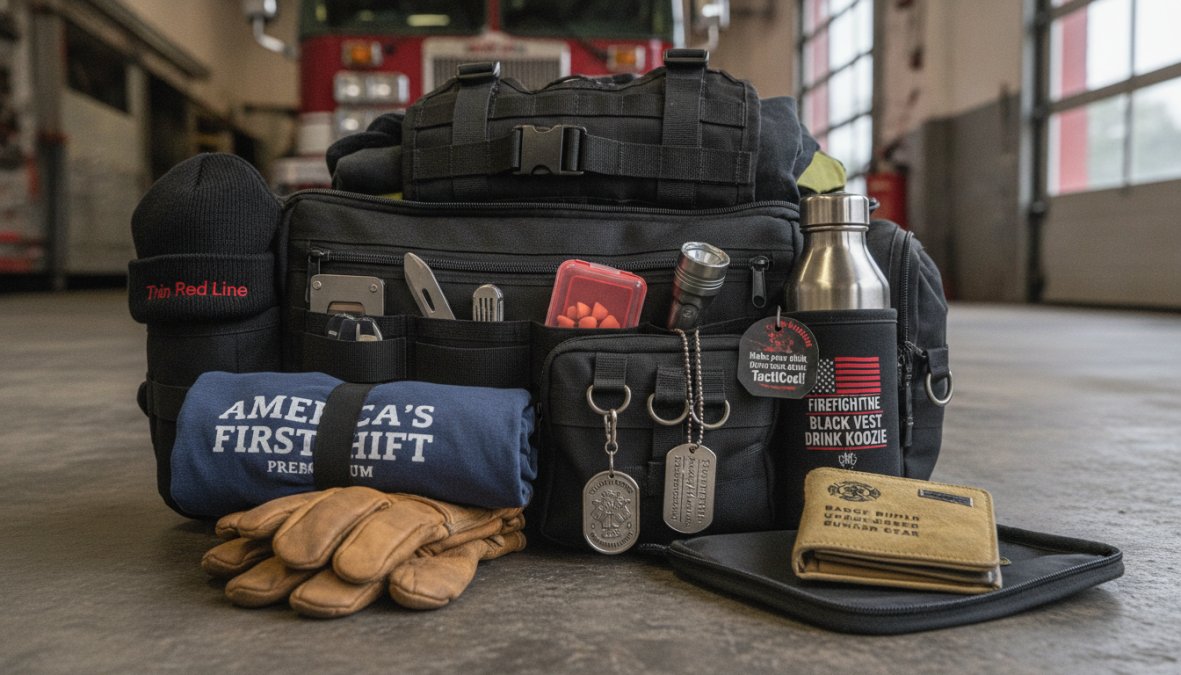
Core essentials every station bag needs:
- Multiple pairs of high-quality socks (merino wool, not cotton)
- Personal toiletries and medications
- Phone charger and backup battery
- Off-duty apparel that represents your station pride
- A quality insulated tumbler for station coffee
- A personalized wallet or challenge coin for quick access to ID
Keep your station bag organized with a small pouch for toiletries and a separate compartment for apparel. This prevents your clean clothes from smelling like station diesel or old coffee.
Apparel and Off-Duty Clothing
Station wear represents your fire department and your brotherhood. It should be durable, comfortable, and authentic. Premium firefighter apparel designed for active and retired firefighters features firehouse themes like brotherhood, legacy, and duty, the values that define the fire service.
What separates authentic fire service apparel from generic merchandise is the design philosophy. Real firefighter gear comes from people who understand station culture, the long hours, and the weight of the job. When choosing off-duty apparel, prioritize comfort and durability. A quality hoodie becomes your default station wear because it's comfortable during long shifts and represents your pride in the profession.
Footwear and Socks for Long Shifts
Your feet spend 24 hours in heavy, non-breathable turnout boots during a shift. Quality socks make a genuine difference in comfort and blister prevention. Smartwool Merino Wool Socks ($20-$30 per pair) regulate temperature, wick moisture, and resist odor naturally. Many firefighters buy three or four pairs and rotate them throughout the shift; fresh socks halfway through a long day significantly improves comfort.
Cotton socks absorb moisture and create an environment where blisters develop. Merino wool maintains its insulating properties even when damp, and natural antimicrobial properties prevent persistent odor. After a particularly wet or muddy call, clean your boots with fresh water and allow them to air dry completely before the next shift.
Fire Academy Graduation Gifts That Honor Service
Graduation from fire academy is a milestone worth celebrating. The best graduation gifts serve a purpose while honoring the profession, not novelty items that end up in a drawer.
Personalized and Engraved Items
Engraved dog tags and personalized items create lasting keepsakes. The Firefighter's Prayer Fire Rescue Brushed Steel Dog Tag ($24.50) features the firefighter Maltese cross on one side and the firefighter's prayer on the reverse. Unlike generic gifts, this one carries specific meaning within the fire service community.
Personalized wallets made from retired or authentic bunker gear material represent a creative middle ground between practical and sentimental. The Fully Involved Stitching Turnout Gear Wallet ($30-$50) is customizable with station numbers or names, making it a personal keepsake that connects directly to the new firefighter's department.
Custom Gear and Challenge Coins
Challenge coins represent a tradition of brotherhood and recognition within the fire service. The Thin Red Line Firefighter's Prayer Family Support Challenge Coin ($12.00) serves multiple purposes: it's a tangible symbol of the profession, a conversation starter, and a reminder of the values that define firefighting. A coin featuring the department's emblem or a meaningful fire service symbol creates a direct connection to their new role.
Drinkware and Hydration Gear for Station Life
Staying hydrated during long shifts and physically demanding calls is non-negotiable. An insulated tumbler keeps cold water cold and hot coffee hot throughout a 24-hour shift. The Black Helmet XL Coffee Mug (15 oz, $16.50) is ceramic and holds a full-size serving, perfect for that first sip of coffee in the morning or a warm drink during downtime. Quality drinkware signals that you respect the rituals of station life.
Many firefighters prefer insulated tumblers with lids for the fireground; they're spill-proof, easier to carry in a gear bag, and keep beverages at the right temperature. A quality mug becomes part of your routine for years.
Gifts for Firefighter Families and Spouses
The fire service affects entire families. Spouses and family members sacrifice time, worry about safety, and manage household responsibilities while their loved one works long shifts. The Thin Red Line Firefighter's Prayer Family Support Challenge Coin ($12.00) explicitly honors family members who support firefighters, acknowledging that they're part of the fire service community.
Apparel designed for firefighter families creates a sense of belonging to the fire service community. A "Firefighter's Spouse" hoodie or shirt lets family members wear their pride and connection to the profession.
Maintenance and Care for Firefighter Gear
How you maintain your gear determines how long it lasts and how reliably it functions when you need it. Turnout gear requires specific care. After a particularly smoky or wet call, rinse the gear with fresh water to remove soot and moisture. Allow it to air dry completely before storing; moisture trapped in the layers promotes mildew and accelerates deterioration.
Multi-tools and rescue shears need occasional maintenance. After exposure to moisture or dusty calls, wipe them dry and apply a light coat of oil to prevent corrosion. Store tools in a dry location; a gear bag that stays damp creates a corrosive environment.
Apparel and socks should be washed after every shift. Station gear that sits in a locker for days develops odor and bacteria growth. Fresh laundry is about respect for the shared station environment and for yourself. Drinkware and personal items should be cleaned daily. A tumbler that sits with old coffee develops stains and odor that regular washing can prevent.
Choosing what to buy new firefighters comes down to understanding three principles: match your department's regulations, invest in tools that get heavy use, and respect the profession through quality choices. The gear you carry, the apparel you wear, and the items you use daily represent your commitment to the job and to the brotherhood. Start with the essentials, build your kit thoughtfully, and invest in gear that will serve you through years of calls.
References and External Sources
According to National Fire Protection Association (NFPA) standards for firefighter protective equipment, proper gear maintenance and department-specific compliance are critical factors in firefighter safety and operational readiness.
Research from International Association of Fire Chiefs (IAFC) guidance on new firefighter onboarding emphasizes that understanding department regulations before purchasing personal gear prevents costly mistakes and ensures safety consistency across operations.
The Occupational Safety and Health Administration (OSHA) firefighter safety standards provide detailed requirements for protective equipment, hydration protocols, and heat stress prevention during long shifts, all factors that influence what gear new firefighters should prioritize.
| Item Category | Budget Tier | Essential | Best For |
|---|---|---|---|
| Multi-Tool | Tier 1 | Yes | Fireground operations, gas shut-offs, hose adjustments |
| Rescue Shears | Tier 1 | Yes | Medical emergencies, extrication, gear cutting |
| Helmet Light | Tier 1 | Yes | Interior operations, hands-free illumination |
| Merino Wool Socks | Tier 2 | Yes | 24-hour shift comfort, blister prevention |
| Station Apparel | Tier 2 | Yes | Off-duty wear, station pride, daily comfort |
| Challenge Coin | Tier 3 | No | Graduation gifts, brotherhood recognition |
| Personalized Drinkware | Tier 2 | No | Station life, daily hydration, personal keepsake |
| Turnout Gear Wallet | Tier 3 | No | Graduation gift, sentimental keepsake |
Frequently Asked Questions
What to buy new firefighters who are just starting at the fire department?
New firefighters benefit most from practical gear that supports station life and fireground operations. Essential purchases include quality tactical tools (multi-tools, rescue shears), comfortable apparel for off-duty wear, durable footwear and performance socks, drinkware for hydration, and personalized items like challenge coins or engraved dog tags. Always verify your fire department's regulations first, as some gear may be restricted or required to meet specific standards.
Are personalized firefighter gifts appropriate for fire academy graduation gifts?
Yes, personalized gifts are highly valued by new firefighters. Custom engraved items like dog tags, challenge coins, and turnout gear wallets create lasting mementos of their achievement and honor the brotherhood. These gifts show respect for the profession and the individual's commitment to service. Personalized drinkware and apparel with fire department insignia or the graduate's name are also thoughtful, practical choices that celebrate their transition into the fire service.
What firefighter station bag essentials should new firefighters prioritize?
Station bag essentials include multi-tools for utility tasks, rescue shears for emergency situations, quality socks designed for long shifts in heavy boots, comfortable off-duty apparel, a reliable helmet light, and organizational accessories like radio mic keepers. Include hydration solutions such as insulated tumblers to maintain focus during long shifts. Personal care items and a change of clothes are also practical. Prioritize items that support comfort, safety, and professional appearance during station downtime.
What maintenance is required for firefighter turnout gear and tactical equipment?
Turnout gear requires regular inspection for damage, proper cleaning per manufacturer guidelines, and storage in cool, dry conditions away from direct sunlight. Tactical tools should be kept clean and free of rust, wipe down metal components regularly and store in dry environments. Helmet lights need battery checks and lens cleaning. Challenge coins and engraved items require occasional gentle cleaning. Apparel should be washed according to fabric care instructions. Proper maintenance extends gear life and ensures reliability during operations.
This article was written using GrandRanker
