

How to Start a Peer Support Group for Firefighters
Table of Contents
- Why Your Fire Department Needs a Peer Support Group
- Define Your Peer Support Team's Purpose and Structure
- First Responder Peer Support Training and Preparation
- Recruit and Select Your Peer Support Team Members
- Establish Peer Support Group Meeting Guidelines
- Build Confidentiality, Trust, and Accountability Into Your Program
- Create a Peer Support Referral Protocol for Professional Help
- Firefighter Peer Support Program Examples and Sustainability
- Frequently Asked Questions
Last Updated: October 18, 2026
Why Your Fire Department Needs a Peer Support Group
Firefighters face unique mental health challenges that most professions never encounter. The trauma of rescue calls, the loss of colleagues, and the constant exposure to human suffering create invisible wounds.
The difference between a peer support group and professional counseling is simple: peers speak the language of the firehouse. They know the culture, the humor, the unspoken codes.
Starting a peer support group isn't just about mental health. It's about strengthening your department's culture. Members who feel heard and supported become more engaged, more loyal, and more committed to the mission. They show up better for their crews.
The challenge is that most fire departments don't know how to start a peer support group for firefighters. Building a peer support group requires structure, training, and clear guidelines. Without these, even well-intentioned efforts can fail or cause harm.
We've seen firsthand how peer support transforms station culture. The teams that invest in this work report stronger bonds, better mental health outcomes, and a noticeable shift in how members talk about their struggles.
Define Your Peer Support Team's Purpose and Structure
Before you recruit anyone, understand how to start a peer support group for firefighters by defining exactly what it will do. A clear purpose statement keeps the program focused and prevents scope creep.
Your peer support team's purpose should answer these questions:
- Who will the group serve (all department members, specific shifts, volunteers)?
- What types of support will you offer (check-ins, crisis support, referrals to professional help)?
- When and where will meetings happen?
- What is the relationship between peer support and professional counseling?
A strong purpose statement might look like this: "Our peer support group provides confidential, peer-led support for firefighters and EMS professionals dealing with stress, trauma, or difficult calls. We offer regular check-ins, crisis support, and referrals to professional resources when needed."
Structure matters as much as purpose. Decide whether your group will be:
- Station-based: Small groups meet at individual stations
- Department-wide: One larger group meets monthly or quarterly
- Hybrid: Regular station meetings plus larger department gatherings
Most departments find that station-based groups work best because they fit into existing schedules and build stronger bonds among crews who work together daily. However, department-wide meetings help prevent isolation and create accountability.
Assign a program leader or coordinator. This person doesn't run the group alone, they handle logistics, scheduling, training coordination, and communication with leadership. The actual peer support work happens in small groups led by trained peers.
First Responder Peer Support Training and Preparation
You cannot start a peer support group without trained peer support leaders. Training teaches firefighters how to listen effectively, recognize signs of trauma, know when to refer someone to professional help, and maintain confidentiality.
Effective peer support training covers:
- Active listening skills and how to avoid giving advice
- Recognizing signs of stress, trauma, and PTSD in peers
- How to approach someone who's struggling
- Boundaries: what peer support can and cannot do
- Confidentiality rules and mandatory reporting exceptions
- Crisis intervention basics and when to call for professional help
- Self-care for peer supporters (preventing burnout)
Training should take 8-16 hours depending on depth. Many departments spread this across multiple sessions to fit firefighter schedules. Some use online modules combined with in-person practice.
Look for training programs designed specifically for first responders. Generic peer support training misses the unique culture and challenges of the fire service. Training providers familiar with firefighter peer support understand the language, the calls, and the brotherhood dynamic.
After initial training, peer supporters need ongoing education. Plan quarterly refresher sessions or monthly case discussions. This keeps skills sharp and gives supporters a chance to process their own experiences.
Preparation also includes creating simple tools. Develop a checklist of what to do when someone reaches out. Create a resource list of local mental health providers, crisis hotlines, and employee assistance programs.
Recruit and Select Your Peer Support Team Members
The right people make or break a peer support program. You need firefighters who are respected by their peers, emotionally stable, good listeners, and genuinely committed to helping others.
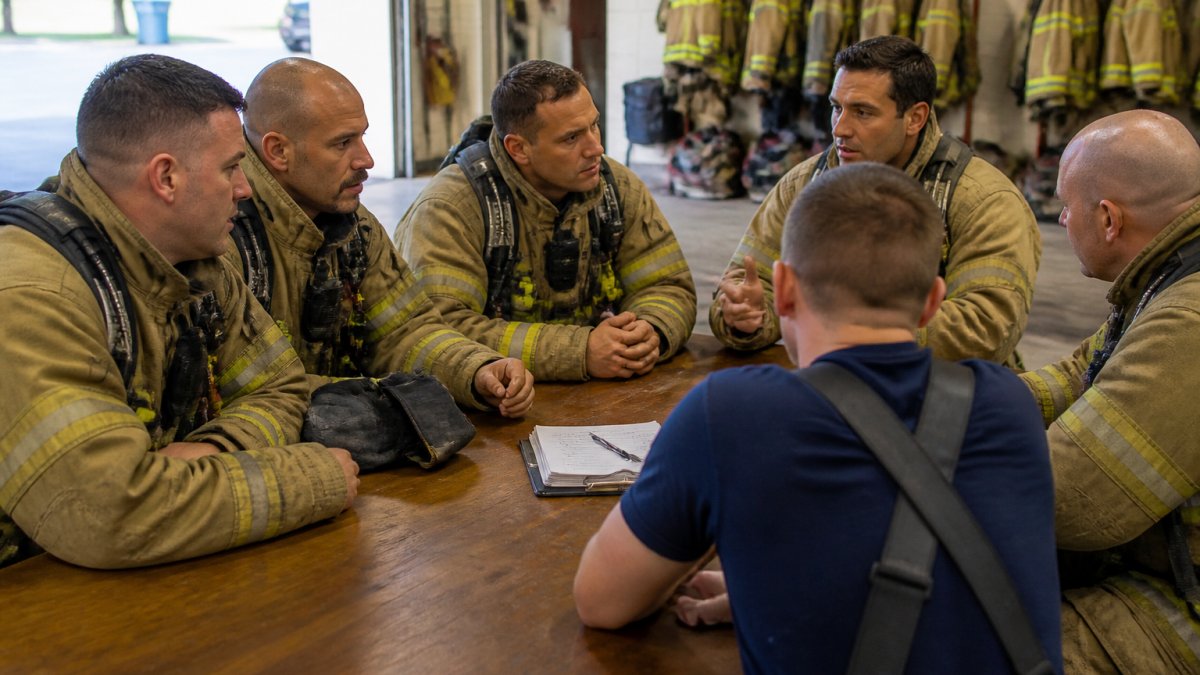
Look for these qualities when recruiting peer support team members:
- Respected by peers (people naturally listen to them)
- Stable and emotionally grounded (can handle difficult conversations)
- Good listeners (ask questions, don't dominate conversations)
- Non-judgmental (accept people as they are)
- Reliable (follow through on commitments)
- Willing to maintain confidentiality
- Committed to the job and the department
Avoid recruiting the "fix-it" types who want to solve everyone's problems. The best peer supporters listen more than they talk. They ask questions like "How are you doing with that?" instead of offering solutions.
Recruit 2-3 peer supporters per shift or station if possible. This prevents burnout and ensures coverage. If one supporter is unavailable, someone else can step in.
The recruitment conversation matters. Be honest about what the role involves. Explain that peer supporters will hear difficult stories. They'll need to maintain confidentiality even when they want to help more.
Some firefighters will decline. That's okay. You want people who choose this role, not people who feel obligated.
Establish Peer Support Group Meeting Guidelines
Clear guidelines keep meetings focused, safe, and productive. Without structure, meetings can become complaint sessions or turn into gossip.
Establish these core guidelines:
- Confidentiality: What's said in the group stays in the group. No exceptions.
- Respect: Everyone gets heard. No interrupting, judging, or offering unsolicited advice.
- Voluntary participation: Attendance is optional. No one is required to share.
- Time limits: Meetings have a start and end time (typically 30-60 minutes).
- Focus: Meetings address peer support, not operational complaints or station politics.
- Professional boundaries: Peer support is not a substitute for professional counseling or medical treatment.
Write these guidelines down. Share them with all participants before the first meeting. New members should acknowledge that they understand and agree to follow them.
Meeting agendas should be simple:
- Check-in: How is everyone doing? (5-10 minutes)
- Open discussion: Is there anything anyone wants to talk about? (20-40 minutes)
- Resource updates: New counseling options, crisis hotlines, or training (5-10 minutes)
- Closing: Reminder about confidentiality and next meeting
Some groups use rotating facilitators so the same person doesn't always lead. Others have one consistent leader. Either approach works as long as meetings stay focused and safe.
Build Confidentiality, Trust, and Accountability Into Your Program
Confidentiality is the foundation of peer support. Without it, firefighters won't open up. They'll fear that what they share will become station gossip or affect their career.
Establish clear confidentiality rules:
- Peer supporters do not share personal information discussed in meetings with anyone outside the group
- Peer supporters do not document personal information in department records
- The only exception is mandatory reporting (threat of harm to self or others)
- Peer supporters understand the limits of confidentiality and communicate these limits upfront
Make sure leadership understands and respects these boundaries. If a fire chief or chief officer pressures peer supporters to share information, the entire program loses credibility.
Trust is built through consistency. When firefighters see that peer supporters keep confidentiality, that they show up to meetings, and that they genuinely care, trust grows. This takes time. Don't expect immediate results. As that trust takes root, practical conversations about reliable gear for first responders can also help crews look out for one another.
Accountability keeps the program healthy. Peer supporters should:
- Check in with each other regularly about how the work is going
- Discuss difficult situations (without breaking confidentiality)
- Seek guidance when they're unsure how to help
- Know when to refer someone to professional help
Establish a simple accountability structure. Maybe the program coordinator checks in with peer supporters monthly. Or peer supporters meet as a group quarterly to discuss what's working and what isn't.
Document the program's basic structure, guidelines, and confidentiality rules. This protects both the peer supporters and the department. If a question arises later about what was shared or how a situation was handled, you have clear documentation.
Create a Peer Support Referral Protocol for Professional Help
Peer support is powerful, but it's not therapy. Firefighters dealing with serious mental health issues, trauma, or suicidal thoughts need professional help. Your peer support group must have a clear protocol for making referrals.
Train peer supporters to recognize when someone needs more than peer support:
- Expressing suicidal or homicidal thoughts
- Severe depression or anxiety that interferes with daily functioning
- Substance abuse
- Persistent sleep problems or nightmares
- Inability to work or perform duties safely
- Relationship breakdown or family crisis
When peer supporters recognize these signs, they should:
- Listen without judgment
- Express concern: "I'm worried about you. I think you need to talk to someone who specializes in this."
- Provide specific resources (counselor names, phone numbers, websites)
- Offer to help make the connection (call together, attend first appointment)
- Follow up to check if they got help
Create a resource list specific to your area. Include:
- Employee Assistance Program (EAP) details
- Local mental health providers who work with first responders
- Crisis hotlines and text lines
- Peer support organizations like the International Association of Fire Chiefs Peer Support Program
- Substance abuse resources
Make sure peer supporters know how to access these resources themselves. If a supporter is struggling, they should model the behavior they're asking others to do.
Firefighter Peer Support Program Examples and Sustainability
Peer support programs that last are the ones that have buy-in from leadership and sustainable funding. Without these, even the best programs fade after a few years.
Leadership buy-in means:
- The fire chief publicly supports the program
- Peer supporters are given time during work hours to do peer support work
- The department provides training and resources
- Leadership respects confidentiality boundaries
- Peer support is seen as part of department culture, not a side project
Sustainable funding can come from:
- Department budget (most reliable)
- Grants from mental health organizations or first responder foundations
- Fundraising events organized by the department
- Combination approach (department funds base program, grants fund training)
Many departments allocate a small amount from their annual budget specifically for peer support. This might cover training, materials, crisis resources, and coordinator time. The investment is small compared to the benefit.
Measure program effectiveness to justify continued support. Track:
- Number of peer supporters trained
- Number of check-ins or meetings per month
- Feedback from participants (informal surveys)
- Referrals made to professional help
- Changes in department culture (more openness about mental health)
You won't see dramatic numbers. Peer support is subtle work. But over time, you'll notice that firefighters talk more openly about struggles, that newer members feel welcomed and supported, and that the department feels stronger.
Start small. Don't try to launch a perfect program. Start with one or two trained peer supporters and regular check-ins. Build from there. As the program grows and gains credibility, expand to more supporters and more structured meetings.
Starting a peer support group for firefighters requires clear purpose, trained leaders, and strong confidentiality. When done right, peer support transforms how your department handles mental health and builds a culture where asking for help is normal.
Frequently Asked Questions
What training do firefighter peer supporters need?
Peer supporters should complete formal peer support training programs that cover active listening, recognizing trauma and PTSD symptoms, crisis intervention basics, and confidentiality requirements. Many programs run 16-40 hours and include scenario-based practice. Additional training in recognizing stress responses and mental health first aid strengthens your team's ability to support fire department members effectively.
How do you keep a firefighter peer support group confidential?
Establish clear confidentiality policies before the group launches. Members should sign agreements stating that conversations stay within the group and are never shared with leadership or HR. Document this in writing. Clarify that confidentiality has limits: immediate safety threats, abuse, or court orders override privacy. Train all peer supporters on these boundaries so they can explain them honestly to those seeking help.
When should a firefighter peer supporter refer someone to a mental health professional?
Refer to professional counseling if someone expresses suicidal thoughts, shows signs of severe depression or PTSD, or describes problems beyond peer support scope (substance abuse, family crisis, trauma requiring clinical care). Peer supporters are not therapists; their role is early intervention and connection to resources. A clear referral protocol prevents delays and ensures members get appropriate care.
How is peer support different from professional counseling?
Peer support is immediate, informal, and built on shared experience. Peers recognize warning signs early, offer station-based check-ins, and normalize help-seeking within the fire service culture. Professional counseling provides clinical diagnosis and treatment. Both are essential. Peer support is the bridge that encourages firefighters to accept professional help when needed.
