

How to Plan Vacations With a Firefighter Shift Schedule
Table of Contents
- Start With Your Firefighter Shift Schedule
- Understand Your Firefighter 24/48 Schedule
- Understand Your Firefighter 48/96 Schedule
- Submit a Firefighter Vacation Time Request the Right Way
- Use a Firefighter Shift Swap to Extend Your Time Off
- Plan Coverage, Recalls, and Staffing Changes
- Book Travel, Coordinate Family, and Handle Long-Distance Trips
- Conclusion
- Frequently Asked Questions
Last Updated: October 19, 2026
Start With Your Firefighter Shift Schedule
Planning vacations with a firefighter shift schedule starts with one step: map your rotation before you request anything.
So grab a calendar and do this first:
- Write out your next six months of shifts, day by day.
- Mark every on-duty block in one color and every off-duty block in another.
- Circle your Kelly days and any built-in consecutive days off.
A common mistake is counting only the days you take as leave. The real number is leave days plus the off-duty days sitting next to them.
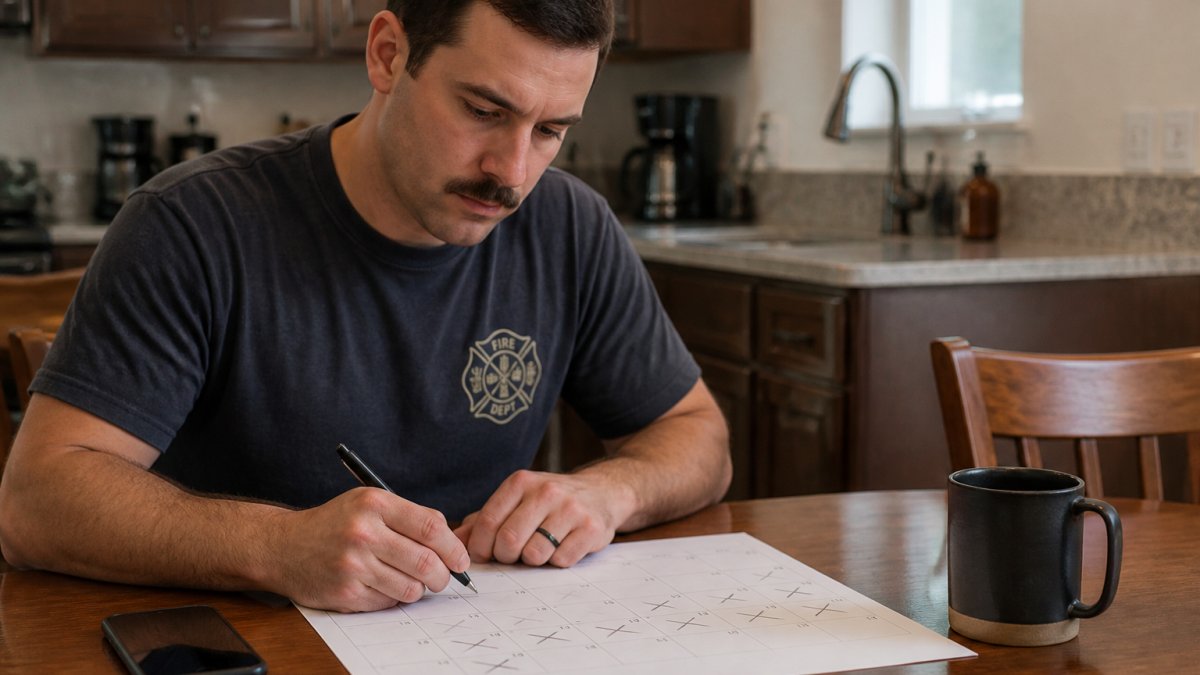
Map Your Rotation Before You Request Anything
Most fire departments run a fixed pattern, so your rotation is predictable months ahead. Pull your shift calendar from the scheduling office or your union and line it up against your target dates.
Write down three things for each candidate week:
- Your first on-duty day after the trip.
- Your last on-duty day before the trip.
- Any shift trades or overtime already on the books.
That last one catches people: a trade agreed to in March can quietly eat the front end of a July vacation.
Understand Your Firefighter 24/48 Schedule
A firefighter 24/48 schedule means 24 hours on duty followed by 48 hours off, repeating in a three-day cycle: one on-duty day and two off-duty days per block.
That 1-on, 2-off rhythm is the whole trick: you stack leave against days you were already off.
A Worked 24/48 Calendar
Say your rotation puts you on duty Monday, Thursday, and Sunday, then repeats. Here is what a nine-day window looks like when you request leave for the three on-duty days inside it:
| Day | Status | Leave Used |
|---|---|---|
| Friday | Off | 0 |
| Saturday | Off | 0 |
| Sunday | On duty | 1 |
| Monday | Off | 0 |
| Tuesday | Off | 0 |
| Wednesday | On duty | 1 |
| Thursday | Off | 0 |
| Friday | Off | 0 |
| Saturday | On duty | 1 |
Three leave days buy nine consecutive days away from the station. The same math works in reverse: if you only want a long weekend, request one on-duty day and you get three days off for one day of leave.
Count the Edges, Not Just the Middle
The day before your first leave day and the day after your last one matter as much as the days inside the window.
Many firefighters build in a buffer day at home before their first shift back. On a 24/48, end the trip on an off day followed by another off day, not the off day immediately before a shift.
Stack a Kelly Day on Top
A Kelly day is a scheduled day off built into some departments' rotations to keep average weekly work hours in line. It is not leave and costs you nothing.
Check your department policy on how Kelly days are scheduled and whether they can be moved. Some allow trades; others lock them in place. If you build a trip around one and it gets rescheduled, your whole window collapses.
Understand Your Firefighter 48/96 Schedule
The firefighter 48/96 schedule runs 48 hours on duty followed by 96 hours off: two days on, four off, giving you a four-day weekend every cycle before you touch a single hour of leave.
Vacation planning on a 48/96 is almost too easy. Two leave days turn a four-day break into an eight-day trip; four leave days get you twelve days away.
The catch is recovery. Two full days on duty back to back is a long stretch, so give yourself a night at home before flying out.
Here is how the three main patterns compare for a one-week trip:
| Schedule | Leave Days Needed | Total Days Off | Best For |
|---|---|---|---|
| 24/48 | 3 | 9 | Frequent short trips |
| 48/96 | 2 | 8 | One longer trip per cycle |
| Kelly day stacked | 2 | 10+ | Longer vacations |
Where Kelly Days Fit In
That makes Kelly days the best vacation currency you have: stack one next to a leave day and the trip grows without touching your leave balance.
Check your department policy on how Kelly days are scheduled and whether they can be moved. Some departments allow trades. Others lock them in place.
Submit a Firefighter Vacation Time Request the Right Way
A firefighter vacation time request is a formal leave request submitted under your department's policy, usually with a deadline, a ranking system, and a cap on how many people can be off at once. Submit it early, in writing, and exactly how your department requires.
The process varies by department, but most follow a similar shape:
- Check the vacation period calendar and the submission deadline.
- Confirm how many slots are open for your dates.
- Fill out the request form with exact dates, not "sometime in July."
- Submit it through the official channel and keep a copy.
- Get written confirmation before you spend money on travel.
That last step matters more than people think. A verbal "should be fine" from a company officer is not approval.
Seniority, Vacation Periods, and Slot Limits
Most departments award vacation by seniority within defined vacation periods, and senior members pick first. If your dates fall in a popular period, like major holidays or the start of summer, slots may fill before your name comes up.
Two things help: know your standing, and have a backup window ready before selection starts.
If you are low on seniority, look at the shoulder seasons. Late September and early October trips are easier to get approved and often cheaper to book.
Use a Firefighter Shift Swap to Extend Your Time Off
A firefighter shift swap is an agreement between two members to trade shifts, usually with officer approval, so each person's schedule shifts without using leave.
Say your trip starts the day after a 24-hour shift. Swap that shift with a coworker who owes you one.
The rules matter. Most departments require:
- A written swap form signed by both members.
- Company officer or battalion chief approval.
- Swaps within the same rank and position.
A common mistake is swapping with someone and never confirming it in writing.
Track your swaps like money. Know who owes you, what you owe, and when each trade is scheduled.
Plan Coverage, Recalls, and Staffing Changes
Minimum staffing is the number of personnel a department must have on duty at all times. Your vacation approval depends on it.
Departments handle this in a few ways:
- Overtime fills. Someone works your shift on overtime.
- Mandatory holdovers. A member on the incoming shift is held to cover.
- Recall. You get called back in an emergency.
Recall is the one that ruins trips. Most departments can recall off-duty personnel for major incidents, and being out of the area does not always excuse you.
Before you book, ask three questions:
- What is the recall policy, and does travel distance matter?
- How much notice does a recall require?
- What happens if staffing drops while I am gone?
Get the answers in writing if you can. Then build a contingency plan.
Book Travel, Coordinate Family, and Handle Long-Distance Trips
Booking travel before vacation approval is the most common vacation mistake firefighters make. Refundable fares and flexible hotel rates cost more up front, but they protect you when a slot does not open or staffing changes. Book in stages.
A Booking Decision Framework
Use this order and do not skip a step:
- Get written vacation approval. A verbal "should be fine" from a company officer is not approval.
- Confirm shift swaps are locked in. A swap that falls apart two weeks before the trip leaves you canceling flights.
- Book refundable travel first. Refundable airfare and flexible hotel rates cost more, but they are the only bookings that survive a denied request or a staffing change.
- Convert to non-refundable only once everything is confirmed. That means approval in writing, swaps signed, and no known staffing shortage in your window.
If your department's approval deadline is later than the best booking window, book refundable and set a calendar reminder to convert or cancel by the airline's deadline. Do not let a refundable fare quietly become non-refundable because you missed the cutoff.
Have Backup Dates Ready Before the Selection Process
Most departments award vacation by seniority within defined vacation periods, and popular periods fill before lower-seniority names come up. Before selection starts, write down a primary window and two backups, each with the leave days and swaps it would require.
If you are low on seniority, look at shoulder seasons. Late September and early October trips are easier to get approved and often cheaper to book.
Coordinate Family and School Breaks
Share your rotation calendar with your partner or travel group. Most scheduling apps import a repeating pattern, so everyone sees your days on and off without asking. Then align the trip against the constraints that decide the dates:
- School breaks. A 24/48 or 48/96 rotation rarely lines up with a school calendar by accident. Count the leave days needed to bridge your off days to the break, not just the break itself.
- A partner's leave. If your partner works a standard Monday-through-Friday schedule, your off days midweek may not overlap. Plan the trip around the days you are both actually free.
- Group travel. When you are traveling with people who are not firefighters, give them your confirmed dates and your buffer days, not your ideal dates. Group bookings rarely wait for a vacation approval.
Handle Long-Distance and International Trips
Long-distance and international trips need extra lead time. Passport processing, customs, and time zone changes eat into a short window, so build in a full day on each end.
Before you leave, confirm three things with your officer: the recall policy and whether travel distance matters, how much notice a recall requires, and who covers your shift if staffing drops.
One more thing worth packing: gear that travels well and still says what you do. Our firefighter hoodies and hats at Black Helmet are built for the drive home, the airport, and the off-duty days in between.
Conclusion
Planning a vacation around a firefighter shift schedule comes down to one habit: know your rotation before you commit to anything. Map the pattern, stack leave against days you were already off, and get approval in writing before you spend a dollar.
Then pack like you mean it. Black Helmet builds firefighter shirts, hoodies, and accessories for the brotherhood, on duty and off. Browse the collection and find gear that travels as well as you do.
Frequently Asked Questions
How far in advance should a firefighter request vacation time?
Most departments open vacation selection weeks or months before the vacation period, and seniority often decides who picks first. Get your request in as soon as the window opens, especially for summer, holidays, and school breaks. If your department uses an annual bid, mark your preferred dates the day the list goes up. Late requests usually land in whatever slots are left, which rarely matches a travel booking you already made.
Can firefighters swap shifts to take a longer vacation?
Yes, many departments allow a firefighter shift swap, but the rules vary. A swap usually means you work someone else's shift and they work yours, keeping staffing levels even. Check your department policy on how far ahead swaps must be approved, whether they need a written form, and whether swaps can cross ranks or stations. String two approved swaps around your vacation days and a short break can turn into a full week off.
How do firefighter shift schedules affect vacation planning?
A firefighter shift schedule packs work into long blocks, so a few vacation days can stretch into a long stretch off. On a firefighter 24/48 schedule, taking two vacation days around your regular days off can produce six or more consecutive days away. On a firefighter 48/96 schedule, the same two days can cover a full week. The catch is that the schedule rotates, so you need to check the exact calendar dates, not just the pattern.
What should firefighter families check before booking a vacation?
Confirm the approved vacation dates in writing before you pay for anything nonrefundable. Check whether your firefighter is on the recall list, whether overtime is likely during that window, and whether a shift swap is needed to cover a gap. Book refundable flights and hotels where possible, and keep travel insurance in mind. Families should also agree on a backup plan in case a staffing change pulls the trip apart at the last minute.
