

How to Maintain Firefighter Station Apparel: A Complete Guide
Table of Contents
- Why Proper Maintenance of Firefighter Station Apparel Matters
- Best Detergent for Firefighter Station Wear: Selection and Safety
- Step-by-Step Washing Process for Station Uniforms
- Firefighter Uniform Decontamination Protocols
- Drying and Heat Management for Flame-Resistant Fabrics
- Storage Solutions for Firefighter Apparel
- NFPA 1851 Station Apparel Care Standards and Compliance
- Professional Cleaning vs. Home Laundering: When to Choose Each
Last Updated: July 16, 2026
Proper maintenance of firefighter station apparel is critical for safety, longevity, and professional appearance. Station wear endures soot, smoke residue, and hazardous particles that require deliberate decontamination protocols beyond standard laundry practices. Flame-resistant fabrics like Nomex demand specific care, heat, certain chemicals, and improper drying can compromise protective properties. Additionally, station uniforms can carry carcinogenic particles that pose cross-contamination risks to family members.
Why Proper Maintenance of Firefighter Station Apparel Matters
Station wear faces unique challenges. Exposure to soot and smoke residue requires decontamination protocols that standard laundry cannot address. Flame-resistant fabrics lose protective properties when exposed to heat, harsh chemicals, or improper drying. A single incorrect wash cycle can reduce flame-resistance ratings or damage breathability.
Cross-contamination is a serious concern often overlooked. Station uniforms can carry carcinogenic particles from fire scenes. Washing station wear with family clothes risks transferring these contaminants to household members. Proper maintenance protocols create a barrier between occupational exposure and home life.
Best Detergent for Firefighter Station Wear: Selection and Safety
The detergent you choose directly impacts FR fabric integrity. Harsh chemicals break down the polymer coating on flame-resistant fabrics, reducing protective capability. Use mild, pH-neutral detergents specifically formulated for technical or delicate fabrics.
Avoid anything containing bleach, optical brighteners, or heavy perfumes. These ingredients damage Nomex and other FR materials. Research from NFPA guidance on protective apparel care emphasizes that detergent selection directly impacts the lifespan and protective qualities of flame-resistant clothing.
What to Avoid: Chemicals That Damage FR Fabrics
Bleach compromises the chemical composition that makes gear flame-resistant. Fabric softeners and dryer sheets create coatings that trap moisture and reduce breathability. Enzymes in some detergents break down fabric fibers over time. Optical brighteners interact negatively with FR polymers.
A common mistake is assuming stronger detergent cleans better. The opposite is true for station wear. Mild detergent combined with proper technique removes contaminants without damaging fabric.
Step-by-Step Washing Process for Station Uniforms
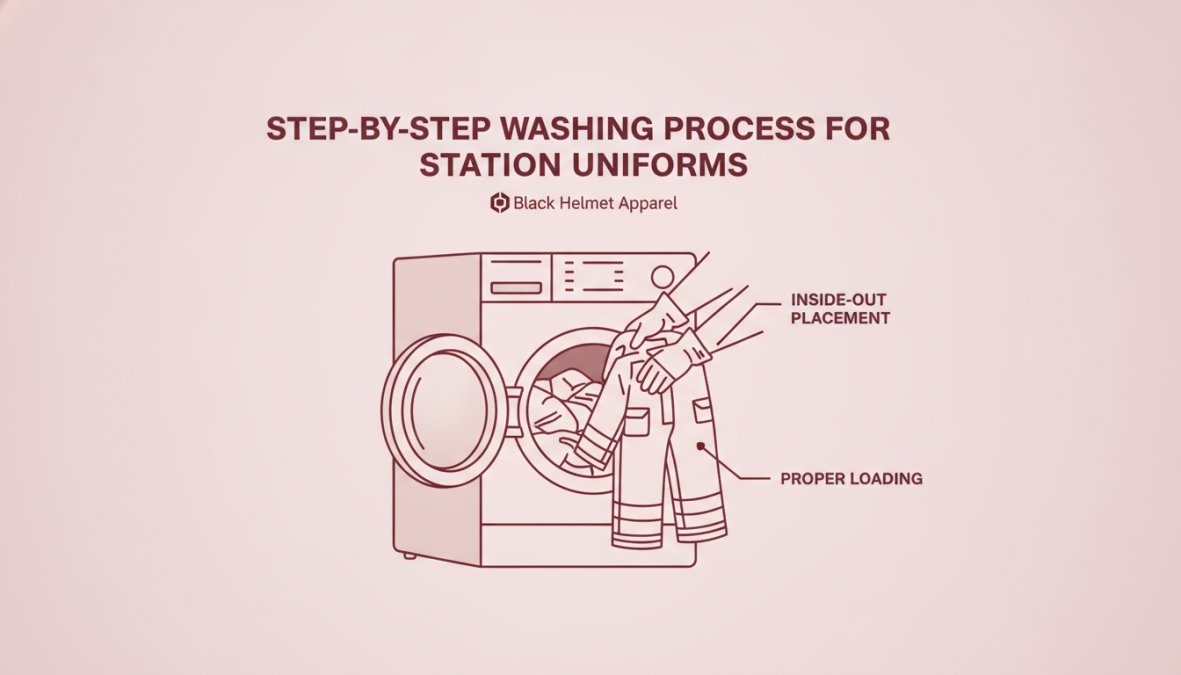
Inspect gear for visible stains or damage before washing. Separate station wear from all other laundry for contamination control. Fill your washing machine with cold water and add mild, pH-neutral detergent at half the recommended amount.
Place uniforms inside-out in the machine to protect the outer surface where flame-resistant treatment is concentrated. Run a gentle or delicate cycle to remove contaminants while protecting fabric integrity.
Cold Water Wash and Inside-Out Technique
Cold water is essential for maintaining flame-resistant fabric integrity. Heat damages the polymer coating and reduces protective properties. Cold water also prevents color fading and reduces shrinkage.
Turning garments inside-out shields the critical outer surface from direct agitation. The flame-resistant treatment is concentrated on the outer layer, and this technique significantly extends uniform life. Cold water keeps fibers closed, allowing contaminants to wash away more easily without embedding into the fabric.
Stain Treatment Before Washing
Address stains immediately using a soft brush or cloth with mild detergent and cold water. For grease or oil-based stains, apply a small amount of delicate dish soap. Let treatment sit for 10-15 minutes, then gently rinse with cold water before proceeding with your regular washing cycle.
Firefighter Uniform Decontamination Protocols
Decontamination removes occupational contaminants that pose health risks. Many fire departments use industrial laundry services with built-in decontamination protocols. If washing at home, establish a protocol that minimizes cross-contamination risk.
Place contaminated gear in a sealed bag or separate container. Never leave it in your regular laundry area where fibers can spread to other clothes. Handle gear with gloves if contamination is visible or after heavy-smoke environments.
Cross-Contamination Prevention
Maintain separate laundry cycles for station wear and family clothing. This prevents carcinogenic particles from transferring to household members' clothes. If sharing a washing machine, run station wear as the first or last load, followed by an empty rinse cycle to clear residual contaminants.
Establish a contamination zone in your laundry area. Keep station wear separate from regular clothes until washed and dried. Store clean uniforms in a dedicated area away from family clothing.
Sanitizing Cycles and Carcinogen Exposure Reduction
A sanitizing cycle uses higher temperatures and extended cycle times to eliminate pathogens and reduce carcinogenic residues. Most modern washing machines have a sanitize setting. Run this cycle after your regular wash if you've been in heavy smoke environments or if visible soot is present.
The sanitizing cycle typically uses water temperatures of 160°F or higher, which is safe for flame-resistant fabrics when done as a secondary cycle after the primary cold-water wash. Some departments use a two-step process: wash with mild detergent in cold water, then run a sanitizing cycle with minimal or no detergent.
Drying and Heat Management for Flame-Resistant Fabrics
Air drying is the gold standard for protecting FR fabrics. Hang station uniforms in a well-ventilated area, preferably outdoors in shade or in a dry indoor space with good air circulation.
If you must use a dryer, use the lowest heat setting or air-dry setting. Never use high or medium heat, this is where most people damage station wear. A low-heat dryer cycle should be brief, 20-30 minutes maximum.
Air Drying vs. Tumble Dry Low
Air drying eliminates heat damage, preserves colors, and extends fabric life significantly. Hang gear on wooden hangers or a clothesline with good air circulation. In humid climates, a fan can speed drying without adding heat.
Tumble dry low is acceptable when air drying isn't practical. Use the absolute lowest heat setting and limit the cycle to 20-30 minutes. Remove the garment while still slightly damp and hang it to finish drying.
Storage Solutions for Firefighter Apparel
Store clean, dry station uniforms in a cool, dark, well-ventilated area. Avoid damp basements or humid closets where moisture promotes mold growth. A dedicated shelf or hanging rack in a climate-controlled space is ideal.
Never store damp or wet gear. Moisture trapped in fibers promotes mold and mildew, which damage fabric and create health hazards. Ensure station wear is completely dry before storage.
Environmental Protection and Moisture Management
Maintain storage areas at 40-50% relative humidity if possible. Avoid plastic storage containers, which trap moisture. Use breathable fabric containers or open shelving that allows air circulation.
Keep station uniforms away from direct sunlight. UV rays fade colors and degrade the polymer coating on flame-resistant fabrics. A dark closet or cabinet is better than a sunny shelf. Inspect stored gear periodically for signs of mold, mildew, or pest damage.
NFPA 1851 Station Apparel Care Standards and Compliance
NFPA 1851 is the standard for protective clothing and equipment for structural firefighting. The standard specifies that station apparel must be cleaned regularly to remove contaminants that compromise protective properties. According to NFPA 1851 standard for protective clothing and equipment, station apparel should be cleaned after each shift when possible, or at minimum every seven days.
NFPA 1851 requires inspection of cleaned gear before returning it to service. Check for damage, discoloration, or signs of degradation. If you notice any issues, remove the garment from service. The standard recommends professional cleaning for heavily contaminated gear or when home laundering is impractical.
Professional Cleaning vs. Home Laundering: When to Choose Each
Professional cleaning services offer advantages that home laundering cannot match. Industrial equipment handles large volumes efficiently, and specialized protocols ensure consistent decontamination. Professional services also provide documentation of cleaning procedures, which satisfies regulatory requirements.
Home laundering offers convenience and control. You can wash gear immediately after your shift and maintain oversight of the process. For lightly contaminated station wear or routine maintenance, home laundering works well when done correctly.
The choice depends on your situation. If your department provides or subsidizes professional cleaning, use it. If you're responsible for your own laundry, home washing with proper protocols is effective. Many firefighters use a hybrid approach: professional cleaning for heavily contaminated gear or quarterly deep cleaning, and home laundering for routine maintenance.
Maintaining your station apparel respects the fire service and represents your commitment to the job. Whether washing at home or using professional services, protect the fabric, remove contamination, and follow proven protocols. Your gear will keep you looking and feeling professional for years to come.
Frequently Asked Questions
How often should firefighter station apparel be cleaned?
Station wear should be laundered after each shift or when visibly soiled. Regular cleaning prevents carcinogen exposure and maintains fabric integrity. However, frequency may increase depending on duty type and environmental exposure. Always inspect apparel for damage before washing, and follow your department's specific decontamination protocols to minimize cross-contamination risks.
What's the best detergent for firefighter station wear?
Use mild, fragrance-free detergents specifically formulated for flame-resistant fabrics. Avoid bleach, fabric softeners, and heavy-duty cleaners that degrade Nomex and FR materials. Mild detergents preserve color retention and breathability while reducing chemical exposure. Always check the manufacturer's care label and follow NFPA 1851 guidelines for compliant cleaning agents that won't compromise heat-resistance properties.
Can firefighter station apparel be washed with regular clothes?
No. Station wear should be laundered separately to prevent cross-contamination and protect both the apparel and regular clothing. Firefighter uniforms may carry residual contaminants from the fireground. Dedicated washing prevents transferring hazardous particles to family clothing. If home laundering, use a separate load with appropriate detergent and sanitizing cycles designed for flame-resistant fabric care.
What are NFPA 1851 standards for cleaning firefighter station apparel?
NFPA 1851 establishes guidelines for PPE maintenance, including proper decontamination, washing temperatures, detergent types, and drying methods. It emphasizes cold water washing, mild detergents, air drying, and regular gear inspection. The standard also addresses sanitizing cycles to reduce carcinogen exposure and requires documentation of cleaning procedures. Compliance ensures fabric integrity, heat-resistance, and firefighter safety throughout the apparel's service life.
Proper maintenance of firefighter station apparel protects both your gear and your health. If you're managing station wear at your department or maintaining your own uniforms, Black Helmet has the gear that deserves this level of care. Our premium firefighter apparel is built to last when maintained correctly. Explore our collection of station-approved uniforms and accessories designed by firefighters, for firefighters.
This article was written using GrandRanker
