

How to Fold Firefighter Shirts for Storage
Table of Contents
- Why Firefighter Shirts Need a Different Folding Approach
- What You'll Need Before You Start Folding
- Step 1: The Classic Fold for Firefighter Shirts
- Step 2: The Ranger Roll T-Shirt Method for Compact Storage
- Step 3: The Japanese Fold for Fast, Wrinkle-Free Results
- How to Organize Fire Station Lockers for Quick Access
- Protecting Patches, Logos, and Reflective Details During Storage
- Choosing the Best Firefighter Hoodies and Shirts for Storage
- Frequently Asked Questions
Last Updated: October 14, 2026
Why Firefighter Shirts Need a Different Folding Approach
A firefighter shirt is not a regular T-shirt. It carries a department logo, sewn-on patches, reflective striping, and a cut built for long shifts.
How to fold firefighter shirts for storage comes down to one goal: protect the insignia, cut down on wrinkles, and make the shirt easy to grab when the tones drop.
Here at Black Helmet, we have served more than 100,000 firefighters since 2008, and we hear the same complaint again and again.
Below, we break down three folding methods, plus locker and storage tips that keep your gear looking sharp.
What You'll Need Before You Start Folding
Gather your tools first so you can fold in one pass. You need less than you think.
- A flat surface: a table, bench, or bed works fine
- Clean, dry hands, since oils and grit dull fabric
- A shirt folder or folding board if you want identical stacks every time
Skip the iron if you can. Most department tees and hoodies are cotton or a cotton blend, and high heat can damage printed logos and reflective tape. If wrinkles are stubborn, a low tumble in the dryer with a damp towel usually does the job.
Step 1: The Classic Fold for Firefighter Shirts
The classic fold is the workhorse. It keeps a shirt flat, protects the front logo, and stacks cleanly on a shelf.
Start with the shirt face up so the logo and any patches stay visible. This matters more than people realize. Folding a printed shirt face down presses the design into the fabric and speeds up cracking over time.
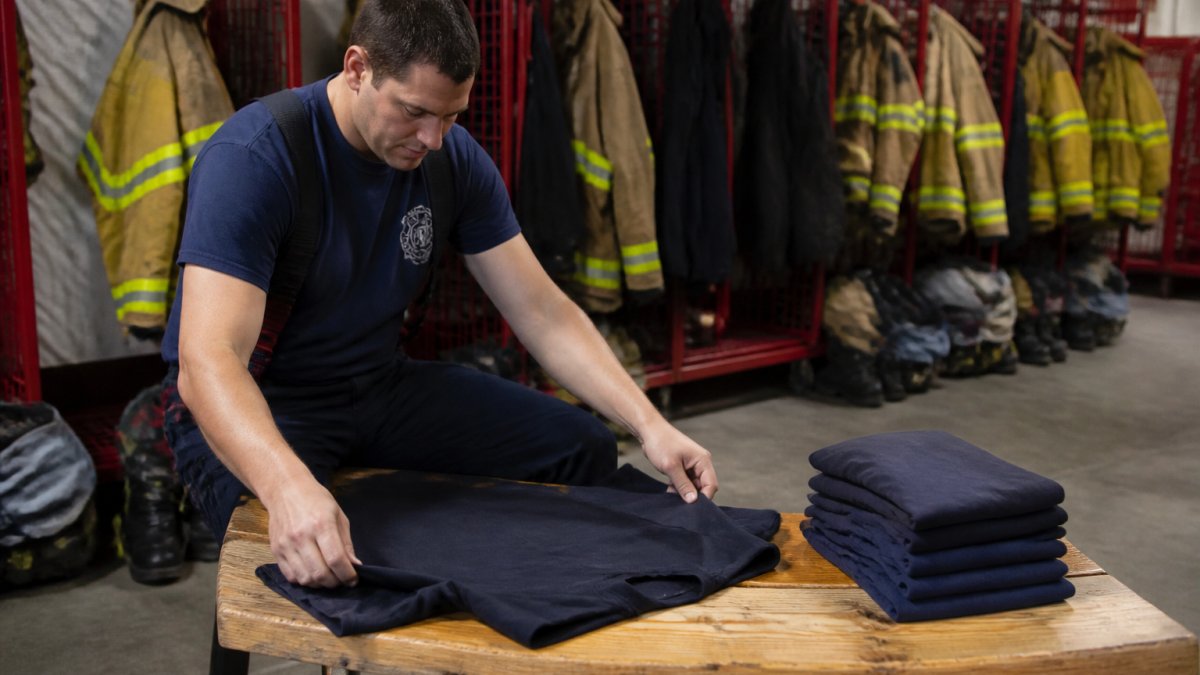
Laying the Shirt Flat and Smoothing the Fabric
Lay the shirt flat on your surface and smooth it with both hands. Run your palms from the shoulders to the hem to push out wrinkles.
Line up the side seams so they sit even. A crooked start means a crooked stack, and a crooked stack falls over in a locker. Check the collar and neckline too. Smooth them flat so they hold their shape.
Folding Sleeves Inward and the Shirt Vertically
Fold each sleeve inward so it lies along the back of the shirt. Keep the cuff straight and avoid doubling the fabric at the shoulder.
Next, fold the shirt vertically in half, or in thirds for a narrower stack. Then fold the bottom hem upward to meet the shoulders.
That is the whole method. Flat, smooth, sleeves in, folded in half, hem up.
Why This Fold Wins for Uniform and Station Shirts
The classic fold is the right default for station tees, uniform button-downs, and any shirt carrying embroidered logos or sewn-on patches.
It is the wrong choice for one case: a shirt you need to compress into a small space. For that, move on to the roll methods below. But for everyday locker storage, the classic fold is the one most firefighters come back to.
Step 2: The Ranger Roll T-Shirt Method for Compact Storage
The ranger roll t-shirt method is the tightest fold on this list. It packs a shirt into a small, self-contained bundle that will not unroll in a bag or drawer.
Here is how it works:
- Lay the shirt flat, face up, and smooth it out.
- Fold one side of the shirt toward the center, then fold the sleeve back on itself.
- Repeat on the other side so the shirt is a narrow rectangle.
- Starting at the collar, roll the shirt down toward the hem in tight, even turns.
- Tuck the rolled shirt into the pocket formed by the hem.
The result is a compact roll that stays put.
One warning: rolling can crease a stiff button-down shirt along the fold lines. Save the ranger roll for tees and hoodies.
Step 3: The Japanese Fold for Fast, Wrinkle-Free Results
The Japanese fold is the fastest method here, and it is nearly wrinkle-free. You do it in the air, in about three seconds, once you learn the motion.
Here are the steps:
- Lay the shirt flat and pinch the shoulder point with one hand.
- Pinch the midpoint of the shirt with your other hand.
- Cross your arms and pinch the hem point.
- Lift and let the shirt hang, then lay it down and fold the sleeve under.
The Japanese fold keeps the collar and neckline crisp because the shirt never gets pressed flat against itself. For a long-sleeve shirt or a button-down shirt, this method protects the front placket and any chest logo.
In practice, this is the fold we reach for when a shirt needs to look sharp right off the shelf. It is also the easiest to teach a new recruit.
Choosing the Right Fold for the Shirt and the Space
Most folding guides give you methods and stop there. The harder question is which method to use for a given shirt and a given storage space. Here is how the three folds compare on the trade-offs that actually matter in a station.
| Fold | Best for | Wrinkle risk | Insignia risk | Space used |
|---|---|---|---|---|
| Classic flat fold | Uniform shirts, patch-heavy shirts, shelf storage | Low | Low | Medium |
| Ranger roll | Tees and hoodies, drawers, go-bags, travel | Medium | High on stiff patches | Lowest |
| Japanese fold | Button-downs, shirts worn soon, presentation | Lowest | Low | Medium |
Read the table by shirt type first, then by space:
- Uniform and button-down shirts, use the classic fold or the Japanese fold. Both keep the collar and placket from taking a hard set. Avoid rolling a button-down; the roll creases along the placket and the buttons press into the fabric.
- Station tees and hoodies, any of the three works. Use the ranger roll when space is tight, the classic fold when you want a readable stack.
- Shirts with sewn-on patches or reflective striping, fold flat, never roll. Rolling bends the patch backing and the reflective film, and both fail at the bend over time.
Then match the fold to where the shirt lives:
- Shelf or locker shelf, classic flat fold, stacked no more than about six shirts high so the bottom shirt is not crushed.
- Drawer, ranger roll or a vertical flat fold, so you can see every shirt without lifting the stack.
- Go-bag or travel bag, ranger roll. It stays rolled and it compresses.
A Note on Fabric and Fold Choice
Fabric changes the math. A heavyweight cotton tee holds a flat fold well and resists creasing. A moisture-wicking performance shirt is thinner and slicker, it slides out of a flat stack, so a ranger roll or a vertical fold keeps it in place.
When in doubt, fold the shirt the way it will spend the most time stored, and give the collar and any insignia the most space. That single habit prevents most of the damage firefighters blame on washing.
How to Organize Fire Station Lockers for Quick Access
A clean locker is a fast locker. When you know how to organize fire station lockers, you cut the seconds that matter on a call.
Use these habits:
- Stack by color or department, so you grab the right shirt without thinking.
- Keep the logo facing out so you can read the stack at a glance.
- Store folded shirts on a shelf at eye level, and rolled shirts in a drawer below.
The goal is consistent placement. If the same shirt lives in the same spot every shift, you stop hunting and start moving.
Protecting Patches, Logos, and Reflective Details During Storage
Patches and reflective trim are the parts most likely to fail first. Store them with care and they will outlast the shirt.
A few rules that make a real difference:
- Fold face up so printed logos never press into other fabric.
- Do not stack heavy gear on top of shirts with reflective details.
- Keep shirts out of direct sunlight, which fades dye and dulls reflective tape.
Plastic traps moisture. Trapped moisture means mildew, and mildew means a shirt you have to throw away. Cotton or a mesh bag lets air through while keeping dust off.
Choosing the Best Firefighter Hoodies and Shirts for Storage
The best shirt to fold is the one built to survive folding. Fabric and construction decide how well a shirt holds up in a locker.
Look for these traits when you buy:
- Heavyweight cotton or a cotton blend that resists shrinking
- Reinforced stitching at the collar, cuff, and hem
- Printed or embroidered logos that will not peel after a few washes
At Black Helmet, we build firefighter shirts and hoodies for exactly this. Our gear is made to hold its shape through washes, shifts, and years of storage.
The right shirt folded the right way is a small habit.
Frequently Asked Questions
Is it better to roll or fold firefighter shirts for locker storage?
Rolling works best for t-shirts and station shirts you wear daily because it saves space and keeps wrinkles minimal. Folding flat is better for button-down uniform shirts or anything with patches and reflective trim that could crease. Many firefighters use a mix: ranger roll their workout and casual tees, then fold dress shirts flat on a shelf. Match the method to the shirt type and how much locker space you have.
How do you fold shirts to prevent wrinkles?
Smooth the fabric flat before making any folds, and keep folds along the same lines every time. Avoid stuffing shirts into tight spaces where they compress unevenly. For button-downs, button the collar and fold along the existing seams. Storing shirts in a cool, dry locker away from damp gear also reduces wrinkles. If a shirt does crease, a quick hang in the station or a low-heat dryer cycle usually releases it.
What is the military-style folding method for t-shirts?
The military or Ranger roll starts by laying the shirt face down and folding both sleeves inward so they align with the body. Fold the bottom hem up about a third of the way, then fold again to create a pocket. Roll the shirt tightly from the collar down, then tuck the rolled bundle into the pocket you created. The result is a compact cylinder that holds its shape and stacks easily in a locker or duffel bag.
How can I organize my duty shirts to save space in my locker?
Use vertical storage instead of stacking flat. Roll t-shirts with the Ranger roll method and stand them upright in a drawer or bin so you can see every shirt at a glance. Hang button-downs and dress uniforms on slim hangers. Keep daily-wear shirts at eye level and reserve the top shelf for seasonal or backup items. A small shelf divider or shoe box used as a bin keeps rolled shirts from toppling.
Storage is not glamorous, but it says something about how you treat the job. A shirt that comes out crisp, patch intact, and ready to wear reflects the pride you bring to the fire service. Black Helmet has outfitted more than 100,000 firefighters with apparel built to last, backed by our satisfaction guarantee and our roots as a firefighter-owned, family-run brand. Get started with Black Helmet and give your station gear the care it deserves.
