

How to Choose Durable Firefighter Apparel: A 2026 Guide
Table of Contents
- Understanding Material Performance and Durability in Firefighter Apparel
- NFPA 1971 Standards for Turnout Gear and Compliance Requirements
- How to Choose Durable Firefighter Apparel: Key Selection Factors
- Firefighter Turnout Gear Maintenance Tips for Extended Durability
- Firefighter Gear Inspection Checklist: What to Look For
- Firefighter PPE Replacement Cycle: Budgeting and Lifecycle Cost Analysis
- Compatibility with Other PPE and Ergonomic Considerations
- Conclusion: Making the Right Choice for Your Department
How to Choose Durable Firefighter Apparel: A 2026 Guide
Last Updated: July 12, 2026
When firefighters step into the station, their gear isn't just clothing, it's a lifeline. Choosing durable firefighter apparel requires understanding material performance, compliance standards, and real-world durability factors that separate gear that lasts from gear that fails when it matters most. Durability isn't a single feature; it's the intersection of material science, proper maintenance, intelligent purchasing decisions, and realistic replacement planning.
Understanding Material Performance and Durability in Firefighter Apparel
The foundation of durable firefighter apparel starts with materials. The outer shell, thermal liner, and moisture barrier work together as a system, and failure in any one layer compromises the entire garment.
Outer Shell Fabrics: Nomex, Kevlar, and Synthetic Fiber Blends
The outer shell resists flame, abrasion, and environmental hazards. Nomex has been the industry standard because it resists ignition and maintains integrity under sustained heat. Kevlar adds puncture and cut resistance for structural firefighting. Modern blends combine these fibers with advanced synthetics to balance flame resistance with breathability.
Fiber blends matter as much as individual materials. A 70% Nomex, 25% Kevlar, 5% synthetic blend behaves differently than a 50/50 split. Higher Nomex content improves flame resistance but reduces breathability; too much can increase heat stress during long operations. Durability depends on seam strength and how fibers hold together after repeated washing and thermal cycling.
Outer shell durability also depends on thread quality and weave density. Looser weaves breathe better but deteriorate faster under abrasion. Tighter weaves last longer but trap more heat. Prioritizing breathability over durability creates gear that feels comfortable in the station but fails after two years of heavy use, a costly mistake.
Thermal Liners and Moisture Barriers
The thermal liner slows heat transfer and protects against thermal injury. Moisture barriers prevent water penetration, critical because water conducts heat directly to skin and dramatically increases burn risk.
Thermal liners experience the most stress from body heat, sweat, and moisture. Liners made from aramid fibers with proper insulation maintain protective properties longer than cheaper alternatives. The key durability metric is Thermal Protective Performance (TPP), which measures how long a material protects skin from thermal injury.
Since thermal liners can't be easily replaced without replacing the entire garment, the initial choice is critical. Gear with removable, replaceable liners costs more upfront but extends the life of the outer shell significantly, a worthwhile investment if budget allows.
NFPA 1971 Standards for Turnout Gear and Compliance Requirements
NFPA 1971 defines what "protective" means in firefighter apparel. Gear must meet minimum performance levels for flame resistance, thermal protection, and abrasion resistance at purchase, but the standard also requires periodic testing to confirm durability over time. Many departments buy compliant gear and assume it stays compliant; in reality, repeated use, decontamination, and aging degrade protective properties.
The standard requires testing for tensile strength, tear resistance, and seam integrity. Seams are the weak point in most garments. A seam meeting the standard at manufacture may not meet it after 100 wash cycles, making inspection protocols as important as the initial purchase.
Thermal Protective Performance (TPP) and Total Heat Loss (THL)
TPP measures how long a material protects skin before reaching a second-degree burn threshold. NFPA 1971 sets minimum TPP values, but gear exceeding the minimum offers better durability against repeated thermal exposure. A garment with 35 seconds of TPP provides a safety margin that extends usable life compared to one with 25 seconds.
Total Heat Loss (THL) measures the material's ability to shed radiant and convective heat. Lower THL means better heat dissipation and reduced risk of heat stress during extended operations. Gear with high TPP but poor THL protects against burns but increases core body temperature, risking heat exhaustion.
Abrasion Resistance and Tensile Strength Testing
Abrasion resistance determines how long the outer shell lasts before developing holes or tears that compromise protection. Tensile strength measures how much force the fabric can withstand before tearing. The best gear balances both metrics.
Seam tensile strength is often lower than the fabric itself. Gear with double-stitched or triple-stitched stress points (shoulders, elbows, knees) lasts significantly longer than single-stitched alternatives. The additional cost is minimal, but the durability gain is substantial.
How to Choose Durable Firefighter Apparel: Key Selection Factors
Selecting durable firefighter apparel means evaluating your specific use case, matching it to the gear's design, and honestly assessing your maintenance capacity.
Application-Specific Requirements: Structural vs. Wildland
Structural firefighting gear prioritizes thermal protection and durability against sustained heat exposure. Wildland gear prioritizes mobility, breathability, and abrasion resistance for extended operations in variable conditions.
Structural gear is heavier and more insulated for short, intense exposures to extreme heat. Wildland gear is lighter and more flexible for all-day wear in moderate heat. Buying one set of gear for both applications is a false economy. Structural firefighters in wildland gear risk inadequate thermal protection; wildland firefighters in structural gear overheat and fatigue faster.
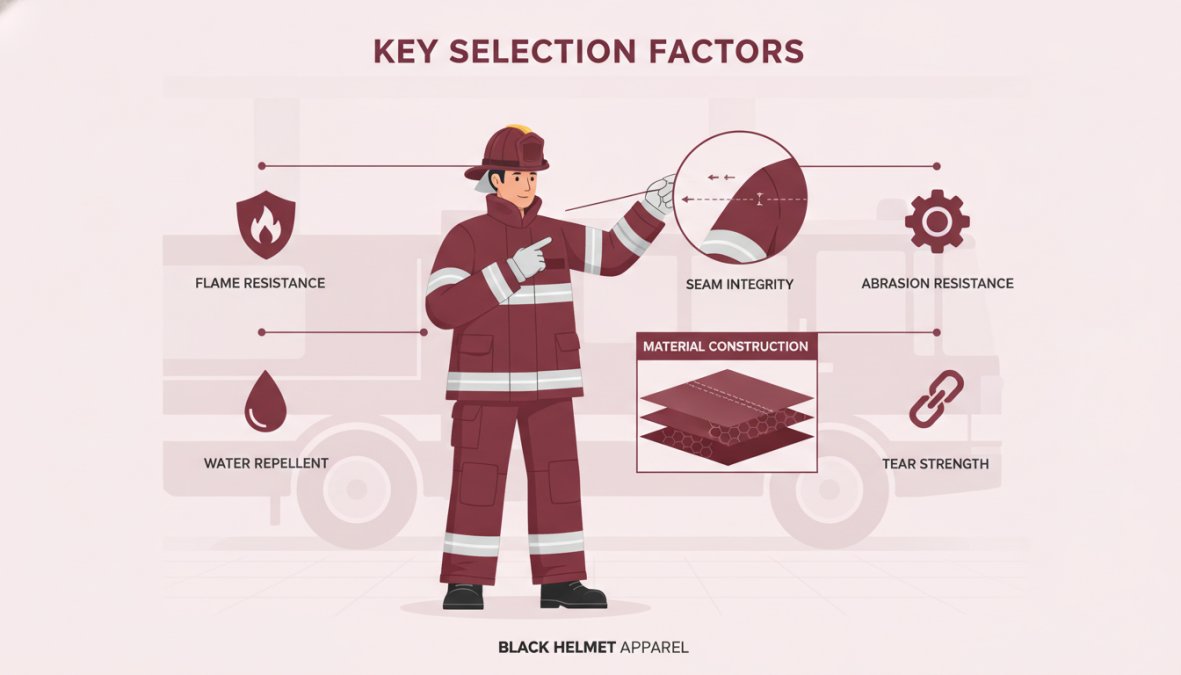
Seam Integrity and Stress Point Reinforcement
Seams fail before fabric does. A garment with premium outer shell fabric but weak seams fails prematurely. Gear with average outer shell but reinforced seams outlasts it.
Stress points, shoulders, elbows, knees, underarms, experience the most movement and tension. Gear with reinforced overlays at these points lasts significantly longer. The overlay should be made from the same material as the outer shell and extend at least 2-3 inches beyond the seam.
When evaluating gear, inspect the seams for double or triple stitching at stress points, reinforcing tape along seams, even stitch spacing without puckering, and seams that lay flat without bunching. Multiple quality issues in seams signal problems that may extend throughout the garment.
Breathability and Heat Stress Management
Breathability is the enemy of thermal protection. More breathable gear allows more heat transfer, reducing protection. Less breathable gear traps heat, reducing comfort and increasing heat stress. Modern gear uses moisture barrier fabrics that allow water vapor to escape while blocking liquid water penetration.
Moisture barrier performance degrades with use. Check the moisture vapor transmission rate (MVTR) of any gear you're considering. Request test data showing MVTR before and after simulated use cycles. Gear that maintains 70% of initial MVTR after 100 wash cycles is durable; gear dropping below 50% will frustrate your crew.
Firefighter Turnout Gear Maintenance Tips for Extended Durability
Proper maintenance extends gear life by years. Poor maintenance shortens it by years.
Decontamination Protocols and Long-Term Durability
Decontamination is necessary but damaging. Modern protocols use specialized detergents designed for protective gear, which cost more than standard laundry soap but preserve gear integrity.
Temperature matters enormously. Warm water (around 100-110°F) is the sweet spot, hot enough to remove contaminants, cool enough to preserve fiber integrity. Many departments use water that's too hot, accelerating degradation.
Decontamination frequency depends on contamination exposure. Gear worn in high-contamination environments needs decontamination after every use. Lower-contamination environments allow longer intervals. The key is removing contamination before it sets.
A practical protocol:
- Rinse with cool water immediately after use
- Allow gear to dry completely before washing
- Wash with specialized protective gear detergent at warm temperature
- Air dry completely before storing
Proper Storage and Handling Between Shifts
Gear stored in hot, humid environments degrades faster than gear stored in cool, dry conditions. Ideal storage is cool (below 70°F), dry (below 60% humidity), and dark. UV light degrades synthetic fibers.
Hanging gear is better than folding it. Folded gear develops creases that concentrate stress and can split along fold lines. Use padded hangers and ensure gear hangs freely without contact with walls or other gear.
Inspect gear monthly even when not in use. Look for signs of mold, mildew, insect damage, or material degradation. Catch problems early before they spread.
Firefighter Gear Inspection Checklist: What to Look For
Regular inspection is the early warning system that prevents failures during operations.
Visual Inspection for Wear and Damage
A thorough visual inspection takes 10-15 minutes per garment quarterly or after heavy use. Look for holes, tears, thin spots, discoloration, loose threads, seam separation, and damage to the moisture barrier. Check stress points carefully, elbows, knees, shoulders, and underarms show wear first.
Examine closures and fasteners for broken zippers, missing snaps, worn Velcro, and broken attachment points. Document findings in a gear maintenance log. Gear developing new damage every month is reaching end of life; gear showing minimal change over a year has many years left.
Testing Flame Resistance and Protective Integrity
Visual inspection catches obvious problems but misses degradation affecting protective properties. Send samples to a certified lab annually or after heavy use. A garment that looks fine but fails flame resistance testing is worse than obviously damaged gear.
Thermal liner integrity is difficult to assess visually. If you suspect liner degradation, send a sample to a lab for TPP testing. Degraded liners show reduced TPP values. If TPP drops below 80% of the original specification, the gear is approaching replacement.
Firefighter PPE Replacement Cycle: Budgeting and Lifecycle Cost Analysis
Gear doesn't last forever. Strategic replacement planning prevents emergency purchases at premium prices.
Understanding Durability vs. Sustainability Trade-Offs
Premium gear costs more initially but lasts longer, reducing total cost of ownership. A practical analysis: premium structural gear costs approximately $2,500-3,500 per set; budget gear costs $1,500-2,000. If premium gear lasts 8 years and budget gear lasts 5 years, the cost per year is similar. But if budget gear requires replacement after 3 years due to degradation, the cost becomes significantly higher.
Wildland gear typically lasts 3-5 years due to higher abrasion exposure. Structural gear typically lasts 5-8 years if properly maintained. Condition-based replacement is more cost-effective than time-based replacement.
Real-World Field Testing and Performance Validation
Before committing to a large purchase, test gear in your actual environment. Request samples from manufacturers and have your crew wear them during training. Evaluate comfort, fit, breathability, durability, ease of donning and doffing, and compatibility with existing equipment.
Pay attention to crew feedback. After several months of use, inspect test gear carefully. Gear that performs well in training performs well in emergencies.
Compatibility with Other PPE and Ergonomic Considerations
Durable gear is useless if it doesn't work with the rest of your equipment. Turnout gear must fit properly with SCBA harnesses. The shoulder seams and upper back take enormous stress from SCBA weight. Gear designed to work with standard SCBA harnesses has reinforcement in these areas.
Radio and equipment placement matters. Gear with pockets and attachment points allows proper equipment positioning. Glove and helmet compatibility are similarly important. Gear designed with these integrations in mind lasts longer.
Ergonomics affects both comfort and durability. Gear that restricts movement forces compensatory motions that increase stress on seams and fabric. Gear with proper ergonomic design distributes stress more evenly.
Conclusion: Making the Right Choice for Your Department
Choosing durable firefighter apparel is fundamentally about understanding that protection is a system. The materials, construction, maintenance protocols, and replacement planning all work together. Cut corners in any area and the entire system fails.
The most durable gear combines premium materials with thoughtful construction, realistic maintenance practices, and strategic replacement planning. It's not always the most expensive option, but it's never the cheapest. Departments that get this right invest in gear that protects their crews and maintains budget predictability.
Your crew deserves gear that performs when it matters most. Choosing durable firefighter apparel requires balancing competing demands: thermal protection versus breathability, cost versus longevity, comfort versus durability. Departments that excel at this balance invest strategically, test before committing, maintain diligently, and replace thoughtfully.
| Selection Factor | What to Evaluate | Impact on Durability |
|---|---|---|
| Outer Shell Material | Nomex/Kevlar blend ratio, weave density | Determines flame resistance and abrasion life |
| Seam Construction | Stitch count, reinforcing tape, stress point overlays | Most common failure point; critical for longevity |
| Thermal Liner | TPP rating, MVTR performance, replaceability | Protects against burns; degrades with repeated use |
| Application Match | Structural vs. wildland design features | Wrong gear for the job fails prematurely |
| Maintenance Protocol | Decontamination method, storage conditions | Extends or shortens gear life by years |
| Inspection Schedule | Quarterly visual checks, annual lab testing | Catches problems before they become failures |
Frequently Asked Questions
What materials are most durable for firefighter turnout gear?
The most durable firefighter apparel uses outer shells of Nomex or Kevlar blended with synthetic fibers, paired with thermal liners and moisture barriers. These materials provide superior abrasion resistance, tensile strength, and flame resistance. The combination of outer shell, thermal liner, and moisture barrier creates a protective system that withstands repeated exposure to heat, abrasion, and decontamination cycles while maintaining structural integrity.
How often should firefighter apparel be replaced according to NFPA standards?
NFPA 1971 standards require regular inspection and testing to determine replacement timing, rather than a fixed schedule. Apparel must be retired when it fails to meet Thermal Protective Performance (TPP), Total Heat Loss (THL), or abrasion resistance standards. Most fire departments replace turnout gear every 10 years, but durability depends on use frequency, decontamination practices, and environmental exposure. Real-world field testing protocols help determine when protective clothing no longer meets safety requirements.
What signs indicate that firefighter apparel is no longer safe to use?
Replace firefighter apparel when you observe visible flame resistance degradation, seam separation, moisture barrier failure, or loss of structural integrity at stress points. If thermal protective performance testing shows decreased TPP or THL values, or if abrasion resistance testing reveals compromised outer shell material, the apparel must be retired. Additionally, apparel that has undergone severe decontamination or repeated heat exposure beyond design limits should be evaluated for replacement to ensure ongoing protective capability.
How does proper maintenance extend the durability of firefighter gear?
Proper decontamination protocols, appropriate storage conditions, and regular inspection significantly extend apparel durability. Clean gear immediately after exposure to prevent chemical degradation of synthetic fibers and thermal liners. Store turnout gear in cool, dry environments away from direct sunlight to prevent material breakdown. Handle seams and stress points carefully during cleaning and storage. Regular hazard assessment and maintenance checks catch damage early, preventing escalation and preserving the protective clothing's thermal protective performance and abrasion resistance throughout its service life.
References & External Sources
[EXTERNAL_LINK: NFPA 1971 Standard on Protective Ensembles for Structural Firefighting | nfpa.org]
[EXTERNAL_LINK: National Fire Protection Association guidance on turnout gear compliance and testing | nfpa.org]
[EXTERNAL_LINK: Occupational Safety and Health Administration standards for personal protective equipment in firefighting | osha.gov]
This article was written using GrandRanker
