

Firefighter Shirts: A Complete Guide to Duty & Off-Duty Apparel
Table of Contents
- Understanding Firefighter Shirts: Duty vs. Off-Duty Apparel
- Fabric Technology and Durability in Firefighter Shirts
- Firefighter Uniform Requirements and Compliance
- Custom Firefighter T-Shirts: Personalization and Design Options
- Sizing and Fit Comparison for Firefighter Shirts
- Care and Maintenance Instructions for Long-Lasting Wear
- Best Firefighter Shirts for Station Pride and Brotherhood
- Ethical Sourcing and Manufacturing in Firefighter Apparel
Firefighter Shirts: A Complete Guide to Duty & Off-Duty Apparel
Last Updated: June 27, 2026
When firefighters suit up for their shift, what they wear under their turnout gear matters. Firefighter shirts serve dual purposes: they're the foundation of on-duty station wear and the canvas for off-duty pride in the fire service community. The right shirt balances durability, comfort, compliance, and identity, affecting your comfort during long shifts and how you carry your pride when off the clock.
Understanding Firefighter Shirts: Duty vs. Off-Duty Apparel
The firefighter shirt landscape splits into two distinct categories with different requirements. On-duty station wear operates under strict compliance frameworks and functional demands. Off-duty apparel functions as identity wear, communicating affiliation and brotherhood in civilian spaces.
Station wear must meet department standards, comply with safety regulations, and withstand physical demands. Off-duty firefighter shirts carry cultural meaning beyond function, they communicate pride and brotherhood to other firefighters and the public. According to research from the International Association of Fire Chiefs, station culture and team identity significantly influence workplace perception and retention rates.
Station wear prioritizes performance and compliance. Off-duty wear prioritizes authenticity and cultural resonance.
On-Duty Station Wear Standards
Station wear represents your department in photos, on calls, and during public interactions. Most fire departments maintain standards for station wear, though specifics vary by jurisdiction. On-duty station wear typically includes embroidered department logos, station numbers, or rank insignia.
The fit must be professional, not oversized, not tight. Sleeve length should be consistent. Station wear features functional details: reinforced seams, moisture management, and wrinkle resistance. These aren't aesthetic choices; they're practical necessities for gear worn repeatedly throughout the week.
Off-Duty and Firehouse Culture Tees
Off-duty firefighter shirts celebrate the brotherhood, sacrifice, and culture that define station life. Designs often reference station culture, inside jokes, memorial tributes, or symbolic imagery like the Maltese cross.
The difference between authentic fire service apparel and generic novelty items is immediately obvious to anyone in the community. Real designs reference actual firefighter culture and avoid clichés. They honor legacy and brotherhood without being overly sentimental.
Fabric Technology and Durability in Firefighter Shirts
The fabric beneath your station wear determines longevity and performance. Firefighter shirts face unique demands: worn under heavy turnout gear, washed frequently in industrial settings, and needing to resist shrinking, fading, and degradation.
Cotton vs. Polyester Blends: What Works Best
Pure cotton offers breathability but shrinks, wrinkles easily, and fades over time. Pure polyester resists shrinking and fading but traps moisture and feels uncomfortable during extended wear.
The optimal solution for station wear is a cotton-polyester blend, typically 50/50 or 60/40 ratios. This balance delivers breathability from cotton with durability and wrinkle resistance from polyester. For off-duty wear, some firefighters prefer pure cotton for authenticity; others choose premium blends like triblend for softness and durability.
Fabric weight matters too. Standard weight (5-6 ounces) balances durability and comfort best for firefighter use.
Moisture-Wicking Firefighter Shirts for Performance
When wearing turnout gear over a station shirt, sweat accumulates quickly. Standard cotton absorbs moisture and stays wet against skin, reducing comfort and increasing chafing during long shifts.
Modern moisture-wicking technology moves sweat away from skin toward the outer layer where it evaporates. Polyester-blend fabrics naturally wick better than pure cotton. For firefighters in hot climates or high-activity stations, moisture-wicking shirts make a tangible difference in comfort during 24-hour shifts.
Durability Features That Last
Reinforced seams at stress points (shoulders, armholes, side seams) prevent tearing. Double-stitched construction adds durability at minimal cost increase. Well-constructed collars maintain shape after dozens of washes; poor construction leads to curling and stretching.
Quality manufacturers pre-shrink fabric to prevent significant size changes after washing. High-quality dyes and proper fabric preparation prevent colors from washing out, critical for station wear representing your department.
Firefighter Uniform Requirements and Compliance
Understanding standards that apply to your department ensures you're wearing appropriate gear and meeting regulatory requirements.
NFPA Standards and Thermal Safety
The National Fire Protection Association (NFPA) establishes standards for firefighter protective equipment. NFPA 1975 specifically addresses station wear standards for structural firefighting, defining requirements for thermal stability, durability, and performance characteristics.
Station wear compliant with NFPA 1975 must meet specific thermal performance thresholds: the fabric must not ignite or sustain burning when exposed to open flame and must maintain structural integrity under thermal stress. Not all station wear needs NFPA 1975 certification depending on your department's policies, but understanding whether your station wear meets these standards provides assurance of appropriate gear.
NFPA 1975 Standard on Station Wear provides complete technical specifications.
Department-Specific Guidelines
Individual fire departments maintain their own uniform policies. Some departments issue standardized station wear; others approve specific vendors or require particular colors, fits, or logos. Common requirements include specific colors, embroidered department logos, approved vendors only, fit standards, and name or rank embroidery in specific locations.
Understanding your department's specific requirements prevents purchasing station wear that doesn't meet standards.
Custom Firefighter T-Shirts: Personalization and Design Options
Customization transforms a generic shirt into something meaningful. The right custom design communicates identity, honors legacy, or celebrates specific achievements within your fire service community.
Embroidery vs. Screen Print: Choosing Your Method
Embroidery involves stitching thread directly into fabric to create a durable, three-dimensional, professional-looking design. It works best for smaller designs with limited color variation. Embroidered logos on station wear communicate formality and permanence.
Screen printing applies ink through mesh screens, handling complex designs, multiple colors, and photographic imagery. It's less expensive for large quantities and delivers sharp, flat results. Screen-printed graphics on off-duty tees allow detailed artwork that embroidery cannot achieve.
For station wear, embroidery typically works better. For off-duty apparel with complex designs, screen printing delivers superior results. Both methods survive hundreds of wash cycles if properly executed.
Maltese Cross and Exclusive Designs
The Maltese cross represents firefighter heritage and sacrifice. This eight-pointed symbol carries deep meaning within the fire service community, it's not decorative, it's a symbol of duty and brotherhood.
Authentic Maltese cross designs respect this symbolism and are often paired with meaningful context: department numbers, station names, or memorial text. Exclusive designs created specifically for the fire service community resonate differently than generic imagery.
Designs created by firefighters who understand station culture carry authenticity that outsiders cannot replicate. The difference is subtle but unmistakable to anyone in the community.
Sizing and Fit Comparison for Firefighter Shirts
Proper fit affects both comfort and appearance. A shirt that's too large looks unprofessional; a shirt that's too tight restricts movement and becomes uncomfortable during long shifts.
Finding Your Perfect Fit
Start with your actual chest measurement, not your usual shirt size. Chest measurement should be taken around the fullest part of your chest with a soft measuring tape held snug but not tight.
For station wear, fit should be professional but not restrictive. The shirt should allow full range of motion for reaching, lifting, and gear work. Sleeve length should reach your wrist bone when arms are at your sides. Shirt length should reach your hip bone without excessive fabric bunching.
Many firefighters wear station wear one size larger than usual street clothes to accommodate physical demands and the bulk of turnout gear worn over the shirt.
Long Sleeve vs. Short Sleeve Options
Short-sleeve station wear works well in warm climates and summer months. Long sleeves provide additional coverage and protection, particularly in cooler seasons.
Many departments maintain both options and allow firefighters to choose based on weather and personal preference. Long sleeves offer protection from minor abrasions and sun exposure. Short sleeves provide better ventilation during high-activity shifts.
| Style | Best For | Comfort in Heat | Durability | Professional Appearance |
|---|---|---|---|---|
| Short Sleeve | Warm climates, summer wear, active calls | Excellent | Very Good | Good |
| Long Sleeve | Year-round wear, cooler seasons, formal settings | Good | Excellent | Excellent |
Care and Maintenance Instructions for Long-Lasting Wear
Proper care extends the life of your firefighter shirts significantly. Station wear in particular gets washed frequently, and incorrect laundering accelerates degradation.
Washing and Drying Best Practices
Wash firefighter shirts in cold water using mild detergent. Hot water causes shrinking and fading. Turn shirts inside out before washing to protect printed or embroidered designs.
Avoid bleach and fabric softener. Bleach weakens fibers; fabric softener coats fabric and reduces moisture-wicking performance.
Dry on low heat or hang dry for maximum longevity. High heat damages elastic fibers in cuffs and collars. Remove shirts from the dryer immediately after the cycle completes to prevent wrinkles from setting permanently.
Preserving Graphics and Embroidery
Screen-printed graphics require gentle handling to prevent cracking. Avoid excessive folding along design lines. Store printed shirts flat when possible, or fold along seams rather than through the design.
Embroidered designs survive washing well if properly executed. Use a mesh laundry bag for additional protection during washing.
Best Firefighter Shirts for Station Pride and Brotherhood
The apparel that resonates most within the fire service community combines quality construction with authentic design.
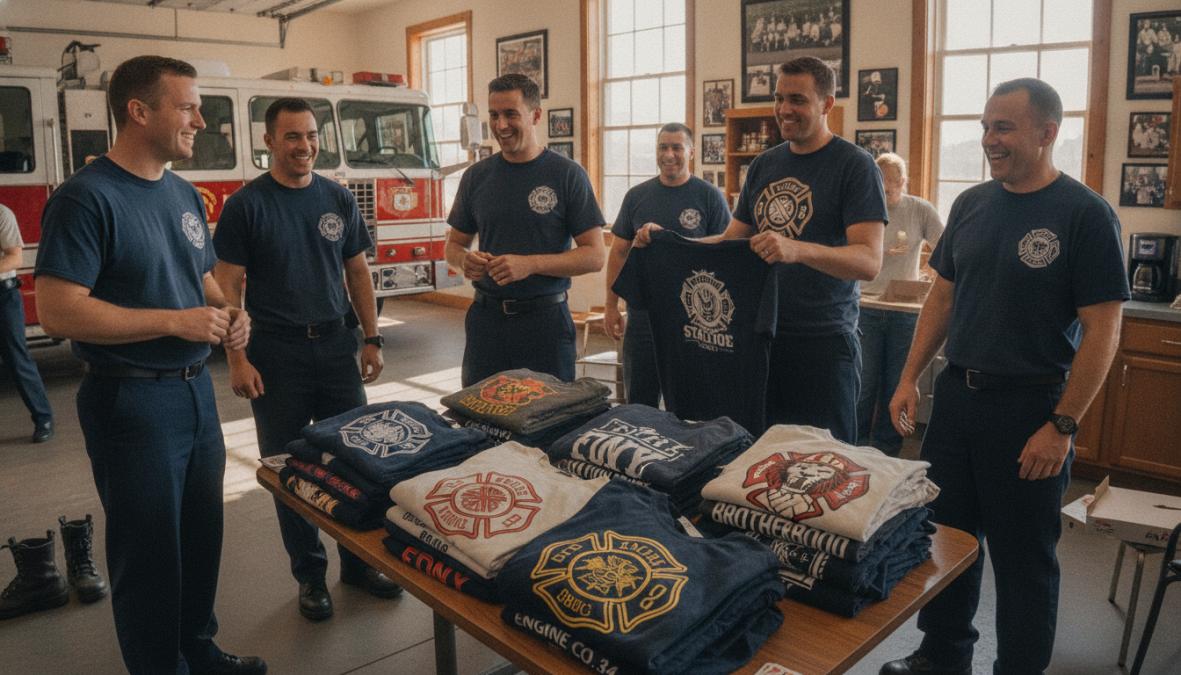
Iconic Designs That Represent Fire Service Legacy
Certain designs have transcended individual stations to become iconic within the broader fire service community. Memorial designs honoring fallen firefighters carry profound meaning. Designs featuring "Never Forget" messaging, fallen firefighter names, or symbolic imagery create connection to the broader fire service community.
Brotherhood-focused designs emphasize the unique bond formed through shared danger and duty. Legacy designs reference the history and tradition of the fire service, appealing to firefighters who value connection to their profession's heritage.
Hoodies and Outerwear for Off-Duty Comfort
Hoodies represent the intersection of comfort and identity in off-duty firefighter wear. A quality firefighter hoodie provides warmth while communicating affiliation with the fire service community.
Quality matters in hoodies. Cheap hoodies pill, fade, and lose shape after a few washes. Quality hoodies maintain appearance and comfort through years of wear. The fabric weight, seam construction, and dye quality determine longevity.
Outerwear beyond hoodies, fleece pullovers, windbreakers, and jackets, extends firefighter apparel into seasonal wear, allowing firefighters to represent their identity year-round.
Ethical Sourcing and Manufacturing in Firefighter Apparel
Where your firefighter shirts come from matters. Manufacturing practices and sourcing standards reflect on the fire service community and support ethical business practices.
Quality firefighter apparel brands prioritize transparency about manufacturing. They work with facilities that maintain fair labor practices, safe working conditions, and reasonable wages. Manufacturers that invest in their workforce produce higher-quality products with fewer defects.
Many firefighter-founded brands maintain direct relationships with manufacturers, allowing for quality control and ethical oversight. The fire service community values authenticity and integrity. Supporting brands committed to these values in manufacturing aligns with principles that define the profession.
Fair Labor Association standards for apparel manufacturing provides transparency into what ethical manufacturing means. Sustainability practices, using recycled materials, reducing water consumption, implementing waste reduction, reduce environmental impact without compromising quality.
Finding the right firefighter shirts comes down to understanding what matters most: compliance and professionalism for station wear, authenticity and pride for off-duty pieces. Quality firefighter apparel respects the job, honors the brotherhood, and delivers the durability that firefighters demand. Explore collections that connect you to the fire service legacy and represent who you are and what you value.
Frequently Asked Questions
What material are most firefighter shirts made of?
Most firefighter shirts use cotton, polyester blends, or cotton-polyester combinations. Cotton offers breathability and comfort for off-duty wear, while polyester blends provide moisture-wicking properties and durability. For on-duty station wear, many departments prefer 50/50 cotton-polyester blends that balance comfort with wrinkle and fade resistance. Specialized duty shirts may use Nomex or fire-resistant materials for enhanced safety compliance.
Are moisture-wicking firefighter shirts better for on-duty performance?
Yes, moisture-wicking firefighter shirts excel during active firefighting and training. These shirts pull sweat away from skin, keeping firefighters dry and comfortable during intense physical activity. Polyester-based fabrics or specialty blends with moisture-wicking technology are ideal for duty wear. However, for casual off-duty apparel, standard cotton or cotton-blend shirts work well. Choose based on your primary use: performance-focused duty shirts for station work, traditional materials for off-duty firehouse pride wear.
What are the main firefighter uniform requirements for duty shirts?
Firefighter uniform requirements vary by department and jurisdiction, but many follow NFPA 1975 standards for thermal stability and safety. Common requirements include wrinkle-resistant, fade-resistant, and shrink-resistant fabrics. Some departments mandate specific colors (often navy, black, or tan), fit standards, and may require custom printed logos or Maltese Cross emblems. Always check with your fire department for specific guidelines before purchasing duty shirts, as compliance ensures professional appearance and department cohesion.
How do I care for custom firefighter t-shirts to preserve graphics and embroidery?
To preserve custom firefighter t-shirts, wash in cold water inside-out to protect screen prints and embroidery. Use mild detergent and avoid bleach or fabric softener. Air dry when possible, high heat can fade graphics and damage embroidered designs. If machine drying is necessary, use low heat. For embroidered shirts, turn inside-out before washing and avoid excessive friction. Proper care extends the life of your fire service pride apparel and keeps designs looking sharp for years.
This article was written using GrandRanker
