

Is Replacing Firefighter PPE Worth the Cost?
Last Updated: October 24, 2026
Quick Summary
Firefighter PPE replacement is worth the cost when analyzed through total cost of ownership rather than upfront price alone. A lifecycle cost analysis comparing purchase price, maintenance, repairs, cleaning labor, and disposal across expected service life often reveals that higher-quality gear costs less annually than cheaper alternatives requiring frequent repairs.
- The firefighter PPE market was valued at $2.1 billion in 2024 and is projected to reach $3.2 billion by 2033, growing at 5.0% annually.
- A higher-durability coat and pants costing $3,100 with an 8-year lifespan can cost $602.50 per year versus $758 per year for a $2,400 set lasting 5 years.
- Use a transparent scoring method across six factors, condition, age, fit, use frequency, standards compliance, and criticality, weighted by your department's risk profile to prioritize replacements.
- Document every piece of gear with purchase date, condition, repair history, and inspection results to build a defensible multi-year replacement plan for budget committees.
Table of Contents
- Why Fire Departments Face Difficult PPE Replacement Decisions
- Understanding Firefighter PPE Lifecycle Cost Analysis
- Establishing a Firefighter PPE Replacement Schedule
- Firefighter PPE Repair vs Replacement: When to Retire Gear
- Fire Department PPE Budget Planning and Prioritization
- The Hidden Cost of Delaying Firefighter PPE Replacement
- Building Your Department's PPE Replacement Strategy
- Frequently Asked Questions
Why Fire Departments Face Difficult PPE Replacement Decisions
Replacing firefighter PPE is one of the toughest budget calls a fire chief makes. According to Grand View Research's firefighter PPE market analysis, the firefighter PPE market was valued at $2.1 billion in 2024 and is projected to reach $3.2 billion by 2033.
The real problem is uncertainty: you don't know if new gear will cost more than what you're replacing, how long current equipment will last, or how to justify the expense to a budget committee with a hundred competing needs.
The cost-benefit analysis of replacing firefighter PPE forces hard questions: Which gear goes first? How do you measure the cost of waiting? What does a strategy that protects both crews and budget look like?
This guide covers the numbers, frameworks, and decisions that separate departments protecting their firefighters from those hoping old gear holds up.
Understanding Firefighter PPE Lifecycle Cost Analysis
A firefighter PPE lifecycle cost analysis measures total expense from purchase through disposal. Most departments only look at upfront price, the single biggest reason replacement requests get rejected, since the comparison is made on sticker price instead of total cost of ownership.
The real cost includes:
- Initial purchase price
- Inspection and maintenance labor
- Repair parts and materials
Build a Total Cost of Ownership Model
A defensible cost-benefit analysis needs a per-item annual cost, not a purchase price:
Annual cost of ownership = (Purchase price + Lifetime maintenance and repair + Cleaning and inspection labor + Disposal cost − Residual value) ÷ Expected service life in years
Run that formula for the gear you have and for the gear you're considering. The lower annual cost wins on financial grounds, but only after you confirm both options meet current performance standards.
Worked Example With Stated Assumptions
Here is a sample scenario. Every number is an assumption for illustration; replace them with your own bid pricing and maintenance logs.
Option A, Current-style coat and pants
- Purchase price: $2,400 per set
- Expected service life: 5 years
- Average annual repair: $150
Option B, Higher-durability coat and pants
- Purchase price: $3,100 per set
- Expected service life: 8 years
- Average annual repair: $90
Option B costs $700 more upfront but saves roughly $155 per set per year. Across 40 sets, that's about $6,200 per year, enough to fund several additional replacements in the same budget cycle.
What the Research Does and Doesn't Tell You
Research from the Journal of Benefit-Cost Analysis examined wildland firefighter garments and found that advanced personal protection systems cost approximately $279 more per garment system than standard equipment.
A lifecycle analysis forces you to think in years, not dollars.
Start tracking these numbers for your current inventory. Baseline data is required for smart replacement decisions, and the spreadsheet you build now becomes the evidence file for every future budget request.
Establishing a Firefighter PPE Replacement Schedule
A firefighter PPE replacement schedule outlines which gear retires when and in what order.
The schedule depends on several factors:
- Gear type and expected lifespan
- Frequency of use and exposure
- Current condition and inspection results
NFPA standards define minimum performance levels for protective clothing and equipment. The NFPA 1970 standard covers structural firefighting protective clothing performance requirements.
Document purchase date, condition, repair history, and inspection results for every piece of equipment, then use that data to prioritize.
A written schedule also protects you: when a budget committee questions new suit spending, you have a documented plan backed by inspection data and lifecycle analysis.
Firefighter PPE Repair vs Replacement: When to Retire Gear
The hardest decision is knowing when to stop repairing and start replacing.
Use this decision framework:
Repair if:
- The gear is less than 75% through its expected lifespan
- Repair cost is less than 50% of replacement cost
- The damage is isolated to one component
Replace if:
- The gear is past 75% of expected lifespan
- Repair cost exceeds 50% of replacement cost
- Multiple components show wear or damage
Brighton Fire Rescue reported a 75% increase in PPE costs since 2020, making the repair-versus-replace decision even more critical.
Learn how to maintain leather fire gear step by step to extend the life of your equipment and make informed repair decisions.
The Firefighter Safety Research Institute examined PPE performance under typical pre-flashover temperatures but did not publish specific measured safe operational times.
Document every repair and track cost and problem. When repairs cluster or costs spike, move that gear into the replacement queue.
Fire Department PPE Budget Planning and Prioritization
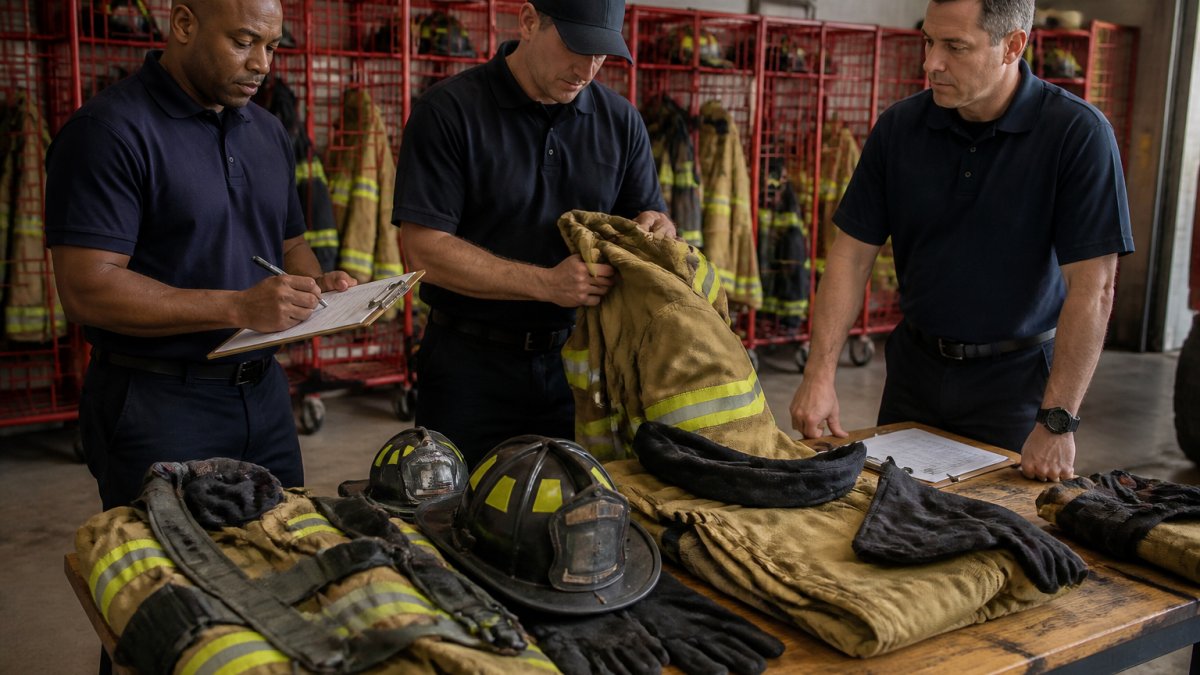
Budget planning requires ranking needs and matching them to available funding. Not everything can be replaced this year, so the priority order must be transparent enough that a budget committee, union representative, and line officer can all look at the same score and agree it's fair.
A Transparent Scoring Method for Replacement Priority
Score every inventory item on a 1-5 scale across six factors, then multiply by a weight that reflects your department's risk profile. A common weighting is shown below; adjust it to your call mix and standards obligations.
| Factor | What to score | Suggested weight |
|---|---|---|
| Condition | Inspection findings, visible wear, failure history | 30% |
| Age vs. expected service life | Percent of service life consumed | 20% |
| Fit and sizing | Does it fit the assigned firefighter correctly? | 15% |
| Use frequency | Calls per year and exposure severity | 15% |
| Standards compliance | Does it meet current NFPA performance requirements? | 10% |
| Criticality | How directly does it protect life? | 10% |
Priority score = Σ (factor score × weight). Rank items from highest to lowest. Items that fail a compliance check move to the top regardless of score, because non-compliant gear creates liability exposure that outweighs every other factor.
Phased Purchasing That Fits Real Budget Cycles
Once you have a ranked list, translate it into a multi-year purchase plan. If you need $500,000 in replacements but have a $100,000 annual budget, that's a five-year plan, realistic only if you protect the line item every year.
A phased approach usually works like this:
- Year one: Replace the highest-scoring items and any non-compliant gear. This is the safety floor.
- Year two: Address the next tier, prioritizing items whose repair costs are climbing.
- Years three to five: Continue down the ranked list, adjusting as new inspection data arrives.
Work backward from your deadline: if certain gear must be retired by 2028, calculate annual spend to hit that target, then fight for it as a non-negotiable line item rather than a discretionary request.
Funding, Grants, and Bid Evaluation
Most departments blend local budget dollars with grants. When pursuing grants, the scoring method above becomes your narrative, a documented, needs-based process rather than a wish list. Keep purchase dates, inspection records, and repair invoices organized for short-notice production.
When evaluating bids, compare total cost of ownership, not unit price. Ask vendors for expected service life, warranty terms, repair turnaround, and cleaning instructions.
Documenting the Rationale for Decision-Makers
Budget committees respond to evidence, not urgency. Package your request with:
- The ranked priority list and the scoring method behind it
- The total cost of ownership comparison for each replacement option
- Inspection findings that justify retirement
Talk to your crews before finalizing the list. They know which gear is failing and what's creating safety gaps; their input should inform prioritization, and their support strengthens your case.
A written, scored, multi-year plan is harder to cut than an ad hoc request and gives you a defensible answer when a budget committee asks why you're spending on new suits instead of something else.
The Hidden Cost of Delaying Firefighter PPE Replacement
Waiting to replace gear costs more than you think. The visible cost is the eventual replacement bill.
Degraded PPE increases injury risk.
Recruitment and retention suffer when crews lack proper equipment.
There's also compliance risk: standards change and new research identifies hazards older gear doesn't address. Equipment below current standards creates regulatory pressure and liability exposure.
The NFPA Journal reported that the cost of new PPE relative to old PPE was not yet known, so departments cannot assume replacement will reduce expenses.
Building Your Department's PPE Replacement Strategy
A replacement strategy ties together lifecycle analysis, scheduling, repair decisions, budget planning, and risk management.
Start here:
-
Audit your current inventory. Document every piece of gear, purchase date, condition, repair history, inspection results. You can't plan without data.
-
Calculate lifecycle costs. For each equipment type, determine total cost of ownership over expected lifespan, including purchase, maintenance, repairs, and disposal.
-
Establish replacement criteria. Define retirement triggers based on age, condition, repair frequency, and performance standards.
-
Build a multi-year plan. Prioritize by criticality and condition, spreading costs across years your budget can handle.
-
Communicate the plan. Share it with crews, leadership, and your budget committee. A documented strategy is harder to cut than an ad hoc request.
-
Review annually. Update inventory data, adjust timelines, and refine priorities.
The goal isn't perfect equipment. It's equipment that protects your firefighters without breaking your budget. A realistic, documented strategy gets you there.
Black Helmet's gear and apparel are built for the crews who wear them, with the durability and authenticity firefighters demand. When deciding what protects your team, you want partners who respect the job.
Frequently Asked Questions
How often should firefighter PPE be replaced?
Replacement timelines depend on gear type, usage frequency, and condition. Structural firefighting turnout gear typically requires replacement every 5-10 years, while wildland PPE may need more frequent replacement due to environmental exposure. NFPA 1970 standards and manufacturer guidelines specify inspection intervals. Departments should conduct annual inspections and document wear, heat damage, and degradation to determine individual garment retirement dates rather than replacing all gear on a fixed schedule.
What costs should be included in a firefighter PPE lifecycle cost analysis?
A complete lifecycle analysis includes purchase price, inspection and maintenance labor, repair costs, storage and inventory management, training on new equipment, disposal of retired gear, and the cost of operational downtime when gear is unavailable. Research shows advanced wildland PPE systems cost approximately $279 more per garment than standard systems. Don't overlook hidden costs like replacement parts compatibility, fit adjustments across your workforce, and the expense of delayed replacement, older gear may require more frequent repairs, increasing total cost of ownership.
Is it more cost-effective to repair or replace firefighter PPE?
The answer depends on the damage type and remaining service life. Minor repairs to relatively new gear often make sense; replacing a zipper or repairing a small seam on gear with 3-4 years of life remaining is cost-effective. However, structural damage, melting, significant heat exposure, or compromised protective layers, means replacement is the only safe option. Once gear reaches 7-8 years old or shows multiple damage areas, replacement typically costs less than accumulated repairs and eliminates safety uncertainty.
How can fire departments budget for PPE replacement when costs keep rising?
Create a multi-year replacement plan that spreads costs across budget cycles. Inventory your current gear by age and condition, then prioritize replacement by risk: gear exposed to the most fires or heat stress gets replaced first. Brighton Fire Rescue reported a 75% increase in PPE costs since 2020, so build in contingency. Consider phased replacement (e.g., replace 20% of inventory annually) rather than replacing everything at once. Track costs and maintenance spending to justify budget requests to leadership and identify which gear types deliver the best lifecycle value.
A cost-benefit analysis of replacing firefighter PPE isn't just about spreadsheets. It's about protecting the people who run into burning buildings so others can run out. The departments that get this right balance safety, budget reality, and long-term planning. They document their decisions. They involve their crews. And they replace gear before it fails.
Your firefighters deserve equipment they can trust. Build the strategy that makes that possible.

