

Firefighter Apparel for Daily Wear: Station to Street
Table of Contents
- What Makes Firefighter Apparel for Daily Wear Different
- Off-Duty Firefighter Shirts: Style Meets Function
- Durable Workwear for Firefighters: Fabric Technology and Construction
- Firefighter Station Wear vs Daily Wear: Understanding the Difference
- Layering Systems for Shift Work and Beyond
- Care and Maintenance: Keeping Your Gear Ready
- Wildland and Specialty Gear for Professional Identity
- Choosing the Right Fit: From Station to Street
Last Updated: August 16, 2026
What Makes Firefighter Apparel for Daily Wear Different
Firefighter apparel for daily wear bridges professional duty gear and authentic civilian comfort. It's gear that honors who you are and what you do, whether at the station or in the community.
The difference starts with fabric. Station wear and daily wear share priorities, moisture-wicking, breathability, durability, but are engineered for different scenarios. Station wear must survive active firefighting heat and physical demands. Daily wear needs the same performance capability but must feel authentic in civilian settings without appearing forced.
Black Helmet designs firefighter apparel respecting both demands. Their premium tees use 100% combed and ring-spun cotton (with polyester blends in select styles) that's pre-shrunk to hold shape through countless wash cycles. The fit is intentional, neither too baggy nor too tight, because firefighter apparel needs to perform whether you're moving through the station or sitting down for dinner.
What separates quality firefighter apparel from generic merchandise is construction detail. Reinforced stitching, side seams, and shoulder-to-shoulder taping extend garment life and maintain fit integrity. When you're wearing something representing your profession and brotherhood, you expect it to last.
Off-Duty Firefighter Shirts: Style Meets Function
Off-duty firefighter shirts walk a fine line between pride and authenticity. They need to feel connected to the job without appearing like costume pieces.
The most effective off-duty shirts use subtle design elements and quality construction to signal affiliation without shouting it. A well-placed skull logo, meaningful phrase, or firehouse culture reference speaks to people who understand while remaining understated for everyday wear. Black Helmet's top-selling designs, the Firehouse Standard, First In Last Out, and Tailboard Rider tees, work because they're rooted in actual fire service language and tradition, not generic marketing.

Construction matters significantly. A premium off-duty shirt must hold its shape through regular washing, resist pilling, and maintain color integrity. Black Helmet uses pre-shrunk fabric and side-seamed construction to prevent shirts that shrink or stretch within months. At $34.50, their premium tees are investment pieces rather than disposable merchandise.
Fit deserves attention too. Firefighters value apparel working across different body types and activity levels. A shirt too tight restricts movement; too loose looks sloppy. Black Helmet's athletic retail fit flatters without requiring gym-ready physique. The Tailboard Rider Tee uses a fitted cut working for someone coming off shift or heading to the gym.
Color selection influences how a shirt reads in civilian settings. Black, dark grey, and navy feel professional and versatile. Most firefighters gravitate toward darker palettes for off-duty wear because they align with professional identity.
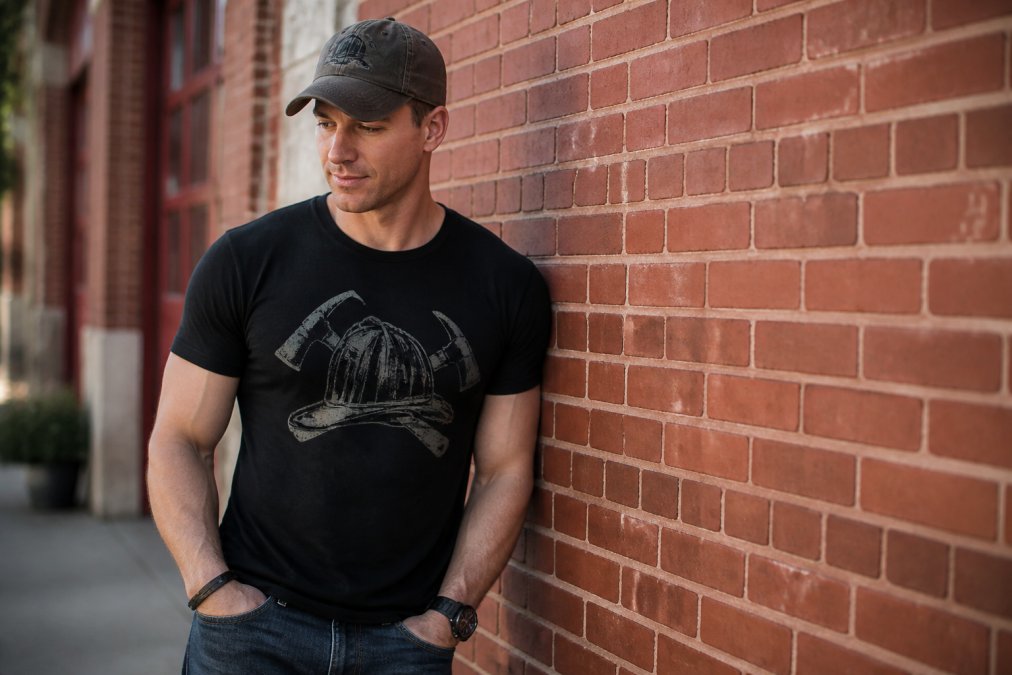
:::pro The best off-duty firefighter shirts use design elements rooted in actual fire service culture, station names, meaningful phrases, or subtle iconography, rather than generic firefighter imagery. This signals authenticity to people who know the job while remaining appropriate for civilian settings. :::
Durable Workwear for Firefighters: Fabric Technology and Construction
Durability in firefighter apparel means maintaining performance and appearance through regular wear patterns. Real durability means consistent performance across multiple seasons, not just lasting longer.
Moisture-Wicking and Breathable Fabrics
Firefighters move between intense physical activity and relative calm. A fabric pulling sweat away from your skin keeps you comfortable during both phases. Quality combed and ring-spun cotton performs better than standard cotton because fiber preparation creates a smoother surface allowing water to move across fabric rather than absorb into it.
Breathability works alongside moisture-wicking. Many quality firefighter tees use cotton-polyester blends where polyester improves moisture management while cotton maintains breathability and comfort. Black Helmet's Plug Brew Premium Tee uses this approach, engineered for long shifts moving between different environments.

After a few hours of wear, a breathable, moisture-wicking shirt keeps you feeling dry and comfortable. A standard shirt absorbs sweat and clings to your body, which feels wrong whether at the station or off-duty.
Reinforced Stitching and Ripstop Materials
Reinforced stitching uses multiple passes or heavier thread, distributing stress across more surface area. Side seams, shoulder-to-shoulder taping, and reinforced neck openings are where most shirts fail first.
Black Helmet's construction includes side-seamed construction and shoulder-to-shoulder taping across their premium tee line. After 20-30 washes, cheaper shirts' seams may fray while Black Helmet shirts look nearly new.
Ripstop materials use a reinforced grid pattern preventing small tears from spreading. For wildland firefighters and rescue professionals working in brush and rough terrain, ripstop construction is essential. Black Helmet's Wildland Fireline Premium Tee incorporates ripstop principles specifically because wildland crews encounter different hazards than structural firefighters.
Firefighter Station Wear vs Daily Wear: Understanding the Difference
Station wear prioritizes performance under active duty conditions. You need apparel that moves with you, breathes under exertion, resists stains, and withstands physical demands of firefighting.
Daily wear serves a different function. You're representing the profession and brotherhood in civilian settings. Daily wear needs to feel authentic to your identity as a firefighter while looking appropriate for non-emergency contexts. Design and personal choice become important.
The overlap is significant. Many firefighters wear the same quality apparel both on and off duty. A premium tee performing well during station training works perfectly for off-duty wear. The difference comes down to design and context rather than technical specs.
Wildland firefighters often face different wear requirements than structural firefighters. Wildland station wear handles brush, heat, and extended outdoor exposure. Wildland daily wear, like Black Helmet's Wildland Fireline Premium Tee, celebrates that specific identity and different demands.
Layering Systems for Shift Work and Beyond
Layering manages the transition between different environments and activity levels throughout a shift. A firefighter might start in a cool station, move to intense physical activity, then settle into relative calm. Apparel supporting this transition performs better.
The base layer matters most. A quality base layer pulls sweat away from your skin, keeping you dry whether active or at rest. Black Helmet's premium tees work as effective base layers because they're engineered for moisture management. Pre-shrunk fabric and quality construction maintain fit and performance through temperature and activity changes.
Mid-layers add insulation without bulk. For firefighters, this often means a lightweight hoodie you can remove if you start moving hard. The mid-layer should be easy to put on and take off without restricting movement.
Outer layers protect against elements. For off-duty wear, this might be a Black Helmet hoodie or casual jacket. For duty situations, outer layers need to comply with department standards and NFPA requirements.
The practical approach is building a small rotation of quality pieces rather than buying many cheap items. Two or three premium tees, a hoodie, and a light jacket provide flexibility across seasons and situations. This costs more upfront but saves money long-term because quality apparel lasts multiple seasons.
Care and Maintenance: Keeping Your Gear Ready
How you care for firefighter apparel directly affects how long it lasts and how well it performs. The difference between a shirt looking new after a year and one looking worn out is often maintenance rather than quality.
Cold water washing preserves color and fabric integrity better than hot water. Machine wash on a gentle cycle, avoiding the heavy-duty cycle designed for heavily soiled work clothes. Avoid bleach unless specifically needed; non-chlorine bleach is safer for colored apparel. Skip fabric softener, it coats fibers and reduces moisture-wicking performance.
Low-heat drying or air-drying extends apparel life significantly. If in a hurry, use medium heat and remove items promptly. Never leave damp apparel in the washer or dryer; mildew and odor set in quickly.
Folding and storage prevent wrinkles and maintain shape. Heavy items like hoodies are better folded because hangers stretch shoulders over time. Store in a cool, dry place away from direct sunlight.
Treat stains immediately. Rinse with cold water first, then treat with stain remover before washing. Cold water is always the safe choice initially.
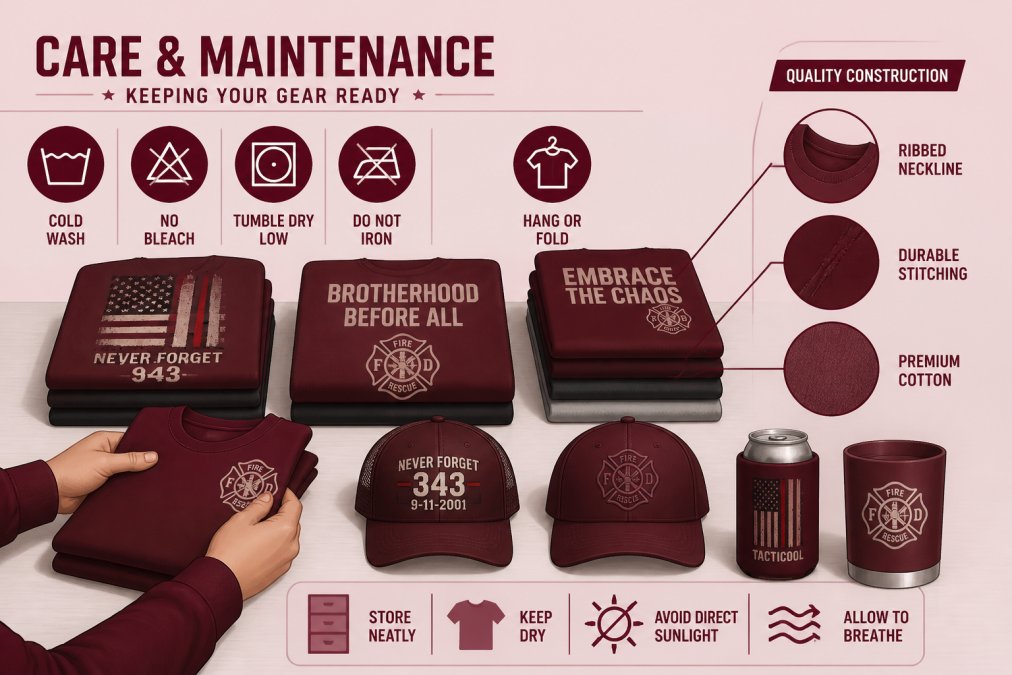
A Black Helmet premium tee at $34.50 will outlast three cheaper $15 shirts if maintained properly. That's about maintaining the fit, color, and performance that made you buy quality.
Wildland and Specialty Gear for Professional Identity
Wildland firefighting demands different gear than structural firefighting. The environment, hazards, and work patterns create specific requirements that specialty apparel addresses. Wildland firefighters spend extended periods outdoors in brush and rough terrain, often in extreme heat.
Wildland gear emphasizes durability under harsh conditions. Ripstop construction, reinforced high-stress areas, and brush-resistant fabrics are standard. Black Helmet's Wildland Fireline Premium Tee uses distressed wildland fireline-inspired graphics with crossed drip torches, design elements speaking directly to the wildland experience.
The identity component matters significantly for wildland crews. Wildland firefighting has its own culture, language, and brotherhood distinct from structural firefighting. Apparel reflecting this identity feels authentic to people doing this work. Generic "firefighter" gear misses this distinction.
The investment in specialty gear is worth it for wildland professionals because it acknowledges the specific nature of your work. You're not just a firefighter; you're a wildland firefighter. Your gear should reflect that distinction.
Choosing the Right Fit: From Station to Street
Finding the right fit requires understanding how you'll actually use the piece and what performance matters most.
Start with intended use. Is this primarily for station wear, off-duty wear, or both? If you want a single piece working both places, prioritize versatility over specialization. This usually means a more subtle design and fit working across different contexts.
Size selection matters significantly. Firefighter apparel tends to run true to size, but fit preferences vary. Black Helmet publishes detailed size guides for each product. Measure your actual chest width and compare it to the size chart rather than guessing.
Color influences how a piece reads in different contexts. Black, dark grey, and navy work everywhere. Most firefighters default to darker palettes because they feel more aligned with professional identity.
Design subtlety affects versatility. A shirt with a small chest logo works in almost any context. A shirt with a large back print feels more specialized. If primarily for off-duty wear in civilian settings, subtlety usually wins.
Quality should be non-negotiable. A $34.50 premium tee from Black Helmet costs more than a $15 option but lasts multiple seasons while maintaining fit and appearance.
| Apparel Type | Best For | Key Feature | Price Point |
|---|---|---|---|
| Premium Tee | Station and off-duty wear | Pre-shrunk, reinforced stitching, moisture-wicking | $34.50 |
| Fitted Tee | Athletic fit preference | Tailored cut, modern silhouette | $34.50 |
| Wildland Specialty | Wildland crews | Ripstop, distressed graphics, terrain-appropriate | $34.50 |
| Dad Hat | Casual off-duty | Distressed finish, adjustable fit | $34.50 |
| Flexfit Hat | Athletic/active wear | Stretch band, structured crown | $34.50 |
The right fit comes down to honest self-assessment. How will you actually use this piece? What matters most, bold design or subtle authenticity? Answer those questions first, then choose gear aligning with those priorities.
Choosing firefighter apparel for daily wear is about representing your profession authentically, investing in gear that lasts, and understanding technical details separating quality from cheap alternatives. Black Helmet has served the firefighter community since 2008 because they understand what matters: construction quality, design authenticity, and apparel honoring the brotherhood both on and off duty. Start with one premium piece, care for it properly, and you'll understand why firefighters invest in quality gear representing who they are.
Frequently Asked Questions
What should firefighters look for in daily wear apparel?
Look for pre-shrunk, combed cotton or cotton-blend fabrics that maintain their fit through repeated washing. Choose pieces with reinforced stitching at stress points, moisture-wicking properties for thermal regulation, and enough stretch for mobility during active shifts. Authentic firefighter apparel should feel durable without sacrificing comfort, you're wearing it both on duty and off, so it needs to handle real use. Brands like Black Helmet design specifically for this dual purpose, using 100% combed and ring-spun cotton with side-seamed construction for longer-lasting fit.
What brands are best for firefighter off-duty clothing?
The best brands are firefighter-owned or deeply rooted in fire service culture. Black Helmet, founded in 2008, has served over 100,000 firefighters with premium apparel that respects the profession's heritage and brotherhood. Look for brands that understand station culture, use quality fabrics, and back their products with guarantees. Avoid generic 'firefighter gifts', seek out makers who design for active duty and off-duty wear with the same standard. Premium tees at $34.50 are a solid investment when they're built to last through wash cycles and real wear.
Are there specific clothing styles that represent the fire service?
Yes. Station wear reflects firehouse tradition: fitted or relaxed premium tees with firehouse pride graphics, distressed or heritage-inspired designs, and iconic symbols like the skull logo that carry meaning within the brotherhood. Class A and Class B uniform aesthetics influence off-duty style, clean lines, functional pockets, and durability are non-negotiable. Wildland firefighters favor designs with drip torches and fireline-inspired graphics. The key is authenticity: designs should honor the job and the sacrifice, not trivialize it. Black Helmet's designs pull from real firehouse culture and mindset, from 'Never Go Gently' to 'First In, Last Out.'
How do I care for firefighter apparel to keep it looking new?
Machine wash in cold water (max 30°C or 90°F) to preserve fabric color and integrity. Use non-chlorine bleach as needed. Tumble dry on low heat to prevent shrinkage and extend the life of reinforced stitching. Iron or steam on medium heat if needed. Avoid dry cleaning, which can damage durable construction. Pre-shrunk fabrics like those used in Black Helmet premium tees maintain their fit through many cycles. Proper care protects your investment, quality apparel that's maintained correctly will serve you for years both on and off shift.
This article was written using GrandRanker
