

Essential Features in Firefighter Station Pants
Table of Contents
- Why Station Pants Matter: Durability and Professional Identity
- Station Pants Versus Turnout Pants: Know the Difference
- Reinforced Construction and Stress-Point Protection
- Firefighter Pants Pockets and Storage: What You Actually Need
- Closures, Cuffs, and Ankle Adjustments That Hold
- Best Firefighter Station Pants: Fit, Sizing, and Mobility
- Fabric, Moisture Management, and Care
- Standards, Certification, and What They Mean
- Frequently Asked Questions
Last Updated: October 6, 2026
Why Station Pants Matter: Durability and Professional Identity
Firefighter station pants are more than everyday work trousers. They're a statement of commitment to the job, a practical layer that needs to perform under demanding conditions, and a piece of your professional identity. When you're moving through a firehouse or responding to calls, your gear reflects who you are and what you stand for.
The difference between quality station pants and mediocre ones shows up fast. Good pants hold their shape, resist wear at stress points, and keep you comfortable during long shifts. Poor ones shrink, tear at the seams, and fall apart after a season of regular use.
Station pants sit at the intersection of professional uniform and functional work wear. They need to look sharp enough for public-facing moments while handling the abuse of daily station life. That's why understanding the essential features to look for in firefighter station pants matters before you buy.
Station Pants Versus Turnout Pants: Know the Difference
Station pants and structural turnout pants serve completely different purposes, and confusing them leads to buying the wrong gear for your role. Understanding this distinction upfront saves money and frustration.
Station pants are designed for wear around the firehouse, during training, and in low-risk environments. They're built for comfort and durability during everyday station duties.
Turnout pants (also called structural firefighting pants) are engineered for interior structural firefighting. They include thermal barriers, moisture barriers, and flame-resistant outer shells. They're heavier, more restrictive, and designed to protect against extreme heat and flame.
Wildland station pants represent a third category entirely. Built for wildland firefighting and technical rescue, they emphasize mobility, abrasion resistance, and durability over thermal protection. They're lighter and more flexible than structural turnout pants but more rugged than standard station wear.
The confusion matters because buying turnout pants when you need station wear means carrying unnecessary weight and heat all day. Conversely, wearing station pants into a structural environment leaves you unprotected.
Reinforced Construction and Stress-Point Protection
The places where station pants fail first are the places where stress concentrates. Knees, crotch seams, pocket corners, and cuffs take the most punishment during daily wear.
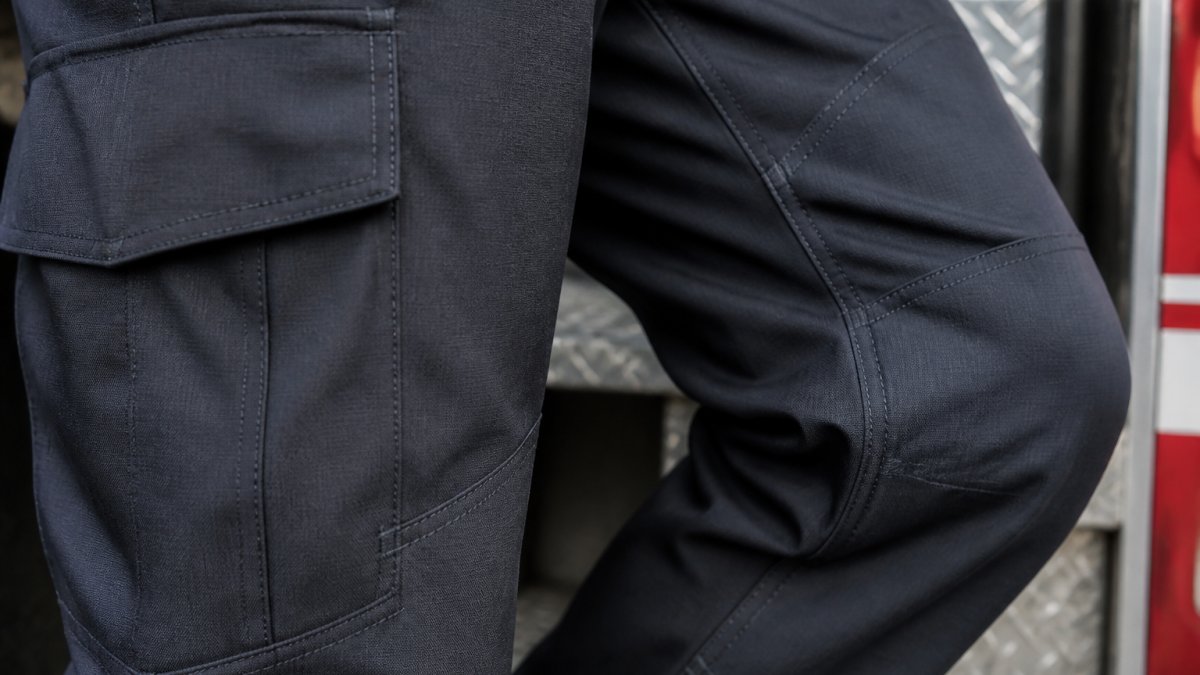
Bar-tack reinforcement is a specific stitching pattern that locks threads at high-stress points. Instead of a single line of stitching, bar-tack creates a rectangular box of tight stitches that distributes force across multiple anchor points.
Look for reinforcement at these critical areas: knees (especially if you kneel regularly), the crotch seam, all pocket corners, zipper fly attachment points, and where the waistband meets the side seams.
The outer shell fabric itself matters too. Durable construction typically uses cotton-blend or polyester-blend materials that resist tearing and maintain their shape through repeated washing. Thicker fabrics (measured in ounces per square yard) generally outlast thin ones, but they also reduce mobility.
Firefighter Pants Pockets and Storage: What You Actually Need
Pockets aren't just convenience, they're functional infrastructure. Station pants need to hold tools, radios, phones, and personal items without sagging, stretching, or dumping contents when you move.
Effective pocket design includes placement, depth, closure type, and internal organization. Slash pockets (the traditional angled pockets at the hip) are standard but limited in capacity. Better station pants add cargo pockets on the thighs, which hold more without affecting the silhouette.
Internal compartments or pass-throughs add real value. A pass-through pocket lets you keep items accessible without a visible exterior pocket. Some pants include tool loops or D-rings for attaching gear. Retention straps or button closures on larger pockets keep contents secure during active movement.
The number of pockets matters less than their placement and accessibility. Two deep, well-designed cargo pockets with secure closures outperform four shallow pockets that sag under minimal weight. Think about what you actually carry during a shift and choose pants with pockets sized and positioned for those items.
Closures, Cuffs, and Ankle Adjustments That Hold
How your station pants stay on and stay closed affects both comfort and professionalism. Zipper flies, hook-and-loop closures, and snap combinations each have trade-offs.
Zipper flies are traditional and reliable. Quality metal zippers last longer than plastic ones and are less likely to jam. The key is reinforcement around the zipper attachment, this is a high-stress area where seams fail if not properly anchored.
Hook-and-loop (Velcro) closures are faster and quieter but wear out over time. They're best as a secondary closure or on pants you won't wash frequently. After 50+ washings, hook-and-loop loses effectiveness.
Ankle closures deserve attention because they affect both comfort and security. Adjustable leg cuffs with hook-and-loop or snap closures let you customize fit around boots. Elastic cuffs are simpler but less adjustable. Cuffs that are too loose let pants drag and catch; too tight restricts circulation.
Look for secure closures at every point: waistband, fly, pockets, and ankles. Loose closures mean lost items and a sloppy appearance. Secure closures keep you looking professional and functional.
Best Firefighter Station Pants: Fit, Sizing, and Mobility
Fit and Sizing Considerations
Proper fit in station pants balances professional appearance with practical comfort. Pants that are too tight restrict movement and cause discomfort during long shifts. Pants that are too loose sag, snag on equipment, and look unprofessional.
The waist should sit at your natural waist without digging in or sliding down. Inseam length should reach the top of your boot with minimal break, a slight fold is normal, but excess fabric bunches and catches. Thigh room should allow a full stride without pulling at the crotch seam.
Sizing varies significantly between brands, so don't assume your usual size works for every manufacturer. Try pants on when possible, or order from retailers with flexible return policies. The best firefighter station pants fit you specifically, not just your size number.
Mobility and Range of Motion
Station pants need to accommodate the full range of motion firefighters need: climbing, bending, kneeling, and reaching. Restrictive pants create fatigue and increase injury risk during long shifts or active calls.
Test mobility by doing a few basic movements before committing: full squat, high step, side lunge, and overhead reach. If any movement feels restricted or pulls at seams, the pants are too tight. Quality station pants use gussets (fabric inserts at high-movement areas) or stretch blends to maintain mobility without sacrificing durability.
Stretch fabrics (typically a small percentage of spandex or elastane blended with cotton or polyester) improve comfort without compromising durability. A 2-5% stretch blend is ideal, enough to move with you without feeling clingy or losing shape.
Fabric, Moisture Management, and Care
The fabric composition of your station pants determines durability, comfort, and care requirements. Most quality station pants use either 100% cotton, cotton blends, or polyester blends.
Cotton is breathable and comfortable but requires more maintenance, it shrinks, wrinkles easily, and can fade. Cotton-blend fabrics (typically 65-85% cotton with polyester) offer better shrink resistance and durability while maintaining breathability. Polyester-dominant blends are more durable and easier to care for but less breathable.
Moisture management matters during active work. Fabrics that wick moisture away from skin keep you comfortable and reduce odor. Many quality station pants use moisture-wicking treatments or blends designed to dry quickly. This is especially important if you're in and out of vehicles or moving between temperature extremes.
Care instructions vary by fabric. Most station pants tolerate machine washing in warm water, but check the label. Avoid bleach (which weakens fibers and fades color) and excessive heat drying (which accelerates shrinkage and damage). Air drying or low-heat drying extends the life of your pants significantly.
Standards, Certification, and What They Mean
Understanding firefighter gear standards helps you choose pants appropriate for your specific role and environment. Standards exist for structural firefighting, wildland firefighting, and general protective wear.
NFPA 1500 (Standard on Fire Department Occupational Safety and Health Program) addresses overall firefighter safety but doesn't specify station pants requirements.
NFPA 1971 (Standard on Protective Ensembles for Structural Fire Fighting and Proximity Fire Fighting) covers structural turnout gear, including pants.
NFPA 1977 (Standard on Protective Clothing and Equipment for Wildland Fire Fighting and Wildland Urban Interface Fire Fighting) covers wildland protective gear, including pants designed for that environment.
Station pants themselves don't have a specific federal standard, which means manufacturers have flexibility in design.
When choosing station pants, verify that they match your department's requirements and your specific role. Structural firefighters need certified turnout pants. Wildland firefighters need wildland-specific gear.
Choosing the right firefighter station pants comes down to understanding your role, knowing what features actually matter for your work, and investing in quality that lasts. At Black Helmet, we build apparel for firefighters who take both seriously.
| Feature | What It Does | Why It Matters |
|---|---|---|
| Bar-tack reinforcement | Locks stitches at stress points | Prevents seam failure at knees, pockets, crotch |
| Cargo pockets with closures | Secure storage for tools and gear | Keeps items accessible without sagging or loss |
| Adjustable ankle cuffs | Customizes fit around boots | Prevents dragging and maintains professional appearance |
| Moisture-wicking fabric blend | Moves sweat away from skin | Keeps you comfortable during long shifts and active work |
| Gussets at high-movement areas | Adds fabric for unrestricted motion | Reduces fatigue and injury risk during climbing, bending, reaching |
NFPA 1977 Standard on Protective Clothing and Equipment for Wildland Fire Fighting
NFPA 1971 Standard on Protective Ensembles for Structural Fire Fighting
NFPA 1500 Standard on Fire Department Occupational Safety and Health Program
Frequently Asked Questions
What's the difference between station pants and turnout pants?
Station pants are everyday work trousers worn during non-emergency duties at the firehouse. They prioritize comfort, breathability, and professional appearance for long shifts. Turnout pants (structural firefighting pants) are heavy-duty protective gear with thermal barriers, flame resistance, and reinforced construction for active firefighting. Station pants use lighter fabrics and focus on mobility and durability for station work, while turnout pants are certified protective equipment designed for extreme heat exposure.
What features matter most in firefighter station pants?
The most critical features are reinforced knees and stress points (bar-tack stitching at pocket corners and seams), multiple secure pockets for tools and equipment, adjustable leg cuffs and ankle closures, durable outer shell fabric with moisture management, and a fit that allows full range of motion. Station pants should also have quality closures (heavy-duty zippers or hook-and-loop) and construction that withstands repeated washing and demanding station work.
How should firefighter station pants fit?
Station pants should fit snugly at the waist without gaps, with enough thigh room to crouch, climb, and move freely. The inseam should end at the top of your boot with minimal break. Test mobility by doing a full squat and reaching overhead to ensure the crotch doesn't pull tight and the waistband stays secure. Proper fit prevents chafing during long shifts and ensures pockets sit at accessible angles for equipment access.
What pocket configuration do firefighters actually need?
Functional station pants include slash pockets on the thighs for quick access to tools, cargo pockets with internal compartments for secure storage, rear pockets with retention straps to prevent loss during activity, and pass-through pockets that allow access to items worn under the pants. D-ring attachments are useful for securing equipment. Pocket placement should allow easy access while seated in apparatus, and internal compartments should be deep enough to prevent items from falling out during movement.
What fabric and care considerations should I know about?
Quality station pants use durable blended fabrics (often cotton-polyester or canvas blends) that balance breathability with abrasion resistance. Look for moisture-wicking properties to manage sweat during active shifts. Check care instructions carefully, many premium station pants require specific washing temperatures and drying methods to maintain durability and prevent shrinkage. Proper care extends the life of reinforced seams and protective treatments.
Are there standards or certifications I should look for?
Station pants don't require the same certifications as turnout gear, but reputable brands follow NFPA (National Fire Protection Association) guidelines for protective apparel construction and durability standards. Some manufacturers reference ASTM standards for fabric strength and colorfastness. Look for brands that clearly state their construction methods, reinforcement techniques, and testing standards. Certification ensures the pants meet durability and safety expectations for professional fire service use.
