

Durable Firefighter Work Gloves Review: 2026 Guide
Table of Contents
- What Makes Firefighter Work Gloves Durable Enough for the Job
- NFPA 1971 and PPE Compliance: What Structural Gloves Must Meet
- Leather vs Synthetic Firefighter Gloves: Which Lasts Longer?
- Best Station Work Gloves for Firefighters: Top Picks for 2026
- How to Clean Firefighter Work Gloves Without Ruining Them
- Dexterity, Fit, and Turnout Gear Compatibility: What to Check Before Buying
- Common Mistakes That Shorten Firefighter Work Glove Lifespan
- Conclusion: Choosing the Right Durable Firefighter Work Gloves
- Frequently Asked Questions
Last Updated: September 18, 2026
What Makes Firefighter Work Gloves Durable Enough for the Job
Durable firefighter work gloves survive heat, abrasion, moisture, and constant abuse without losing grip or protection. At Black Helmet, we hear the same frustration from crews everywhere: gloves that look tough in the catalog but blow out after a few months of station work. This review breaks down what actually holds up, leather construction, stitching, cuff design, so you can stop replacing cheap pairs every season.
NFPA 1971 and PPE Compliance: What Structural Gloves Must Meet
Structural firefighting gloves sold for interior operations must meet NFPA 1971, the standard covering protective ensembles for structural and proximity firefighting. Certification verifies the glove passed tests for heat, flame, thermal insulation, cut and puncture resistance, and liquid penetration.
Leather vs Synthetic Firefighter Gloves: Which Lasts Longer?
Leather firefighter gloves generally outlast synthetic ones in structural and heavy work conditions, while synthetics win on dexterity and dry-time. Leather handles heat, abrasion, and puncture better but soaks up water and dries slowly; synthetics dry faster and feel lighter, but coatings and seams break down sooner under repeated heat.
| Glove Type | Durability | Best For | Main Weakness |
|---|---|---|---|
| Split-grain leather | High | Structural, extrication | Slow to dry |
| Full-grain leather | Very high | Heavy abrasion tasks | Stiff, less dexterity |
| Synthetic + nitrile | Moderate | Wildland, wet work | Coating wears out |
| Hybrid leather/synthetic | High | All-around station work | Higher cost |
Best Station Work Gloves for Firefighters: Top Picks for 2026
Most "best of" glove lists rank products by price and star rating, which tells you nothing about how a glove survives month six of truck checks, hose loads, and overhaul. This section ranks station work gloves by the durability mechanisms that matter: palm construction, seam type, cuff interface, and wash-cycle behavior.
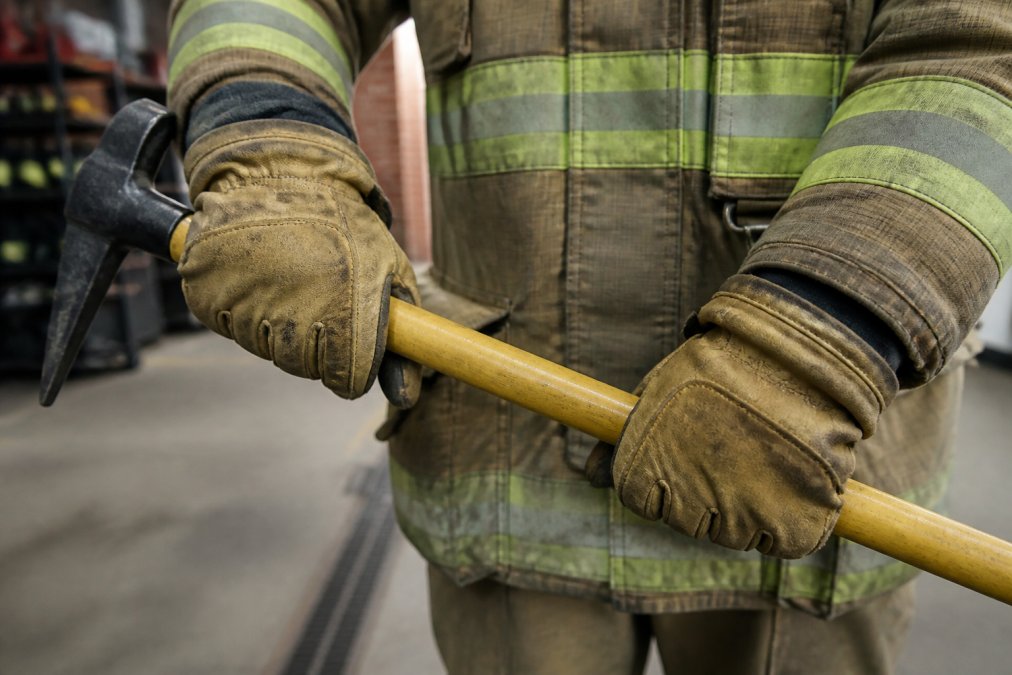
How We Evaluate Durability
We score each glove on four failure points from real station use:
- Palm abrasion resistance, how the material holds up against hose couplings, tool handles, and concrete. Split-grain leather with a reinforced palm patch outlasts smooth-grain by a wide margin.
- Seam construction, double-stitched seams with locked stitching at stress points (thumb crotch, palm edge) resist blowout far better than single-stitched. Kevlar thread adds cut and heat resistance.
- Cuff-to-sleeve interface, a gauntlet cuff that overlaps the turnout coat sleeve without bunching keeps debris out and reduces wrist wear.
- Wash-cycle survival, gloves that lose shape, stiffen, or delaminate after 10-15 wash cycles aren't durable, no matter how they feel new.
Top Picks by Category
Best overall for daily station duty: Black Helmet station work glove. Reinforced palm, breathable back panel, and a fit that holds up to repeated use. Founded in 2008 by firefighters and backed by a satisfaction guarantee, the brand has served over 100,000 members of the fire service. Recommended for crews who want one pair that handles truck checks, hose work, and light extrication without structural-glove bulk.
What Most Reviews Miss: The Cuff Interface Problem
For most crews, a dedicated station work glove plus a certified structural pair covers everything. Outfitting a whole house? Black Helmet handles group and department orders.
How to Clean Firefighter Work Gloves Without Ruining Them
Cleaning firefighter work gloves the wrong way is the single biggest cause of premature failure. Harsh detergents strip leather's oils, machine drying cracks it, and skipping decontamination leaves carcinogens in the fabric shift after shift. But most guides ignore a second problem: the method that removes the most contaminants often destroys the glove fastest, the difference between a glove lasting two years and one failing in six months.
The Decontamination-Durability Trade-Off
Firefighters face elevated cancer risks from the soot and chemicals that cling to gear. The NIOSH firefighter cancer research documents how important proper gear cleaning is for long-term health. But heavy-duty decontamination, the kind that actually removes embedded carcinogens, is hard on materials.
- Split-grain leather, Holds up to mild soap and water but degrades quickly with strong detergents or degreasers, which strip the oils that keep leather supple, causing cracking and stiffness. Typically survives 15-20 gentle wash cycles, but only 5-8 aggressive decon cycles.
- Full-grain leather, More detergent-resistant than split-grain because the grain layer protects underlying fibers, but still needs reconditioning after every wash to prevent cracking. Expect 20-25 gentle cycles or 8-12 aggressive cycles.
- Synthetic leather with nitrile coating, The coating resists detergent better than leather, but repeated washing breaks the adhesive bond to the fabric backing. Delamination is the primary failure mode; most synthetics survive 10-15 wash cycles before peeling.
- Hybrid leather/synthetic, Leather portions behave like leather, synthetic portions like synthetic, so the glove fails at different rates in different areas. Frustrating, but you can often get more total life by rotating which tasks you use them for.
A Cleaning Routine That Balances Both Goals
The goal: remove as much contamination as possible without accelerating material breakdown. This routine does both:
- Brush off dry debris before it works into the seams, this removes most surface contamination without water or chemicals.
- Pre-rinse with lukewarm water to loosen embedded soot. Avoid hot water, it opens leather pores and drives contaminants deeper.
- Wash with mild soap and lukewarm water. Never bleach or use strong solvents on leather. For synthetics, a diluted degreaser is acceptable but must be rinsed thoroughly.
- Work soap into the palm and fingers with a soft brush, then rinse thoroughly, paying attention to seams and cuff where contaminants accumulate.
- Air dry away from direct heat. Never put leather gloves in a dryer or on a radiator. Heat cracks leather and breaks down synthetic coatings.
- Recondition leather with a leather-safe treatment once dry to prevent cracking, non-negotiable if you wash frequently.
- Inspect seams and coatings after every wash and retire gloves with worn-through areas, a compromised seam no longer provides certified protection.
When to Retire a Glove
Most firefighters keep gloves in service too long because they don't know the retirement criteria. Replace a glove when:
- The palm is worn through to the underlying layer.
- Seams are frayed or stitching is missing at stress points.
- The cuff no longer overlaps the turnout coat sleeve properly.
- It's been exposed to a known carcinogen or chemical agent and can't be fully decontaminated.
- It no longer fits snugly, stretched-out gloves slide during grip and tear at the seams.
Dexterity, Fit, and Turnout Gear Compatibility: What to Check Before Buying
Fit is where durability and safety meet. Too loose and the glove slides during grip and tears at the seams; too tight and it causes hand fatigue and cuts off circulation. Get the fit right and the glove lasts longer because you stop fighting it.
Check these before you buy:
- Finger length, you should feel the tip without bunching at the knuckle.
- Palm fit, snug, with no excess material that can snag.
- Cuff design, must interface cleanly with your turnout gear sleeve without gaps or bunching.
- Wrist closure, a secure closure keeps debris and moisture out.
Common Mistakes That Shorten Firefighter Work Glove Lifespan
Most glove failures trace back to habits, not defects. The biggest: using a certified structural glove for every messy station task, grinding grease and solvents into a glove built for fireground protection. Save the good pair for the job it was made for.
Other lifespan killers:
- Machine washing and drying, heat and agitation crack leather and break down coatings.
- Drying on heaters or in direct sun, dries out leather until it splits.
- Ignoring small tears, a frayed seam becomes a full blowout fast.
- Storing wet gloves in a gear bag, trapped moisture grows mildew and rots stitching.
- Skipping decontamination, soot left in the fabric degrades it and exposes you.
- Buying on price alone, the cheapest glove usually costs more over a year of replacements.
Conclusion: Choosing the Right Durable Firefighter Work Gloves
The gloves that last aren't always the most expensive ones. They're matched to the job, sized correctly, and maintained like the PPE they are. Keep a certified structural pair for the fireground, a durable work glove for station duty, and a lightweight option for wildland operations.
OSHA PPE requirements for fire service
Frequently Asked Questions
What are the best work gloves for firefighters?
The best firefighter work gloves balance NFPA 1971 compliance, cut and puncture resistance, dexterity, and a secure fit. For structural firefighting, look for gloves with a moisture barrier, thermal liner, and split-grain leather palm. For station chores and non-structural tasks, nitrile-coated synthetic gloves offer better grip and breathability. Durability depends on matching the glove to the task, so many firefighters keep two pairs: one for fireground use and one for station work.
How do leather and synthetic firefighter gloves compare for durability?
Leather firefighter gloves resist heat, abrasion, and punctures well, and they mold to your hand over time. They need regular cleaning and conditioning to prevent cracking. Synthetic gloves dry faster, cost less, and offer better dexterity, but they break down sooner under high heat. For heavy structural work, leather usually lasts longer. For wildland operations or station tasks, synthetic gloves are lighter and more breathable. Your choice should match your typical call volume and environment.
How often should I clean my firefighter work gloves?
Clean your firefighter work gloves after every structural fire or exposure to soot and chemicals. For station work gloves, wash them weekly or whenever they get dirty. Use a mild detergent and warm water, then air dry away from direct heat. Never machine wash or dry leather gloves, as that causes cracking and shrinkage. Regular cleaning removes carcinogens and maintains grip, which extends the glove's lifespan and protects your health.
What features make a work glove durable enough for fire station use?
Look for reinforced palms and fingertips, double-stitched seams, and abrasion-resistant materials like split-grain leather or nitrile coatings. A secure cuff keeps debris out, and a moisture barrier prevents saturation. For station chores, gloves with impact protection and cut resistance add safety. Check that the glove meets NFPA 1971 if it's for structural firefighting. Durability also depends on fit: gloves that are too loose wear out faster and reduce grip.
Replacing gloves every few months gets old fast, and cheap gear that fails on shift is a safety problem, not just a budget one. Black Helmet makes durable firefighter work gloves and gear designed for the station, the fireground, and everything between, backed by our satisfaction guarantee and a firefighter-owned team that knows the job. Get started with Black Helmet and gear up with work gloves built to last.
