

Durable Fabrics for Firefighter Station Shirts
Table of Contents
- What Makes a Station Shirt Fabric Durable
- Cotton vs Polyester Blends for Duty Shirts
- NFPA 1975 Standards for Station Wear
- Material Composition: Nomex, Aramid, and Natural Fibers
- Moisture Management and Long-Shift Performance
- Firefighter Apparel Maintenance Tips
- Choosing the Right Shirt for Your Needs
- Frequently Asked Questions
Last Updated: September 25, 2026
What Makes a Station Shirt Fabric Durable
Durable fabrics for firefighter station shirts must withstand repeated washing, physical strain, and long shifts. The best combine strong fiber composition with thoughtful construction that resists pilling, fading, and structural breakdown.
Durability depends on how fibers hold together under stress, respond to industrial laundering, and maintain shape after dozens of wash cycles. Firefighters need station wear that performs consistently because frequent replacement isn't practical or affordable.
Durability depends on fiber selection, fabric weight, and construction method. A lightweight cotton-polyester blend with reinforced seams outlasts heavier pure cotton with basic stitching, understanding material composition directly affects how long your station shirt lasts.
Cotton vs Polyester Blends for Duty Shirts
Cotton offers breathability and comfort but shrinks unpredictably and wrinkles easily. Polyester adds durability and reduces shrinkage, but too much reduces breathability and feels plastic-like during long shifts.
The ideal station wear is a 50/50 cotton-polyester blend or cotton-dominant mix, balancing comfort with durability and low-maintenance care. Blended fabrics dry faster, which matters with frequent washing.
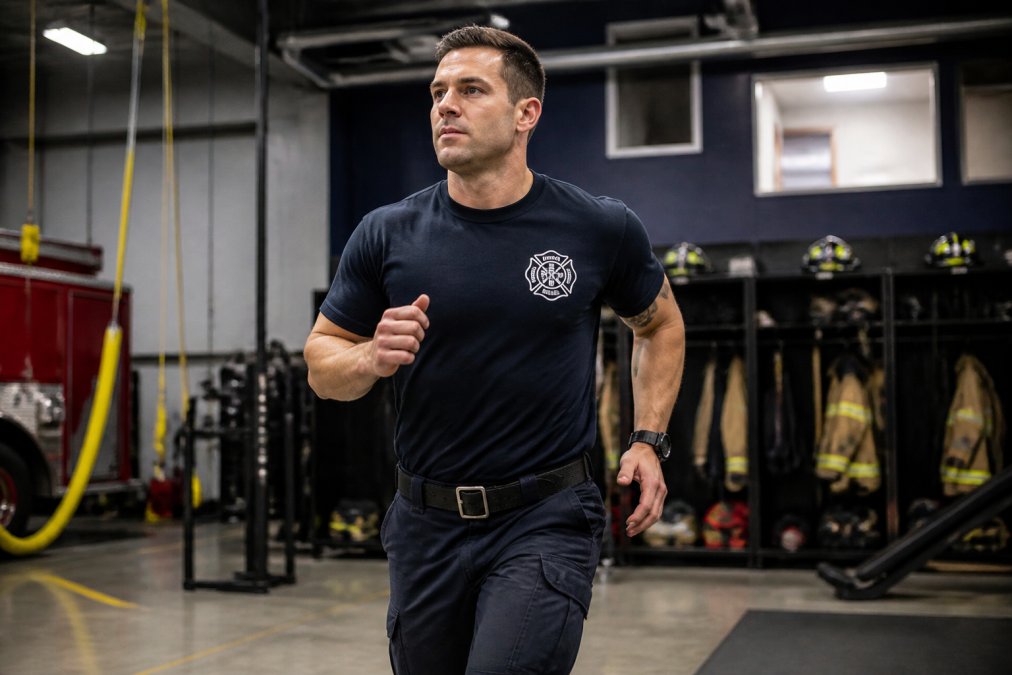
Black Helmet's premium tees, like the Firehouse Standard Premium Tee, use 100% combed and ring-spun cotton with pre-shrunk fabric to deliver authentic comfort without the shrinkage problem. For those who prefer added durability and easier care, options like the Plug Brew Premium Tee combine cotton with polyester in a blend designed specifically for the demands of station wear.

Cotton-blend shirts maintain shape better through repeated washing, resist staining more effectively, and require less ironing, saving time on maintenance and extending gear lifespan.
NFPA 1975 Standards for Station Wear
The standard requires fabrics to resist ignition and maintain structural integrity under heat exposure, important because station wear may be exposed to unexpected thermal hazards around the station.
Material Composition: Nomex, Aramid, and Natural Fibers
Cotton brings comfort and breathability.
Cotton-based blends provide the durability and comfort most firefighters want for daily wear.
Strategies to minimize skin sensitivity:
-
Choose natural-fiber-dominant blends (70-80% cotton, 20-30% polyester) over high-synthetic content for reduced irritation risk.
-
Wash new station shirts 2-3 times before full shifts to remove loose dyes and finishing agents. Use mild detergent and avoid fabric softeners.
-
Avoid fabric softeners and dryer sheets, which trap sweat and chemical residues against skin.
-
Layer a moisture-wicking base layer under station wear if irritation persists to reduce direct contact with irritants.
Wildland firefighters and rescue professionals prefer natural-fiber blends for extended wear, valuing breathability and comfort. The Wildland Fireline Premium Tee uses 100% combed and ring-spun cotton for crews working extended shifts.

Moisture Management and Long-Shift Performance
Station shifts can stretch 12-24 hours, and a shirt that traps sweat against the skin becomes uncomfortable quickly. Moisture-wicking fabrics pull sweat away from the body and allow it to evaporate, keeping firefighters dry and comfortable during extended periods of wear.
Cotton naturally wicks moisture, but it absorbs and holds sweat rather than dispersing it. Polyester blends improve moisture management by allowing faster evaporation. The best station shirts combine natural fibers for comfort with synthetic components that enhance moisture dispersal.
Breathability, the fabric's ability to allow air circulation, works alongside moisture management. A dense, tightly woven fabric might be durable but can feel hot and restrictive during long shifts. The ideal station shirt balances durability with enough breathability to keep firefighters comfortable when they're moving around the station, training, or responding to calls.
Fabric weight is a critical but often overlooked factor in long-shift comfort. Fabric weight is measured in ounces per square yard (oz./yd.²) and directly affects how a shirt performs over 12-24 hour shifts:
Firehouse Standard Premium Tee →
-
Lightweight fabrics (4-5 oz./yd.²): Feel breathable and comfortable during extended wear, especially in warm station environments or during physical training. They dry quickly after washing and don't create heat buildup under turnout gear during layering. The trade-off is that lighter construction requires reinforced seams and quality stitching to resist pilling and stress damage. Wildland firefighters and rescue professionals often prefer this weight for long shifts in variable conditions.
-
Mid-weight fabrics (5.5-6.5 oz./yd.²): Offer a balance between durability and comfort. They feel more substantial than lightweight options without becoming restrictive, and they typically hold their shape better through repeated washing. This weight is common in premium station wear because it resists pilling while maintaining good moisture dispersal.
-
Heavier fabrics (7+ oz./yd.²): Provide maximum durability and a more substantial feel, but can trap heat and feel sluggish during active duty or long shifts, especially in warm climates. They're better suited for structural firefighters in cool regions who prioritize durability over extended-wear comfort.
Climate and role matter when choosing weight. A firefighter in the Southwest working 24-hour shifts in a warm station benefits from 4-5 oz./yd.² fabric that breathes well. A structural firefighter in a cool climate who wears station wear primarily during training and administrative time can handle mid-weight or heavier fabric without discomfort.
Moisture management also depends on fiber blend and weave construction. A 50/50 cotton-polyester blend at 5 oz./yd.² will outperform a 100% cotton shirt at the same weight because the polyester component accelerates evaporation. Conversely, a tightly woven 100% cotton at 6 oz./yd.² may feel less breathable than a loosely woven cotton-poly blend at 4.5 oz./yd.², even though it weighs more.
Firefighter Apparel Maintenance Tips
How you care for station wear directly affects how long it lasts. Proper laundering preserves fabric integrity, maintains flame-resistant properties, and prevents premature wear and fading.
Use industrial-grade detergent designed for duty wear, and avoid fabric softeners, which can coat fibers and reduce moisture-wicking. Wash in hot water if the fabric allows it, many station shirts benefit from hot water washing that removes sweat and oils more effectively. Check the care label first; some blends perform better in warm water.
Dry station wear on low heat or air dry when possible. High heat can damage synthetic fibers and cause unnecessary shrinkage, even in pre-shrunk fabrics. Removing shirts from the dryer while slightly damp and laying them flat prevents wrinkles and reduces the need for ironing.
Inspect seams and hems regularly for signs of stress or separation. Station wear gets pulled, stretched, and stressed during physical activity, catching seam issues early prevents them from spreading. Reinforced seams and shoulder-to-shoulder taping resist this stress better than basic construction.
Store station wear in a cool, dry place away from direct sunlight. UV exposure fades colors and can degrade synthetic fibers over time. For departments managing bulk inventory, proper storage extends the life of entire uniform stocks.
Choosing the Right Shirt for Your Needs
The right station shirt depends on your specific role, climate, and how you'll use it. Structural firefighters in cool climates might prioritize durability and thermal protection. Wildland firefighters and rescue professionals in warm environments need maximum breathability alongside durability. Retirees and supporters wearing station wear casually can focus on authentic design and comfort.
Consider fabric composition first. Pure cotton offers comfort but requires careful laundering. Cotton-polyester blends balance comfort, durability, and ease of care.
Weight matters too. Lighter fabrics (4-5 oz./yd.²) feel comfortable for long shifts but need solid construction to resist pilling and stress. Heavier fabrics feel more substantial but can be restrictive during active duty.
Check construction details: side-seamed construction, shoulder-to-shoulder taping, and reinforced seams all indicate a shirt built to last. These details prevent the common problems of warping, seam separation, and premature wear.
Black Helmet's lineup offers options for different needs. The Firehouse Standard Premium Tee delivers authentic comfort with durable pre-shrunk cotton. The Wildland Fireline Premium Tee prioritizes long-shift comfort with lightweight cotton construction. The Fire Rescue Thin Red Line Premium Tee combines durability with meaningful design for firefighters and medics who want their station wear to reflect their role.
| Consideration | What to Look For | Why It Matters |
|---|---|---|
| Fiber Composition | Cotton or cotton-dominant blend | Comfort and moisture management |
| Synthetic Content | 20-50% polyester | Durability and shrinkage resistance |
| Fabric Weight | 4-5 oz./yd.² | Balance of comfort and durability |
| Construction | Side-seamed, shoulder taping | Prevents warping and seam failure |
| Care Requirements | Pre-shrunk, low-heat dry | Extends lifespan and maintains fit |
| Flame Resistance | NFPA 1975 compliance | Meets safety standards for station wear |
Choosing durable fabrics for firefighter station shirts means understanding the balance between comfort, durability, and practical care.
Frequently Asked Questions
What is the best fabric for firefighter station shirts?
The best fabric depends on your priority. Pure cotton offers breathability and comfort for long shifts. Cotton-polyester blends provide durability, wrinkle resistance, and easier care while maintaining comfort. Most firefighters balance comfort with practicality by choosing pre-shrunk cotton or quality cotton-blend station shirts that withstand regular washing.
Do firefighter station shirts need to be flame resistant?
Station shirts don't require flame-resistant certification like turnout gear does. Non-FR cotton and cotton-blend shirts are standard and acceptable in most departments. The key is choosing durable fabrics that maintain their integrity through repeated laundering and can handle the demands of station wear without tearing or degrading.
How do I maintain the durability of my station shirts?
Proper care extends shirt life significantly. Dry on low heat or air-dry to prevent shrinkage and fiber damage. Turn shirts inside-out before washing to reduce fading and pilling. Follow care labels closely, pre-shrunk fabrics still benefit from gentle handling.
What are the benefits of blended fabrics for duty shirts?
Polyester blends with cotton combine the best of both materials. Cotton provides breathability and comfort; polyester adds durability, wrinkle resistance, and easier maintenance. Blended fabrics dry faster, resist pilling, and maintain their shape through repeated washing. They also offer better tensile strength, meaning they're less likely to tear during physical activity. For firefighters managing multiple shirts across busy schedules, blends reduce ironing time and extend garment life.
