

Best Firefighter Accessories for Work
Table of Contents
- Essential Pocket Tools for Firefighters
- Turnout Gear Pocket Organization and Quick-Access Systems
- Best Firefighter Flashlight for Structural Firefighting
- Wallets and Carry Gear Built for the Fireground
- Multi-Purpose Tools and Rescue Knives
- Off-Duty and Station Accessories That Honor the Service
- Maintenance and Care for Your Firefighter Gear
- Conclusion
Last Updated: August 14, 2026
Essential Pocket Tools for Firefighters
Firefighter accessories aren't luxury items, they're survival tools. The right pocket tools can mean the difference between a controlled operation and a chaotic one. When you're working on the fireground, every second counts, and fumbling for gear you can't find costs lives.
The essential firefighter accessories for work start with what fits in your turnout gear pockets: a quality multi-tool, a reliable flashlight, and a rescue knife. These are engineered for the specific demands of structural firefighting: durability under extreme heat, functionality with gloved hands, and quick accessibility when visibility drops to zero.
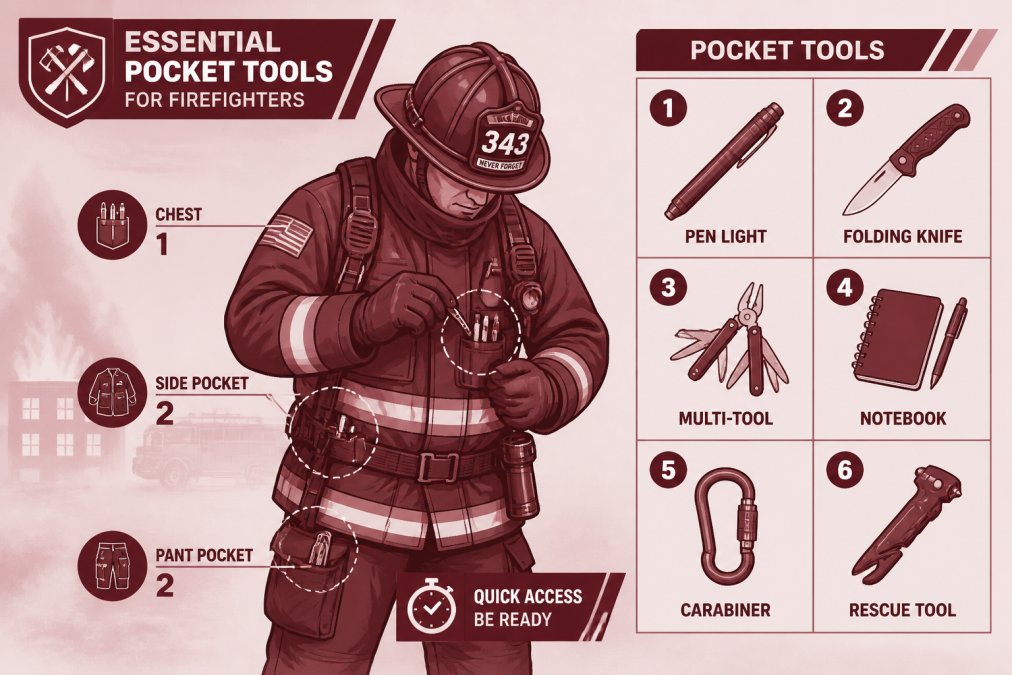
A common mistake is treating pocket tools as afterthoughts. Many firefighters grab whatever's on sale, only to find tools fail at critical moments or slow you down when speed matters most. The solution is intentional selection based on what actually works on the job. At Black Helmet, we understand that firefighter accessories reflect your commitment to the job. Start with the basics: a multi-tool designed for rescue operations, a flashlight rated for structural firefighting, and a knife that won't fail when you need it most.
Turnout Gear Pocket Organization and Quick-Access Systems
Organizing your turnout gear pockets is about muscle memory and survival. When conditions deteriorate and visibility drops, you need to find what you need without looking. High-frequency tools go in high-access pockets. Secondary tools and backup items go deeper.
Most departments have standard operating procedures for gear organization. When crews work together, knowing where each person's tools are located creates accountability and efficiency. A firefighter who can't find their carabiner in darkness puts the whole team at risk.
The best firefighter accessories for work are the ones you can access with your eyes closed and gloved hands. This means choosing tools with distinct shapes, secure attachment points, and logical placement. Weight distribution matters more than most guides acknowledge. Unbalanced gear creates fatigue during long operations. Spread your load and keep your center of gravity balanced.
Consider dedicated carry systems designed specifically for turnout gear. Whatever system you choose, stick with it. Your crew should know exactly where to find your tools if they need them.
Best Firefighter Flashlight for Structural Firefighting
The best firefighter flashlight for structural firefighting isn't the brightest one, it's the one that works when everything else fails. Brightness matters, but reliability matters more.
Structural firefighting flashlights need specific features: solid construction from aircraft-grade aluminum, LED technology with minimal power draw, waterproof rating of at least IPX8, and a beam pattern designed for close-range visibility in smoke. The best models produce between 200-500 lumens.
Mounting options matter. A helmet-mounted flashlight frees your hands and keeps the beam where you're looking. A pocket flashlight serves as backup. Most experienced firefighters carry both. This redundancy has saved lives during equipment failures.
Battery life directly impacts reliability. Lithium batteries offer better performance in extreme temperatures. Know your battery choice and understand its limitations. The weight of your flashlight affects fatigue during extended operations. Most quality firefighter flashlights weigh between 4-8 ounces, which balances durability with carrying comfort.
Wallets and Carry Gear Built for the Fireground
Your wallet won't survive the fireground if it's standard civilian gear. It gets crushed in your turnout gear pockets, and the leather cracks from heat and decontamination.
The best firefighter accessories for work include wallets designed from actual decommissioned bunker gear. This isn't marketing, it's practical. Used bunker gear has already proven its durability under the worst conditions.
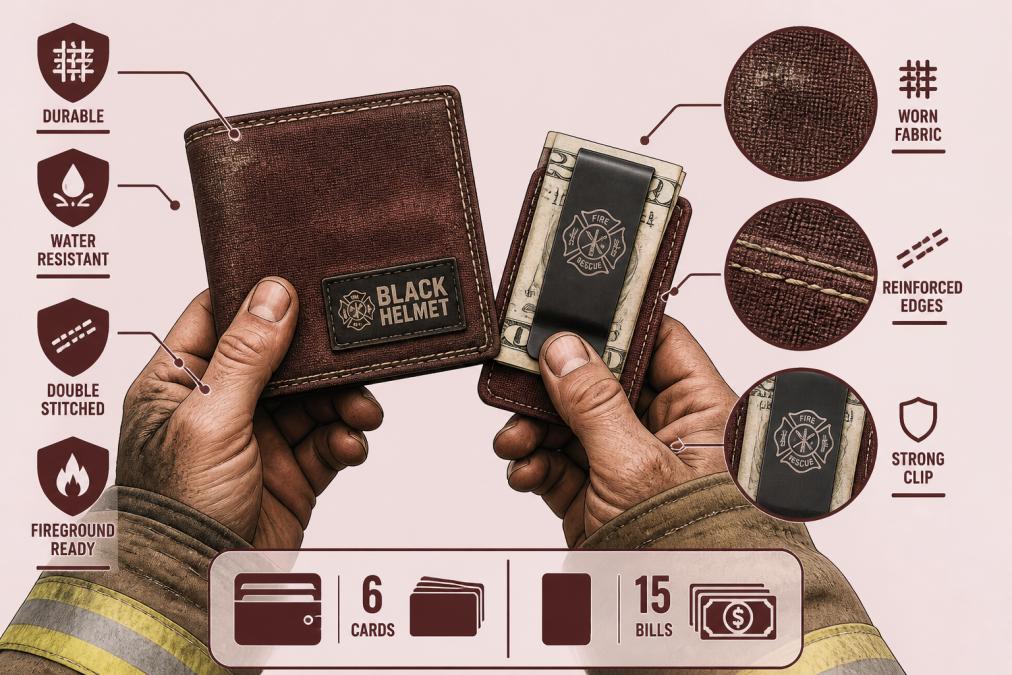
Black Helmet created the original bunker gear wallet. Our Badge Bifold wallet starts at $52 and is made in the USA from real decommissioned bunker gear. Each wallet is unique because the fabric patterns vary from actual gear that's been worn and worked in. The Black Helmet Used Bunker Gear Money Clip ($45) works for firefighters who travel light or prefer minimal pocket bulk.

What separates quality carry gear from cheap alternatives is how it handles repeated stress. A standard wallet lasts a few months before falling apart. Bunker gear material lasts years because it's engineered for abuse. The stitching doesn't fray. The closure mechanism doesn't fail.
Accountability tags and ID holders are different from wallets. Your ID needs to be findable by rescue crews if you become incapacitated. Dedicated carry systems serve this purpose better than standard civilian wallets buried in pockets.
Multi-Purpose Tools and Rescue Knives
A multi-tool on the fireground isn't the same as a camping multi-tool. You need tools that work with one hand, blades that cut through materials your training taught you to expect, and durability that survives repeated use in extreme conditions.
The best multi-tools for firefighters include a blade sharp enough to cut through rope and webbing, a serrated edge for cutting through binding material, a glass breaker for emergency window access, and a carabiner attachment point. Most professional-grade models include a pry bar for forcing entry on jammed mechanisms.
A rescue knife is different from a utility knife. A straight edge is faster for cutting rope. A serrated edge handles tough materials better. A hook-style blade is designed specifically for cutting seatbelts and webbing without puncturing occupants. Understand your knife's design and practice with it.
Carabiner selection matters. A standard carabiner holds gear. A locking carabiner prevents accidental opening. A load-bearing carabiner rated for rescue operations can support your weight. Know the difference and the rating of every carabiner in your gear.
Spanner wrenches are specialized tools often overlooked. They're designed for specific fireground tasks: adjusting hydrant connections, working with standpipe systems, and manipulating equipment under pressure. If your department uses these tools, carry one.
Off-Duty and Station Accessories That Honor the Service
Not every firefighter accessory is designed for the fireground. The gear you carry off-duty and the items in your station locker tell a different story about identity and connection to the brotherhood.
Station accessories range from practical to ceremonial. A quality duffel bag like The Signal Everyday Duffel ($86.50) works for carrying gear to and from the station. It's 22 inches, carry-on friendly for most airlines, and designed with multiple pockets for organization.

Off-duty gear serves a different purpose. A paracord keychain with carabiner ($8) is 4.5 feet of survival cord deployable in emergency situations. A silicone wristband with the thin red line ($3) represents your commitment to the service.
The Plug Brew 20oz Stainless Steel Tumbler ($36.50) is made from high-grade stainless steel with a metal straw included. Station culture includes shared meals and shared moments. Quality drinkware is part of that culture.
The Off-Duty Tread Doormat ($46.50) is constructed from heavy-duty natural coconut husk fiber, inspired by the diamond plate steel that lines apparatus bays. It marks the threshold between work and home. The Into the Heat Firefighter Notebook ($17.50) features 140 dotted pages and a wire-o binding. Use it for shift notes, workout logs, or training records.
Maintenance and Care for Your Firefighter Gear
Firefighter accessories require maintenance protocols that standard gear doesn't need. Decontamination happens after every exposure to hazardous materials. Regular cleaning prevents buildup. Proper storage extends lifespan.
Bunker gear wallets made from decommissioned material need specific care. After exposure to contaminants, wipe them down with appropriate decontamination solution. Allow them to dry completely before storing. Don't leave them in direct sunlight for extended periods.
Flashlights require regular battery checks and lens cleaning. A cloudy lens reduces beam effectiveness. Check battery contacts for corrosion. Replace batteries on a schedule rather than waiting for failure.
Multi-tools and rescue knives need blade maintenance. A dull blade is dangerous because it requires more force and is more likely to slip. Sharpen blades regularly and wipe them clean after each use. Test your gear regularly.
Carabiners should be inspected for damage before each use. Look for cracks, bent gates, or corrosion. A compromised carabiner needs replacement, not repair. This isn't an area where you improvise or take chances.
Department standard operating procedures govern how gear is maintained and stored. Follow them. They exist because experience has taught lessons about what works and what fails.
The best firefighter accessories for work are the ones you maintain, understand, and trust completely. They're not status symbols. They're tools that reflect your commitment to doing the job right, protecting your crew, and coming home safe. Black Helmet has served the firefighter community since 2008 because we understand that these accessories carry real weight. When you choose gear designed by people who understand the fireground, you're choosing reliability over marketing and authenticity over novelty.
Frequently Asked Questions
What should every firefighter carry in their turnout gear pockets?
Every firefighter should carry essential items that support accountability, communication, and safety. A radio strap keeps your communication device secure and accessible. A carabiner or multi-tool provides quick-access utility for unexpected situations. A personal identification tag or accountability tag is critical for incident command tracking. A rescue knife offers emergency cutting capability. A flashlight with backup batteries ensures illumination in zero-visibility conditions. A wallet or money clip keeps ID and credentials organized without adding bulk. The key is balancing quick access with load-bearing comfort during extended fireground operations.
How do you organize firefighter gear in turnout pockets for quick access?
Effective pocket organization follows the principle of accessibility and weight distribution. Place frequently used items like your radio strap, flashlight, and carabiner in front pockets where you can reach them without looking. Reserve larger pockets for heavier items like multi-tools or rescue knives, distributing weight evenly across both sides of your turnout gear. Use load-bearing vests or tactical gear to manage weight distribution and prevent shoulder strain during long shifts. Label pockets or use color-coded gear to help crew members quickly locate shared equipment. Consistent organization across your station ensures accountability and faster response during emergency situations.
Are there specific standards for personal firefighter accessories?
The National Fire Protection Association (NFPA) establishes standards for personal protective equipment and turnout gear through NFPA 1971 and NFPA 1975. While these standards focus on protective clothing and ensemble requirements, they do not specifically regulate pocket accessories. However, your fire department's standard operating procedures (SOP) will dictate which accessories are approved for duty wear. Many departments require accountability tags, radio straps, and identification systems that comply with incident command protocols. Always check your department's policy before purchasing or carrying non-standard gear. This ensures compliance and maintains operational safety across your crew.
What makes a firefighter wallet or carry accessory durable for the fireground?
Durable firefighter wallets are built from materials that withstand heat, moisture, and constant use. Real decommissioned bunker gear fabric offers authenticity and proven durability because it's already been tested in actual fireground conditions. Look for wallets with reinforced stitching, minimal bulk to prevent discomfort under turnout gear, and secure closures that won't spill contents during active operations. Money clips and bifold designs offer faster access than traditional wallets. Materials made in the USA from actual used bunker gear tend to last longer than synthetic alternatives because they're built from equipment designed for the job. Quality construction directly impacts how long your carry gear will serve you through your career.
This article was written using GrandRanker
