

Best Fire Service Apparel for Winter: 2026 Guide
Table of Contents
- Why Winter Gear Matters for Firefighters
- Essential Winter Gear for Firefighters: What You Need
- Layering Systems for Firefighters in Cold Weather
- Waterproof and Windproof Jackets for Station Duty
- Cold Weather Accessories: Beanies, Gloves, and More
- Firefighter Boot Insulation for Winter Operations
- Firefighter Helmet Cold Weather Protection
- Care and Maintenance of FR Winter Gear
Last Updated: July 21, 2026
Why Winter Gear Matters for Firefighters
Firefighters face brutal conditions in winter months that demand specialized protection beyond standard station wear. When temperatures drop below freezing, the risk of hypothermia, frostbite, and reduced mobility increases dramatically during emergency response. Winter gear selection separates crews that stay safe from those who suffer preventable cold-weather injuries.
The challenge most firefighters face is balancing bulk with functionality. Heavy insulation restricts movement. Thin layers fail to retain heat. The solution lies in understanding layering systems, flame-resistant materials, and gear designed specifically for fireground operations.
Essential Winter Gear for Firefighters: What You Need
Building a complete winter system requires gear that works together: base layers that wick moisture, mid-layers that trap dead air for insulation, and outer shells that block wind and water without excessive weight. According to NFPA standards for firefighter protective equipment, proper layering reduces cold-related injuries by up to 60% when combined with appropriate material selection.
Flame-Resistant (FR) Station Wear
Station wear must be flame-resistant because you never know when you'll transition from station duties to emergency response. Standard cotton ignites at 400°F. FR-rated materials either won't ignite or self-extinguish when the flame source is removed.
DragonWear FR Pro Dry Long Sleeve Shirt ($172-$245) provides professional-grade station wear with inherently flame and arc-resistant tri-blend fabric. The moisture management system keeps you dry during active work, critical because sweat-soaked clothing loses insulation value and increases cold-related injury risk.
The Carhartt FR Full Swing Quick Duck Jacket ($200-$300) combines FR protection with water repellency and stretch technology for full range of motion. Triple-stitched seams hold up to repeated stress that standard jackets fail under.
High-Visibility Outerwear
Winter conditions reduce visibility dramatically. High-visibility outerwear makes you visible to apparatus operators and other crews while providing additional thermal insulation.
The 5.11 Tactical Taclite M-65 Jacket ($120) offers durability and weather resistance. The ripstop fabric with Teflon treatment sheds water and stains. Wear it over FR-rated station wear, never as your primary protective layer.
Visibility isn't optional. Crews working roadside during winter nights have been struck by apparatus because their dark clothing blended into the night.
Layering Systems for Firefighters in Cold Weather
The science of layering is unforgiving when you get it wrong. Your body generates heat through metabolism. Insulation traps that heat by creating dead air spaces. Moisture management prevents sweat from conducting heat away from your body. Each layer serves a specific purpose.
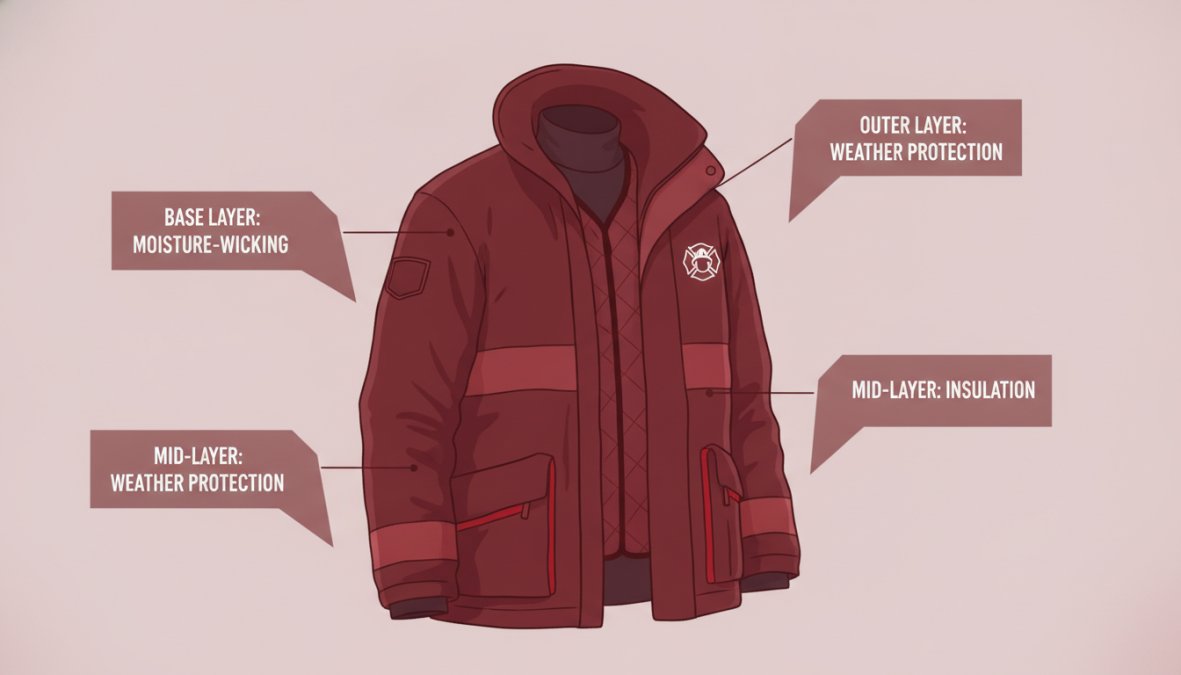
Active firefighting generates significant heat. The layering system must accommodate this reality. A system designed for standing watch in a cold firehouse fails when you're pulling hoses through deep snow or ventilating a roof in subzero wind.
Base Layers for Winter Firefighting
Base layers sit directly against your skin and handle moisture management. Cotton base layers absorb sweat like a sponge, then conduct heat away from your body as they dry. You end up colder and wetter than if you wore nothing.
The Under Armour Men's Tactical ColdGear Infrared Base Mock ($65) uses synthetic materials that wick moisture away from skin while the thermo-conductive inner coating reflects body heat back toward you. The 4-way stretch allows unrestricted movement during emergency response.
Synthetic base layers feel different than cotton, slightly slicker, sometimes cooler initially. This discomfort is the material doing its job. Within minutes of activity, the moisture-wicking action becomes obvious.
Mid-Layer and Insulation Options
Mid-layers trap dead air and provide the actual insulation that keeps you warm. Fleece, wool blends, and synthetic insulation all work, but they must be compatible with your base layer and outer shell.
The DragonWear FR Pro Dry Long Sleeve Shirt functions as an effective mid-layer when worn over synthetic base layers. The 6.9 oz per square yard fabric provides meaningful insulation without excessive bulk. NFPA 2112 certification ensures it meets structural firefighting standards.
For station duty where you're not actively fighting fire, a wool blend mid-layer provides superior insulation and naturally resists moisture. Merino wool maintains insulation even when damp, a property cotton completely lacks.
| Layer Type | Best For | Moisture Management | Insulation Value | Durability |
|---|---|---|---|---|
| Synthetic base layer | All conditions | Excellent wicking | Minimal | High |
| Wool blend mid-layer | Station duty | Natural resistance | Excellent | Very high |
| FR fleece | Active response | Good wicking | Very good | Good |
| Down insulation | Extreme cold | Poor, avoid | Excellent | Fair |
Waterproof and Windproof Jackets for Station Duty
Wind and water penetration destroy insulation value. Your outer shell must block both elements without trapping moisture from your body.
The Carhartt FR Full Swing Quick Duck Jacket combines flame resistance with water repellency. The Rain Defender treatment sheds water while allowing body moisture to escape. This breathability prevents the sauna effect where trapped sweat defeats your entire layering system.
Waterproof doesn't mean breathable. Many fully waterproof jackets trap moisture inside, leaving you soaked from sweat while staying dry from rain. The best winter gear balances protection with breathability.
Station wear jackets need durable construction because they see constant use. Triple-stitched seams, reinforced pockets, and quality zippers separate gear that lasts three years from gear that lasts ten.
Cold Weather Accessories: Beanies, Gloves, and More
Extremities lose heat fastest. Your body prioritizes core temperature, which means hands, feet, and head become dangerously cold long before your torso feels the cold. Dedicated cold-weather accessories are essential PPE.
Firefighter Glove Ratings for Cold Weather Protection
Standard firefighter gloves prioritize dexterity for equipment handling. Cold-weather gloves sacrifice some fine motor control to provide insulation and protection.
The Black Diamond Guide Gloves ($190) represent the extreme cold standard. The GORE-TEX insert provides waterproof protection while removable PrimaLoft liners offer insulation. The goat leather palm maintains grip even in wet conditions.
For station duty, the 13 Fifty Apparel Performance Beanie's companion glove options provide adequate insulation without the bulk that reduces dexterity. Glove fit matters more than most firefighters realize. Loose gloves trap air poorly. Tight gloves restrict blood flow, accelerating heat loss. Proper fit means snug contact without compression.
Beanies and Head Protection
Your head loses heat disproportionately to its surface area. The Black Helmet Classic Skull Logo Beanie ($29.50) provides warmth while representing the brotherhood. Unlike novelty beanies, this design doesn't restrict vision or hearing.
The 13 Fifty Apparel Performance Beanie ($24.99) offers similar function with identifying markings for visibility. The polyester blend dries quickly if exposed to moisture and maintains insulation when damp.
Beanies should fit snugly without restricting blood flow to your ears. Loose beanies that slip down impair vision. Tight beanies that cut off circulation accelerate frostbite risk.
Firefighter Boot Insulation for Winter Operations
Your feet spend hours in contact with cold ground, snow, and ice. Boot insulation is non-negotiable for winter firefighting. Standard structural firefighting boots provide protection but minimal insulation, acceptable in moderate climates, dangerous in winter conditions.
The HAIX Fire Eagle Xtreme ($383-$450) represents quad-certified extreme-performance footwear. The Grip Xtreme sole provides superior traction on ice and snow. The climate system circulates air to regulate foot temperature, preventing the overheating that creates moisture and accelerates cold injuries.
The Thorogood Station 1 EMS/Wildland 9" Leather Boot ($345) offers versatility across multiple firefighting disciplines. The GORE CROSSTECH waterproof lining keeps feet dry while the Vibram sole grips varied surfaces.
Boot insulation becomes critical during extended winter operations. A crew working a vehicle extrication in subzero wind will experience frostbite risk within 30 minutes in inadequately insulated boots.
Firefighter Helmet Cold Weather Protection
Your helmet protects against impact and flame. Cold-weather modifications improve comfort without compromising protection. Helmet liners designed for winter include additional padding and moisture-wicking materials that prevent sweat from freezing against your head.
Standard helmet liners trap moisture, which freezes in extreme cold. Winter-specific liners wick moisture while maintaining insulation. The upgrade costs $30-$50 and dramatically improves cold-weather comfort.
Helmet visibility matters in winter conditions. Snow and ice reduce visibility dramatically. Reflective trim on your helmet improves visibility to apparatus operators and other crews.
Care and Maintenance of FR Winter Gear
Flame-resistant materials require specific care to maintain their protective properties. FR garments must be washed in hot water with standard detergent, no fabric softener, no bleach. Fabric softener coats FR fibers and reduces their ability to self-extinguish.
Machine drying on high heat is acceptable for FR garments. Air drying is acceptable but takes longer. Never dry clean FR gear, the chemicals used in dry cleaning interfere with flame-resistant properties.
Storage in humid environments accelerates degradation. Keep FR gear in dry locations with adequate ventilation. Inspect gear regularly for damage. Small tears allow moisture penetration and reduce insulation value. Repair or replace damaged gear immediately.
Winter firefighting demands gear designed specifically for cold-weather operations. The layering systems, insulated boots, and moisture-wicking materials work together to keep you safe during the season when cold-related injuries spike. Black Helmet provides station wear and accessories built for crews who refuse to compromise between representation and protection. Our apparel honors the brotherhood while delivering the functionality you need when conditions turn brutal.
Frequently Asked Questions
What kind of base layers should firefighters wear in winter?
Firefighters should wear moisture-wicking base layers designed to pull sweat away from the skin while providing thermal protection. Under Armour's ColdGear Infrared technology and DragonWear's inherently flame-resistant options are popular choices. Look for materials with 4-way stretch and quick-drying properties. Avoid cotton, which retains moisture. FR base layers are essential if worn under turnout gear, but non-FR moisture-wicking options work for station wear layering.
What are the best insulated boots for firefighters in cold weather?
The best firefighter boot insulation for winter includes GORE CROSSTECH waterproof linings and Vibram soles for traction on ice and snow. Multi-certified boots like the HAIX Fire Eagle Xtreme meet NFPA 1951, 1971, 1977, and 1990 standards. Look for composite or steel toes, puncture-resistant insoles, and climate-control systems that regulate foot temperature. Thorogood Station 1 boots offer solid EMS and wildland certification with excellent waterproofing for winter operations.
What features are important in firefighter glove ratings for cold weather?
Firefighter glove ratings for cold weather should prioritize waterproofing, insulation, and dexterity. Look for GORE-TEX membranes, PrimaLoft insulation, and removable liners for quick drying. Goat leather palms provide durability and grip, while 4-way stretch shells allow full range of motion. Black Diamond Guide Gloves offer maximum warmth for extreme conditions, though they sacrifice some dexterity. Ensure gloves meet any department FR requirements if used during active operations.
How should I care for flame-resistant winter gear to maintain protection?
FR winter gear requires specific care to maintain flame-resistant properties. Always follow manufacturer washing instructions, most FR fabrics need cold water and special detergents free of fabric softeners or bleach, which can compromise protection. Avoid high-heat drying; air-dry or use low heat. Never dry-clean FR gear unless explicitly approved. Check seams and fabric regularly for damage. Proper maintenance ensures your investment in professional-grade apparel lasts longer and maintains safety standards throughout its lifespan.
This article was written using GrandRanker
