

NFPA 1851 Inspection Checklist for Fire Chiefs: How?
Quick Summary
An NFPA 1851 inspection checklist for fire chiefs turns the standard's care and maintenance rules for turnout gear into a repeatable form crews can use every shift. It should cover routine checks by firefighters and advanced checks by a qualified person, with records kept for each ensemble.
- Routine inspections look for visible damage, soiling, and anything that stops gear from working as designed.
- Advanced inspections are done by a qualified person and include a full review of the liner system.
- Check the moisture barrier and thermal liner, since a shell-only check misses the parts most likely to hide damage.
- Record every checklist result, defect note, disposition, and corrective action for each ensemble.
- Remove gear from service with cracks, liner holes, missing reflective trim, or a failing helmet suspension, and tag it.
Table of Contents
- What NFPA 1851 Requires for Turnout Gear Inspections
- Structural Firefighting Ensemble Components to Inspect
- Building a Firefighter PPE Inspection Checklist Step by Step
- Routine PPE Inspection Procedure for Department Staff
- Turnout Gear Inspection Form and Recordkeeping
- Firefighter PPE Out-of-Service Criteria
- Putting Your Inspection Program Into Practice This Week
- Frequently Asked Questions
What NFPA 1851 Requires for Turnout Gear Inspections
NFPA 1851 sets the rules for caring for firefighting protective ensembles, and an NFPA 1851 inspection checklist for fire chiefs turns those rules into something your crew can follow every shift. The standard covers selection, care, and maintenance of turnout gear.
The routine inspection is the first level of any nfpa 1851 inspection checklist, carried out by the firefighters who wear the gear. Firefighters themselves carry it out, usually after a call or at the start of a shift. A routine check looks for visible damage, soiling, and anything that prevents the gear from working as designed. Advanced inspections go deeper and are handled by a qualified person. They include a full review of the liner system and documentation of the findings.
NFPA 1851 also calls for documentation of advanced inspections. That record is what proves your department followed the standard, so treat it as part of the job, not paperwork you add later.
Watch out: a routine check that only looks at the outer shell misses the moisture barrier and thermal liner, the parts most likely to hide damage.
Structural Firefighting Ensemble Components to Inspect
A structural ensemble has several parts, and each one needs its own look during inspection. The main components are the coat, trousers, helmet, protective hood, gloves, and footwear. Some ensembles also include a suspension system and retention system inside the helmet.
Each component has a job. The outer shell resists heat and abrasion. The thermal liner and moisture barrier protect against heat and water. The hood and gloves protect the skin around the head and hands. If any one part fails, the whole ensemble loses protection.
Use this table as a quick reference during inspections:
| Component | What to Check | Common Problem |
|---|---|---|
| Coat and trousers | Outer shell, reflective trim, liner system | Cracks, abrasions, missing trim |
| Helmet | Shell, suspension, retention system | Cracks, loose straps |
| Hood | Seams, face opening, fabric | Thinning, holes |
| Gloves | Palms, seams, cuffs | Wear at fingertips |
| Footwear | Soles, uppers, closures | Separation, worn tread |
Building a Firefighter PPE Inspection Checklist Step by Step
A written checklist gives every inspector the same starting point, but the form itself has to be usable in a station bay with gloves on. Build yours around the ensemble components above, give every line a pass, fail, and defect-notes field, and add a disposition column so the inspector records what happened next, returned to service, tagged out, sent for advanced inspection, or retired.
Follow these steps to build it:
- List every ensemble component your department issues, including the coat, trousers, helmet, hood, gloves, and footwear.
- Write one line per inspection point, such as "outer shell free of cracks and tears" or "reflective trim intact and visible."
- Add a pass/fail box next to each line, plus a short defect-notes field.
- Add a disposition field: return to service, tag out for advanced inspection, repair, or retire.
- Add the inspector's name, the date, the gear ID, and the shift or station.
- Review the form each year and update it when your gear or the adopted edition of NFPA 1851 changes.
A consolidated checklist that combines routine and advanced inspection points in one document is more useful than two separate forms, because it lets a chief see at a glance which items were checked at which level. Keep the routine items at the top for daily use and the advanced items in a clearly marked section for the qualified person.
Coat and Trouser Inspection Points
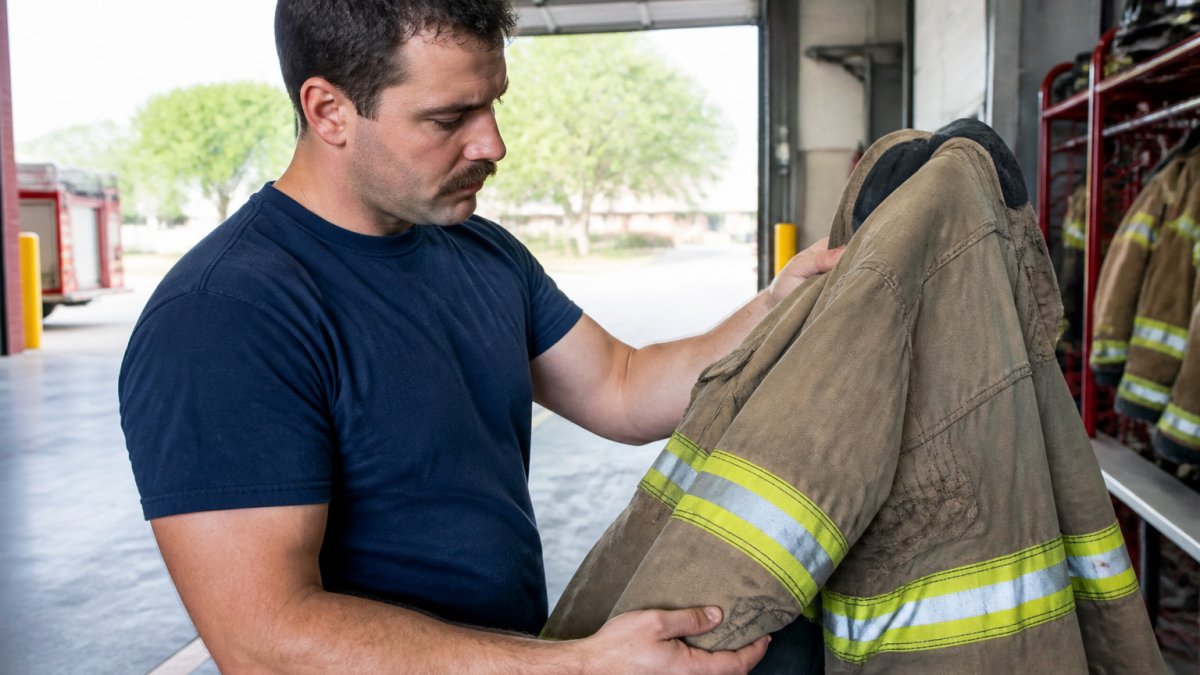
Start with the outer shell. Run your hands over the fabric and look for cracks, tears, and thin spots. Check the reflective trim for fading or peeling, since it stops being visible once it wears down.
Next, check the closures and seams. Zippers should run smoothly, and Velcro should still grip. Look inside the liner for separation, tears, or holes. A damaged liner often shows up as a cold spot or a bunched area inside the coat.
Watch out: a coat that looks clean can still hide contamination. Soiled gear needs cleaning before inspection can be accurate.
Helmet, Hood, Gloves and Footwear Checks
Inspect the helmet shell for cracks and crazing, which look like fine lines across the surface. Test the suspension and retention system by pulling the straps and checking the buckles. Missing or loose parts mean the helmet comes out of service.
Check the hood for thinning fabric and holes, especially around the face opening. Look at glove palms and fingertips for wear, and test that seams are intact. For footwear, look at the sole, the upper, and any closures. Separated soles and worn tread are common and easy to miss.
Routine PPE Inspection Procedure for Department Staff
Routine inspections should be quick, consistent, and easy to repeat. Assign them to the crew members who use the gear every day, since they are the ones most likely to spot a problem first.
Set a routine schedule. Many departments check gear after every structure fire and at the start of each shift. Give crews a short procedure card they can carry, with the same pass and fail items as your full checklist.
Routine checks should cover the outer shell, closures, reflective trim, helmet, hood, gloves, and boots. If a crew member finds a problem, the gear should be tagged, pulled from service, and reported to the officer in charge. Nobody should try to fix damaged gear on the fireground. If replacement is on the table, compare PFAS-free turnout gear brands and buying criteria before you order.
Watch out: a routine check does not replace the advanced inspection. Both levels are required, and each one is only useful if it is recorded.
Turnout Gear Inspection Form and Recordkeeping
Records prove that inspections happened and show when action was taken. Your inspection form should capture the gear's identification, the date, the inspector's name, each checklist result, any defect notes, the disposition, and the corrective action taken. Keep one record per ensemble and tie each record to the firefighter's assigned gear so you can track history over time.
A chief-focused recordkeeping system covers three areas:
- Audit readiness. Store records in a central file or a simple tracking system the chief can review. If an inspector general, insurer, or grant reviewer asks for proof, you should be able to pull a complete history for any ensemble in minutes.
- Corrective-action closeout. Every failed item needs a follow-up entry: who approved the repair or replacement, when the gear returned to service or was retired, and what the final disposition was. A defect that is noted but never closed out is the most common audit finding.
- Inspection schedule tracking. Build a calendar or workflow for routine, advanced, and complete liner-system inspections, with reminders and records that help prevent overdue inspections.
Good records also make budget requests and replacement decisions easier. When you can show a pattern of failed liners or worn shells across a company, the case for spare gear or a replacement cycle is grounded in data rather than opinion.
NFPA guidance on cleaning and validating firefighter PPE
Firefighter PPE Out-of-Service Criteria
Gear should come out of service when it can no longer protect the wearer. Remove any ensemble with cracks in the shell, holes or thinning in the liner or moisture barrier, missing or damaged reflective trim, or a helmet with cracks, crazing, or a failing suspension.
Document each removal. Write down what failed, when you found it, and who removed the gear from service. Tag the gear so no one wears it by mistake. Then decide whether it can be repaired, must be replaced, or should be retired. If replacement is the answer, review PFAS-free turnout gear options and verification steps before you buy. Your department policy should spell out who makes that call.
Putting Your Inspection Program Into Practice This Week
Start small. Pick one shift, print your checklist, and walk through each ensemble with your crew. When replacements come up, follow the English PFAS-free turnout gear buying guide to plan the purchase. Note what slows the process down and fix it before you roll out the program department-wide.
Then set a fixed schedule for routine and advanced inspections, assign owners for each task, and review the records every month. Use the first few weeks to train inspectors on what each check looks for.
NFPA guidance on cleaning and validating firefighter PPE
MSA Safety's explanation of the consolidated NFPA 1850 standard
FireRescue1's guide to inspecting firefighter gear under NFPA 1851
Frequently Asked Questions
What should be included in a firefighter PPE inspection checklist?
A firefighter PPE inspection checklist should cover every element of the structural ensemble: the outer shell, thermal liner, moisture barrier, coat and trouser closures, reflective trim, helmet, protective hood, gloves and footwear. For each item, record whether it passes, needs repair, or must be removed from service. Note cracks, crazing, abrasions, missing components, contamination and damaged closures. Include the gear's manufacture date, inspector name, and date of inspection so the record supports your department's NFPA 1851 compliance program.
How often should structural firefighting PPE be inspected?
NFPA 1851 separates routine inspections performed by the end user from advanced inspections performed by a qualified person. Routine inspections are generally done after each use or exposure to contamination, and advanced inspections are performed at intervals set by the department and the standard. Your department policy should state the schedule explicitly, and inspection records should show that the schedule was followed.
What defects require turnout gear to be removed from service?
Turnout gear should be removed from service when it has structural damage such as tears, burn holes, or separated seams, when the thermal or moisture barrier is compromised, or when closures and suspension components no longer function. Contamination that cannot be removed by approved cleaning, and missing components, also qualify. Document each removal, and mark the gear so it is not returned to service until it has been repaired or replaced.
What records should a fire department keep for PPE inspections?
Keep a maintenance log for each set of gear that records the inspection type, date, inspector, findings, any repairs, cleaning events, and final disposition. Retain the completed turnout gear inspection form alongside the log. Records should be easy to retrieve during audits, and they should show corrective actions taken for every defect found.

