

Moisture-Wicking Fabrics for Fire Station Uniforms
Table of Contents
- Why Moisture-Wicking Matters for Firefighters
- Best Fabric for Firefighter Station Wear
- Lightweight Clothes to Wear Under Turnout Gear
- Cotton vs Polyester Firefighter Uniforms
- How to Wash Moisture-Wicking Firefighter Shirts
- Fabric Performance: Drying Time, Breathability, and Durability
- Station Uniforms vs Structural Protective Gear
- Conclusion
- Frequently Asked Questions
Last Updated: October 8, 2026
Why Moisture-Wicking Matters for Firefighters
Firefighters spend hours in station uniforms between calls. Unlike turnout gear, station wear must keep you comfortable, dry, and ready during downtime, that's where moisture-wicking fabrics firefighter uniforms become essential.
Sweat builds up fast, whether you're training, running equipment checks, or moving through the station. Cotton holds moisture against your skin, causing discomfort and odor, while moisture-wicking fabrics pull sweat away and dry quickly.
Fabric choice affects how you feel, how your uniform performs over time, and how often you wash it. At Black Helmet, we know station wear is about comfort during long stretches between calls. Below, we'll show you how to choose the best moisture wicking fabrics firefighter uniforms actually need.
Best Fabric for Firefighter Station Wear
The best fabric for firefighter station wear balances breathability, durability, and moisture management. Most modern station uniforms use synthetic blends rather than pure cotton, because synthetics dry faster and resist odor better over time.
Synthetic Blends and Performance Polyester
Polyester dominates firefighter station wear: it wicks moisture effectively, dries in half the time cotton requires, and resists shrinking.
Pure polyester wicks and dries faster but can feel stiff and less breathable. The cotton adds softness and breathability while polyester handles moisture management.
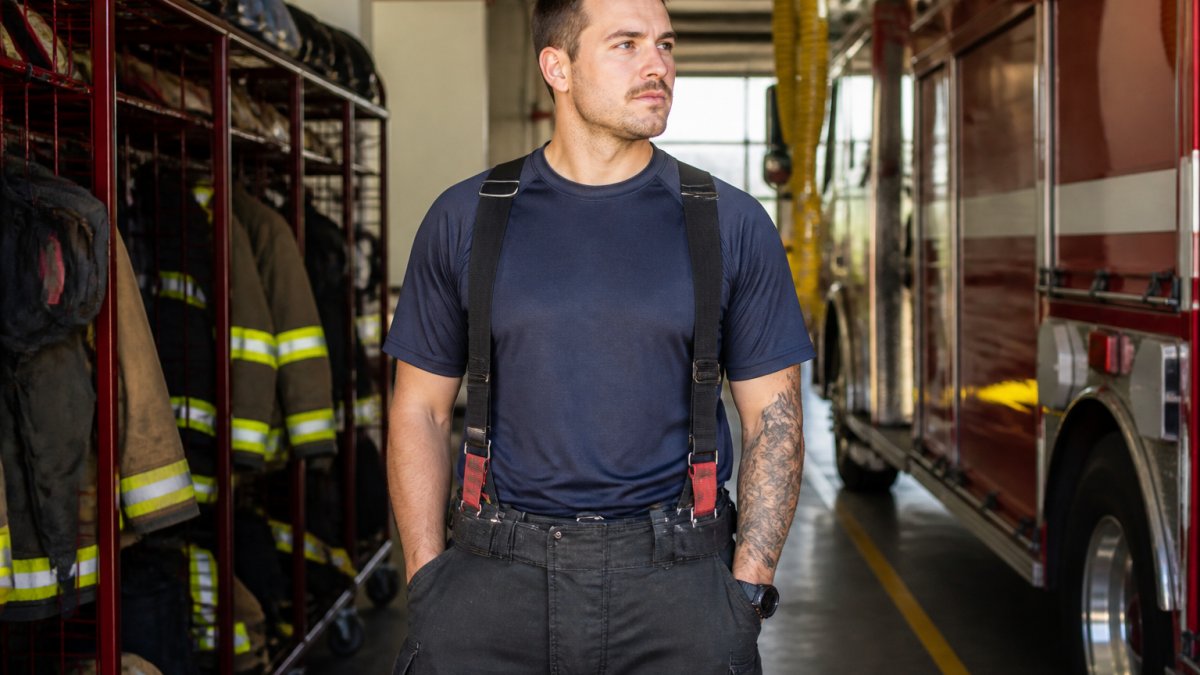
Aramid-Blend Options
Aramid fibers like Nomex and Kevlar offer superior flame resistance but are typically reserved for turnout gear. Some premium station uniforms add small percentages for durability and heat resistance.
Aramid blends cost significantly more and aren't necessary for station uniforms, which don't face active fire exposure. Consider them only if your department requires flame-resistant station wear or you want maximum longevity, pure aramid is stiffer and less comfortable than polyester blends.
Lightweight Clothes to Wear Under Turnout Gear
Station wear serves double duty: it's what you wear around the firehouse and under your turnout gear during responses. Your lightweight clothes to wear under turnout gear must be comfortable in the station and functional under heavy protective equipment.
Moisture management is critical under turnout gear. Sweat builds up quickly under the outer shell, and a base layer that doesn't wick leaves you wet for hours after a call. Synthetic blends excel because they pull moisture away from your skin.
Black Helmet's Turnout Print Sports Bra exemplifies this design philosophy: 82% polyester and 18% spandex with four-way stretch, it manages moisture while providing support and comfort under heavy gear. The moisture-wicking polyester keeps you dry, while the spandex allows freedom of movement during active firefighting.

Cotton vs Polyester Firefighter Uniforms
The cotton vs polyester firefighter uniforms debate comes down to comfort versus performance. Cotton feels softer initially, but polyester outperforms it in real-world conditions.
Cotton absorbs moisture deeply and dries slowly, so odor develops faster, especially in humid climates. It also shrinks unpredictably, so a well-fitting uniform can become tight after a few washes.
Polyester wicks moisture to the surface where it evaporates quickly and resists shrinking. The tradeoff: pure polyester feels less soft and can trap heat without breathable fibers blended in.
| Fabric Type | Drying Time | Odor Resistance | Shrink Risk | Comfort | Best For |
|---|---|---|---|---|---|
| 100% Cotton | 6+ hours | Low | High | High | Casual wear only |
| Polyester Blend (65/35) | 2-3 hours | High | Low | High | Station wear and under-gear |
| 100% Polyester | 1-2 hours | Very High | Very Low | Moderate | Base layers, athletic wear |
| Aramid Blend | 3-4 hours | Very High | Very Low | Moderate | Premium/flame-resistant station wear |
How to Wash Moisture-Wicking Firefighter Shirts
Proper washing preserves the moisture-wicking properties of synthetic fabrics; hot water and harsh detergents degrade the fibers and reduce wicking.
Wash in warm (not hot) water with standard detergent. Avoid fabric softeners, they coat fibers and block wicking. Skip bleach unless necessary for stains; it weakens synthetics over time.
Dry on low heat or air dry; high heat damages polyester and can melt spandex. Air drying, or low-heat drying finished on a line, significantly extends uniform life. If you use a dryer, remove shirts slightly damp and finish air drying.
Wash new moisture-wicking shirts separately the first time to prevent dye transfer; after that they're safe with standard station wear.
Fabric Performance: Drying Time, Breathability, and Durability
Most articles say performance matters and move on. This section lays out the criteria, test methods, and care factors that determine whether a fabric still wicks after a year of shift life.
A Transparent Comparison Framework
Score station-uniform fabrics on five criteria. Ask the manufacturer or supplier for this information, and be skeptical of any garment that can't answer at least the first three.
Turnout Print Sports Bra (Breathable, Moisture-Wicking) →
| Criterion | What It Measures | Common Test Method | What to Look For |
|---|---|---|---|
| Drying time | How fast the fabric releases moisture | AATCC 199 (drying time of textiles) or a comparable timed-dry test | Faster is better for odor control; performance polyester typically dries fastest |
| Vertical wicking | How far moisture travels up the fabric in a set time | AATCC 197 (vertical wicking of textiles) | Higher wicking distance means sweat moves away from skin faster |
| Moisture regain | How much moisture the fiber itself absorbs from the air | Standard moisture-regain values reported by fiber producers | Lower regain generally means a drier feel; cotton and aramid are higher, polyester is low |
| Air permeability | How much air passes through the fabric | ASTM D737 (air permeability of textile fabrics) | Higher airflow means more breathability, but very open fabrics can snag and wear faster |
| Abrasion resistance | How well the fabric survives rubbing and washing | ASTM D4966 (Martindale abrasion) or ASTM D4157 (Wyzenbeek) | Higher cycles mean longer garment life; important for station wear worn daily |
These are standard textile-industry tests, so a manufacturer selling performance apparel should supply results. If they can't, treat the "moisture-wicking" claim as marketing until proven otherwise.
Drying Time in Practice
Drying time is the most useful number for station wear because it drives odor. Odor-causing bacteria need moisture, so a fabric that dries in two hours is far less likely to develop the sour smell that plagues cotton station shirts.
These are ranges, not guarantees. Actual drying time depends on fabric weight, knit or weave structure, air movement, humidity, and how the garment is dried.
Breathability and Fabric Construction
Breathability isn't just about fiber, it's about how the fabric is built. Two garments can use identical polyester yarns and feel completely different.
- Knit vs. woven: Knits stretch and generally allow more air movement, which is why base layers and athletic-style station shirts are usually knit. Wovens are more durable and hold a pressed appearance, which is why many uniform shirts are woven.
- Fabric weight:
- Weave or knit density: Tighter constructions block more airflow but resist pilling and snags better. Looser constructions breathe well but can snag on equipment.
- Blends: Adding cotton to polyester softens the hand and can improve perceived breathability, but it also raises moisture regain and slows drying.
Durability and Long-Term Wicking Performance
A fabric that wicks well on day one but stops after twenty washes isn't good station-uniform fabric. Three things degrade wicking over time:
- Fabric softener and dryer sheets. These leave a hydrophobic coating on synthetic fibers that blocks moisture movement. This is the most common cause of "my wicking shirt stopped working."
- High heat. Repeated hot-water washing and high-heat drying can damage spandex, cause pilling, and accelerate fiber breakdown.
- Mechanical abrasion. Washing with heavy items, turnout gear, boots, tools, abrades lighter knits and creates pills that reduce surface area for evaporation.
A practical care routine that preserves wicking:
- Wash in warm water with a standard detergent, no fabric softener, no dryer sheets.
- Avoid bleach except for targeted stain treatment.
- Tumble dry low or air dry; remove while slightly damp if you finish on a line or rack.
- Wash moisture-wicking garments separately from turnout gear and heavy work clothing.
- Wash new dark or brightly dyed garments separately the first time to avoid dye transfer.
How to Use This Framework
When comparing station-uniform options, don't just compare fiber percentages. Ask for:
- Drying time test data or a stated drying-time range.
- Wicking test data if available.
- Fabric weight in oz/yd².
- Knit or woven construction.
- Care instructions and any warnings about softener or heat.
If a supplier answers those five questions, you have enough to make a defensible choice. If not, you're choosing on marketing.
Station Uniforms vs Structural Protective Gear
Station wear and structural protective gear (turnout gear) serve completely different purposes, and that distinction shapes fabric choices.
Station uniforms are comfort-focused apparel for downtime and training. They must manage sweat, resist odor, and withstand repeated washing, moisture-wicking synthetic blends are ideal for extended wear.
Structural protective gear is engineered for life safety.
The moisture barrier intentionally blocks sweat from escaping, creating the wet feeling firefighters know after active calls. Station wear doesn't need that protection, so it prioritizes breathability and quick drying, station-wear fabrics under turnout gear work fine because the outer gear dominates performance.
Many firefighters treat station wear like protective gear or vice versa. Station uniforms won't protect you in structural firefighting, and heavy protective gear is unnecessarily uncomfortable for station duties. Choose each for its purpose.
Conclusion
Choosing the right moisture-wicking fabrics firefighter uniforms requires means prioritizing comfort, durability, and real-world performance over marketing hype. Polyester-dominant blends outperform pure cotton: they dry faster, resist odor better, and hold their shape through years of washing.
At Black Helmet, we've built our reputation on understanding what firefighters actually need, gear that performs under the demands of station life and the firehouse community. When selecting uniforms or base layers, focus on fabric composition and construction quality. Proper care, warm water washing, low-heat drying, no fabric softener, extends uniform life and preserves wicking properties.
The difference between a uniform that stays comfortable all shift and one that leaves you damp by midday comes down to fabric choice and care. Invest in quality, and your gear will honor your commitment to the job.
Frequently Asked Questions
Which fabrics wick moisture best for fire station uniforms?
Performance polyester blends (82% polyester, 18% spandex) and synthetic fiber combinations outperform pure cotton for moisture-wicking in station wear. These materials pull sweat away from skin and dry faster than cotton, which absorbs and holds moisture. For daily station uniforms, polyester-based blends with four-way stretch construction provide the best balance of breathability, comfort, and quick-drying performance.
Is polyester or cotton better for moisture-wicking station wear?
Polyester is superior for moisture-wicking in station uniforms. Cotton absorbs moisture and holds it against your skin, leading to longer drying times and discomfort during extended shifts. Polyester actively wicks sweat away from the body and dries significantly faster. A polyester-spandex blend (like 82/18) combines moisture management with four-way stretch, offering superior comfort and durability compared to pure cotton or cotton-dominant blends for firefighter station wear.
What should firefighters wear under turnout gear?
Lightweight, moisture-wicking synthetic garments are ideal under turnout gear. Choose fitted, breathable pieces that minimize bulk and reduce heat buildup under the protective shell and thermal liner. Four-way stretch polyester blends reduce chafing and allow full mobility. Avoid heavy cotton, which traps sweat and heat. Properly fitted moisture-wicking base layers help manage thermal protection by allowing sweat to escape, keeping firefighters more comfortable during extended operations and reducing moisture accumulation inside the protective ensemble.
How do I preserve moisture-wicking performance when washing firefighter shirts?
Wash moisture-wicking firefighter shirts in cool water with mild detergent and avoid fabric softeners, which coat the fibers and reduce wicking ability. Air dry or use low heat, as high temperatures can damage synthetic fibers. Wash separately from lint-producing items. Regular laundering maintains performance, but avoid bleach and harsh chemicals that degrade polyester and synthetic blends. Proper care extends the shirt's lifespan and preserves its ability to absorb and release moisture effectively.
