

Firefighter Uniform Polo Shirt Buying Guide
Table of Contents
- What Makes a Firefighter Uniform Polo Different
- Understanding Firefighter Uniform Standards and NFPA Compliance
- Moisture-Wicking Firefighter Polos: Fabric Technology and Performance
- Class A vs. Class B Uniform Standards: What You Need
- Custom Fire Department Polo Shirts for Station Crews
- Key Features That Matter: Durability, Fit, and Layering
- Care and Maintenance: Keeping Your Polo Ready for Duty
- Conclusion
- Frequently Asked Questions
Last Updated: September 24, 2026
What Makes a Firefighter Uniform Polo Different
A firefighter uniform polo isn't just another work shirt. It's engineered specifically for the demands of station life, training, and duty, combining professional appearance with the durability and functionality that first responders need. Black Helmet understands that firefighters require gear that performs under real conditions, not theoretical ones.
The difference starts with fabric choice. Standard retail polos use lightweight cotton or thin blends designed for comfort in office settings. Firefighter uniform polos incorporate moisture-wicking technology, reinforced seams, and treatments that resist fading and shrinkage through repeated washing and high-heat drying. They're built to maintain their shape after dozens of wash cycles, hold up against station equipment, and look professional whether you're responding to a call or sitting in the firehouse.
The fit matters too. Firefighter polos account for layering over protective gear, movement during physical training, and the reality that crews spend hours in these shirts during shifts. A well-designed firefighter uniform polo balances a professional silhouette with enough room for functional movement, something mass-market polos simply don't address.
Understanding Firefighter Uniform Standards and NFPA Compliance
Firefighter uniform standards exist for a reason: consistency, professionalism, and safety. The National Fire Protection Association (NFPA) establishes guidelines that many departments reference when specifying station wear requirements. Understanding these standards helps you choose gear that aligns with your department's expectations.
NFPA 1975 covers station/work uniforms for structural firefighting and hazmat operations. While this standard doesn't mandate specific polo designs, it addresses fabric performance, colorfastness, and durability requirements that quality firefighter polos must meet. Departments often reference NFPA standards when evaluating whether station wear meets their operational needs.
Class A and Class B uniform designations represent different levels of formality and protection. Class A uniforms are formal dress uniforms worn for ceremonies and official events. Class B uniforms are station wear, the everyday polos and shirts worn during training, station duties, and non-emergency operations. Most firefighters spend far more time in Class B gear than Class A, making the quality and functionality of station wear critical.
When selecting a firefighter uniform polo, verify that it meets your department's specific uniform policy. Some departments specify fabric content, color requirements, or approved vendors. Others allow flexibility as long as the polo maintains a professional appearance and meets durability standards. Knowing your department's requirements prevents purchasing gear that won't be approved for duty wear.
NFPA 1975 Station/Work Uniforms Standard
Moisture-Wicking Firefighter Polos: Fabric Technology and Performance
Moisture-wicking technology transforms how a firefighter uniform polo performs during active duty. These fabrics pull sweat away from your skin and move it to the outer surface, where it can evaporate. This keeps you cooler, drier, and more comfortable during physically demanding shifts, whether you're training in the yard or responding to calls.
Most quality firefighter polos use polyester blends or advanced cotton treatments to achieve moisture-wicking performance. Polyester naturally wicks moisture better than 100% cotton, but it can feel less breathable if the weave is too tight. The best designs balance moisture management with breathability, allowing air circulation while actively moving sweat away from your body.
Heat stress is a real concern for firefighters. When you're wearing multiple layers of gear, staying dry becomes critical for both comfort and safety. A polo that manages moisture effectively reduces the risk of heat exhaustion during training or emergency operations. This is why moisture-wicking isn't just a comfort feature, it's a performance necessity.
Fabric weight also affects moisture management. Lightweight polos dry faster but may feel flimsy during active use. Mid-weight polos offer better durability while still maintaining reasonable drying times. The goal is finding a balance that works for your climate and operational tempo. A firefighter in a warm climate might prefer lighter weight, while crews in cooler regions might choose mid-weight for better durability and layering capability.
Class A vs. Class B Uniform Standards: What You Need
Understanding the difference between Class A and Class B uniforms helps you make the right purchasing decision for your actual needs. Most firefighters need both, but they serve different purposes.
Class B uniforms are your everyday station wear. These include polos, work shirts, and casual duty attire worn during training, station duties, and non-emergency operations. Class B gear prioritizes comfort, durability, and functionality over formality. A quality firefighter uniform polo is typically Class B wear, designed for repeated use, frequent washing, and active movement.
Class A uniforms are formal dress uniforms for ceremonies, official events, and formal occasions. These typically include dress shirts, ties, and more structured garments. Class A wear emphasizes professional appearance and tradition over the practical durability needed for daily station work.
The confusion often arises because departments use these terms differently. Some departments have strict uniform policies specifying exactly which colors, styles, and brands are acceptable for each class. Others use the terms more loosely, simply distinguishing between formal and casual duty wear.
For most firefighters, the priority is finding a high-quality Class B uniform polo that you'll actually wear during your shift. This is where functionality, comfort, and durability matter most. A firefighter uniform polo that performs well during training and station duties is more valuable than formal wear you only use a few times per year.
Firehouse Standard Premium Tee →
Custom Fire Department Polo Shirts for Station Crews
Many fire departments order custom polos for their crews. Custom embroidery with department insignia, station numbers, or crew names builds team identity and professionalism. Black Helmet offers customization options that let crews represent their station with pride while maintaining the durability and performance standards firefighters depend on.
Custom firefighter uniform polos serve multiple purposes. They create visual unity among crew members, support department branding, and give firefighters gear that genuinely represents their station culture. Unlike generic commercial polos with aftermarket embroidery, purpose-built firefighter polos are designed to accommodate embroidery without compromising fabric integrity or fit.
When ordering custom polos for your crew, consider a few practical factors.
Bulk ordering also provides cost efficiency. This makes it practical for departments to equip entire shifts with matching gear that reinforces crew identity and maintains uniform standards.
The lead time for custom orders matters. Plan ahead if you're outfitting a new crew or replacing worn gear. Black Helmet handles bulk orders with reliable turnaround, ensuring your crew gets matching gear when you need it.
Key Features That Matter: Durability, Fit, and Layering
A firefighter wearing a well-fitted polo at the station demonstrates how proper design accommodates the realities of duty wear. The shirt should sit comfortably over a t-shirt without bunching, allow full range of motion during training, and provide enough room for layering when needed.
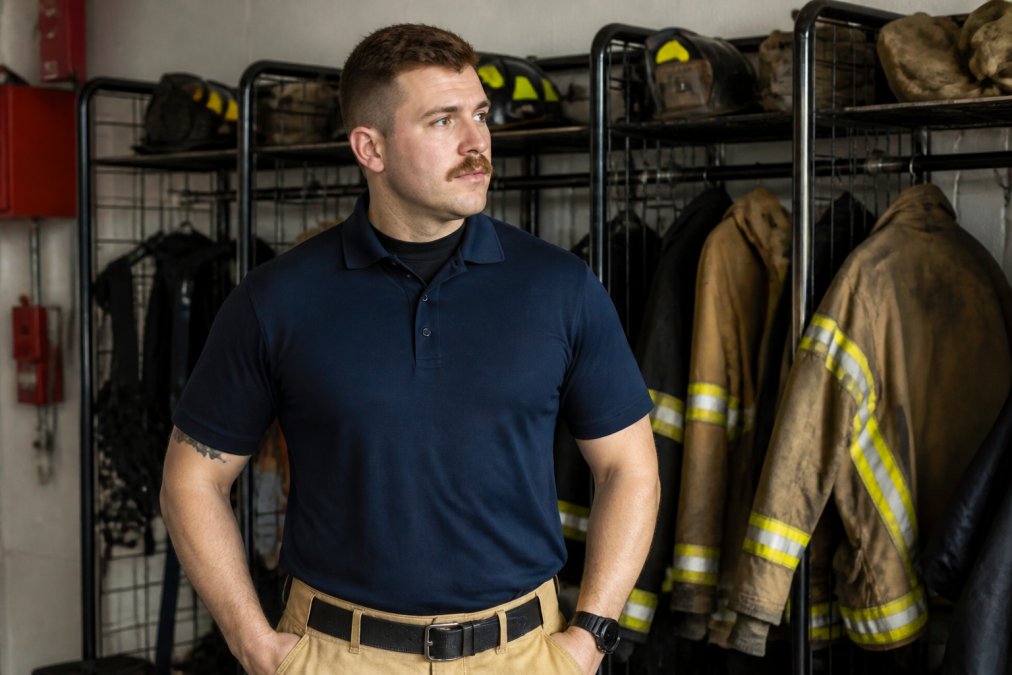
Durability determines whether a firefighter uniform polo survives a full season of use. Look for reinforced seams, especially at stress points like armholes and pocket attachments. Double-stitched construction holds up better than single-stitch seams. The fabric itself should feel substantial, not heavy, but dense enough to resist tearing and pilling from repeated wear and washing.
Pocket placement and construction deserve attention. Firefighters use shirt pockets for pens, notepads, and small tools. Poorly constructed pockets tear easily or pull away from the shirt body. Quality firefighter polos feature reinforced pocket openings and durable stitching that withstands months of practical use.
Fit affects both comfort and professionalism. A polo that's too tight restricts movement and looks unprofessional. One that's too loose looks sloppy and catches on equipment.
Care and Maintenance: Keeping Your Polo Ready for Duty
Proper care extends the life of your firefighter uniform polo and maintains its performance characteristics. Most quality polos are designed for machine washing, but a few practices keep them looking and performing like new.
Fabric Care Guidelines for Performance Textiles
Conclusion
Choosing the right firefighter uniform polo means understanding what separates functional duty wear from generic retail shirts. Quality matters because your polo needs to perform during training, maintain its appearance throughout your career, and represent your department with pride.
| Feature | Why It Matters | What to Look For |
|---|---|---|
| Moisture-wicking fabric | Keeps you dry and cool during active duty | Polyester blend or treated cotton; breathable weight |
| Reinforced seams | Withstands repeated washing and movement | Double-stitched construction; stress-point reinforcement |
| Colorfastness | Maintains professional appearance through season | Resists fading after 50+ wash cycles |
| Proper fit | Allows movement and layering without bulk | Comfortable over base layer; full shoulder mobility |
| Pocket durability | Supports practical use without tearing | Reinforced openings; quality stitching |
| NFPA compliance | Meets departmental uniform standards | Verifies fabric performance and durability specs |
Frequently Asked Questions
What fabric is best for a firefighter uniform polo shirt?
Cotton and cotton-polyester blends are industry standard for firefighter uniform polos. Cotton offers breathability and comfort for long shifts, while polyester blends add durability, moisture-wicking properties, and resistance to shrinking. Look for pre-shrunk fabric and blends that balance softness with wash-and-wear performance. NFPA 1975 compliance ensures the fabric meets safety standards for station wear.
Are polo shirts considered professional station wear?
Yes. Polo shirts are standard station wear for many departments and meet professional uniform requirements. They're appropriate for daily training, station duties, and community interactions. However, your department's specific policy determines whether polos qualify as Class A or Class B uniform attire. Check with your fire department before purchasing to confirm compliance with your station's dress code.
How do moisture-wicking firefighter polos improve performance on shift?
Moisture-wicking fabrics pull sweat away from your skin, reducing heat stress during physical exertion and hot weather. This keeps you dry and comfortable during training, station work, and emergency response. Polyester-blend polos perform better than 100% cotton at moisture management. Proper moisture regulation helps maintain focus and reduces fatigue during long shifts.
What should I look for when ordering custom fire department polo shirts for my crew?
Verify your supplier can handle bulk orders with reliable turnaround times. Choose durable fabric (cotton or cotton-polyester blend) that withstands frequent washing. Confirm customization quality and placement options for department logos or station insignia. Request samples before committing to large orders. Ensure sizing runs cover diverse body types so all crew members get proper fit.
