

Class A Firefighter Uniforms: The Complete Guide
Table of Contents
- What Is a Class A Firefighter Uniform?
- Class A vs Class B Firefighter Uniforms: Key Differences
- Firefighter Dress Uniform Requirements and Departmental Standards
- Components of a Full Class A Uniform Ensemble
- When Firefighters Wear Class A: Ceremonial Occasions and Events
- How to Maintain Firefighter Dress Uniforms for Long-Term Wear
- Sizing, Tailoring, and Storage: Getting the Professional Fit Right
- Frequently Asked Questions
Last Updated: September 22, 2026
What Is a Class A Firefighter Uniform?
A Class A firefighter uniform is the formal dress attire worn by fire service personnel for ceremonial occasions, parades, funerals, and official department functions. It is distinct from the protective gear used in fire suppression and represents the tradition, discipline, and professionalism of the fire service.
At Black Helmet, we've spent years serving the firefighter community, and we understand that the Class A uniform carries meaning beyond fabric and stitching. It signals respect for the job, the department, and the fallen. This guide covers everything from components and insignia placement to sizing, maintenance, and storage, so you can wear the dress uniform with confidence.
The Class A uniform typically includes a dress coat, long-sleeve shirt, four-in-hand tie, trousers, and dress shoes. Departmental standards govern the exact configuration, but the core purpose remains consistent: presenting a professional appearance at formal events.
A Brief History of the Class A Dress Uniform
The Class A dress uniform evolved from 19th-century military and parade traditions adopted by early American fire companies. Volunteer fire brigades modeled their formal attire on military dress, incorporating rank insignia, brass buttons, and structured coats that projected authority and order.
Over time, fire departments standardized these elements into what we now recognize as the Class A uniform. The parade uniform became a symbol of pride, worn at musters, inspections, and public ceremonies. While protective equipment has changed dramatically, the dress uniform has retained its traditional character.
Understanding this history matters because it explains why certain elements, like collar brass and service medals, carry such weight. They aren't decoration. They're a record of service and a link to the generations who came before.
Class A vs Class B Firefighter Uniforms: Key Differences
The primary difference between Class A and Class B firefighter uniforms comes down to formality and function. Class A is the dress uniform for ceremonial occasions, while Class B is a working uniform for station performance and daily duties.
| Feature | Class A Uniform | Class B Uniform |
|---|---|---|
| Purpose | Ceremonial, formal events | Daily station wear, non-fire calls |
| Coat | Dress coat with brass buttons | Station shirt or polo |
| Tie | Four-in-hand tie required | No tie |
| Insignia | Full collar brass, medals, ribbon bars | Name tag, department patch |
| Footwear | Dress shoes | Work boots or station shoes |
| Formality Level | High | Moderate |
Class A uniforms prioritize appearance and tradition. Class B uniforms prioritize comfort and practicality for tasks like training, equipment checks, and public education events.
A common mistake is treating Class B as a casual substitute for Class A at formal events. Departmental standards exist for a reason, and wearing the wrong uniform to a funeral or award ceremony sends the wrong message.
Firefighter Dress Uniform Requirements and Departmental Standards
Firefighter dress uniform requirements vary by department, but most follow similar guidelines for appearance, insignia placement, and authorized accessories. These standards ensure consistency across personnel and maintain the professional image of the fire service. Beyond formal dress, operational gear must also adhere to rigorous high visibility standards to ensure safety during emergency response activities.
Typical departmental standards cover:
- Collar brass: Department name, rank, and specialty insignia positioned symmetrically on both lapels
- Name tag: Worn on the right chest, above the pocket
- Service medals and ribbon bars: Worn on the left chest, arranged by precedence
- Patches: Department patch on the left shoulder, rank patch on the right
- Trousers: Pressed with a visible crease, hemmed to break just above the shoe
Many departments publish a written uniform policy that specifies exact measurements and placement. If your department doesn't have one, ask your chief or training officer for guidance. Guessing leads to corrections, and corrections at a formal event are embarrassing.
The National Fire Protection Association standards provide guidance on protective equipment, but dress uniform standards are typically set at the department level. Your department's policy is the final word.
Accept The Challenge Never Go Gently →
Components of a Full Class A Uniform Ensemble
A complete Class A firefighter uniform ensemble includes the dress coat, long-sleeve shirt, four-in-hand tie, trousers, dress shoes, and all authorized insignia. Each component contributes to the overall professional appearance.
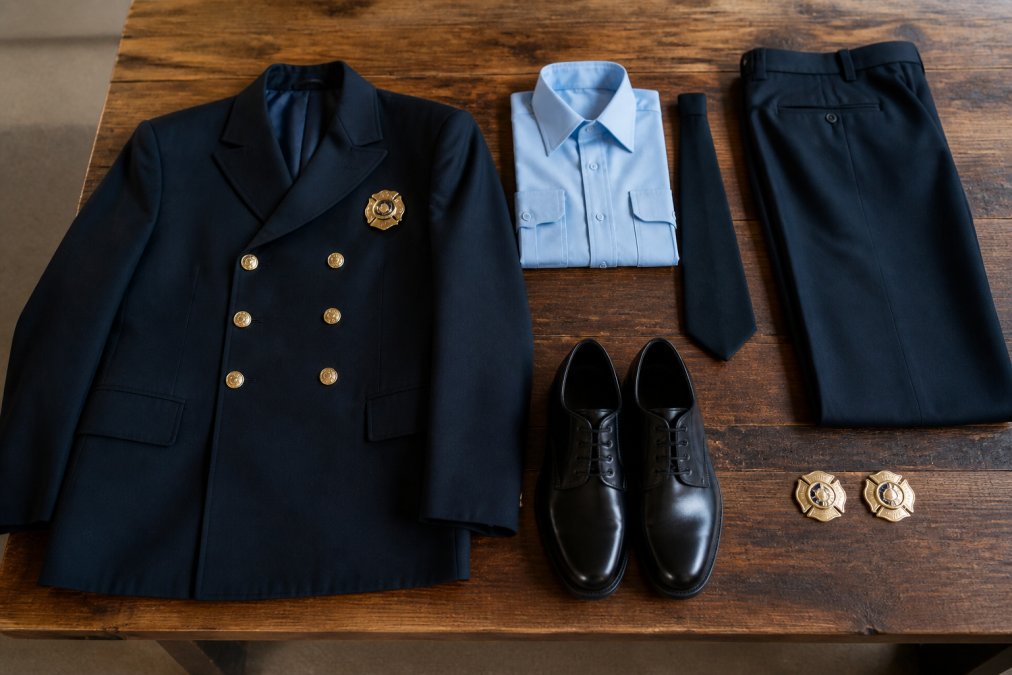
The dress coat is the centerpiece. It features brass buttons, a tailored fit, and shoulder epaulets for rank identification. The long-sleeve shirt is worn underneath, with the four-in-hand tie knotted neatly at the collar. Trousers match the coat and are pressed with a sharp crease.
Dress shoes complete the look.
Insignia, Collar Brass, and Rank Identification
Insignia placement follows a hierarchy that reflects rank and service. Collar brass identifies the department and the individual's role. Rank insignia, worn on the epaulets or sleeves, distinguishes officers from firefighters.
When Firefighters Wear Class A: Ceremonial Occasions and Events
Firefighters wear Class A uniforms for formal events that require a professional, traditional appearance. These occasions include parades, funerals, award ceremonies, court appearances, and department inspections.
The Class A uniform is standard attire for:
- Funerals and memorial services: Honoring fallen firefighters and retired members
- Parades and musters: Representing the department at public events
- Award ceremonies: Recognizing promotions, retirements, and acts of valor
- Court appearances: Presenting a professional image when testifying
- Department inspections: Demonstrating readiness and discipline
How to Maintain Firefighter Dress Uniforms for Long-Term Wear
Maintaining a firefighter dress uniform requires regular cleaning, pressing, inspection, and, because most Class A uniforms are worn only a handful of times a year, deliberate storage between events. The care routine has two phases: what you do around each wearing, and what you do during the long stretches in between.
- Hang, don't fold. Use a sturdy, wide-shouldered hanger for the coat so the shoulders keep their shape. Wire hangers distort the shoulder line over time. Trousers go on a clamp hanger at the waistband or a bar hanger folded at the crease, never over a wire hanger, which leaves a ridge.
- Use a breathable garment bag. Cotton or canvas garment bags let air circulate. Plastic dry-cleaning bags trap moisture and can cause mildew and yellowing, especially in humid climates. Remove the plastic bag as soon as you get home from the cleaner.
- Control pests without chemicals. Cedar blocks, cedar rings, or lavender sachets placed in the garment bag deter moths and other fabric pests. Refresh cedar periodically by lightly sanding the surface, which re-releases the oils. Avoid mothballs if you can, the odor lingers and is hard to remove before a ceremony.
- Keep it cool, dark, and dry. Store the uniform in a closet away from direct sunlight, which fades fabric and weakens fibers. Avoid attics and basements, where temperature and humidity swing widely. A stable indoor closet is better than a garage or storage unit.
- Shoe care. Keep dress shoes in a cool, dry place with shoe trees to maintain their shape. Cedar shoe trees also absorb moisture. Polish before storage, not just before wearing, so the leather is protected during the off-season.
- Rotate if you have multiple sets. If you own more than one Class A uniform, rotate them so no single set takes all the wear. Rotating also gives you a backup if one set is at the cleaner before an unexpected event.
- Inspect seasonally. Once or twice a year, take the uniform out of the bag, check for moth damage, loose stitching, tarnish on the brass, and any change in fit. Catching a small moth hole early is far easier than repairing a large one later.
Sizing, Tailoring, and Storage: Getting the Professional Fit Right
A Class A firefighter uniform should fit like it was made for you, because in many cases, it was. Proper sizing and tailoring transform a standard-issue uniform into a professional presentation.
Frequently Asked Questions
What is a Class A firefighter uniform?
A Class A firefighter uniform is the formal dress attire worn for ceremonial occasions, funerals, award ceremonies, parades, and court appearances. It typically includes a dress coat, long-sleeve shirt, four-in-hand tie, trousers, dress shoes, and insignia such as collar brass and service medals. Departmental standards vary, but the Class A uniform represents the highest level of professional presentation in the fire service.
What are the main differences between Class A and Class B firefighter uniforms?
Class A uniforms are formal dress attire used for ceremonies and official events, featuring a dress coat, tie, and full insignia. Class B uniforms are more practical station wear, often consisting of a polo or short-sleeve shirt and work trousers. Class B is worn for daily duties and non-ceremonial public interactions, while Class A is reserved for events requiring formal presentation and rank identification.
When are firefighters required to wear Class A dress uniforms?
Class A uniforms are required for formal events such as funerals, memorial services, award ceremonies, parades, court appearances, and department graduations. Some departments also mandate them for promotional ceremonies and official public appearances. Requirements are set by departmental policy, so firefighters should check their specific department's uniform guidelines for exact occasions.
How should a Class A firefighter uniform be maintained and stored?
Dry clean the dress coat and trousers to preserve fabric and fit. Spot clean the long-sleeve shirt and tie as needed, and polish dress shoes regularly. Store the uniform on a sturdy hanger in a breathable garment bag away from direct sunlight. Remove insignia and collar brass before cleaning to prevent damage. Proper maintenance keeps the uniform looking sharp for years and honors the tradition it represents.
