

Why Firefighters Wear Specific Apparel: A Complete Guide
Table of Contents
- Why Firefighters Wear Specific Apparel: The Foundation
- Components of Firefighter PPE and Their Roles
- Materials Used in Firefighter Uniforms Explained
- NFPA Standards for Protective Clothing
- Wildland Firefighter Gear vs. Structural Gear
- Heat Stress, Breathability, and Gear Maintenance
- Technological Advancements in Smart Fabrics and Stationwear
- Conclusion: Understanding Why Firefighters Wear Specific Apparel
Why Firefighters Wear Specific Apparel: A Complete Guide
Last Updated: July 18, 2026
Understanding why firefighters wear specific apparel goes far beyond tradition or regulation, it's about survival. Every layer, every material, and every design choice serves a critical purpose when lives depend on protection from extreme heat, flame, and hazardous environments. This guide breaks down exactly why firefighters wear specific apparel, what each component does, and how modern standards ensure that protective clothing meets the demands of structural firefighting, wildland operations, and station duty.
Why Firefighters Wear Specific Apparel: The Foundation
Firefighters don't choose their apparel based on comfort or style. Every piece of gear is engineered to address three core threats: extreme heat, flame exposure, and chemical or hazardous material contact.
Heat is the primary enemy. A structural fire can reach temperatures exceeding 1,000 degrees Fahrenheit. Flame-resistant materials form the outer shell of turnout gear, creating a barrier that resists ignition and slows heat transfer to the body. According to NFPA guidelines on firefighter protective equipment, turnout gear must meet strict standards that test both flame resistance and thermal protection.
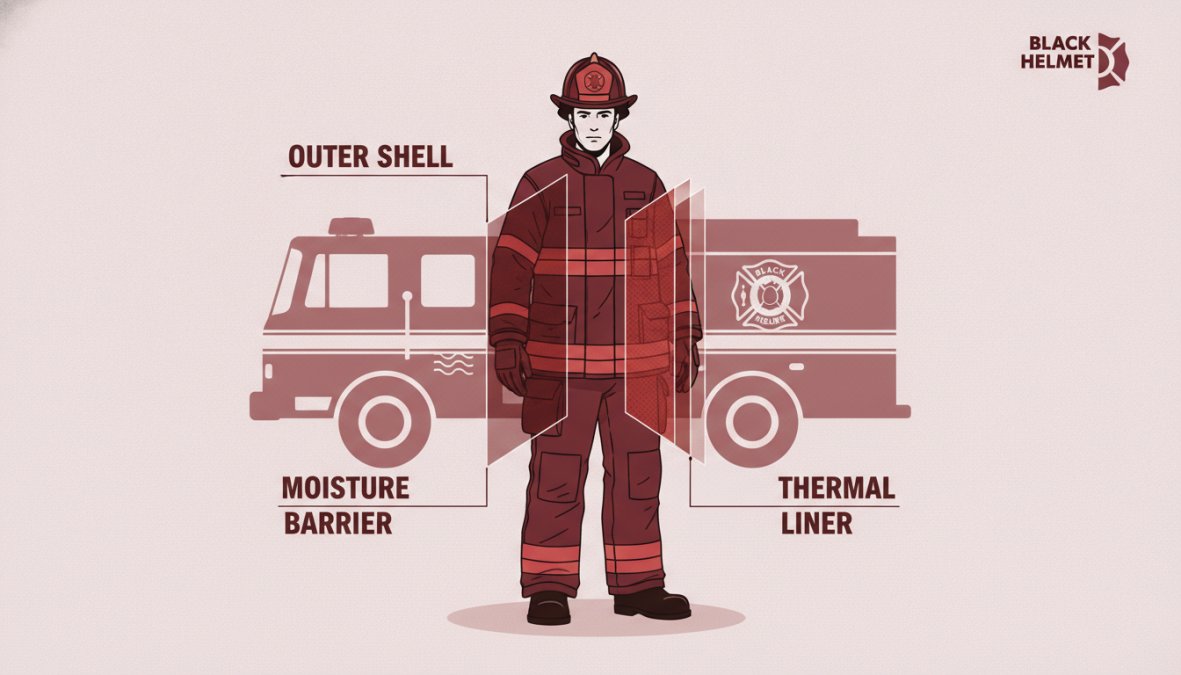
Moisture and liquid hazards present a second threat. A moisture barrier layer sits between the outer shell and the thermal liner, blocking water, oils, and chemicals while allowing vapor to escape, a critical balance that prevents heat stress while maintaining protection.
Finally, the thermal liner provides insulation by trapping air and slowing heat transfer. When all three layers work together, they create a protective system that can mean the difference between a close call and a tragedy.
Components of Firefighter PPE and Their Roles
Personal protective equipment for firefighters is a complete system, not just a jacket and pants. Each component is designed to protect against specific hazards while maintaining mobility and communication.
Outer Shell: First Line of Defense
The outer shell is the visible yellow, white, red, or blue jacket and pants that identify a firefighter. This layer must resist flame, shed water, and withstand abrasion from sharp objects and rough surfaces. The outer shell is typically made from aramid fibers like Nomex or blended synthetic materials that resist ignition and maintain structural integrity when exposed to direct flame.
This layer also provides visibility through reflective trim and bright colors, ensuring firefighters can be seen in smoke-filled environments and at night. The design includes multiple pockets, tool loops, and reinforced seams that support the demands of the job while maintaining protection.
:::pro The outer shell's reflective trim helps other firefighters locate crew members using thermal imaging cameras in heavy smoke. :::
Moisture Barrier: Liquid Protection
The moisture barrier prevents water, blood, chemicals, and other liquids from penetrating to the skin while allowing sweat vapor to escape. Without this barrier, a firefighter could absorb hazardous materials through their skin or suffer heat stress from trapped moisture.
Modern moisture barriers use microporous films that block liquid water but allow water vapor to pass through. This balance is essential, a completely waterproof barrier would trap sweat and cause dangerous heat stress during intense physical work. The barrier also protects against bloodborne pathogens, increasingly important in modern fire service operations.
Thermal Liner: Insulation Against Heat
The thermal liner is the innermost layer, typically made from aramid fibers or blended synthetics that provide insulation and comfort. This layer traps dead air space, which slows heat transfer through the entire assembly. When firefighters are exposed to extreme heat, the thermal liner works with the outer shell and moisture barrier to slow heat penetration. Testing shows that a complete three-layer system can delay serious skin burns by several seconds, time that might allow a firefighter to escape a dangerous environment.
Materials Used in Firefighter Uniforms Explained
The materials in firefighter apparel have been refined through decades of testing and real-world experience. Each material offers specific advantages and trade-offs between protection, durability, breathability, and cost.
Aromatic Polyamides: Nomex and Kevlar
Nomex is the gold standard in firefighter gear. This aramid fiber resists flame at temperatures where other materials would ignite or melt. Nomex doesn't burn, it chars, creating a protective barrier that slows heat transfer. It's used in the outer shell and thermal liner of most quality turnout gear.
Kevlar offers similar flame resistance with added cut and abrasion resistance. Some departments use Kevlar-blended gear for wildland firefighting, where brush and branches pose significant hazards. Research confirms that Nomex-based gear retains at least 90% of its thermal protection after 100 industrial wash cycles.
PBI and Synthetic Fiber Blends
PBI (polybenzimidazole) is a high-performance synthetic fiber that offers exceptional thermal protection and maintains strength at extreme temperatures. Modern turnout gear often uses blended fabrics that combine multiple fibers to optimize protection and performance. A typical blend might include Nomex for flame resistance, Kevlar for cut resistance, and PBI for thermal performance.
NFPA Standards for Protective Clothing
The National Fire Protection Association (NFPA) sets the standards that define what "proper" turnout gear actually means. These standards are based on decades of research about what protects firefighters.
What NFPA 1971 Requires
NFPA 1971 is the standard for structural firefighting protective clothing. This standard specifies minimum requirements for flame resistance, thermal protection, moisture barriers, and durability. Gear must pass rigorous laboratory tests that simulate real-world exposure to flame, heat, and hazardous materials.
The standard requires that turnout gear meet specific performance metrics: outer shell must not ignite when exposed to open flame, thermal protection must delay heat transfer for a minimum duration, moisture barrier must block liquid penetration while allowing vapor transmission, seams must maintain integrity after flame exposure, and reflective trim must remain visible after abrasion and washing.
Regulatory Compliance and Testing
Every piece of turnout gear sold must be tested and certified to NFPA standards. Manufacturers submit samples to independent laboratories that conduct thermal, flame, and durability testing. Testing includes scenarios like direct flame exposure, radiant heat, and contact with hot surfaces. The gear must perform consistently across multiple test cycles, simulating the reality that firefighters may face repeated exposures during a single incident.
Wildland Firefighter Gear vs. Structural Gear
Wildland and structural firefighting present different hazards, and gear must be tailored accordingly.
Structural Turnout Gear Requirements
Structural gear prioritizes protection from intense heat and flame in enclosed environments. The three-layer system is designed for situations where firefighters may be exposed to extreme temperatures for extended periods. Structural gear includes a hood that covers the neck and lower face, protecting against radiant heat and direct flame. A complete structural turnout ensemble includes the jacket, pants, hood, gloves, boots, and helmet, with overlapping coverage to prevent gaps where heat or flame could reach the skin.
Wildland Firefighting Apparel Differences
Wildland firefighters face different threats: brush, branches, uneven terrain, and sustained exposure to smoke and heat over many hours. Wildland gear is lighter, more breathable, and designed for maximum mobility and visibility.
Wildland gear typically uses a single or two-layer construction rather than the three-layer structural system. This reduces weight and improves breathability, which is critical when firefighters are working for hours in hot conditions. Wildland gear includes bright orange or yellow shirts and pants, wide-brimmed hard hats, and sturdy boots designed for rough terrain.
| Gear Type | Primary Threat | Weight | Layers | Breathability | Best For |
|---|---|---|---|---|---|
| Structural | Extreme heat/flame | Heavier | Three | Moderate | Structure fires |
| Wildland | Brush/sustained heat | Lighter | One-two | High | Brush and forest fires |
Heat Stress, Breathability, and Gear Maintenance
Firefighter gear protects against external threats, but it also creates internal challenges. The weight and insulation of turnout gear can cause heat stress during intense physical exertion, and proper maintenance ensures gear remains protective throughout its service life.
Balancing Protection with Breathability
The fundamental challenge in turnout gear design is balancing maximum protection with enough breathability to prevent heat stress. Modern moisture barriers use microporous technology that allows water vapor to escape while blocking liquid water. This compromise means some heat and moisture build up inside, but it allows firefighters to work at high intensity for extended periods without dangerous heat accumulation.
Proper Cleaning and Maintenance Protocols
Turnout gear must be cleaned after exposure to smoke, heat, or hazardous materials. Most departments use industrial wash systems designed specifically for firefighter gear. Cleaning protocols include inspection for damage, hot water wash with specialized detergent, rinse cycles, air drying, and post-cleaning inspection.
Research shows that properly maintained gear retains its protective properties for 5-10 years, depending on exposure and use frequency. Departments that skip maintenance steps see gear degrade faster and lose protection.
:::pro Never use fabric softener or bleach on turnout gear. These products damage the flame-resistant properties of Nomex and other protective materials. :::
The Physical and Psychological Impact of Gear Weight
A complete turnout ensemble weighs 70-100 pounds, depending on the specific gear and size. This weight affects mobility, speed, and endurance. A firefighter carrying this weight while performing strenuous work in extreme heat faces significant physical demands.
Beyond the physical impact, gear weight carries psychological significance. Many firefighters report that donning turnout gear marks a mental transition from station life to emergency response. The weight and restriction serve as a constant reminder of the seriousness of the work and the need for focus and discipline.
Technological Advancements in Smart Fabrics and Stationwear
The fire service is evolving, and so is the technology behind protective apparel. New materials and designs promise to improve both protection and comfort, and stationwear plays an increasingly important role in overall protective strategy.
Moisture-Wicking and Thermal Innovation
Modern stationwear uses moisture-wicking fabrics that pull sweat away from the skin, improving comfort and reducing heat stress. New thermal liner materials use advanced synthetics that provide better insulation without added weight. Some manufacturers are experimenting with phase-change materials that absorb heat when firefighters are exposed to extreme temperatures, then release that heat when conditions cool.
Stationwear as Part of the Protective Ecosystem
Stationwear has become more sophisticated, with moisture-wicking base layers, compression shorts, and performance socks now standard issue at many departments. This gear improves comfort during station time and provides a foundation for better thermoregulation when turnout gear is donned.
Black Helmet creates performance-focused stationwear and accessories designed specifically for firefighters. Products like the Turnout Print Sports Bra ($31.50) deliver the moisture-wicking and breathability firefighters need during training and off-duty fitness. Accessories like the [Badge Bifold Used Bunker Gear Wallet](https://blackhelmetapparel.com/products/badge-bifold-wallet) ($52.00) are made from decommissioned firefighter gear, honoring the legacy of those who served while providing durable, authentic accessories that represent the fire service community.
Conclusion: Understanding Why Firefighters Wear Specific Apparel
Understanding why firefighters wear specific apparel reveals the engineering, science, and human experience behind one of the most demanding uniforms in any profession. Every layer, every material, and every design choice exists because it protects lives.
The gear firefighters wear represents more than regulation compliance, it embodies the commitment of the fire service to protect its own. When you understand the three-layer system, the NFPA standards, the difference between structural and wildland gear, and the ongoing evolution of protective materials, you understand why firefighters trust their equipment and why that trust is earned through rigorous testing and real-world performance.
Frequently Asked Questions
What are the different layers of firefighter turnout gear and why does each layer matter?
Firefighter turnout gear consists of three critical layers: the outer shell (protects against flame and abrasion), the moisture barrier (blocks water and hazardous chemicals), and the thermal liner (insulates against radiant and conductive heat). Each layer serves a distinct purpose in protecting firefighters from the extreme thermal and chemical hazards encountered during structural firefighting and emergency response. Together, these layers work as an integrated system to provide comprehensive protection while managing heat stress and physical fatigue.
How do NFPA standards for protective clothing ensure firefighter safety?
NFPA 1971 and related standards establish minimum requirements for flame-resistant materials, thermal protection, breathability, and durability of turnout gear. These regulations mandate rigorous testing for heat transfer, flame resistance, and chemical exposure protection. Compliance ensures that all firefighter apparel meets consistent performance benchmarks, protecting personnel across different departments and emergency response scenarios. Regular updates to NFPA standards incorporate technological advancements in synthetic fibers and fabric innovation.
Why is gear maintenance critical for firefighter safety?
Proper maintenance and cleaning protocols preserve the flame-resistant and thermal protective properties of turnout gear. Contamination from smoke, chemicals, and hazardous materials can degrade synthetic fibers like Nomex and Kevlar, reducing their effectiveness. Regular inspection and professional cleaning according to NFPA guidelines ensures that moisture barriers remain intact and thermal liners maintain their insulating capacity. Neglecting maintenance can compromise the PPE's ability to protect against heat transfer and chemical exposure during future emergency calls.
What is the difference between wildland firefighter gear and structural turnout gear?
Structural firefighting gear prioritizes maximum thermal protection and chemical resistance for high-heat, close-proximity fire environments, featuring heavy outer shells and robust moisture barriers. Wildland firefighter gear emphasizes lighter weight, breathability, and mobility for extended outdoor operations in brush and forest fires, using less insulation and more breathable synthetic fibers. Both types comply with NFPA standards but are engineered for different hazard profiles, structural gear protects against extreme heat transfer, while wildland gear balances protection with the physical demands of extended emergency response in remote terrain.
The fire service is built on tradition, brotherhood, and the unshakeable commitment to protect one another. Understanding why firefighters wear specific apparel strengthens that connection and deepens respect for the men and women who serve. Explore Black Helmet's collection of authentic firefighter apparel, accessories, and gifts designed to honor the legacy and pride of those who serve, gear that represents not just the job, but the values and brotherhood that define the fire service.
This article was written using GrandRanker
