

Support Firefighter Mental Health as a Spouse
Table of Contents
- Understanding the Unique Stressors of Firefighting
- Recognizing Signs of PTSD in First Responders
- How to Talk to Your Spouse About Mental Health
- Coping with Firefighter Shift Work and Its Impact
- Setting Healthy Boundaries and Communication Strategies
- Mental Health Resources for Fire Service Families
- Building Resilience and Post-Traumatic Growth Together
Last Updated: August 20, 2026
Understanding the Unique Stressors of Firefighting
Firefighting creates stressors most professions never encounter. Your spouse faces exposure to trauma, life-and-death decisions, physical danger, and the weight of responsibility that comes with saving lives. First responders experience secondary trauma, absorbing the psychological impact of others' traumatic experiences. A call involving children, a colleague's injury, or a preventable death doesn't end when the shift does; it travels home in their nervous system.
The 24-hour shift cycle disrupts normal family life. Your spouse works extended hours, then crashes into recovery mode. Sleep becomes fragmented, meal times irregular, and hypervigilance doesn't switch off at home. Station culture adds another layer: firefighters bond through shared danger and dark humor, creating isolation within relationships. Your spouse may feel more understood by crew members than family, which can feel like rejection even when it isn't personal.
Financial stress often accompanies the job. Many firefighters work second jobs or overtime, compounding fatigue and reducing relationship time. The pressure to provide, combined with physical demands, creates constant low-level stress that builds over years.
Recognizing Signs of PTSD in First Responders
Post-traumatic stress in firefighters often looks subtle. Many mask their struggles because the culture values toughness and self-reliance. Learning to recognize signs of PTSD and burnout is critical for early intervention.
Hypervigilance is common: your spouse startle easily at loud noises, scan rooms automatically for exits and threats, and struggle to relax in public spaces. This heightened alert state exhausts their nervous system.
Sleep disruption goes beyond shift fatigue. Your firefighter may experience nightmares about calls, wake suddenly drenched in sweat, or avoid sleep altogether knowing what awaits there. Others sleep heavily but wake unrefreshed.
Emotional numbing or detachment is critical to recognize. Your spouse becomes withdrawn, shows less interest in activities they once enjoyed, and conversations feel surface-level. Intimacy declines. This is a protective mechanism, not rejection.
Irritability and anger outbursts are common trauma responses. Small frustrations trigger disproportionate reactions. This isn't character weakness; it's a sign their nervous system is overwhelmed.
Substance use often increases as a coping mechanism. Your firefighter might drink more after shifts, use prescription medications beyond their intended purpose, or rely on sleep aids. These are red flags that your spouse is struggling to self-regulate.
Avoidance behaviors develop around trauma triggers. Your spouse might avoid certain routes, neighborhoods, or situations that remind them of difficult calls, or refuse to watch news coverage of emergencies.
How to Talk to Your Spouse About Mental Health
Conversations about mental health require a different approach. Your firefighter has been trained to compartmentalize and push feelings aside. Vulnerability feels dangerous in a profession where strength is survival.
Start by choosing the right time and place. Don't bring up difficult conversations during or immediately after a shift. Choose a calm moment when you're both rested and have privacy.
Use specific observations rather than generalizations. Instead of "You seem depressed," try "I've noticed you're not going to the gym anymore, and you seem withdrawn. I'm concerned."
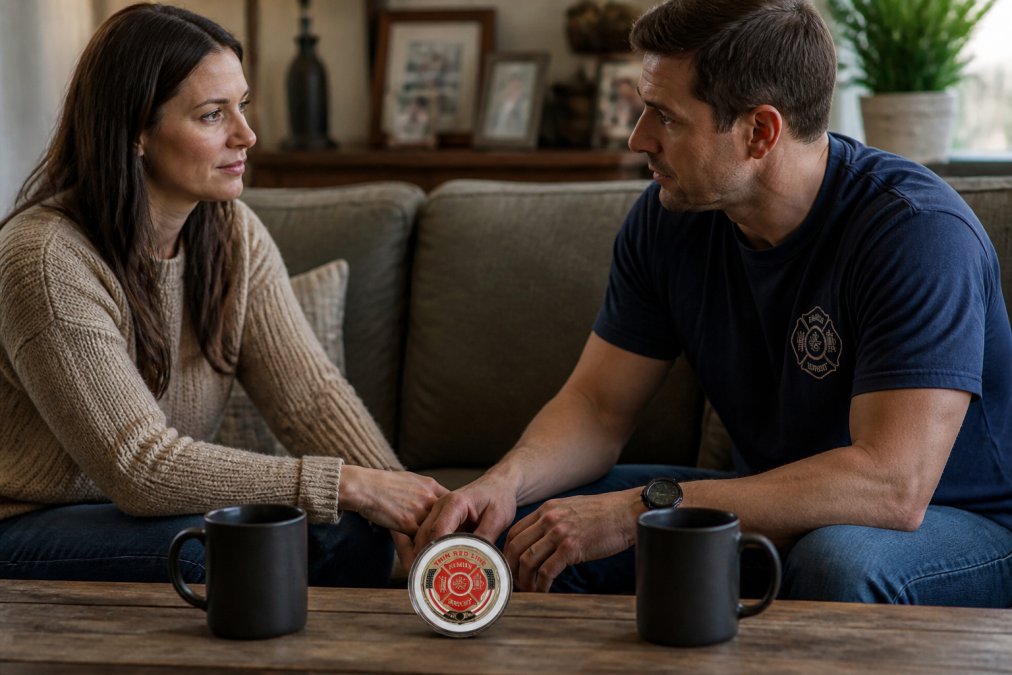
Ask open-ended questions and listen without trying to fix. Your firefighter needs to feel heard, not solved. Questions like "What would help you feel better?" invite expression.
Avoid minimizing their experience. Instead of "You'll get over it," validate: "That sounds incredibly difficult. I'm glad you're telling me about it."
Set boundaries around communication patterns. If your spouse uses silence or anger to avoid conversations, say: "I want to understand what you're going through. When you shut down, I can't help. Can we agree to try talking about this?" wellness gifts for stress.
Be direct about your own needs. "I love you and I want to support you. I also need us to have a plan for getting you professional help. This is bigger than what I can handle alone."
Normalize professional help as strength, not weakness. "Getting help is how you stay sharp and healthy. It's what the best firefighters do."
Coping with Firefighter Shift Work and Its Impact
The 24-hour shift cycle fundamentally disrupts normal family rhythms. Managing this reality requires intentional strategies.
Sleep deprivation is foundational to many problems. When your firefighter works nights and struggles to sleep during the day, cognitive function declines, emotional regulation becomes harder, and irritability increases.
Create a sleep sanctuary: blackout curtains, white noise machines, and a cool room temperature help daytime sleep quality. Protect your spouse's sleep time and don't schedule family activities during their designated recovery hours.
Nutrition suffers on shift work. Prepare healthy meals your spouse can take to the station or eat before their shift. Hydration matters too; many firefighters don't drink enough water during long shifts.
The irregular schedule affects intimacy and connection. You might not have synchronized free time. Some couples find that shorter, frequent check-ins work better than lengthy conversations. A 15-minute conversation over coffee might be more realistic than a long dinner out.
Children struggle with the irregular schedule too. Help your spouse stay connected through video calls during shifts, written notes, or recorded messages.
Plan transitions between work and home deliberately. Build in a buffer, a shower, a walk, 30 minutes alone, so your spouse's nervous system can downregulate before engaging with family.
Setting Healthy Boundaries and Communication Strategies
Boundaries protect both partners. Without them, you risk becoming enmeshed in your spouse's emotional state, losing yourself in the process.
Define what you can and cannot handle. You cannot fix your spouse's trauma, absorb their emotional pain, or sacrifice your own wellbeing to manage theirs. You can listen, encourage professional help, and show up consistently.
Establish communication rules for difficult moments. If your spouse tends to shut down or become angry, agree on a signal that means "I need a break, but I want to come back to this."
Set limits on substance use or unhealthy coping mechanisms. If your spouse is drinking heavily, say: "I love you and I'm concerned about how much you're drinking. I can't enable this. I need you to talk to someone about what's driving this." Then follow through with consequences if necessary.
Protect your own mental health. You're not responsible for your spouse's recovery. Consider your own therapy or counseling to process secondary trauma. Many spouses of first responders benefit from support groups.
Digital boundaries matter too. Discuss reasonable limits on news consumption and social media use, especially before bed or during recovery time.
Address accountability directly. Your firefighter is responsible for seeking help and doing the work of recovery. You can support that process, but you cannot do it for them.
Mental Health Resources for Fire Service Families
Professional help is essential when trauma is present. The fire service has specific resources designed for first responders and their families.
The National Suicide Prevention Lifeline (988) is available 24/7. The Crisis Text Line (text HOME to 741741) offers immediate support via text message.
Many fire departments have Employee Assistance Programs (EAPs) that provide free, confidential counseling. Ask your firefighter's department about their EAP or contact their union representative.
The International Association of Fire Chiefs and the Firefighter Behavioral Health Alliance provide resources and connect firefighters with mental health professionals who understand the unique culture and stressors of the job.
Look for therapists with experience treating first responders and trauma. The SAMHSA National Helpline (1-800-662-4357) can help you find local mental health services.
Support groups for fire service families exist in many areas. Knowing you're not alone in this struggle is powerful. The American Psychological Association's resources on first responder mental health provide evidence-based information about trauma and recovery.
Some couples benefit from couples therapy with a therapist trained in trauma. The National Alliance on Mental Illness (NAMI) family support resources offer guidance on supporting a loved one with mental health challenges.
Peer support networks within the fire service are invaluable. Many departments have peer support teams trained to help firefighters after critical incidents.
Building Resilience and Post-Traumatic Growth Together
Resilience isn't about bouncing back unchanged. It's about integrating difficult experiences and growing from them.
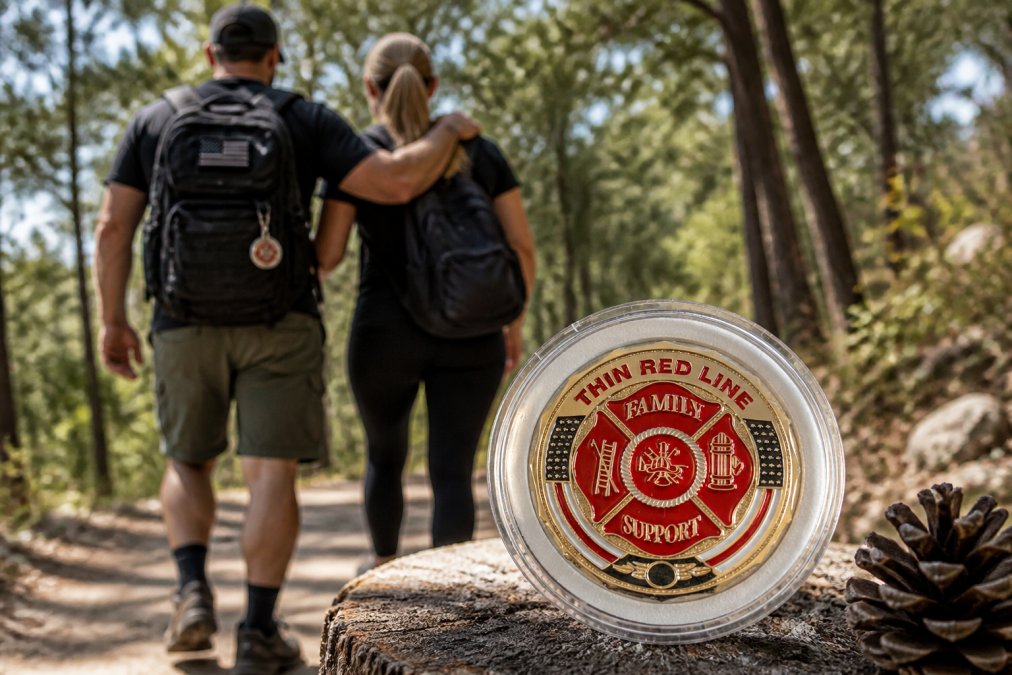
Start with shared wellness practices. Exercise is one of the most effective trauma treatments. Walking, hiking, or working out together builds resilience while creating positive time together.
Develop a shared meaning around your spouse's work. Help your spouse articulate why they do this work and what it means beyond the paycheck. This can transform trauma from senseless suffering into purposeful service.
Create rituals that honor both the difficulty and the strength. Some couples light a candle on the anniversary of a difficult call. Others volunteer together in their community.
Practice gratitude deliberately. Share one thing you're grateful for each day. This shifts perspective without dismissing struggle.
Invest in your relationship intentionally. Schedule time together for fun and connection, not just crisis management conversations. Laugh together. Play together.
Build a support network beyond your spouse. You need friends, family, and community. Your firefighter needs peer support from other first responders.
Recovery isn't linear. Your spouse will have good days and hard days. This is normal. The goal is to process trauma and move forward with resilience.
Many couples find that supporting each other through firefighter mental health challenges actually strengthens their relationship. You've faced something difficult together and chosen to stay present and seek help. That builds a foundation of trust and commitment.
Consider items that honor the fire service and your spouse's identity while supporting mental health awareness. Black Helmet's Thin Red Line Firefighter's Prayer Family Support Challenge Coin or Firefighter's Prayer Fire Rescue Brushed Steel Dog Tag serve as tangible reminders of your commitment to supporting your spouse through this journey. These pieces carry meaning beyond their material value; they represent the brotherhood, faith, and resilience that sustains firefighters and their families.


Supporting a firefighter's mental health as a spouse is one of the most important things you can do for your family. Your presence, willingness to learn, and commitment to professional help create the conditions for healing. The fire service demands extraordinary things from those who serve. Meeting them with understanding, boundaries, and unwavering support honors both their sacrifice and your own strength. The Centers for Disease Control and Prevention's resources on mental health support emphasize that mental health is as critical as physical health for first responders. Your firefighter deserves care. So do you.
Frequently Asked Questions
What are the common signs of PTSD in firefighters?
PTSD in firefighters often appears as hypervigilance, intrusive thoughts about traumatic calls, avoidance of reminders, emotional numbness, or sudden anger. You might notice your spouse being easily startled, having difficulty sleeping, withdrawing from family activities, or experiencing flashbacks. Secondary trauma, absorbing your partner's trauma, can also affect spouses. If you observe these patterns after a significant incident, professional evaluation is important. Many first responders benefit from trauma-informed counseling and peer support networks.
How can I encourage my firefighter spouse to seek professional help?
Start by creating psychological safety, acknowledge that seeking help is a sign of strength, not weakness. Avoid framing it as 'something is wrong with you.' Instead, say: 'I've noticed you've been struggling since that call. A counselor who works with first responders could help you process what happened.' Offer to research therapists together or attend the first session with them. Normalize mental health care by discussing your own wellness. Many fire departments offer employee assistance programs (EAP) with confidential counseling at no cost, remind your spouse of this resource.
What resources are available for firefighter families?
The International Association of Fire Chiefs (IAFC) and the Firefighter Behavioral Health Alliance provide peer support networks and mental health resources. Many departments have Employee Assistance Programs (EAP) offering free counseling. The Crisis Text Line (text HOME to 741741) and the 988 Suicide and Crisis Lifeline are available 24/7. Organizations like First Responder Support Network and the Fire Service EMS Wellness Foundation offer family-focused programs. Black Helmet's Thin Red Line Family Support Challenge Coin serves as a meaningful reminder of your commitment to standing together through challenges.
How do I maintain my own mental health while supporting a first responder?
Supporting a firefighter spouse is emotionally demanding, protecting your own wellbeing is essential, not selfish. Set boundaries around work talk, maintain your own friendships and activities, and consider therapy or support groups for fire service families. Vicarious trauma can affect spouses, so recognize when you're absorbing secondary stress. Practice stress management through exercise, hobbies, or meditation. Connect with other fire service families who understand the unique pressures. Remember: you cannot pour from an empty cup. Your mental health directly impacts your ability to support your spouse effectively.
This article was written using GrandRanker
