

Rugged Accessories for Wildland Fire Crews: Essential Gear Guide
Table of Contents
- Rugged Accessories for Wildland Fire Crews: What Sets Professionals Apart
- Wildland Firefighter PPE Essentials and Compliance Standards
- NFPA 1977 Standards Wildland: Understanding Gear Compliance
- Wildland Fire Tools List: Hand Tools and Gear Management
- Wildland Fire Packs and Bags: Load Carriage and Weight Optimization
- Hydration Systems and Field Repair Hacks for Extended Operations
- Budget vs. Professional Grade: Value and Durability Comparison
- Fire Shelter Deployment and Emergency Accessories
Last Updated: July 24, 2026
Rugged Accessories for Wildland Fire Crews: What Sets Professionals Apart
Wildland firefighters operate in extreme conditions, intense heat, rough terrain, unpredictable weather, and 14+ hour shifts. Rugged accessories aren't optional; they're essential to crew efficiency and safety. At Black Helmet, we understand that wildland firefighting demands equipment built to the same standard as the people wearing it: tough, reliable, and designed by those who know the job.
Modern crews demand accessories that balance weight, durability, and functionality, something generic outdoor equipment cannot deliver. This guide covers essential rugged accessories for wildland fire crews, from protective equipment to load-bearing systems to field-tested maintenance solutions.
Wildland Firefighter PPE Essentials and Compliance Standards
Personal protective equipment for wildland operations must meet federal standards while remaining practical for extended field deployment. The foundation of any crew's safety system starts with PPE that protects without hindering mobility or creating excessive heat burden.
Fire-Resistant Clothing and Layers
Fire-resistant clothing forms the outer shell of wildland firefighter protection. NFPA 1977 standards define performance requirements for wildland apparel, and crews should verify that all clothing meets these specifications before deployment. The most effective wildland fire crews layer strategically: a moisture-wicking base layer (typically synthetic or wool) sits closest to skin, a fire-resistant shirt provides the primary protection barrier, and outer pants offer abrasion resistance and additional thermal protection.
Nomex remains the industry standard for fire-resistant fabric, though newer blends now offer improved comfort and durability. Crews working extended operations report that quality fire-resistant clothing reduces fatigue compared to heavier alternatives, directly impacting crew safety and decision-making capability late in a shift.
Helmets and Face Protection
A wildland helmet serves multiple purposes: impact protection from falling debris, thermal protection from radiant heat, and a mounting point for face protection accessories. Helmets designed for wildland work differ significantly from structural firefighting helmets, they're lighter, offer better visibility, and integrate with face shields and goggles.
Eye protection represents a critical gap in many crew setups. Flying embers, smoke, and debris pose constant threats to vision. Modern wildland helmets accommodate integrated face shields or compatible goggles that stay secure during active fireline work. Heat-resistant helmet shrouds, fabric extensions that protect the back of the neck and shoulders, provide additional thermal protection in high-radiant-heat environments.
NFPA 1977 Standards Wildland: Understanding Gear Compliance
NFPA 1977 establishes the benchmark for wildland firefighting protective equipment in the United States. This standard defines performance requirements for apparel, helmets, gloves, and boots used in wildland fire operations. The standard specifies minimum thermal protection levels, flame-spread ratings, and durability requirements. Apparel must resist ignition and limit flame spread; helmets must withstand impact and thermal stress; boots must provide ankle support and sole protection on rough terrain.
Crews should request certification documentation from equipment suppliers. A simple question, "Does this meet NFPA 1977?", separates compliant gear from equipment that merely appears professional.
Wildland Fire Tools List: Hand Tools and Gear Management
Hand tools represent the working end of any wildland crew's capability. A well-maintained hand tool, Pulaski, shovel, or McLeod, directly impacts crew productivity and safety. The core hand tools for wildland operations include the Pulaski (combination axe and hoe), the McLeod (shovel and rake combined), flat shovels for digging, and specialized tools like the drip torch for prescribed burns.
Tool bags and carrying systems prevent damage during transport and keep tools accessible during operations. Quality tool bags distribute weight evenly, protect both the tool and the crew member carrying it, and allow quick access when conditions change. Tool maintenance in the field determines whether equipment functions when needed. Crews that sharpen tools regularly, clean soil and debris from handles, and inspect for damage maintain operational capability throughout a deployment. Field repair kits, files, replacement handles, and fasteners allow crews to address problems immediately.
Footwear and Boot Selection for Fireline Work
Wildland firefighting footwear must provide ankle support, thermal protection, and grip on unstable terrain. Purpose-built wildland fire boots integrate heat-resistant soles, reinforced ankle support, and aggressive tread patterns designed for loose soil and rocky ground. Boot selection depends on terrain and operational conditions. Crews working steep, rocky terrain prioritize aggressive ankle support and protective toe caps.
Proper fit is non-negotiable. Boots that slip or create pressure points cause blisters, which compound fatigue and reduce crew effectiveness. Sock selection matters significantly, moisture-wicking merino wool or synthetic blends outperform cotton. Cotton retains moisture, creating conditions for blister formation and fungal growth.
Wildland Fire Packs and Bags: Load Carriage and Weight Optimization
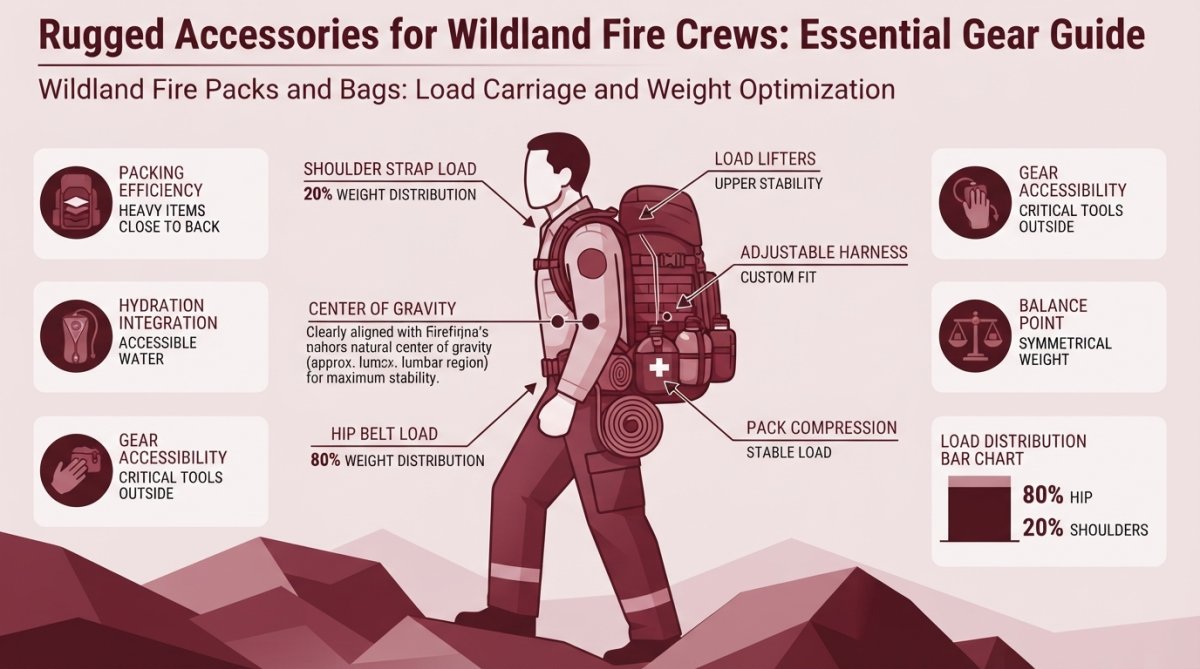
Load carriage systems determine how effectively crews function during extended operations. A poorly designed pack creates fatigue that compounds over 14+ hour shifts. A well-designed system distributes weight across the shoulders, hips, and core, allowing crews to maintain efficiency even when carrying 40-50 pounds of gear.
Modern wildland fire packs integrate multiple compartments for organized gear storage, padded hip belts that transfer weight to the hips, and ventilation systems that reduce heat buildup on the back. Capacity matters, but so does how capacity is organized. Packs with logical compartmentalization, water bottles accessible without opening the main compartment, tools stored where they're needed, improve crew function throughout a deployment.
Gear Weight-to-Durability Optimization
The tension between weight and durability defines modern wildland accessory design. Lightweight materials reduce fatigue over extended operations; durable materials withstand the abuse of fireline work. Material selection drives this balance. Ballistic nylon offers excellent durability but weighs more than lighter synthetics. Ripstop fabrics provide tear resistance with minimal weight penalty. Reinforced stitching and stress-point construction increase durability without proportionally increasing weight.
Testing in real conditions reveals which accessories deliver on their promises. Crews should prioritize field-tested recommendations from experienced personnel over marketing claims.
Hydration Systems and Field Repair Hacks for Extended Operations
Hydration directly impacts crew performance, decision-making capability, and heat illness prevention. Hydration bladders (internal water reservoirs with drink tubes) keep hands free and allow crews to drink while moving. Insulated bladder covers reduce water temperature increase in hot conditions. Electrolyte supplementation becomes critical during extended operations, plain water alone doesn't fully restore electrolyte balance lost through sweat.
Water treatment in field conditions prevents illness from contaminated sources. Lightweight water filters or chemical treatment tablets allow crews to safely drink from available water sources rather than carrying all water from the start.
Maintenance and Durability in the Field
Gear fails when it's not maintained. Field repair capability, the ability to address problems immediately rather than abandoning equipment, extends the functional life of accessories and keeps crews operational. Field repair kits should include basic supplies: heavy-duty thread and needles for fabric repairs, duct tape, small fasteners and bolts, a lightweight multi-tool, and replacement parts for frequently-damaged items like straps and D-rings.
Preventive maintenance during operations extends equipment life. Crews should inspect gear daily for developing problems, clean dirt and debris from equipment before it causes wear, and address small issues before they become failures. Storage conditions between operations significantly impact equipment longevity. Gear stored damp develops mold and mildew; proper storage in clean, dry, cool conditions extends the service life of accessories.
Budget vs. Professional Grade: Value and Durability Comparison
| Accessory Type | Budget Option | Professional Grade | Key Difference |
|---|---|---|---|
| Fire Pack | Generic hiking pack, 40L capacity | Wildland-specific pack, 45L, reinforced hip belt | Weight distribution and durability under repeated use |
| Hydration System | Standard water bottle | Insulated bladder system with treatment capability | Temperature maintenance and field water access |
| Tool Bag | Generic canvas bag | Reinforced ballistic nylon with organized compartments | Durability and accessibility during operations |
| Helmet Shroud | Basic fabric cover | Heat-resistant specialized shroud | Thermal protection and secure attachment |
| Hand Tools | Generic outdoor tools | Wildland-certified Pulaski/McLeod | Balance, durability, and performance standards |
Budget-grade accessories cost less initially but often require replacement mid-season or fail when crews depend on them. Professional-grade equipment costs more upfront but maintains functionality throughout multiple seasons, ultimately providing better value.
Black Helmet understands this reality. Our [Wildland Fireline Premium Tee](https://blackhelmetapparel.com/products/wildland-firefighter-premium-tee) ($34.50) represents professional-grade apparel built for crews who live this work. Designed by wildland firefighters for wildland firefighters, this tee combines fire-resistant protection with the durability that field operations demand.
Fire Shelter Deployment and Emergency Accessories
Fire shelters represent the last line of defense when escape routes close or fire behavior becomes unpredictable. Every crew member must carry a fire shelter, understand deployment procedures, and maintain their shelter in deployment-ready condition. Fire shelter deployment bags protect the shelter during transport and storage while allowing rapid deployment when needed.
Maintenance protocols ensure fire shelters remain functional. Regular inspection for tears, proper folding technique, and storage in cool, dry conditions keep shelters deployment-ready. Training and practice represent critical accessories in the broader sense. Crews that regularly practice fire shelter deployment develop muscle memory that functions even under extreme stress.
Fire shelter accessories extend beyond the shelter itself. Reflective markers that identify shelter locations help rescue personnel locate crews. Communication devices that function in fire conditions allow crews to maintain contact with incident command. Personal locator beacons provide backup communication when radio systems fail.
Wildland firefighting demands accessories built to withstand conditions that most outdoor gear never encounters. The crews who survive dangerous seasons and maintain peak performance throughout extended operations invest in professional-grade accessories designed by and for wildland firefighters. Black Helmet has served the fire service since 2008, creating gear that honors the tradition and demands of those who work the fireline. Whether you're gearing up a new crew or upgrading existing equipment, choosing accessories built on real-world experience rather than marketing promises makes the difference when conditions turn critical.
Frequently Asked Questions
What essential gear do wildland fire crews need for daily fireline operations?
Wildland firefighters require fire-resistant clothing, helmets with face protection, sturdy boots rated for rugged terrain, a fire pack with hand tools, hydration systems, a fire shelter, and navigation equipment. All gear must meet NFPA 1977 standards. The specific combination depends on crew role, hotshot crews and crewboss teams carry specialized configurations. Quality rugged accessories reduce fatigue and improve response time during extended operations.
What does NFPA 1977 standards wildland compliance actually mean for gear selection?
NFPA 1977 is the standard for wildland firefighting protective clothing and equipment in the United States. It specifies minimum requirements for fire-resistant fabric weight, tear and abrasion resistance, and flame spread ratings. Compliant gear must withstand the thermal and mechanical demands of fireline work. When selecting rugged accessories, verify that clothing, gloves, and pack materials meet or exceed NFPA 1977 certification. Non-compliant gear puts crews at risk and may violate department safety protocols.
How do I balance gear weight with durability for long-term wildland fire operations?
Gear weight-to-durability optimization requires choosing materials that perform under stress without excessive bulk. Nomex and other fire-resistant synthetics offer high durability with moderate weight. Prioritize critical items, boots, shelter, and pack, for premium construction, then scale down on secondary accessories. Field-tested rugged accessories from brands like Haix boots and Bullard helmets provide proven durability. Test gear during training before committing to full crew loadouts. Lighter isn't always better if it sacrifices protection.
What field repair and maintenance hacks keep rugged wildland accessories functional in remote locations?
Carry a small repair kit: duct tape, paracord, spare boot laces, and needle/thread for Nomex clothing. Inspect gear daily for tears, loose straps, and deterioration. Clean equipment after each deployment to prevent salt and dirt buildup that accelerates wear. Rotate packs and boots to extend lifespan. For emergency fixes, duct tape handles broken pack straps; paracord replaces damaged attachment points. Regular maintenance prevents field failures and extends the life of expensive rugged accessories, reducing replacement costs for crews and departments.
This article was written using GrandRanker
