

How to Maintain Firefighter Cotton Shirts
Table of Contents
- Why Cotton Shirts Demand Different Care
- Washing Your Firefighter Cotton Shirts Correctly
- Choosing the Best Laundry Detergent for Firefighter Uniforms
- How to Remove Soot from Cotton Clothing
- Protecting Screen Prints and Embroidery During Cleaning
- Drying Methods: Air-Drying vs. Tumble Drying
- Preventing Shrinkage in Cotton Shirts
- Storage and Longevity: Preserving Fabric Integrity
Last Updated: August 22, 2026
Why Cotton Shirts Demand Different Care
Cotton is the backbone of station wear. It's breathable, durable, and comfortable during long shifts, which is exactly why firefighters rely on cotton duty shirts to represent their crew and their pride. But cotton also demands respect when it comes to maintenance. Unlike synthetic blends, pure cotton fibers break down faster under heat, harsh chemicals, and improper washing. Sweat, soot, and smoke exposure create conditions that accelerate fabric degradation if you don't know what you're doing.
The difference between a cotton shirt that lasts five years and one that falls apart in two comes down to how you maintain it. This guide from Black Helmet covers the exact protocols that keep your duty shirts looking sharp, feeling comfortable, and holding up through countless shifts. We'll walk you through every step, from choosing the right detergent to protecting embroidery and screen prints, so your gear represents you the way it should.
Washing Your Firefighter Cotton Shirts Correctly
The foundation of shirt longevity starts in the washing machine. Most people treat all laundry the same way, but cotton duty shirts, especially those bearing screen prints, embroidery, or crew insignia, need a different approach. The goal is to clean effectively without compromising the fabric or the graphics that make the shirt meaningful.
Water Temperature and Wash Cycle Settings
Cold water is non-negotiable for maintaining firefighter cotton shirts. Hot water accelerates fiber breakdown and causes dyes to fade faster, which matters when your shirt carries your station's colors or a design that means something to your crew (peer-reviewed research). Cold water cleans just as effectively while preserving the structural integrity of the cotton fibers.
Set your machine to a gentle or delicate cycle. This reduces agitation and spin speed, which means less mechanical stress on the fabric. A standard heavy-duty cycle is designed for towels and work clothes that can handle rough treatment, your duty shirt isn't that. The gentle cycle typically runs 30-40 minutes and uses lower spin speeds that protect against pilling and stretching (the FTC).
Fill the machine to about three-quarters capacity, not to the brim. Overloading prevents proper water circulation and detergent distribution, which means some areas won't get cleaned while others get over-processed. Underloading is fine, it actually gives each shirt more room to move freely without tangling or friction damage.
:::pro Load your washing machine with similar weights and fabric types together. Washing a heavy cotton duty shirt with lightweight synthetics causes uneven agitation and can damage the lighter items. :::
Separating Loads to Prevent Cross-Contamination
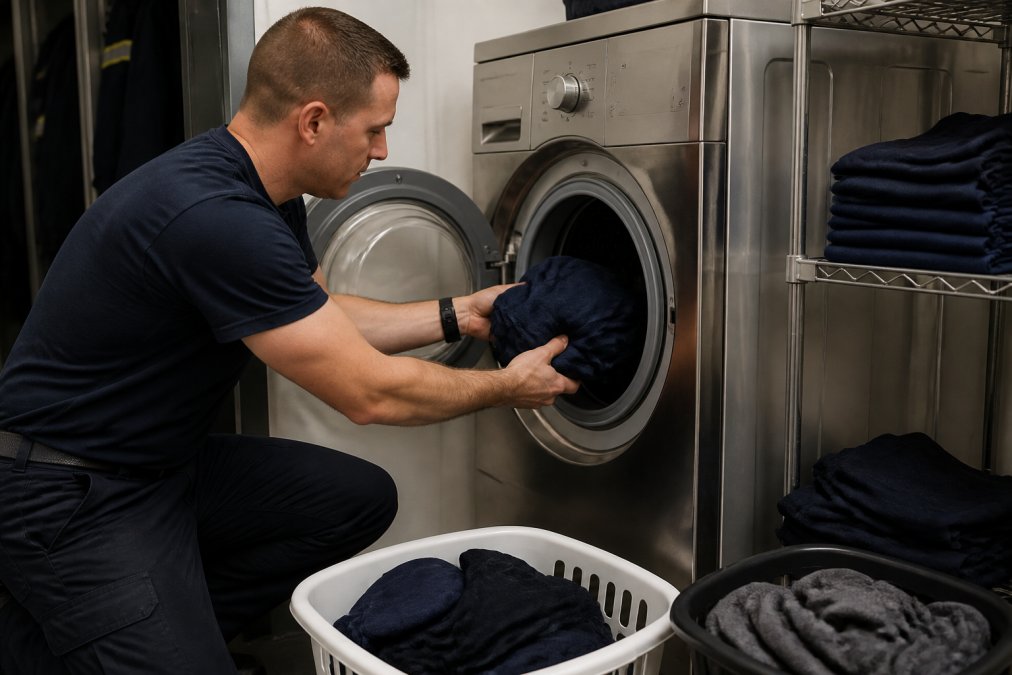
Separation matters more than most people realize. Soot and smoke residue cling to fabric fibers, and if you wash your duty shirt with regular clothes, you risk transferring contaminants. Wash duty shirts in their own load whenever possible, especially after shifts that involved heavy smoke exposure or working around soot.
Separate by color too. Dark shirts should wash separately from light-colored gear. Dyes from darker fabrics can bleed slightly in cold water, especially on the first few washes, and you don't want that transfer happening to lighter crew shirts or personal clothing.
If you're washing multiple duty shirts together, that's fine, they're designed for the same conditions and same care level. Group them with other station gear that has similar exposure history. The key is preventing cross-contamination between duty wear and everyday clothing.
Choosing the Best Laundry Detergent for Firefighter Uniforms
Not all detergents are created equal when it comes to duty wear. Harsh chemicals strip protective coatings from fabric, break down dyes, and can leave residue that traps moisture and promotes odor. For maintaining firefighter cotton shirts, you want mild, pH-balanced detergent without optical brighteners, bleach, or heavy enzymes.
Look for detergents labeled as "gentle," "delicate," or "wool-safe." These formulations are designed to clean without aggressive chemicals. Avoid fabric softeners entirely, they coat fibers with a waxy residue that traps sweat and bacteria, which is the opposite of what you want in gear that needs to stay fresh and functional. Softeners also break down moisture-wicking properties if your shirt has any performance treatments.
Measure your detergent carefully. More detergent doesn't mean cleaner clothes, it means residue buildup over time. A standard load typically needs about half the amount most people use. Excess detergent leaves a film on fibers that makes the fabric feel stiff and can trap odors.
For soot and smoke-heavy shifts, pre-treat with a mild detergent solution before washing. Soak the affected area in cold water with a small amount of gentle detergent for 15-30 minutes before the main wash cycle. This breaks down soot particles without requiring harsh chemicals or extended exposure to strong products.
How to Remove Soot from Cotton Clothing
Soot is carbon particles that embed themselves in fabric fibers (the CDC). The challenge is removing them without damaging the shirt. Aggressive scrubbing spreads soot deeper into the weave and can cause pilling or tears. The right approach combines gentle pre-treatment with proper wash technique.
Start by brushing off loose soot with a soft brush or old toothbrush before wet cleaning. This removes surface particles and prevents them from being driven deeper into the fabric during washing. Brush gently in one direction, don't scrub back and forth.
For embedded soot, soak the shirt in cold water for 30 minutes. This allows water to penetrate the fibers and loosen particles. Then apply a mild detergent directly to the stained area and let it sit for another 15-20 minutes. The detergent works to break down the carbon bonds without requiring you to physically scrub the fabric.
Rinse thoroughly with cold water before putting the shirt in the washing machine. A pre-rinse removes loose particles and detergent residue, which means the main wash cycle can focus on finishing the job rather than fighting against extra soap. Wash in cold water on a gentle cycle as described earlier.
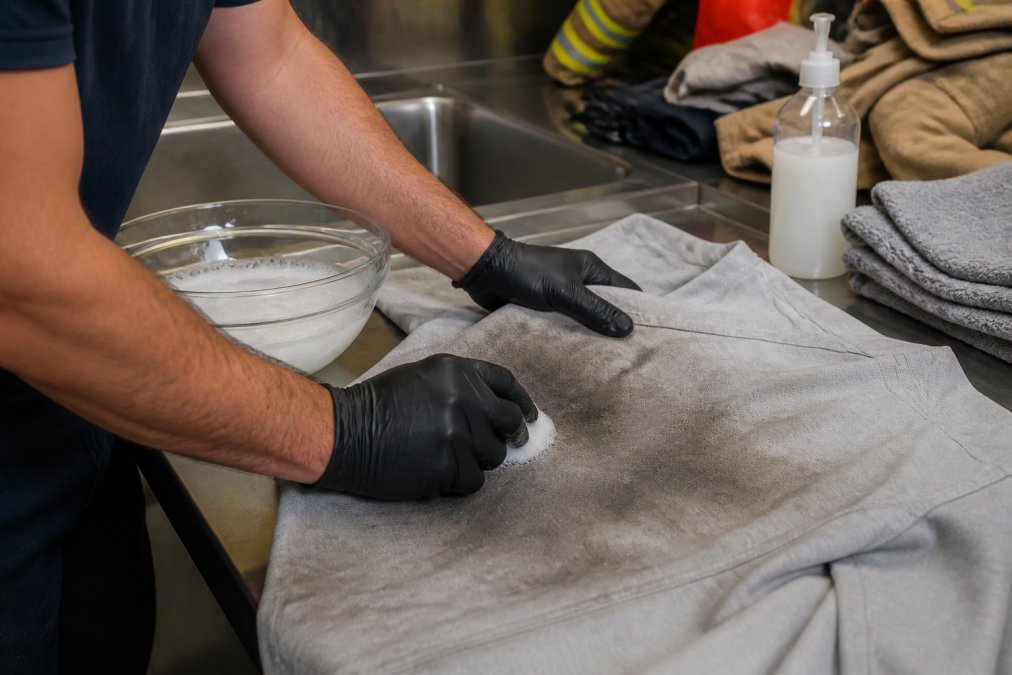
If soot persists after the first wash, repeat the soak and pre-treat rather than using stronger chemicals. Multiple gentle treatments are better than one aggressive approach. Patience here preserves the shirt.
Protecting Screen Prints and Embroidery During Cleaning
Screen prints and embroidered insignia are what make a duty shirt meaningful. They're also vulnerable to damage from washing, drying, and storage. The best protection starts before the shirt ever goes in the machine.
Always wash inside-out. This keeps printed graphics and embroidery facing inward, away from agitation and friction. The inside of the shirt experiences less mechanical stress during the wash cycle, which significantly extends the life of the graphics. Inside-out washing is one of the simplest and most effective protection methods available.
Avoid washing screen-printed or embroidered shirts with items that have rough textures or metal components, zippers, buttons, hooks. These catch on the raised surface of embroidery and can snag or tear the threads. Wash them with other smooth-surfaced items or alone.
When drying, air-drying is superior to machine drying for any shirt with printed or embroidered graphics. Machine heat can crack and fade screen prints, and tumble action can catch embroidery. If you must use a dryer, use low heat and remove the shirt while it's still slightly damp to minimize heat exposure.
Store printed and embroidered shirts flat or folded, not hung. Hanging creates tension on the graphics and can cause thread damage over time, especially on heavier embroidery. Fold gently and store in a cool, dry place away from direct sunlight.
Drying Methods: Air-Drying vs. Tumble Drying
How you dry your shirt matters as much as how you wash it. Machine dryers use heat and mechanical action, both are hard on cotton. Air-drying preserves fabric integrity, prevents shrinkage, and eliminates the risk of heat-related damage to graphics or embroidery.
Air-dry your duty shirts whenever possible. Hang them on a clothesline or lay them flat on a clean surface. Avoid direct sunlight, which can fade dyes over time. A shaded outdoor area or indoor space with good air circulation works well. Air-drying typically takes 4-6 hours depending on humidity and airflow.
If you need to use a machine dryer, use the lowest heat setting available. Remove the shirt while it's still slightly damp, this prevents over-drying, which makes fabric stiff and brittle. Damp-dry on low heat for 20-30 minutes, then hang to air-dry the rest of the way. This hybrid approach is a compromise that's better than full machine drying.
Never use high heat on cotton duty shirts. High heat accelerates fiber breakdown, causes shrinkage, and can damage or crack screen prints. The time saved isn't worth the damage to gear that represents your crew.
Preventing Shrinkage in Cotton Shirts
Cotton naturally shrinks when exposed to heat and moisture. A shirt that shrinks even half a size becomes uncomfortable and looks wrong, and you can't get that fit back. Prevention is far easier than trying to stretch a shrunken shirt.
The primary defense against shrinkage is cold water washing and low-heat or no-heat drying. Heat is the main driver of shrinkage, so eliminating it at every step prevents the problem. Cold water wash plus air-dry is the gold standard for shrinkage prevention.
If your shirt is new, wash it once before wearing it for a full shift. Pre-washing in cold water on a gentle cycle allows any minor shrinkage to happen before the shirt becomes part of your regular rotation. This is especially important for duty shirts you're counting on to fit a certain way.
Avoid wringing or twisting the shirt when wet. This creates stress on fibers and can contribute to shrinkage and stretching. Instead, gently squeeze out excess water and hang or lay flat to dry. The fabric will release water naturally without mechanical stress.
Store dry shirts in a cool, dry place. Humidity and temperature fluctuations can cause subtle shrinkage over time, so a climate-controlled closet is better than a damp basement or hot attic.
Storage and Longevity: Preserving Fabric Integrity
How you store your duty shirts between wears affects how long they last. Proper storage prevents damage, maintains fit, and keeps gear ready when you need it.
Fold rather than hang long-term. Hanging creates tension on fibers, especially around the shoulders and armholes, which can stretch the shirt out of shape over months. Fold gently and stack in a drawer or shelf. If you must hang, use padded hangers and hang only for a few days at a time.
Keep shirts in a cool, dry location away from direct sunlight. UV exposure fades dyes and weakens fibers. A dark closet or drawer is ideal. Avoid damp basements or hot attics, moisture promotes mildew and odor, while heat accelerates fiber breakdown.
Don't store shirts immediately after wearing them if they're damp from sweat. Hang them to air-dry completely first, then fold and store. Storing damp fabric creates conditions for mildew and odor that are hard to remove.
Inspect your shirts periodically for signs of wear. Small holes or loose seams are easier to repair early than after they've spread. Minor repairs extend the life of gear significantly. A loose thread or small seam separation takes minutes to fix and prevents a larger problem.
Rotate your duty shirts so you're not wearing the same one repeatedly. Alternating between shirts gives fabric time to recover between wears and distributes wear evenly. If you have three duty shirts, wear them on a three-day rotation. This simple practice extends the life of all three.
Black Helmet gear is built to last, but longevity depends on how you maintain it. Treat your duty shirt like the meaningful piece of equipment it is, not just another piece of laundry. Cold water, gentle cycles, mild detergent, and proper drying and storage are the fundamentals. Follow these protocols, and your cotton duty shirt will represent you and your crew for years to come.
Maintaining your firefighter cotton shirts properly keeps you looking sharp and ensures your gear lasts through countless shifts. The approach we've outlined, cold water washing, inside-out cleaning, gentle drying, and careful storage, protects both the fabric and the graphics that make your shirt meaningful. Black Helmet understands that your duty wear represents more than just clothing; it's a connection to your crew and your service. Start with these fundamentals today, and you'll see the difference in how your shirts hold up and how they make you feel when you wear them.
Frequently Asked Questions
How often should you wash duty shirts to prevent fabric breakdown?
Wash duty shirts after each shift or when visibly soiled to prevent soot, sweat, and smoke odors from setting into the fibers. Regular washing maintains structural integrity better than infrequent heavy-duty cycles. However, excessive washing with harsh detergents accelerates fiber breakdown. Balance frequency with gentle detergent selection and cold water washing to extend the life of your firefighter cotton shirts.
What is the best laundry detergent for firefighter uniforms?
Use mild, fragrance-free detergents designed for delicate or performance fabrics. Avoid chlorine bleach and fabric softeners, which degrade cotton fibers and damage screen prints. Enzyme-based detergents work well for removing organic stains like sweat and soot. For best results with firefighter uniforms, choose detergents formulated for moisture-wicking or technical fabrics, and always follow the manufacturer's recommended dosage to prevent residue buildup.
Can you use bleach on firefighter cotton shirts?
No, avoid chlorine bleach entirely on firefighter cotton shirts. Bleach weakens cotton fibers, causes yellowing, and strips color from graphics and embroidery. For whitening or brightening, use oxygen-based alternatives or oxygen bleach products, which are gentler on fabric. If your duty shirt has stubborn stains, pre-treat with a mild detergent solution and soak before washing in cold water instead of relying on bleach.
Should firefighter cotton shirts be air-dried or machine-dried?
Air-drying is the best choice to maximize longevity and protect screen prints from heat damage. High heat in tumble dryers accelerates fiber breakdown and can shrink cotton shirts. If you must use a dryer, use the lowest heat setting or air-dry cycle. Lay shirts flat or hang them in a well-ventilated area away from direct sunlight to prevent fading while preserving the structural integrity of your duty wear.
This article was written using GrandRanker
