

7 Reasons Firehouse Identity Matters for New Recruits
Last Updated: October 25, 2026
Quick Summary
Firehouse identity is the shared set of values, habits, and traditions that tells a new recruit what a crew stands for and how it expects members to act. A recruit who understands the identity of a house joins a team, while one who does not joins a shift.
- Assign one senior firefighter, not the officer, to check in daily with a recruit for the first two weeks.
- Ask recruits at the 30-day mark what surprised them, what confused them, and what they would change.
- Give recruits a small ownership task in days 46 to 90 to convert observation into identity.
- Convert each value into three observable behaviors a recruit could witness on their first shift.
- Track probationary check-ins at 30, 90, and 180 days to test whether values are visible.
Table of Contents
- What Firehouse Identity Actually Means to a Recruit
- Firehouse Culture for New Recruits: What They See in the First 90 Days
- Building Trust in the Firehouse When You're the New Guy
- Firefighter Traditions and Identity: Passing Down What the Job Stands For
- How Fire Service Recruitment and Retention Depend on Identity
- Turning Stated Values into Observable Station Behaviors
- Wear the Identity: Gear That Carries the Firehouse Standard
- Frequently Asked Questions
What Firehouse Identity Actually Means to a Recruit
Firehouse identity is the shared set of values, habits, and traditions that tells a new recruit what a crew stands for and how it expects members to act.
The U.S. Fire Administration's Executive Fire Officer Program research examined how departments attract applicants and keep existing employees. Its core finding is hard to argue with: people stay where they feel they belong.
A recruit who understands the identity of a house joins a team. A recruit who does not joins a shift.
Why the Probationary Year Tests Identity, Not Just Skill
Most recruits assume the first year is a skills test. Pass the drills, learn the tools, keep your mouth shut, and you are in.
The probationary year is really an identity test.
A common mistake is treating probation like a solo exam. Every senior firefighter on that shift is watching how you carry yourself and deciding whether to trust you with their life.
Firehouse Culture for New Recruits: What They See in the First 90 Days
Firehouse culture for new recruits is learned by observation, not by manual, and it follows a rough timeline. Knowing that timeline helps both the recruit and the crew turn observation into belonging.
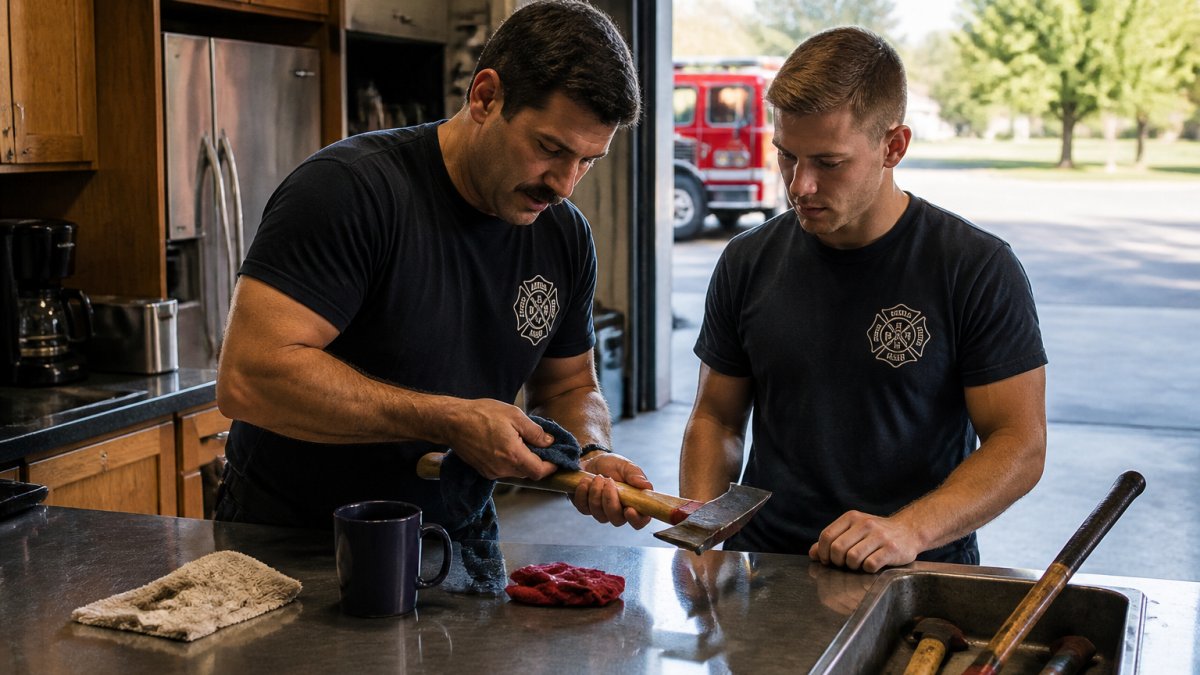
Days 1-14: The recruit is reading the room
In the first two weeks, a recruit is not really learning the job. They are learning whether they are safe: how veterans greet them by name, how the crew talks about the last call and the one who got hurt, whether the station honors its retirees and its fallen, and whether officers correct mistakes publicly or privately.
What helps at this stage: a named sponsor. Assign one senior firefighter, not the officer, to check in daily for the first two weeks. The sponsor's job is not to teach skills; it is to translate. 'Here is why we do it this way' is the most valuable sentence a recruit can hear in week one.
Days 15-45: The recruit is testing whether the values are real
By the second month, the recruit has heard the stated values and is watching for evidence. Does the crew stop unsafe habits, or only when the chief is around? Does the officer own a mistake, or blame the rookie?
What helps at this stage: a short, honest conversation at the 30-day mark. Ask three questions, what surprised you, what confused you, and what would you change? Then act on one answer.
Days 46-90: The recruit is deciding whether to invest
The third month is when a recruit decides whether to go all-in. They have enough skill to be useful and enough context to see the culture clearly.
What helps at this stage: give the recruit a real, small ownership task, checking a tool, running a drill segment, owning a station chore that matters. Ownership is the fastest way to convert observation into identity.
What the crew should watch for
Recruits rarely announce that they are struggling. The signals are quieter: a recruit who stops asking questions, eats alone, or goes quiet after a hard call. Senior firefighters who respond early, a conversation, a shared meal, a check-in after shift, do more for retention than any formal program.
For recruits who want to understand how shared gear and brotherhood symbols build crew trust, our article on why authentic brotherhood gear matters for fire crews digs into the culture behind the apparel.
Building Trust in the Firehouse When You're the New Guy
Trust in the firehouse is built through small, repeated acts of reliability, not grand gestures.
The fastest way to lose trust is to bluff. Every veteran has watched a rookie pretend to know something. It never ends well.
For recruits who want to understand how shared gear and brotherhood symbols build crew trust, our article on why authentic brotherhood gear matters for fire crews digs into the culture behind the apparel.
Firefighter Traditions and Identity: Passing Down What the Job Stands For
Firefighter traditions and identity are inseparable. The bell, the challenge coin, the helmet worn a certain way, the retiree who still shows up for coffee: these are not decoration.
A Firehouse.com research brief by Jordan Saas describes firefighting as a defining framework for many firefighters and examines the loss of identity that comes with retirement (EFO Research Brief: Retirement from the Fire Service and the Loss of Identity).
Firehouse Standard Premium Tee →
Traditions carry that weight forward. A recruit who learns why the crew does what it does inherits more than a routine. They inherit a standard.
For a recruit who wants to carry that standard in hand, the On These Principles We Stand challenge coin puts tradition, sacrifice, and resolve into something you can keep in your pocket.

How Fire Service Recruitment and Retention Depend on Identity
Fire service recruitment and retention rise and fall on whether the department can articulate who it is.
Recruitment messaging that only lists pay and benefits misses the point.
Retention works the same way in reverse. Firefighters leave when the identity they were promised does not match the one they live with.
A leader's identity matters here too. A Firehouse.com leadership article cautions company officers against building their identity entirely on rank (Fire Department Company Officers Err When Their Identity Is Built Entirely on Their Rank).
Turning Stated Values into Observable Station Behaviors
Values on a wall mean nothing to a recruit; values they can see in daily behavior mean everything. The gap between the two is where most departments lose people. What follows is a concrete process a company officer or shift leader can run in four to six weeks, not a poster campaign.
Step 1: Name the values the crew already lives by
Do not start with a brainstorming session about aspirational words. Start with observation. For two weeks, have the officer or a designated senior firefighter note specific moments when the crew behaved well: who checked the rookie's gear without being asked, who owned a mistake at the kitchen table, who called a retiree on his birthday. Group those moments into three to five themes, those are your real values.
Step 2: Convert each value into three observable behaviors
A value is only usable to a recruit if it can be seen. For each theme, write three behaviors that are specific enough to be witnessed and corrected. The test: could a recruit on their first shift tell whether the behavior happened? If not, rewrite it.
| Stated Value | Observable Station Behavior | Why It Matters to a Recruit |
|---|---|---|
| Brotherhood | Veterans eat with the crew and include the rookie at the table | Signals belonging from day one |
| Accountability | Officers name their own mistakes out loud at shift change | Teaches the recruit it is safe to fail |
| Tradition | Crew honors retirees and the fallen by name at musters | Connects the recruit to something bigger |
| Safety | Senior members stop unsafe habits immediately, regardless of rank | Proves the talk is real |
| Respect | Correction happens privately, praise publicly | Builds trust instead of fear |
Step 3: Assign an owner and a cadence
Behaviors without an owner decay. Assign each value to a senior firefighter or officer responsible for modeling it and flagging drift. Put the behaviors on the shift-change agenda once a month: ten minutes, no slides, one question, did we live these this month, and where did we fall short? A recruit who hears the crew audit itself learns more about accountability than any orientation packet can teach.
Step 4: Make it visible to candidates before they apply
Put the three-to-five values and one or two observable behaviors on the department's recruiting page and in ride-along briefings. A candidate who reads 'officers name their own mistakes out loud' learns more about the house than a photo of a shiny engine, and gets a fair preview of what they are joining, the best defense against early attrition.
Step 5: Measure whether it is working
You cannot manage what you do not check. Three simple measures, tracked quarterly, tell you whether the process is real:
- Probationary check-ins. Ask every recruit at 30, 90, and 180 days: 'Can you name our values, and can you give me an example of each one you saw this month?' If they cannot, the behaviors are not visible enough.
- Retention at the one-year mark. Compare probationary retention before and after the process started. A common pattern is that departments see the biggest gains in the first six months, when identity is still forming.
- Exit conversations. When a firefighter leaves in the first three years, ask directly whether the house matched what they were told. Patterns in those answers are the most honest audit a department will ever get.
If your crew wants to make those values visible on and off duty, our guide on designing custom station apparel for fire department morale shows how crews put their identity into what they wear.
Wear the Identity: Gear That Carries the Firehouse Standard
Gear is not the identity. But it can carry it.
That is the idea behind everything we make at Black Helmet. Since 2008, we have built apparel for firefighters who want gear that feels authentic to the job, not a costume.
The Firehouse Standard Premium Tee is our take on quiet pride. It is soft and lightweight, with the right amount of stretch. It's comfortable and flattering for all.
Frequently Asked Questions
How do new firefighters build trust with their crew?
Trust comes from small, repeated actions: showing up early, knowing your equipment, asking questions instead of guessing, and doing the unglamorous work without being told. A recruit who cleans the bay, checks the tools, and listens during debriefs signals reliability. Firehouse identity gives those actions meaning, because the crew sees a recruit who understands the standard, not just someone filling a shift slot.
What does firehouse culture mean for someone just out of the academy?
Firehouse culture is the unwritten code of a station: how the crew talks to each other, how traditions are honored, how mistakes are handled, and who gets mentored. For a new recruit, it is the difference between feeling like a guest and feeling like part of the crew. Departments that explain their culture during onboarding, rather than leaving recruits to figure it out, keep more of them through probation.
Why does firehouse identity matter for fire service recruitment and retention?
Prospective firefighters want to know what they are joining, not just what the pay and schedule are. A clear identity helps recruitment messaging feel honest, and it helps retention because current crew members stay where they feel connected to a mission and to each other. U.S. Fire Administration research on recruitment and retention points to belonging and department culture as central to keeping firefighters on the job.
What are firefighter traditions and identity, and do new recruits need them?
Firefighter traditions include challenge coins, helmet history, station rituals, and the brotherhood that ties crews together across shifts and generations. New recruits benefit from learning where those traditions come from, because it connects their daily work to something larger. Departments should explain traditions rather than assume recruits absorb them, so the meaning lands instead of feeling like an inside joke.
The hardest part of a recruit's first year is not the skills. It is figuring out who they are supposed to become. Departments that define their firehouse identity clearly, and then live it in the kitchen and on the fireground, give recruits an answer worth staying for. Black Helmet has been part of that brotherhood since 2008, with premium firefighter apparel built to honor tradition, sacrifice, and resolve. Get started with Black Helmet and wear the standard your crew already lives by.

