

Customizable Fire Department Group Apparel: Complete Guide
Table of Contents
- What Is Customizable Fire Department Group Apparel?
- Custom Embroidery and Screen Printing Options
- Apparel Categories: Shirts, Hoodies, Hats, and More
- How to Design Fire Department Logos for Apparel
- Department Logo Integration and Personalization
- Fire Department Uniform Design Ideas for Group Wear
- Bulk Fire Department Apparel Ordering Process
- Sustainability and Quality in Custom Fire Apparel
Customizable Fire Department Group Apparel: Complete Guide
Last Updated: July 2, 2026
Customizable fire department group apparel reinforces brotherhood and pride while representing your station's identity. Whether displayed at community events, fundraisers, or daily duty shifts, the right gear serves as a visible commitment to shared values. This guide covers everything you need to know about ordering, designing, and implementing customizable apparel for your station, from embroidery and screen printing options to the bulk ordering process.
What Is Customizable Fire Department Group Apparel?
Customizable fire department group apparel refers to branded clothing and accessories designed specifically for firefighters. These pieces, from polo shirts and hoodies to hats and jackets, are tailored with station logos, department names, ranks, and personalized details that create unified identity and strengthen team cohesion.
The customization process involves selecting base apparel, choosing embroidery or screen printing techniques, designing artwork, and placing bulk orders. Quality matters significantly. Firefighters work in demanding environments, so apparel must withstand frequent washing, physical activity, and harsh conditions while maintaining professional appearance.
Custom Embroidery and Screen Printing Options
Two primary methods dominate custom apparel production: embroidery and screen printing. Each has distinct advantages depending on design complexity, quantity, and durability requirements.
Embroidery for Station Logos and Badges
Embroidery creates raised, three-dimensional designs using colored thread stitched directly into fabric. This method works exceptionally well for logos, badges, and detailed artwork, particularly station emblems and maltese crosses.
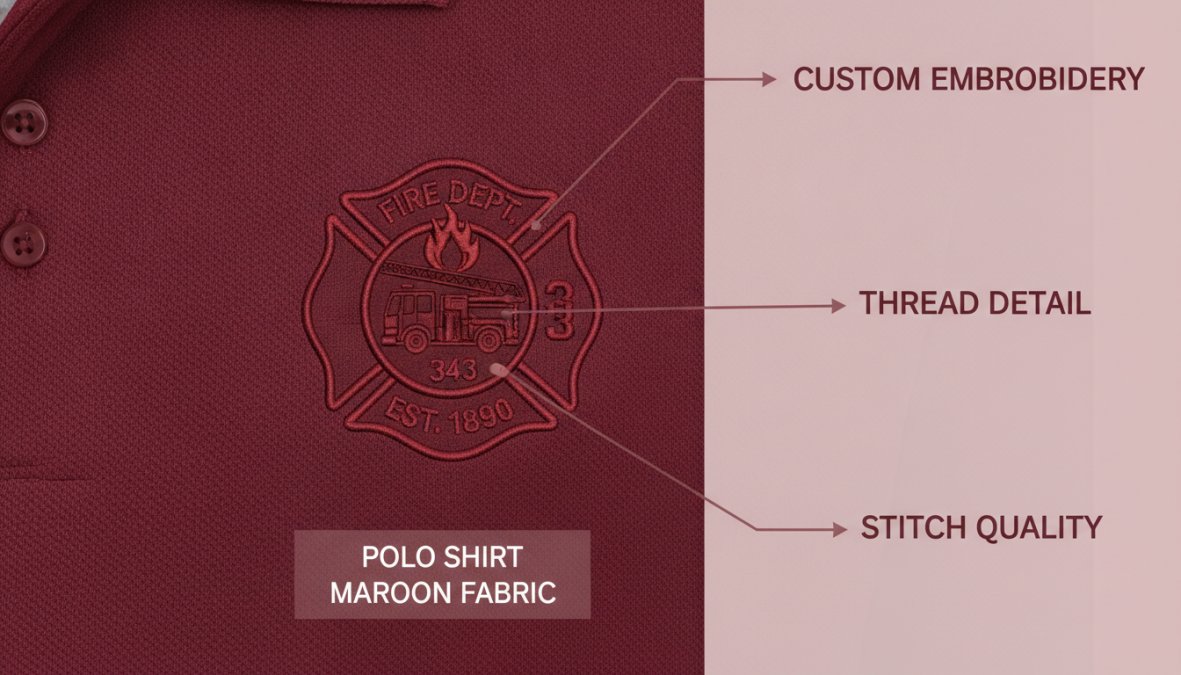
Embroidery delivers superior longevity. Stitched thread resists fading, cracking, and peeling far better than printed alternatives, maintaining sharp appearance through hundreds of wash cycles. This makes embroidery the preferred choice for duty apparel that will see regular, heavy use.
The trade-off is cost and minimum order quantities. Embroidery requires digitizing artwork into machine-readable format and setting up machines for each color. Setup fees typically run higher than screen printing, making embroidery more economical for larger orders or items you'll produce repeatedly.
Thread color selection matters. Fire departments typically choose from standard palettes: blacks, navy, reds, golds, and whites. Some request specialty colors like metallic gold for shields and accents. Request thread samples before production begins.
Placement affects cost and durability. Left-chest embroidery (station logo) is standard and economical. Full-back designs or multi-location embroidery increase complexity and cost. Most departments start with a single left-chest logo and add personalization via screen printing on the back or sleeves.
Screen Printing for High-Volume Orders
Screen printing forces ink through a mesh screen onto fabric, creating flat, vibrant designs. This method excels for high-volume orders, simple designs, and full-color artwork.
Screen printing costs less per unit at scale. Once screens are created, printing each additional shirt costs only a few dollars, making it ideal for department fundraisers, community events, or large-scale orders of 500+ units.
The limitation is durability. Printed designs fade with washing and can crack or peel if exposed to harsh chemicals or excessive heat. For duty apparel worn daily, embroidery outlasts screen printing by years. However, for event-specific or temporary apparel, screen printing provides excellent value.
Setup fees for screen printing run lower than embroidery, typically $25-75 per color, making small orders (50-100 units) more feasible. Many departments use both methods on the same garment: embroidered station logo on the chest and screen-printed department name on the back.
Apparel Categories: Shirts, Hoodies, Hats, and More
Fire department apparel extends far beyond basic t-shirts. Understanding the full range of options helps you build a cohesive uniform strategy.
T-Shirts and Duty Shirts form the foundation. Premium duty apparel uses heavyweight cotton or cotton-poly blends (50/50 or 60/40) that resist shrinking and maintain shape. Most departments choose 6-ounce shirts for year-round wear.
Polos project professionalism and work well for community events, recruitment, or administrative duties. Embroidered logos on polos convey quality better than screen printing.
Hoodies build camaraderie and work for station wear and training. Fleece-lined hoodies (80/20 cotton-poly) balance warmth and durability. Embroidered chest logos and screen-printed back designs create visual impact.
Hats and Beanies extend branding to headwear. Structured baseball caps with embroidered logos suit outdoor events. Cap quality varies significantly; structured front panels and adjustable sizing matter for professional appearance.
Jackets and Outerwear serve dual purposes: function and identity. Lightweight windbreakers work for mild climates; insulated jackets suit cold-weather regions. Reflective piping or logos improve visibility and safety.
Reflective Gear combines safety with branding. Reflective vests with embroidered logos enhance visibility during nighttime operations or traffic control while meeting ANSI standards.
Most departments build a tiered strategy: premium duty shirts for daily wear, hoodies for station/training, hats for events, and reflective gear for specific operations.
How to Design Fire Department Logos for Apparel
Effective logo design balances tradition with technical requirements for embroidery and printing. A logo that looks great on paper may fail when translated to a 2-inch embroidered chest patch.
Vector Artwork and Design Best Practices
Professional logos begin as vector files, scalable graphics created in Adobe Illustrator or similar software. Vector files maintain crisp edges whether scaled to 0.5 inches or 12 inches, unlike raster images (JPGs, PNGs) which pixelate when enlarged.
Work with a designer experienced in embroidery and apparel production. They understand technical constraints: thread cannot replicate hairline details, fills must accommodate stitch direction, and color separation affects final appearance.
Simplification is essential. Complex designs with fine lines, thin serifs, or dense shading fail in embroidery. A strong logo uses bold lines, limited colors, and clear contrast. The maltese cross translates beautifully because its geometric simplicity suits embroidery perfectly.
Color separation matters for screen printing. Each color requires a separate screen, so every additional color increases costs. Most effective designs use 2-4 colors maximum.
Request vector files in .ai, .eps, or .pdf format. These preserve scalability and allow vendors to adjust designs for production. Avoid submitting JPGs or PNGs unless the vendor specifically requests raster files.
Incorporating Station Emblems and Maltese Crosses
The maltese cross stands as the universal symbol of fire service. Incorporating it into department apparel connects individual stations to the broader firefighter community and honors tradition.
Station emblems typically combine the maltese cross with department-specific details: station number, location, founding year, or unique symbols representing local geography. When designing with the maltese cross, maintain proper proportions. The cross should occupy the visual center, with station details arranged around it rather than competing for attention.
Color choices reinforce identity. Traditional combinations include red and gold (honoring tradition), navy and gold (professional appearance), or black and red (bold, modern look). Avoid color schemes that clash with existing department uniforms.
Placement on apparel affects design prominence. Left-chest logos work well at 2-3 inches. Back designs can be larger (4-6 inches) and accommodate more detail. Sleeve logos require simplified designs due to limited space.
Department Logo Integration and Personalization
Beyond the core station logo, apparel customization extends to individual and departmental personalization that strengthens identity.
Station Name and Rank Personalization
Adding station names and firefighter ranks to apparel creates individual connection while maintaining group cohesion. Screen printing works best for personalization, as it accommodates variable text without setup fees for each variation.
Station names typically appear on back shoulders or lower back. Names and ranks go on sleeves or back yoke. Text smaller than 0.5 inches becomes illegible on embroidery. Most departments use 0.75-1 inch lettering for names and 0.5-0.75 inch for ranks.
Font selection affects professional appearance. Serif fonts convey tradition and formality. Sans-serif fonts project contemporary professionalism. Avoid decorative or script fonts that reduce legibility.
Consistency across the department matters. Mixing abbreviations and full titles creates visual inconsistency.
Fire Department Uniform Design Ideas for Group Wear
Cohesive apparel strategies coordinate colors, logos, and messaging across multiple garment types.
Reflective Gear and Safety Standards
Reflective apparel serves dual purposes: safety compliance and brand visibility. High-visibility gear meets ANSI/ISEA standards, which specify reflective material placement and brightness levels.
Reflective piping or logos on duty apparel improve visibility during nighttime operations, traffic control, or emergency scenes. Many departments incorporate reflective elements into routine apparel rather than limiting them to specialized safety gear.
High-quality reflective material maintains brightness through 50+ washings. When specifying reflective gear, request material rated for professional laundry processes.
Placement strategy balances safety and aesthetics. Back-shoulder reflective logos provide excellent visibility without dominating the design. Sleeve reflective trim works well on jackets.
Fabric Durability and NFPA Compliance
Fire department apparel must withstand demanding conditions: frequent washing, physical activity, exposure to smoke and chemicals, and rapid temperature changes. Fabric selection directly impacts longevity.
Cotton-dominant blends (80/20 or 100% cotton) offer breathability and comfort but shrink more readily. Poly-dominant blends (60/40 or 50/50) resist shrinking and wrinkles. Most premium duty apparel uses 50/50 blends as a compromise.
Weight matters for durability. Optimal duty apparel weight ranges 6-7 ounces, heavy enough for durability, light enough for comfort.
Stitching quality determines longevity as much as fabric. Double-stitched seams resist tearing and unraveling. Reinforced stress points (armholes, collar, hem) extend garment life significantly.
Preshrinking affects fit after first wash. Quality manufacturers preshrink fabric before cutting and sewing, minimizing shrinkage. Always request preshrunk fabric for apparel that will undergo commercial laundry processes.
Bulk Fire Department Apparel Ordering Process
Ordering customized apparel for an entire department requires coordination across design, production, and logistics.
Minimum Order Quantities and Volume Discounts
Minimum order quantities (MOQs) vary by customization method and vendor. Screen printing typically requires 50-unit minimums per design. Embroidery often requires 25-50 unit minimums.
Volume discounts reward larger orders. A typical pricing structure: 25-49 units at full price, 50-99 units at 10% discount, 100-249 units at 15% discount, 250+ units at 20% discount. Departments ordering apparel for entire companies typically qualify for meaningful discounts.
Planning ahead maximizes savings. Consolidating orders into quarterly or annual purchases reduces per-unit costs significantly.
Lead times vary by complexity. Simple screen-printed designs might ship in 5-7 business days. Embroidered apparel requires 2-3 weeks for digitizing, setup, and production.
Sizing and Fit Guides for Diverse Teams
Departments include firefighters of varying body types, ages, and fitness levels. Proper sizing ensures every team member has comfortable, professional-looking apparel.
Most vendors provide detailed size charts with measurements: chest width, sleeve length, torso length. Request these before ordering. Have team members measure themselves rather than relying on typical size assumptions.
Unisex sizing differs from traditional men's/women's cuts. Unisex apparel accommodates broader shoulders and longer torsos but may fit loosely in the torso for smaller firefighters.
Requesting extended sizes (XS-3XL or 4XL) ensures all team members feel included. Some vendors charge modest upcharges for extended sizes; others include them at standard pricing.
Fit testing before full production prevents costly errors. Order sample sizes in XS, S, M, L, XL, and 2XL. Have representative team members try them on and provide feedback.
| Sizing Consideration | Impact | Recommendation |
|---|---|---|
| Chest Measurement | Determines comfort and mobility | Measure at fullest point with arms at sides |
| Sleeve Length | Affects professional appearance and function | Measure from shoulder to wrist |
| Torso Length | Prevents excessive bunching or exposure | Taller firefighters often need longer lengths |
| Fabric Shrinkage | Affects fit after washing | Request preshrunk fabric; expect 1-3% residual shrinkage |
| Unisex vs. Fitted | Impacts comfort for diverse body types | Unisex offers consistency; fitted suits specific preferences |
Sustainability and Quality in Custom Fire Apparel
Modern departments increasingly consider environmental impact and long-term value when selecting apparel vendors.
Quality construction extends garment lifespan, reducing replacement frequency and environmental waste. A $35 shirt lasting 3 years costs less per wear than a $20 shirt lasting 1 year.
Fabric sourcing matters. Organic cotton avoids synthetic pesticides and reduces water consumption. Recycled polyester uses existing materials rather than petroleum-based virgin fibers.
Ethical manufacturing practices ensure fair labor conditions. Reputable vendors maintain transparent supply chains and partner with certified facilities.
Color durability reduces the need for frequent replacement. Apparel dyed with high-quality dyes resists fading, maintaining appearance through extended use.
Long-term cost analysis reveals that premium apparel delivers better value than budget alternatives. Departments investing in durable, well-designed gear reduce replacement cycles and maintain professional appearance that strengthens community relationships.
Building identity through customizable fire department group apparel requires thoughtful planning across design, production, and implementation. The right apparel reinforces brotherhood, projects professionalism, and honors the fire service tradition. Premium firefighter gear designed specifically for departments that value durability, authentic design, and connection to the fire service community equips your station with gear that represents your legacy and pride.
Frequently Asked Questions
What customization options are available for customizable fire department group apparel?
Fire departments can customize apparel through embroidery (logos, badges, names), screen printing (full-color designs), and personalization (rank, station name, firefighter initials). Embroidery works best for smaller logos and badges, while screen printing handles larger designs and high-volume orders. Most vendors offer both custom artwork submission and pre-designed options featuring maltese crosses, station emblems, and duty apparel graphics.
What is the minimum order quantity for bulk fire department apparel ordering?
Minimum order quantities typically range from 12-25 pieces per design, though many vendors offer lower minimums for smaller departments or fundraiser apparel. Volume discounts increase significantly at 50, 100, and 250+ unit thresholds. It's worth asking vendors about mixed-size orders and whether personalization (individual names/ranks) affects minimums, as custom personalization sometimes requires slightly higher order quantities.
How do I design fire department logos for apparel that will work with embroidery and screen printing?
Submit vector artwork (AI, EPS, or PDF files) rather than raster images for best results. Keep designs simple and bold, avoid thin lines under 1/8 inch that won't survive embroidery. For screen printing, ensure color separation is clean. Work with your vendor's design team to review artwork before production. Include station name, maltese cross, or emblem clearly, and specify thread colors or ink colors. Most vendors provide free design consultation to ensure your logo translates well to fabric.
What fabric and safety standards should I consider for fire department group apparel?
Look for durable, moisture-wicking fabrics that withstand frequent washing and station environments. For reflective gear and safety apparel, verify NFPA compliance and reflective trim standards. High-quality polyester blends (50/50 or 60/40 cotton-poly) offer durability and color retention. For duty apparel worn at community events or fundraisers, ensure fabric weight (14 oz minimum for longevity) and thread quality match your department's activity level. Sustainability matters too, consider eco-friendly options that don't compromise durability.
This article was written using GrandRanker
