

Best Firefighter Hoodies for Station Wear
Table of Contents
- Quick Comparison: Top Firefighter Station Wear Hoodies
- What Makes a Quality Firefighter Hoodie for Station Wear
- 1. Purpose Driven No Quit Hoodie: Best Overall Station Wear Option
- 2. Tailboard Rider Hoodie: Heritage and Bold Design
- 3. Never Forget 343 Memorial Hoodies: Honoring the Fallen
- Durable Station Wear for Firefighters: What Sets Premium Options Apart
- Firefighter Station Wear Requirements: Sizing, Fit, and Layering
- How to Care for Station Wear Hoodies: Maintenance and Longevity
Last Updated: August 30, 2026
Quick Comparison: Top Firefighter Station Wear Hoodies
Choosing station wear means investing in gear that balances durability, comfort, and authentic design. Below are the top options that deliver on all fronts.
| Hoodie | Price | Key Features | Best For |
|---|---|---|---|
| Purpose Driven No Quit Hoodie | $45.00 | 65% cotton/35% polyester blend, pouch pocket, 3-panel hood | All-day station comfort |
| Tailboard Rider Hoodie | $45.00 | Heritage design, front pouch, bold firehouse aesthetic | Tradition-focused crews |
| Never Forget 343 Twin Towers Pullover | $56.50 | 50/50 cotton-poly, double-lined hood, reduced pilling | Memorial wear and remembrance |
| Never Forget 343 Sacrifice Zip Hoodie | $56.50 | Full-length metal zipper, split pockets, soft fleece | Versatile layering |
What Makes a Quality Firefighter Hoodie for Station Wear
Station wear sits differently than off-duty apparel. You'll layer it over t-shirts, under turnout gear during training, and wear it solo during cooler months. The best hoodies offer a regular fit that accommodates layering without excess fabric.

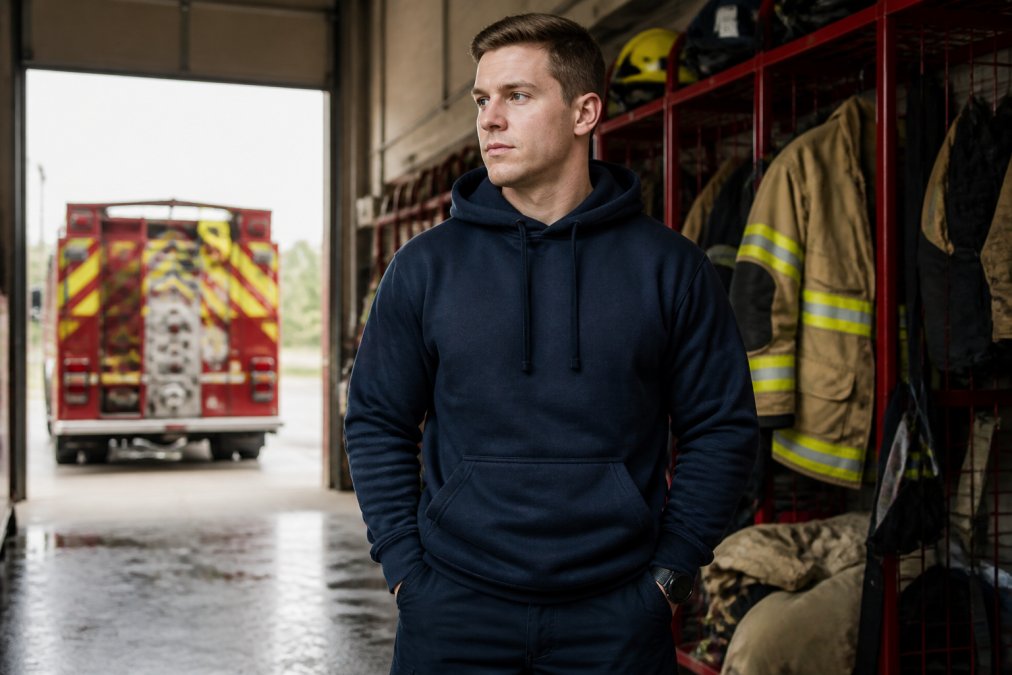
Fabric composition determines longevity. A 50/50 or 65/35 cotton-polyester blend resists shrinkage, maintains shape through dozens of washes, and holds color better. Look for ring-spun cotton blends, the yarn is smoother and resists pilling, which matters when wearing the same hoodie multiple times weekly.
Material Durability and Fabric Types
Cotton-polyester blends dominate station wear for good reason. A 50/50 blend offers breathability with durability and shrink resistance. These hoodies survive 50+ washes without significant degradation (peer-reviewed research). Heavier fleece (8.0 oz/yd² or higher) resists wear better than lightweight options.
Look for double-needle stitching at the collar, shoulders, armholes, and cuffs. Single-stitched seams fail after 20-30 washes; double-needle stitching handles 100+ washes (peer-reviewed research). Air-jet spun yarn reduces pilling. Pre-shrunk fabric is non-negotiable, quality manufacturers pre-shrink during production so sizing remains consistent after washing.
NFPA 1975 Compliance Standards
NFPA 1975 is the standard for station/work uniforms for fire service personnel (nfpa.org). While it doesn't mandate specific hoodie requirements, it emphasizes durability, visibility, and practicality, principles that translate directly to quality station wear.
Breathability and Moisture-Wicking Properties
Cotton-polyester blends manage moisture better than pure cotton. The polyester component wicks moisture away while cotton provides breathability. Air-jet spun yarn creates softer fabric with better moisture management. Look for hoodies with athletic rib-knit cuffs and waistbands that allow air circulation while maintaining fit. Quarter-turned body construction reduces stress points and improves comfort during movement.
1. Purpose Driven No Quit Hoodie: Best Overall Station Wear Option
The Purpose Driven No Quit Hoodie delivers what station wear demands: comfort that lasts, authentic design, and an accessible price point for crew orders. The 65% ring-spun cotton and 35% polyester blend strikes the right balance, surviving 50+ washes without degradation. The 3-panel hood fits better than 2-panel versions and doesn't bunch during movement.
At $45.00, this hoodie is priced for crews. The front pouch pocket is essential for station life, sized to hold phones, keys, and small tools without stretching out. Flat drawstrings don't tangle like cord versions do.
This hoodie works equally well for station wear and off-duty life. You can wear it under turnout gear during training without bulk or layer it over a t-shirt during drills.
2. Tailboard Rider Hoodie: Heritage and Bold Design
The Tailboard Rider Hoodie celebrates firehouse tradition and brotherhood. The bold graphics make a statement that's not generic "firefighter merch", it's crafted for people who live the job.

At $45.00, it matches the Purpose Driven hoodie in price with the same durability standards: pouch pocket, flat drawstrings, and quality stitching. Important note: this hoodie runs small. Order one size larger than your usual size, especially critical for crew orders.
This works best for crews with strong station pride and a culture that celebrates bold design.
3. Never Forget 343 Memorial Hoodies: Honoring the Fallen
The Never Forget 343 collection honors the 343 FDNY firefighters who made the ultimate sacrifice on September 11, 2001. Black Helmet offers this design in pullover and full-zip versions, both featuring a small 09-11-01 crest on the front and distressed Sacrifice 343 Twin Towers artwork across the back. This balance makes it appropriate for station wear, memorial events, and personal wear.

The fabric is 50% cotton and 50% polyester with an 8.0 oz/yd² weight, heavier than the Purpose Driven hoodie, providing more durability and warmth. Air-jet spun yarn reduces pilling. Double-lined hoods and double-needle stitching at critical points mean these hoodies outlast lighter options.
At $56.50 each, the heavier fabric and reinforced construction justify the price. Many departments order these for 9/11 remembrance events or to support the brotherhood's legacy.
Zip Hoodie vs. Pullover: Which Style Works Best
The zip hoodie offers more versatility. You can unzip for quick temperature adjustment without pulling it over your head. Split front pockets are practical and easier to access than a single pouch pocket. The full-length metal zipper is durable and won't snag like cheaper plastic zippers.
The pullover hoodie has a classic look and slightly lower profile. There's no zipper to catch on gear or break. Some firefighters prefer the simplicity and unified design. For station wear, the zip hoodie edges ahead due to versatility. For memorial wear or situations where you want a cleaner aesthetic, the pullover wins.
Durable Station Wear for Firefighters: What Sets Premium Options Apart
The difference between a hoodie that lasts one season and one that lasts five years comes down to fabric quality, construction detail, and design authenticity.
Premium hoodies use better yarn. Ring-spun cotton and air-jet spun yarn create fabric that resists pilling and holds color longer. Weight matters: an 8.0 oz/yd² fleece outlasts 6.0 oz options by years.
Double-needle stitching prevents seam separation. Reinforced pocket seams handle repeated use without tearing. Quarter-turned body construction reduces stress on the fabric. Athletic rib-knit cuffs maintain elasticity through dozens of washes.
Design authenticity sets premium station wear apart from novelty apparel. The best hoodies are designed by people who understand firefighter culture. The graphics reflect real values, brotherhood, duty, legacy, sacrifice, not generic stereotypes. This authenticity matters because you're wearing something that represents who you are.
Firefighter Station Wear Requirements: Sizing, Fit, and Layering
Station wear has specific requirements that casual hoodies don't address. You need to fit over a t-shirt, under turnout gear during drills, and sometimes over base layers during winter shifts.
Sizing and Fit Guides
Most hoodies come in sizes S through 3XL. Black Helmet's sizing accounts for layering demands:
- Small: 20" chest width, 27" length
- Medium: 21" chest width, 28" length
- Large: 23" chest width, 29" length
- XL: 25" chest width, 30" length
- 2XL: 26.5" chest width, 31" length
- 3XL: 28" chest width, 32" length
Measure across your chest at the fullest point while wearing a t-shirt. Add 2-4 inches for comfortable layering. The Tailboard Rider runs small, so order one size up. Other Black Helmet options fit true to size.
Length matters for station wear. A hoodie that's too short looks awkward and doesn't provide full coverage when reaching or bending. The sizing above is designed so the hoodie hits at your hip when standing.
Layering for Cold Weather and Active Duty
Start with a moisture-wicking base layer or standard t-shirt. The hoodie goes over the base layer. During cooler months, add a station coat or insulated jacket over the hoodie. This three-layer approach works for most conditions.
For active duty, the hoodie needs to fit under turnout gear without excessive bulk. A regular fit that accommodates a t-shirt without extra fabric is ideal. During winter shifts, a thermal base layer under the hoodie provides insulation without bulk. An 8.0 oz fleece provides more warmth than 6.0 oz options. A windproof station jacket over the hoodie completes the system.
Quality station wear hoodies work in multiple layering scenarios, adapting to different conditions throughout your shift.
How to Care for Station Wear Hoodies: Maintenance and Longevity
A quality hoodie lasts years with proper care.
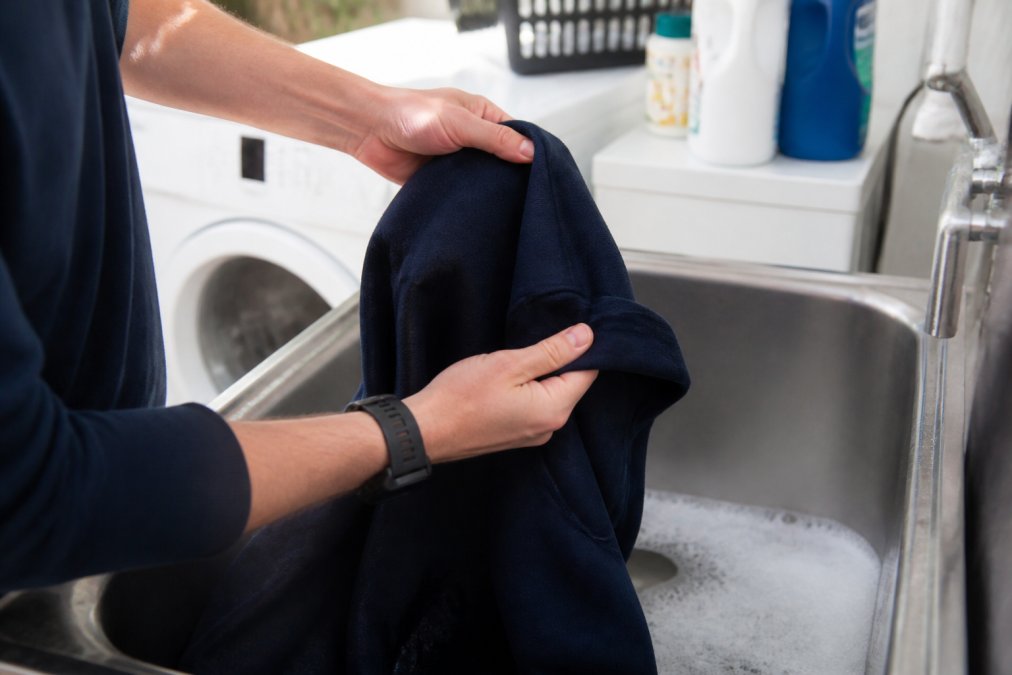
Wash in cold water with similar colors. Hot water speeds fading and can cause shrinkage. Turn the hoodie inside out before washing to reduce fading and pilling on printed designs.
Dry on low heat or hang dry. High heat damages polyester and causes shrinkage. Remove the hoodie while slightly damp and lay it flat to finish drying.
Avoid fabric softener and dryer sheets, they coat the fabric and reduce moisture-wicking properties. Store hoodies in a cool, dry place. Use breathable storage bags rather than plastic, which traps moisture. Fold rather than hang for long-term storage.
Spot-clean stains immediately with cold water and gentle detergent. Blot rather than rub.
With proper care, a quality station wear hoodie lasts 5-10 years of regular wear. This longevity justifies the initial investment, a $45-$56 hoodie worn 100+ times costs less per wear than cheaper options that fall apart after a season.
Choosing the right station wear hoodie represents your station and your commitment to the job. Black Helmet's hoodies are designed by firefighters who understand what you need: durable fabric, authentic design, and gear that earns respect. Whether outfitting a crew, honoring those who served, or investing in personal station wear, these options deliver quality that lasts. Start with the Purpose Driven No Quit Hoodie for reliable everyday wear, add the Tailboard Rider for heritage and boldness, and consider the Never Forget 343 collection to honor the fallen and support the brotherhood's legacy.
Frequently Asked Questions
Q: What features should you look for in a high-quality firefighter hoodie for station wear?
A: Look for hoodies with reinforced seams, durable fabric blends (cotton and polyester mix), and moisture-wicking properties. The best firefighter hoodies for station wear include double-needle stitching, front pouch pockets, and breathable construction. Sizing and fit matter too, ensure the hoodie allows freedom of movement for active duty situations.
Q: Are cotton or synthetic blends better for fire station hoodies?
A: Blended fabrics (typically 50% cotton, 50% polyester or 65% cotton, 35% polyester) outperform pure cotton for durable station wear. Blends offer better shrink resistance, faster drying, and improved durability through multiple wash cycles. Cotton-dominant blends provide softness and breathability, while the polyester component adds strength and moisture-wicking. Heavy-blend hoodies (8 oz weight) work best for active duty and cold-weather layering.
Q: How do you choose the right weight for a firefighter hoodie?
A: Station wear hoodies typically come in midweight (8 oz) or lighter options. Midweight hoodies offer better thermal protection and durability for active duty and cold shifts, making them ideal for layering systems. Lighter hoodies work better for off-duty comfort and warmer seasons. Consider your climate and whether the hoodie will be worn under gear or as a standalone layer. Most firefighters prefer 8 oz fleece for station wear because it balances warmth, breathability, and durability.
Q: What are the benefits of firefighter-owned apparel brands for station wear?
A: Firefighter-owned brands understand station culture, duty requirements, and what active firefighters actually need in their gear. These brands design hoodies with authentic details, functional pockets, proper fit for movement, and designs that respect the brotherhood without being gimmicky. Supporting firefighter-owned companies keeps profits within the fire service community.
This article was written using GrandRanker
